Dravite Brown Tourmaline
What Is Dravite Brown Tourmaline?
Dravite, the brown tourmaline, is a magnesium-rich tourmaline species with the formula NaMg3Al6(BO3)3Si6O18(OH)4, and it’s usually some shade of brown to yellow-brown.
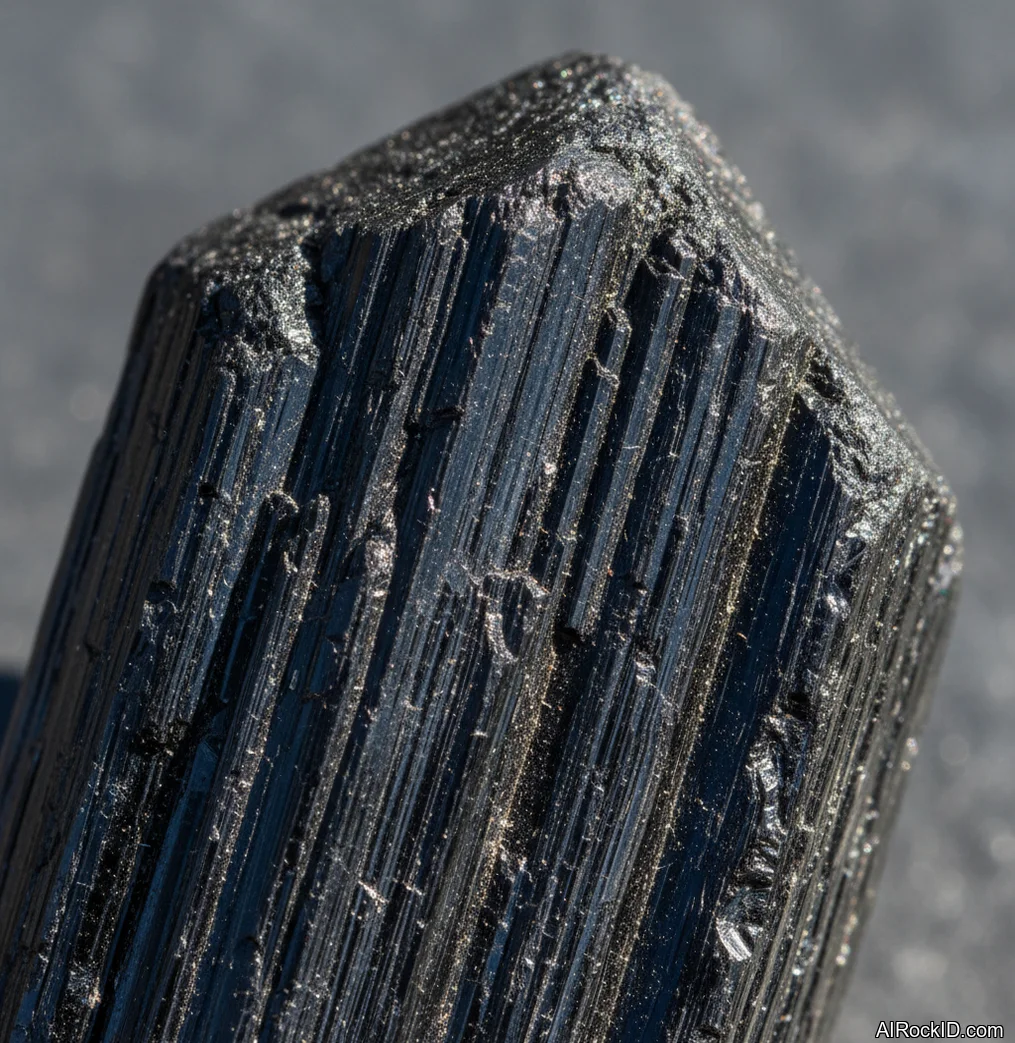
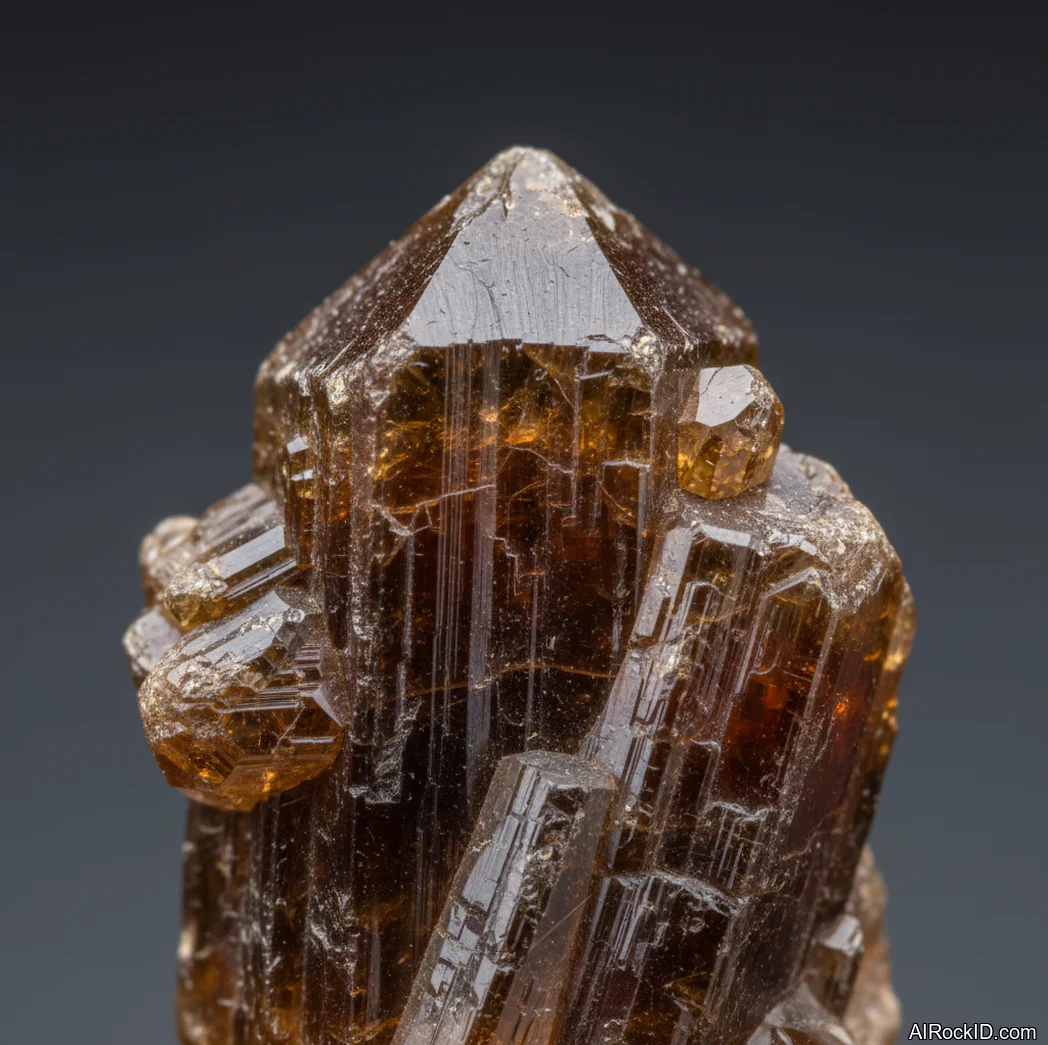
Grab a decent dravite crystal and, honestly, the shape hits you first. Long prisms. Lots of them. And those classic tourmaline lengthwise striations are right there, like somebody took a pin and scored the sides in straight lines. It feels hard in your hand the same way quartz does, but the look is warmer, more earthy, especially when the color slides from cocoa in the middle to amber along the edges (if the lighting’s right).
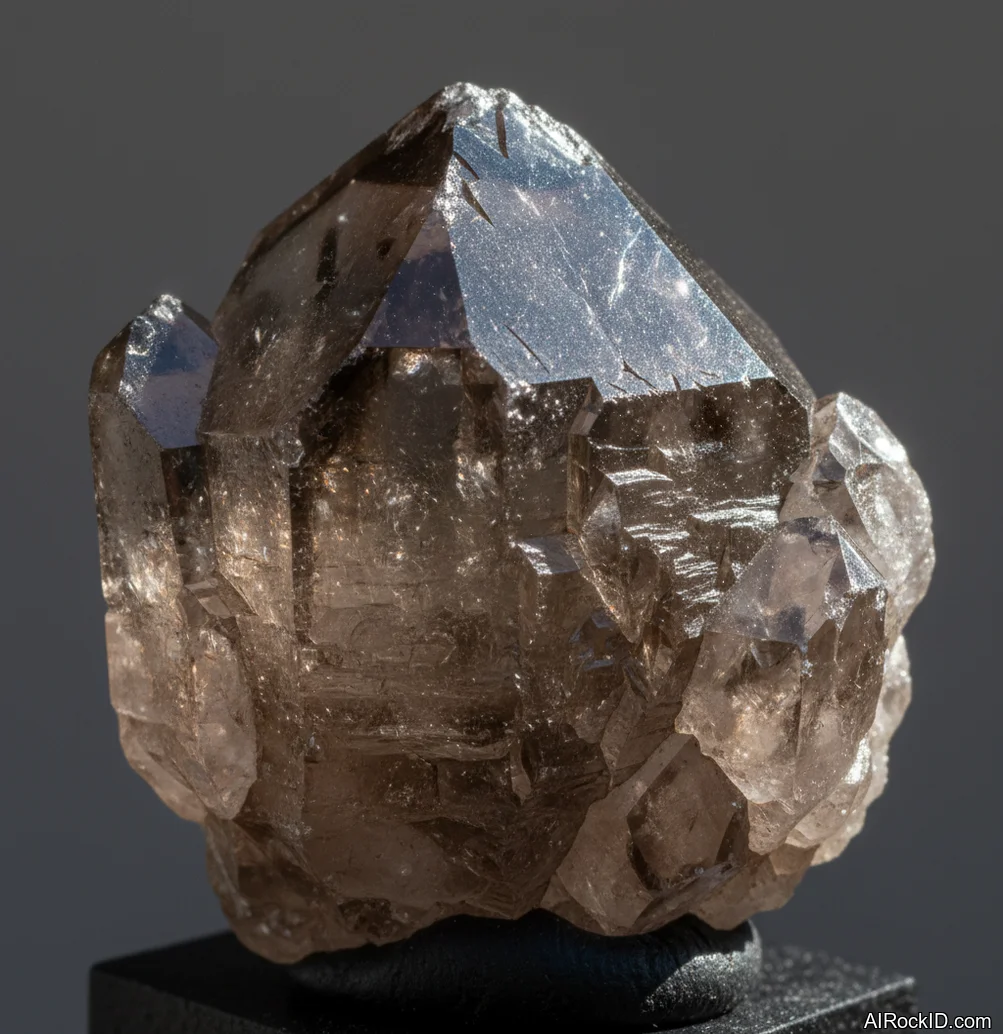
People mix it up with smoky quartz or brown garnet at a quick glance, especially when it’s tumbled smooth. But shine a light on it and dravite gives itself away with that tourmaline vibe: the crystal faces kick back these sharp little flashes, and if it’s translucent you can sometimes spot color zoning as you roll it between your fingers. Most pieces you’ll run into for sale are opaque to translucent, not that clean, gemmy material. The really nice transparent brown crystals are out there, sure, but they don’t hang around in bargain bins. Why would they?
Origin & History
Dravite got its first proper description in 1884, thanks to Gustav Tschermak. The name’s pulled from the Drava (Drau) River area, because some of the early material came out of the region people used to call “Drautal” (Drava Valley) in Central Europe.
Thing is, tourmaline has always been kind of a chaotic bunch, with a lot of stones that look the same until you’ve actually handled them and really looked close under decent light. So calling out dravite as its own magnesium-dominant species actually mattered for mineral classification. But old labels are still all over the place. I’ve bought “dravite” at shows that ended up being schorl (black tourmaline) with that dusty brown weathering on the surface, or just mixed-color tourmaline where nobody had a real species ID to back it up.
Where Is Dravite Brown Tourmaline Found?
You’ll run into dravite in metamorphic belts and in or near granitic pegmatites. Alpine-style crystals from Europe exist, and brown tourmaline also shows up in Brazil and parts of East Africa.
Formation
Most dravite I’ve actually had in my hands has come out of metamorphic stuff: marbles, calc-silicate rocks, plus schists where boron-rich fluids had enough space to work. Tourmaline’s basically a boron sponge. When those fluids cut through hot rock, tourmaline can show up as prisms, granular clots, or those tight little sprays that look like someone shoved a bundle of brown needles into the matrix.
But you’ll also run into brown tourmaline in and around granites and pegmatites, especially where the chemistry skews magnesium and aluminum. In pockets, the crystals can come out chunky and nicely formed (the kind you can feel the sharp-ish prism edges on when you turn one over). Or they can be straight-up ugly and massive. And that’s the deal: the name “dravite” covers everything from collector-grade prisms to brown, blocky chunks that only a tourmaline nerd would bother to get excited about.
How to Identify Dravite Brown Tourmaline
Color: Colors run from yellow-brown and honey to deep chocolate brown, sometimes with greenish-brown or darker cores. Zoning is common, especially when a crystal is translucent along the edges.
Luster: Vitreous luster on clean crystal faces, sometimes a bit resinous on worn or etched surfaces.
Look closely for the lengthwise striations on the prism faces. They’re the tourmaline fingerprint. The real test is a quick hardness reality check: it should scratch glass, but don’t go gouging your best specimen. And in the hand, dravite usually stays cool to the touch like most silicates, while a lot of brown glass fakes feel weirdly warm and “soft” when you roll them under a lamp.
Properties of Dravite Brown Tourmaline
Physical Properties
| Crystal System | Trigonal |
| Hardness (Mohs) | 7-7.5 (Hard (6-7.5)) |
| Density | 3.02-3.26 g/cm3 |
| Luster | Vitreous |
| Diaphaneity | Transparent to translucent |
| Fracture | Uneven |
| Streak | White |
| Magnetism | Non-magnetic |
| Colors | Brown, Yellow-brown, Chocolate brown, Honey, Greenish-brown |
Chemical Properties
| Classification | Silicates (cyclosilicate) |
| Formula | NaMg3Al6(BO3)3Si6O18(OH)4 |
| Elements | Na, Mg, Al, B, Si, O, H |
| Common Impurities | Fe, Mn, Ti, Ca |
Optical Properties
| Refractive Index | 1.614-1.666 |
| Birefringence | 0.018-0.040 |
| Pleochroism | Strong |
| Optical Character | Uniaxial |
Dravite Brown Tourmaline Health & Safety
Normal handling is safe, and a quick splash of water usually isn’t a big deal. The real issue is mechanical: if it’s pressed up against softer stuff in storage, it can chip it or leave scratches.
Safety Tips
If you’re cutting or grinding it, handle it like you would any other silicate. Keep the dust out of your lungs. Use water to knock it down, and wear proper respiratory protection so you’re not breathing that fine, gritty powder.
Dravite Brown Tourmaline Value & Price
Price Range
Rough/Tumbled: $10 - $250 per specimen
Cut/Polished: $20 - $200 per carat
Price swings depending on how clear it is, what kind of crystal shape it grew into, and how clean the faces look when you turn it in the light. Big, sharp prisms with nice brown color zoning usually cost more than those dark, blocky, opaque chunks that just sort of sit there and swallow the light (you can’t see much through them anyway).
Durability
Durable — Scratch resistance: Good, Toughness: Fair
It’s stable in normal room conditions, but sharp impacts can chip edges and terminations, especially on long prismatic crystals.
How to Care for Dravite Brown Tourmaline
Use & Storage
Store it wrapped or in a compartmented box so the hard edges don’t scratch softer minerals. If it’s a terminated crystal, keep it from rattling around in a jar.
Cleaning
1) Rinse briefly in lukewarm water. 2) Use a soft toothbrush with a drop of mild soap to get dirt out of the striations. 3) Rinse well and pat dry; don’t bake it in direct sun on a windowsill.
Cleanse & Charge
If you do energy-style care, stick to simple stuff like a quick rinse, a dry wipe, or letting it sit on a selenite plate. Avoid saltwater if there’s any matrix that might react or crumble.
Placement
On a shelf, it looks best under angled light so the prism faces flash and the zoning shows. For a desk stone, a tumbled dravite is less likely to chip than a sharp crystal.
Caution
Don’t run ultrasonic cleaners on crystals that are fractured or have inclusions. And when you put it away, don’t let it sit rubbing up against fluorite, calcite, selenite, or any other softer pieces (that kind of contact can leave little scuffs fast).
Works Well With
Dravite Brown Tourmaline Meaning & Healing Properties
Next to the flashier tourmalines, dravite’s the one I grab when I want things to feel quiet. It’s got this grounded, earthy vibe. And yeah, that’s totally subjective. But there’s a reason a lot of people file brown stones under “steadying” without even thinking about it.
Thing is, you can tell a lot just by picking up a palm stone. Some are slick like glass, and some still have that tiny bit of micro-texture you can feel with your thumb. Dravite usually lands in that second camp. Even polished, it can keep this slightly grippy, “yep, this is a real rock” feel, which honestly makes it a great fidget stone when you’re trying to stay present. I’ve also noticed dravite can be kind of awful to photograph. In your hand, the browns can look warm, almost tea-colored, like there’s a soft glow inside, and then you take a phone pic and it just… disappears. Where’d it go?
If you’re using crystals as part of meditation or self-care, I’d think of dravite as a routine tool. Consistency. Boundaries. Getting back into your body. Not medical. And if you’re dealing with anxiety or sleep stuff, use the stone as a cue to do the boring things that actually work: breathing, walking, putting your phone down. So much metaphysical shopping turns into chasing big promises. Dravite isn’t that. It’s more like a steady hand on your shoulder (no drama, just there).
Identify Any Crystal Instantly
Snap a photo and get properties, value, care instructions, and healing meanings in seconds.