Flower Obsidian
What Is Flower Obsidian?
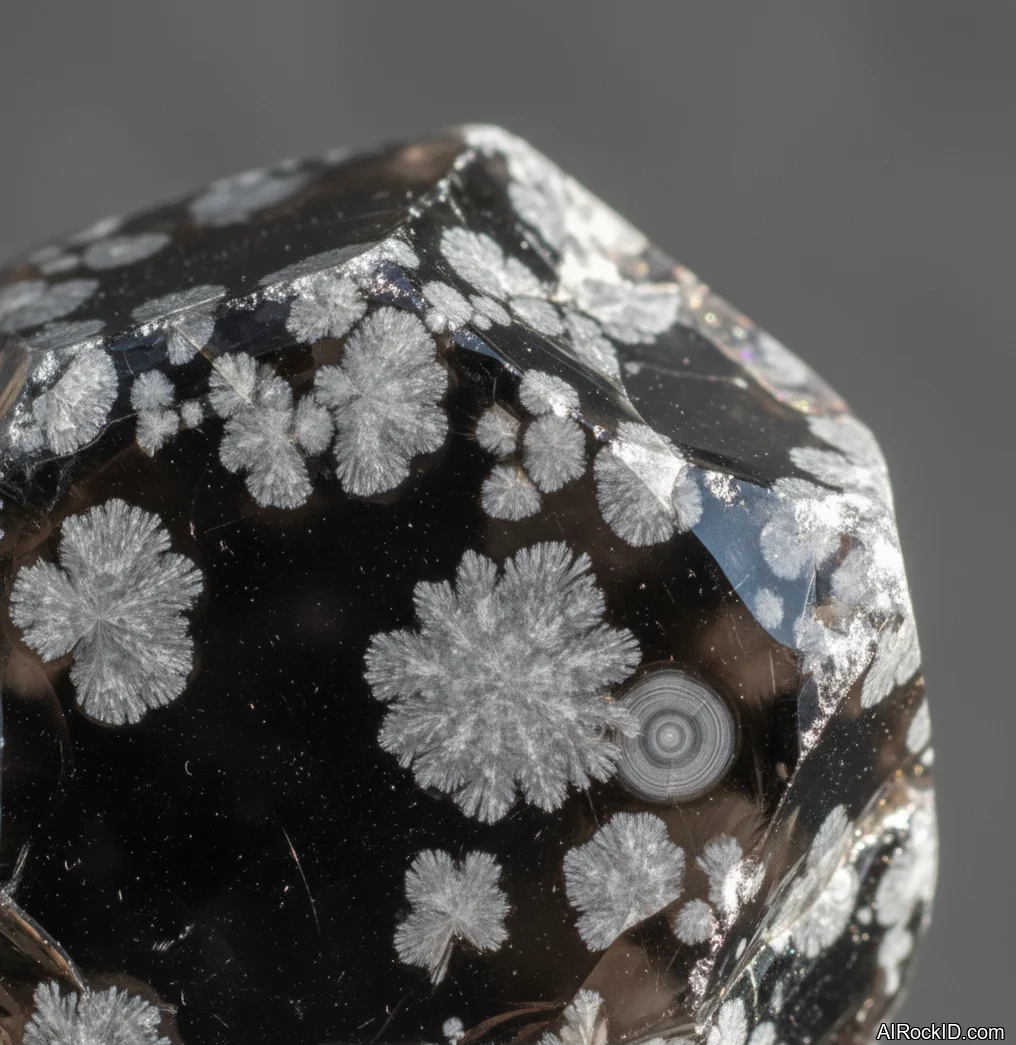
Flower Obsidian is a patterned variety of obsidian, meaning natural volcanic glass, and it has these pale, flower-like spherulites sitting in a darker, glassy base.
Pick up a decent palm stone and you notice a couple things fast. It’s a little heavier than you’d guess for something that, at first glance, just reads as black glass. And the “flowers” don’t look painted on. They’re tucked under the polish like tiny frozen bursts, and if you tilt the stone under a shop light, they fade in and out instead of staying flat on the surface.
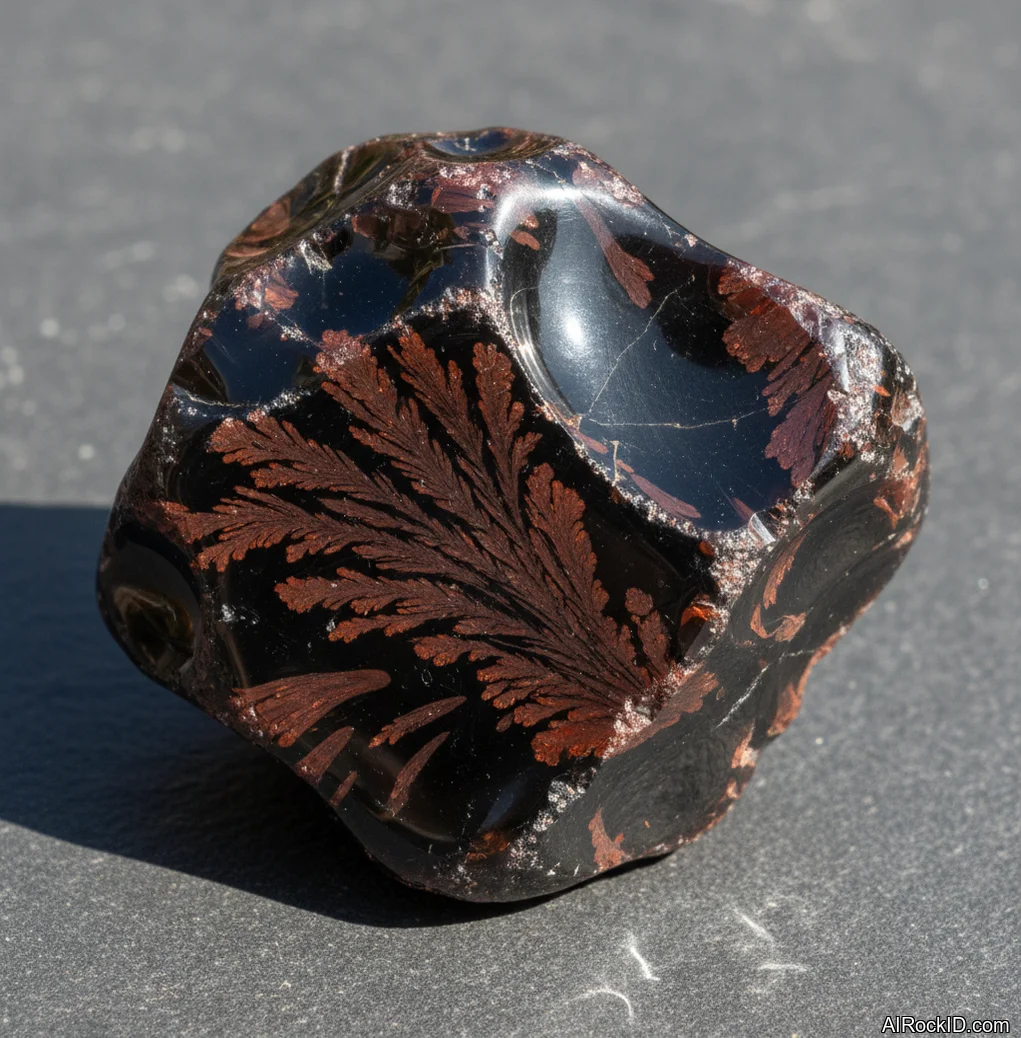
People often lump it in with snowflake obsidian, and honestly, most of what gets sold as “flower” is basically in that same family. But the pattern can be tighter, more rosette-like, not just big cottony flakes. Some pieces show soft gray blooms, some go cream, and once in a while you’ll catch brownish or tan halos where the devitrified bits picked up a little more iron (kind of a cool tell, right?).
Origin & History
People were talking about obsidian and using it way before anybody had a clean, modern system for classifying minerals. But the word “obsidian” itself traces back to the Latin “obsidianus,” linked to an old Roman story about someone named Obsius who brought a similar stone back to Rome. The name stuck. It’s short, it’s easy, and it just fits.
“Flower obsidian” isn’t a formal geologic term. It’s a trade name. Sellers started using it to set aside the nicer rosette-pattern stuff from plain black obsidian, and from the classic “snowflake” material. Look, if you’ve ever run a gem show table, you know the drill: the same rough might get tagged with a couple different labels depending on how crisp the spherulites look once it’s polished (especially under those harsh booth lights).
Where Is Flower Obsidian Found?
Flower-pattern obsidian shows up anywhere rhyolitic obsidian occurs and later devitrifies in spots; a lot of market material is from the western USA and Mexico.
Formation
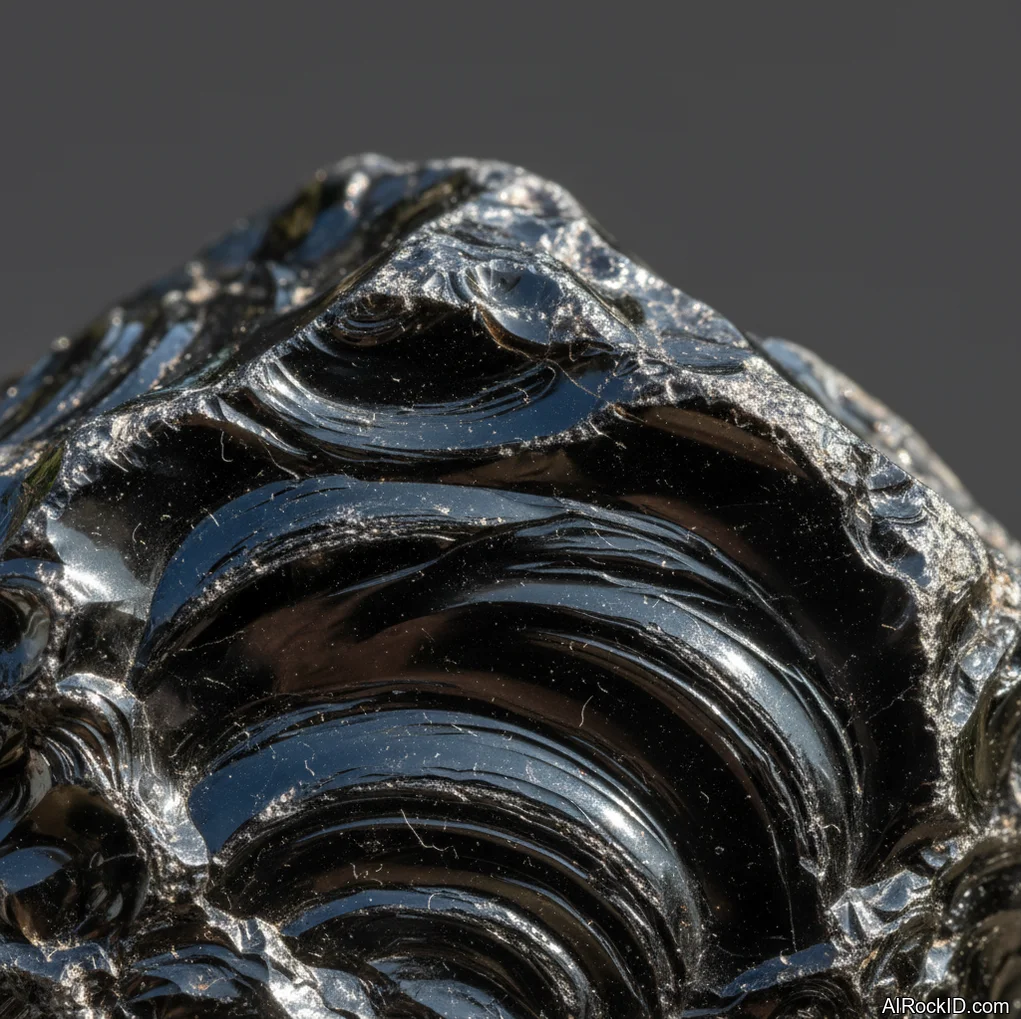
Obsidian happens when silica-rich lava chills so fast the atoms never get the chance to line up into mineral crystals. So it snaps like a bottle, and a fresh flake can look almost wet, like you just broke open something glossy. You’re basically holding a frozen liquid. Cold. Smooth. Sharp at the edge.
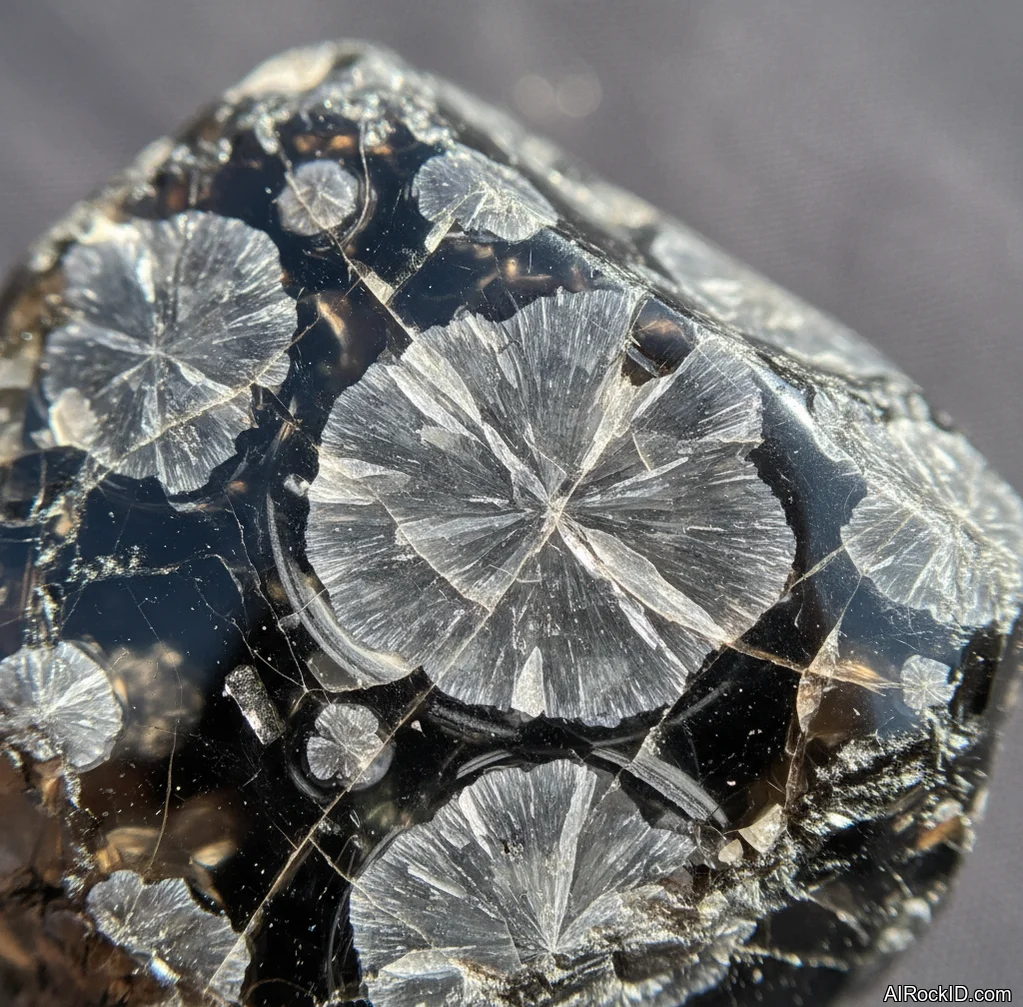
The “flower” bit shows up later, after parts of that glass start to devitrify. Tiny crystals, commonly cristobalite and feldspar microlites, begin growing in radiating clusters called spherulites. And if you stare at a cut face under decent light, you can catch how a bloom has a brighter center and softer edges, like it spread outward in little pulses as the lava body cooled and rearranged (slowly, then all at once). Kinda wild, right?
How to Identify Flower Obsidian
Color: Most pieces are black to very dark brown with gray to off-white “flowers” or rosettes scattered through the body. The blooms can be sparse or packed, and they’re usually roundish, not banded.
Luster: Vitreous, like polished glass.
Pick up a polished piece and let it sit for a minute. Real obsidian stays cool to the touch longer than plastic or resin fakes. And if you tilt it under a single overhead light, the glassy base should give a clean, sharp reflection while the flower patches look a bit softer and slightly sugary under the surface.
Properties of Flower Obsidian
Physical Properties
| Crystal System | Amorphous |
| Hardness (Mohs) | 5-5.5 (Medium (4-6)) |
| Density | 2.35-2.60 g/cm3 |
| Luster | Vitreous |
| Diaphaneity | Opaque |
| Fracture | Conchoidal |
| Streak | white |
| Magnetism | Non-magnetic |
| Colors | black, dark brown, gray, white, cream |
Chemical Properties
| Classification | Silicates |
| Formula | SiO2 (dominant; variable composition) |
| Elements | Si, O |
| Common Impurities | Fe, Mg, Ca, Na, K, Al, Ti, Mn |
Optical Properties
| Refractive Index | 1.48-1.51 |
| Birefringence | None |
| Pleochroism | None |
| Optical Character | Isotropic |
Flower Obsidian Health & Safety
It’s safe to handle, and it’s fine around water during normal use. Thing is, the main hazard isn’t the water at all, it’s the sharp edges on raw pieces or ones that were just chipped and still have those fresh, glassy bits.
Safety Tips
If you’re going to cut or grind it, handle it like you would glass. Put on eye protection, and don’t slack on the dust control, because that fine powder gets everywhere (and it’s nasty). For display, either take a minute to knock down the razor-sharp edges with a quick pass, or just keep the raw shards in a box so nobody ends up with a surprise cut.
Flower Obsidian Value & Price
Price Range
Rough/Tumbled: $5 - $60 per piece
Cut/Polished: $1 - $6 per carat
Price jumps around based on two things: how sharp the flower pattern looks after it’s been polished, and how clean the piece is from pits or little bruise marks. If you’ve handled a few slabs, you know what I mean. Some come off the wheel looking glassy with tight rosettes that stay crisp even when you tilt them under a shop light, and those big, clean pieces cost more. But if the material’s mixed or kind of blotchy, with the pattern going soft in spots, the price drops.
Durability
Moderate — Scratch resistance: Fair, Toughness: Fair
It’s chemically stable for normal wear, but it chips easier than most crystalline stones because it’s glass.
How to Care for Flower Obsidian
Use & Storage
Store it so it can’t rattle against harder stones. A little cloth pouch goes a long way because obsidian loves to pick up tiny edge chips.
Cleaning
1) Rinse with lukewarm water. 2) Use a mild soap and your fingers or a soft cloth to wipe oils off the polish. 3) Dry completely with a soft towel to avoid water spots on the glassy surface.
Cleanse & Charge
If you do energetic cleansing, smoke, sound, or a quick rinse works fine. I avoid salt soaks mostly because they leave crust in little pits and it’s annoying to scrub out.
Placement
Looks best where you get one strong light source, like a desk lamp, so the flowers pop when you turn it. Keep it out of windowsills if you don’t want the surface to get dusty and micro-scratched from constant handling.
Caution
Don’t just jam it in your pocket next to your keys or a chunk of quartz. And keep an eye on the corners of those polished towers, because that’s what smacks the tile first when it slips out of your hand.
Works Well With
Flower Obsidian Meaning & Healing Properties
Look at Flower Obsidian for a second and it’s pretty obvious why people grab it when their brain feels scrambled. It’s still obsidian at heart: grounded, blunt, no-nonsense. But then you get those pale rosettes in there, and they take the edge off. In my own stash, it’s the one I reach for when I want “steady” without that heavy, closed-in vibe pure black obsidian can put on the room.
Most dealers will bring up protection with any obsidian, and yeah, that’s the usual line. With Flower Obsidian though, I hear more talk about noticing your behavior patterns and cooling down those reactive emotions that spike fast. I’ve carried a palm stone on days when I had too many conversations stacked back-to-back and my patience was already thin. It doesn’t do magic. But it’s a solid, literal reminder in your pocket to pause, take a breath, and not fire off the first sharp comment that shows up.
But look, let’s keep it real. None of this replaces medical care, therapy, or medication. If you like it for meditation, the texture and weight honestly help in a very practical way. A polished piece has that slick-glass feel that almost wants to slide out of your fingers if you’re not paying attention (especially when your hands are warm), and the flower patterns give your eyes somewhere to land while you’re trying to settle your thoughts.
Identify Any Crystal Instantly
Snap a photo and get properties, value, care instructions, and healing meanings in seconds.