Green Dolomite
What Is Green Dolomite?
Green Dolomite is just dolomite, CaMg(CO3)2, but with a green tint.
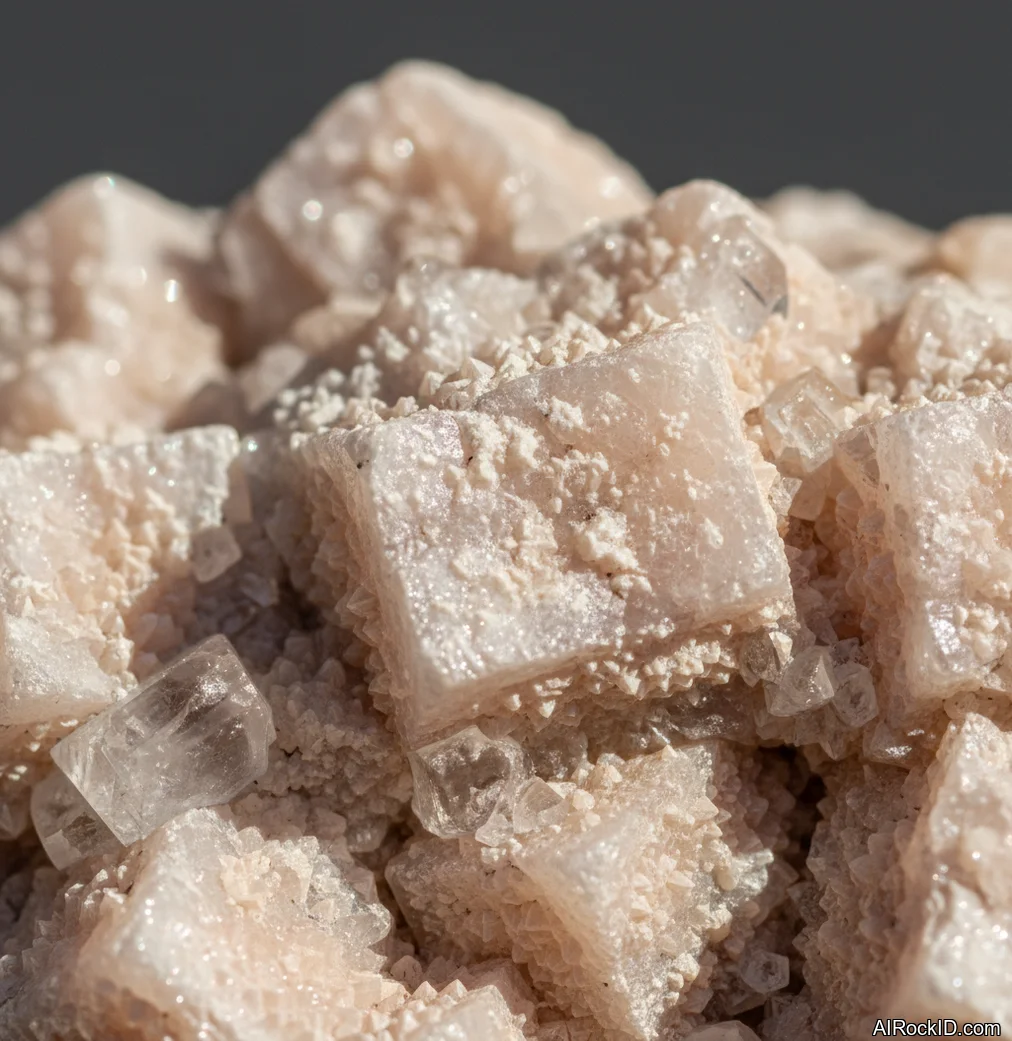
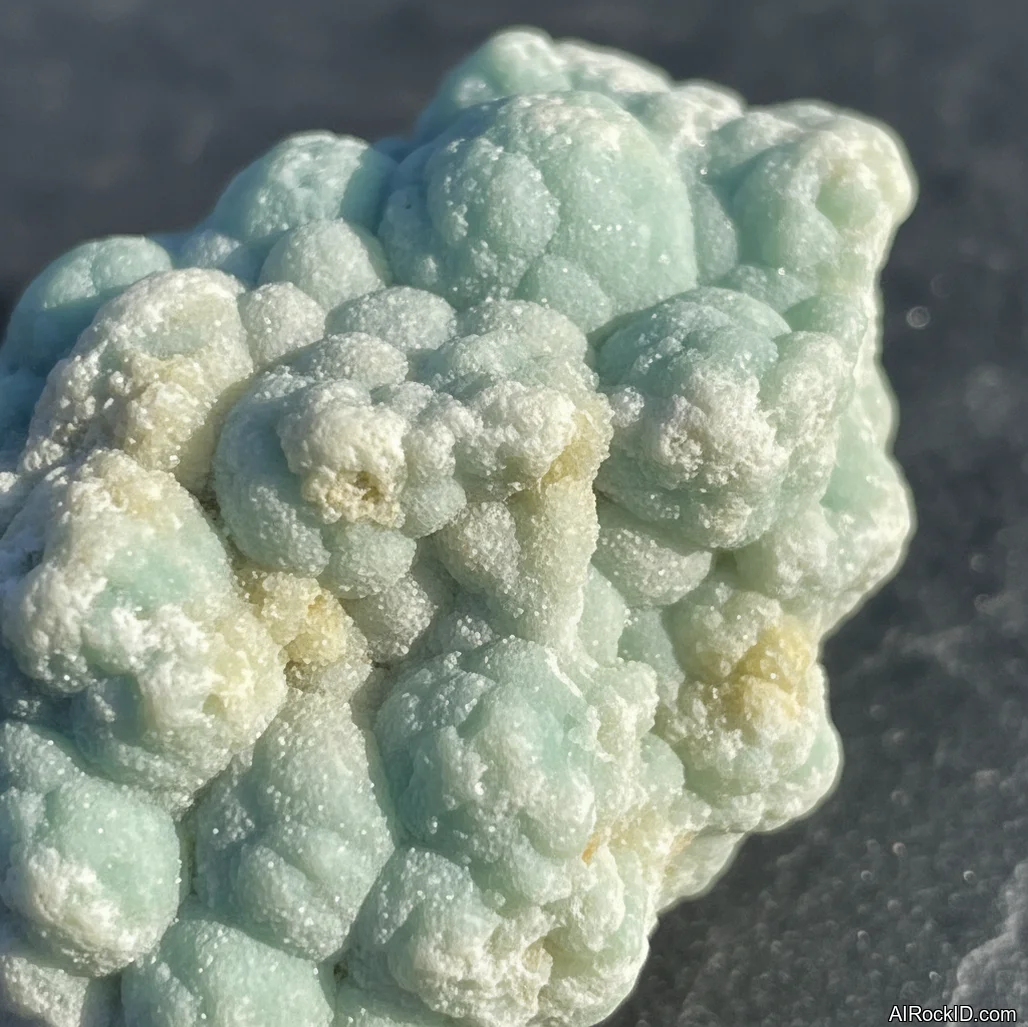
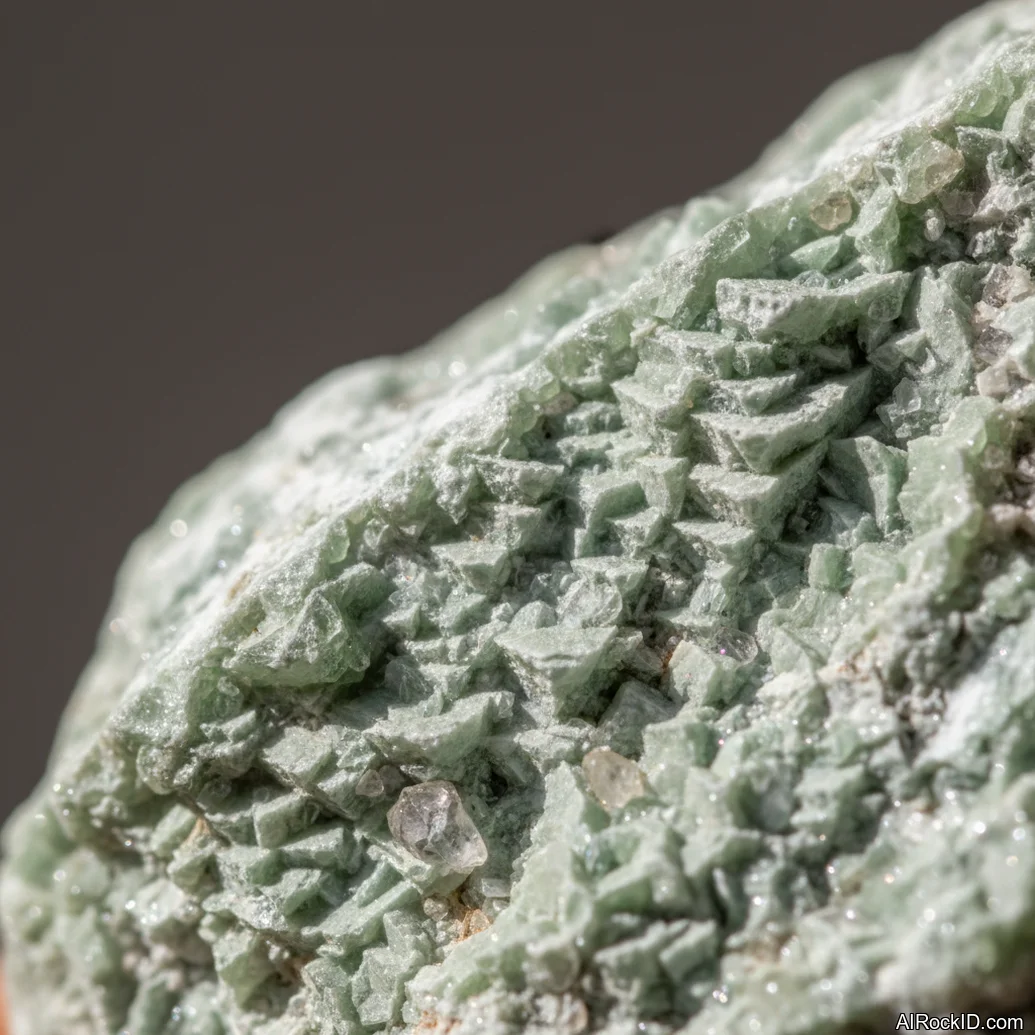
Grab a chunky piece and the first thing you clock is how it feels in your hand. It’s lighter than it looks, sure, but it still has that carbonate weight compared to the fluffy, almost fake-light feel you get from a lot of zeolites. The green itself is usually muted and a bit cloudy, more celery or pistachio than that deep, saturated “chrome” green people picture. And if you’ve got a drusy bit, the tiny faces will toss off quick pinprick flashes when you roll it under a desk lamp (you know, that little glitter that comes and goes as you change the angle).
Most of what’s sold is either a thin crust of tiny rhombs sitting on matrix, or a more massive, waxy-looking chunk that’s been cut into a palm stone. But here’s the annoying part: sellers will sometimes slap “green dolomite” on basically any pale green carbonate, even when it’s actually calcite or magnesite. Dolomite has its own feel and the way it behaves gives it away. Once you’ve handled a few pieces, you can usually spot the difference pretty fast.
Origin & History
Dolomite, the mineral species, got its formal description in 1791 from the French mineralogist Déodat Gratet de Dolomieu after he’d been working in the Alps. It’s named straight off his surname. And the name stuck, mostly because dolomite shows up all over the place and it matters a lot in carbonate rocks.
“Green dolomite” isn’t its own species name or anything official. It’s just what dealers and collectors call a color variety. That green tint? It usually comes from tiny trace impurities, most often iron, and sometimes manganese, and it can look totally different depending on the locality.
Where Is Green Dolomite Found?
Green dolomite shows up anywhere dolomite forms, but the prettier green material tends to come from hydrothermal pockets and ore districts where trace elements can tint the crystals.
Formation
Out in the field, dolomite usually shows up from a couple main processes. The big one is diagenesis: magnesium-rich fluids percolate through limestone and, slowly, calcite gets swapped out for dolomite. That’s the route to those thick dolostone packages you see on maps, the ones that tend to look kind of dull and chunky in hand sample, more massive than sparkly.
But the showy collector pieces are often a different story. They commonly come from hydrothermal veins, little cavities (vugs) in carbonate host rock, or ore districts where fluids keep moving through and dropping carbonates in stages. Dolomite in those settings likes forming rhombohedral crystals or a drusy crust that feels a bit “sugary” when you tilt it under a light. And that greenish tint? That can show up when iron or manganese is mixed in. If you really look, you’ll sometimes catch dolomite sitting right alongside fluorite, sphalerite, galena, or quartz, depending on the district.
How to Identify Green Dolomite
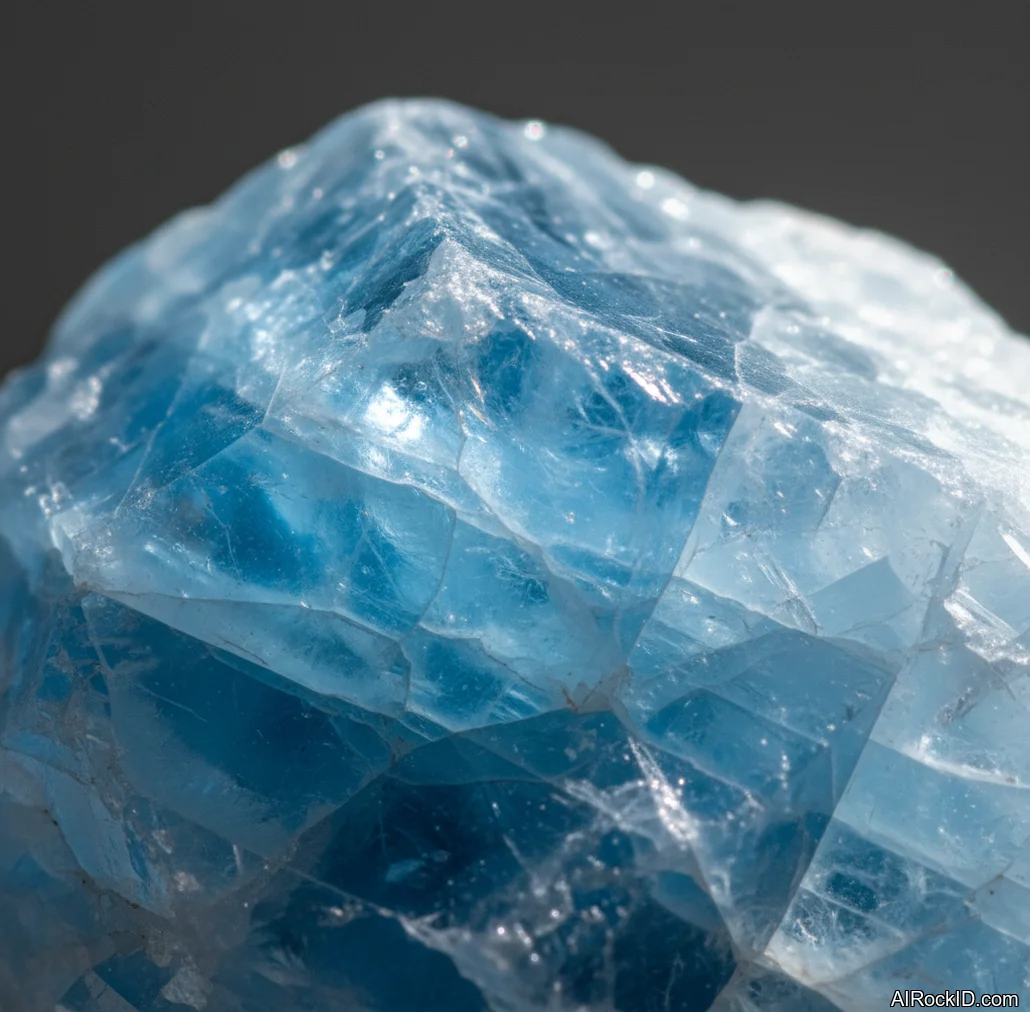
Color: Most green dolomite is pale mint to yellow-green, sometimes with a gray or brown cast from iron. The color is usually uneven, with lighter zones and slightly darker patches on crystal clusters.
Luster: Luster ranges from vitreous on clean crystal faces to pearly on cleavage surfaces and massive pieces.
If you scratch it with a copper penny, it’ll usually mark, but it won’t feel as buttery-soft as talc or gypsum. The real test is a drop of dilute acid: dolomite reacts weakly when cold, but it fizzes much more if the acid is warm or if you powder a tiny bit. And in hand, dolomite cleavage faces give a slightly pearly flash that reminds me of calcite, but the crystals are often more blocky-rhombohedral.
Properties of Green Dolomite
Physical Properties
| Crystal System | Trigonal |
| Hardness (Mohs) | 3.5-4 (Soft (2-4)) |
| Density | 2.85-2.90 g/cm3 |
| Luster | Vitreous |
| Diaphaneity | Transparent to translucent |
| Fracture | Uneven |
| Streak | White |
| Magnetism | Non-magnetic |
| Colors | Pale green, Mint green, Yellow-green, Gray-green, White |
Chemical Properties
| Classification | Carbonates |
| Formula | CaMg(CO3)2 |
| Elements | Ca, Mg, C, O |
| Common Impurities | Fe, Mn |
Optical Properties
| Refractive Index | 1.679-1.681 |
| Birefringence | 0.179 |
| Pleochroism | None |
| Optical Character | Uniaxial |
Green Dolomite Health & Safety
It’s safe to handle for normal collecting and display. But if you’re shaping it or sanding it, don’t breathe in the dust (it gets everywhere).
Safety Tips
If you’re going to cut it or even just polish it, keep some water running, put on eye protection, and don’t cheap out on the mask. You’ll want a proper respirator that’s actually rated for fine particulates.
Green Dolomite Value & Price
Price Range
Rough/Tumbled: $5 - $120 per specimen
Cut/Polished: $2 - $10 per carat
Prices jump when the crystals come in sharp and glassy, with that real green color you can spot the second you tilt it under a lamp, not that chalky off-white stuff. And the big cabinet specimens, the ones with crisp rhomb faces sitting on a contrasting matrix (you know, the kind that still has grit tucked into the corners), will run higher than the usual massive material that’s been carved up.
Durability
Nondurable — Scratch resistance: Fair, Toughness: Fair
It’s stable in normal room conditions, but it scratches easily and the cleavage means sharp knocks can chip corners.
How to Care for Green Dolomite
Use & Storage
Store it so harder stones don’t rub against it. I keep my dolomite clusters in little perky boxes or wrapped in tissue because the tiny crystals scuff fast.
Cleaning
1) Rinse briefly with lukewarm water. 2) Use a soft toothbrush and a drop of mild soap to lift grime from between crystals. 3) Pat dry and let it air-dry fully before putting it back in a box.
Cleanse & Charge
If you do the metaphysical side, smoke cleansing or sound works well and doesn’t risk scratching it. I skip salt bowls since gritty salt can leave little abrasion marks on softer carbonates.
Placement
Keep it away from spots where it’ll get bumped, like the edge of a desk. A shelf with steady light is fine, but I wouldn’t park it in direct sun just to avoid any long-term color shift in paler material.
Caution
Skip strong acids when you’re cleaning, and don’t toss it in an ultrasonic cleaner either. If you really have to do an acid test, pick a tiny spot nobody will ever see (like the underside or right along an edge), touch it there, then rinse it off immediately. Why risk leaving a mark?
Works Well With
Green Dolomite Meaning & Healing Properties
In most crystal shops, green dolomite gets filed under the gentle, heart-centered stuff. And yeah, I see it. That soft green looks calm right away, and the cluster pieces in particular have this quiet “okay, breathe” feeling when they’re sitting in your palm.
Grab a palm stone and you’ll notice it’s smooth, but not slick like glass. More of a satin finish, the kind you can rub with your thumb without it slipping away. That little detail matters if you’re the type who fidgets when stress hits. But look, dolomite is soft. Toss it in a pocket with keys or coins and it’ll come out with tiny scuffs and the shine won’t look as crisp.
If crystals are part of your personal practice, I’d use green dolomite like a support stone for slowing down, checking in with your body, and doing the boring-but-useful things, like journaling or a short meditation you actually finish. It’s not medicine. It won’t replace therapy or a doctor. So what’s it good for? A physical reminder in your hand that you’re trying to stay steady.
Identify Any Crystal Instantly
Snap a photo and get properties, value, care instructions, and healing meanings in seconds.