Heulandite
What Is Heulandite?
Heulandite is a monoclinic zeolite mineral, a hydrated calcium-aluminum silicate that commonly forms thin, tabular crystals lining cavities in volcanic rock.
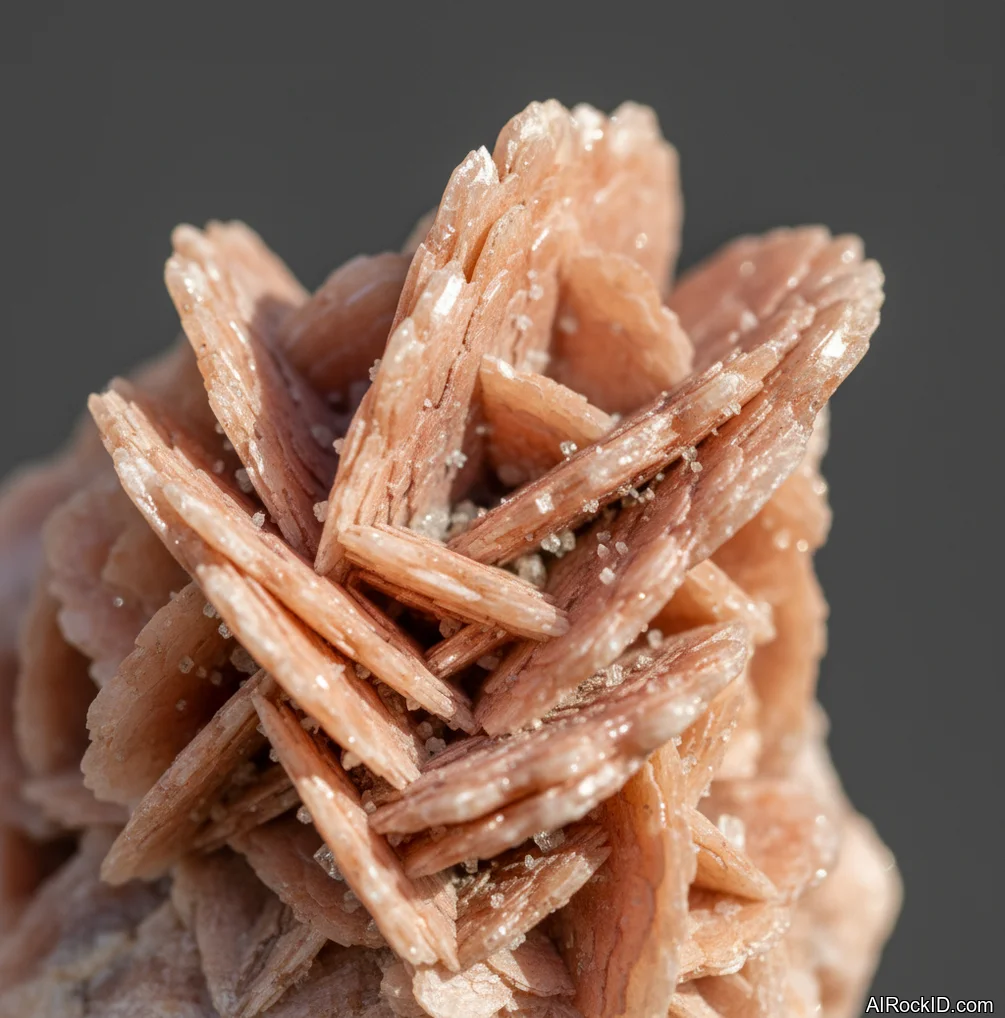
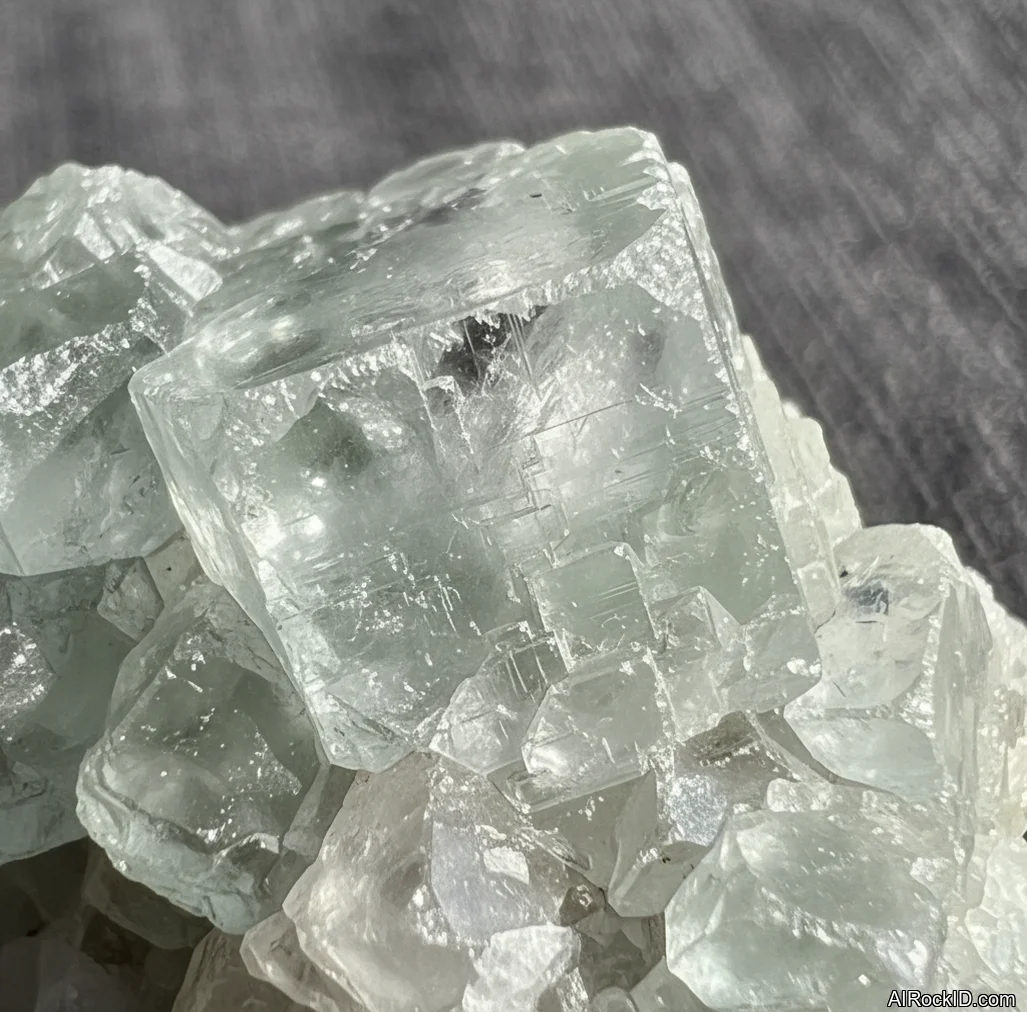
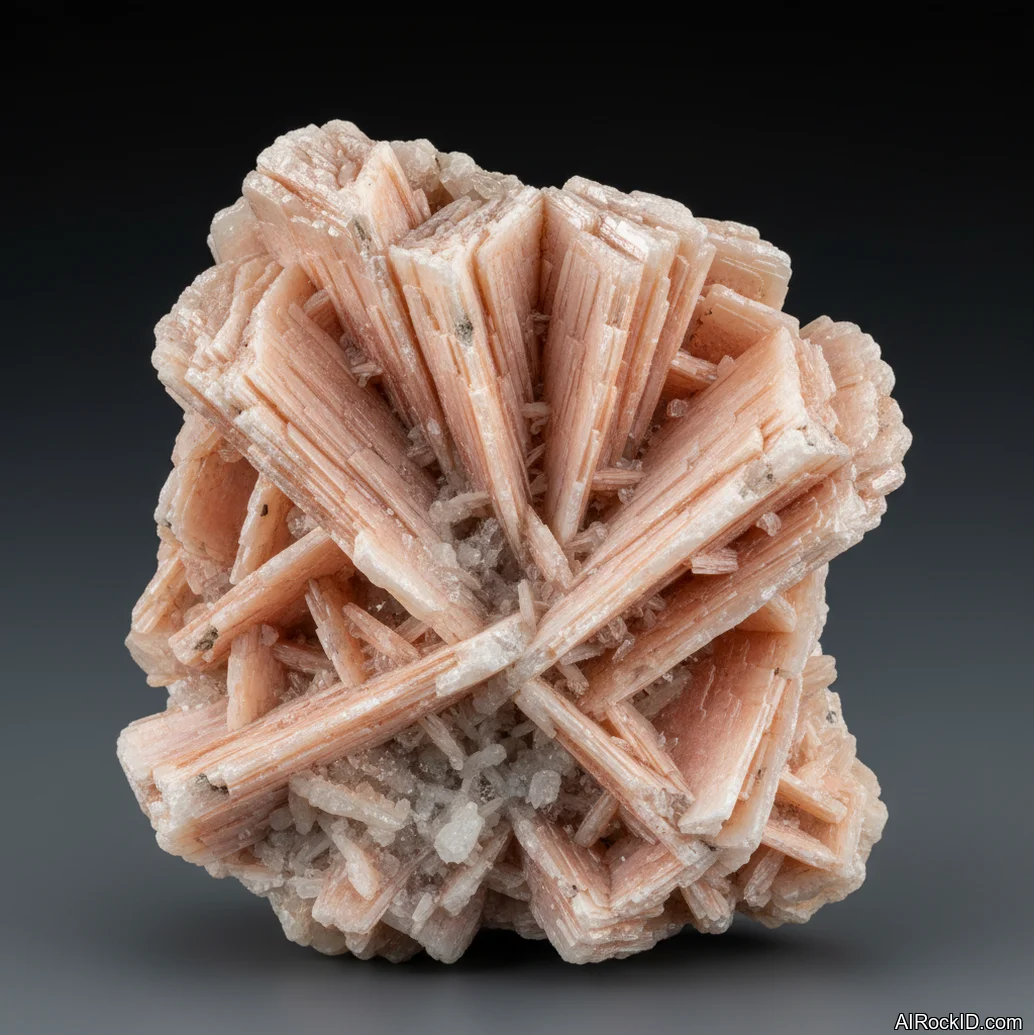
Pick up a hand specimen and you’ll notice it right away. It’s weirdly light for something that looks like it should have more heft. The crystals tend to be blade-like, sometimes a little wedgey, and the cleavage faces kick back this soft, pearly flash when you roll the piece under a lamp. In a flat, well-formed cluster, you can actually read the “book” structure, like tight little pages stacked together. And if you’re not careful? You’ll pop a corner off just from knocking it against another sample in a box (I’ve done it).
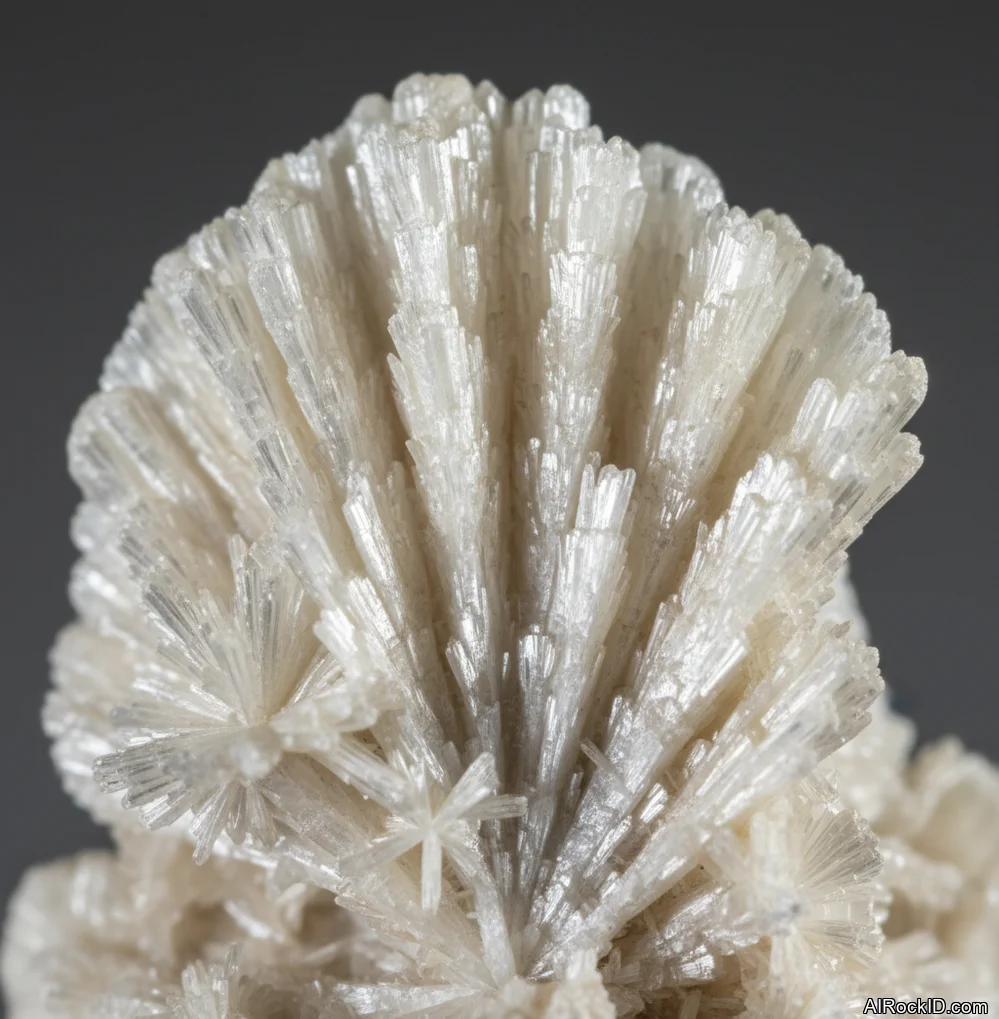
People mix it up with stilbite all the time at first glance, especially that peachy Indian material. But heulandite reads more “platy” and less sheaf-like than stilbite, and the luster on a clean cleavage plane can come off almost satiny when the light hits it right. Thing is, in the real world it’s a display mineral. You can carry one around, sure, but it’s not a pocket stone unless you don’t mind it shedding tiny chips.
Origin & History
In 1822, Henry James Brooke described heulandite and named it for John Henry Heuland, a British mineral dealer and collector who moved a ton of classic European material through his hands. You see that kind of thing all over older species names. The folks building the big cabinets and trading specimens ended up as the names on the labels.
Older books sometimes talked about heulandite like it was a single mineral with one locked-in chemistry. But it isn’t. It’s a series. So on modern labels you’ll often see the main cation called out, like heulandite-Ca or heulandite-Na. Most shop tags still just say “Heulandite,” though, because that’s what collectors recognize, and (let’s be real) it’s usually enough unless you’re doing serious zeolite ID work.
Where Is Heulandite Found?
Most of the heulandite you actually see for sale comes from India’s Deccan basalts, where it lines vesicles with other zeolites. Classic localities also include parts of the Alps, Icelandic basalt areas, and old trap rock sites in the northeastern USA.
Formation
Raw pieces pulled out of basalt pockets really do tell the whole story.
Heulandite shows up late in the game, after the lava’s already turned to rock. Hot, mineral-rich fluids thread their way through little cavities in the volcanic rock, and as those fluids cool and react with the host basalt, they start laying down zeolites. It’s basically the same “cavity wallpaper” setup you see with stilbite, apophyllite, scolecite, and friends, just with heulandite’s own crystal habit and chemistry.
Look, if you stare at a good Indian plate under decent light, you can usually read the layers like a cut face. First there’s that dark basalt rind, sometimes with a slightly greasy look where it broke. Then you’ll catch a thin dusting of drusy quartz or calcite, like fine sugar stuck to the surface. Then the heulandite blades sit on top of that. And sometimes there’s a little scatter of tiny green celadonite tucked into corners, or some peach stilbite wedged in the gaps (the kind you notice when you tilt it and it flashes).
The order matters. Heulandite generally shows up after the cavity has opened enough for fluids to actually circulate, not right at the moment the lava solidified. Why would it, if there’s nowhere for the fluid to move?
How to Identify Heulandite
Color: Heulandite ranges from colorless and white to cream, peach, salmon, tan, and occasionally pale greenish or reddish-brown. Color is usually soft and a little muted, especially compared to bright apophyllite.
Luster: Vitreous to pearly, with the pearly sheen strongest on cleavage faces.
Pick up a piece and tilt it slowly under a single overhead light. Those cleavage planes can flash pearly like mica, but the crystals still look chunky and mineral, not flaky like true micas. If you scratch it with a copper coin, you’ll often leave a mark, and a steel nail can bite it, which is a quick reality check if someone’s calling it “hard.” The problem with photos is they hide the cleavage. In hand, you can usually spot the platy habit and the way edges chip instead of bending.
Properties of Heulandite
Physical Properties
| Crystal System | Monoclinic |
| Hardness (Mohs) | 3.5-4 (Soft (2-4)) |
| Density | 2.10-2.20 g/cm3 |
| Luster | Pearly |
| Diaphaneity | Transparent to translucent |
| Fracture | Uneven |
| Streak | White |
| Magnetism | Non-magnetic |
| Colors | Colorless, White, Cream, Peach, Salmon, Tan, Reddish-brown, Pale green |
Chemical Properties
| Classification | Silicates (tectosilicate, zeolite) |
| Formula | CaAl2Si7O18·6H2O |
| Elements | Ca, Al, Si, O, H |
| Common Impurities | Na, K, Fe, Mg |
Optical Properties
| Refractive Index | 1.480-1.510 |
| Birefringence | 0.010-0.020 |
| Pleochroism | Weak |
| Optical Character | Biaxial |
Heulandite Health & Safety
Normal handling is pretty low risk. But don’t go grinding or sanding it unless you’ve got proper dust control in place, because that fine powder gets everywhere (you can feel it in your throat). Like most silicate minerals, the dust is an irritant.
Safety Tips
If you have to cut matrix, put on a respirator and keep the surface wet the whole time so the dust doesn’t get kicked up. It gets gritty fast. And when you’re done, wash your hands.
Heulandite Value & Price
Price Range
Rough/Tumbled: $10 - $250 per specimen
Prices jump around depending on the crystal size, whether the edges are still intact, and how clean the plate looks in hand. Those big, sharp Indian clusters with good luster and barely any damage go for way more than the crumbly little cavity fragments.
Durability
Nondurable — Scratch resistance: Fair, Toughness: Poor
Heulandite cleaves easily and can chip from small knocks, so it’s best treated as a shelf specimen, not a handled stone.
How to Care for Heulandite
Use & Storage
Store it in a box with padding or on a stable shelf where it won’t get bumped. If crystals are exposed, don’t let it rattle against harder pieces like quartz.
Cleaning
1) Blow off loose dust with a bulb blower or soft brush. 2) Rinse briefly with lukewarm water and a drop of mild soap if needed. 3) Pat dry and let it air-dry fully before putting it back in a closed container.
Cleanse & Charge
For a gentle reset, use smoke, sound, or a short sit on a dry selenite plate. Avoid salt piles, since gritty grains can scratch and wedge into cleavage steps.
Placement
Put it where side light can hit the cleavage faces, like near a lamp but not in direct sun. A dark matrix behind it makes the pearly flash easier to see.
Caution
Skip ultrasonic cleaners and harsh acids, and don’t go at it with a heavy scrub. Heulandite chips right along its cleavage, and the edges bruise fast. I’ve seen those corners go cloudy and scuffed after just a little too much pressure (it happens quick).
Works Well With
Heulandite Meaning & Healing Properties
Next to the loud, flashy stuff, heulandite feels almost quiet sitting in a room. I’ve had a plate on my desk before, and it’s the kind of mineral you catch yourself staring at between emails, tracing those tiny steps and sharp little angles until your brain drops down a gear. That’s basically how people talk about it metaphysically: more like a pause button for your mind, not some big, dramatic energy hit.
In the metaphysical shop world, most dealers connect heulandite with gentle dreamwork, memory, and reflection. People usually describe it as something that lands in your headspace, inward and mental, not really a body thing. But the catch is real: heulandite is soft and it cleaves, so if your practice includes carrying stones around, don’t pick this one. I’ve literally seen the corners get chewed up in a pocket after a single afternoon (you pull it out and there’s that fresh, dusty-looking chip right on the edge). Keep it as a sit-still stone. On a shelf. On a desk. Somewhere it won’t get knocked around.
And look, this is personal spiritual territory, not medicine. If the symbolism works for you, cool. If it doesn’t, it’s still a fantastic zeolite for learning crystal habits, cleavage, and basalt cavity formation, which honestly is half the fun of collecting in the first place.
Identify Any Crystal Instantly
Snap a photo and get properties, value, care instructions, and healing meanings in seconds.