Scolecite
What Is Scolecite?
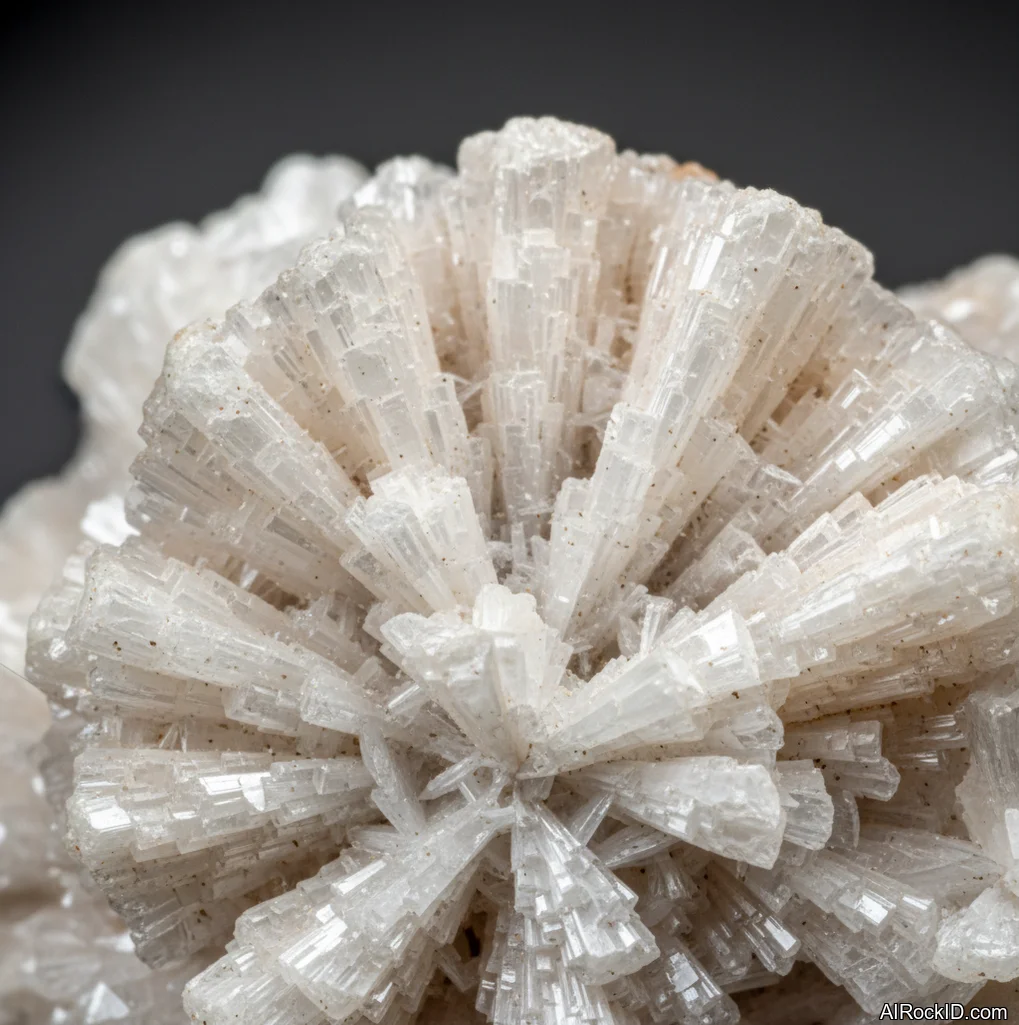
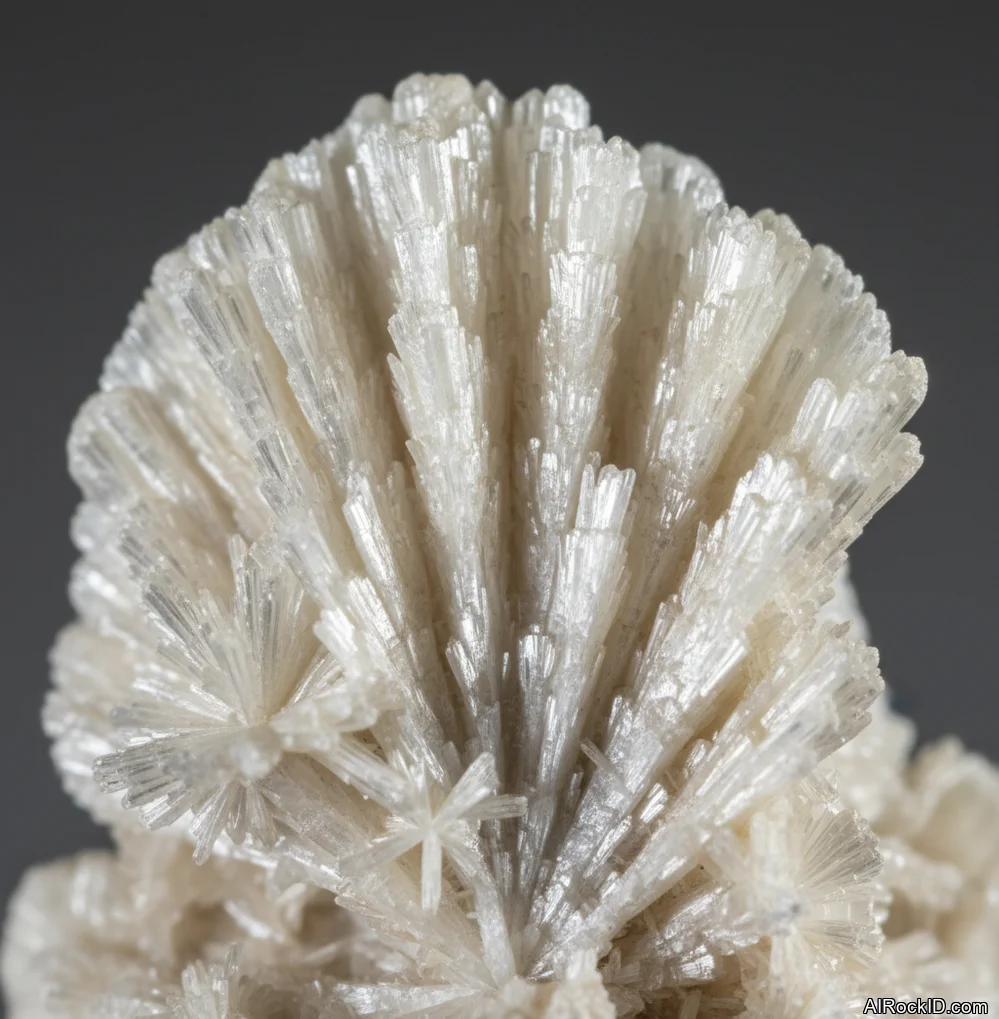
Scolecite is a calcium aluminum silicate zeolite mineral with the formula CaAl2Si3O10·3H2O, and it usually shows up as long, needle-thin crystals growing in volcanic cavities.
Grab a solid piece and, man, the weight is the first giveaway. It feels weirdly light for how big it looks. Most scolecite I’ve had in my hands runs snow-white to milky, with this soft, silky shine on the needles that almost looks fuzzy from a few feet away. Then you angle it under a lamp and the “fuzz” snaps into a bunch of tiny points. Pretty. Fragile, though.
Thing is, it’s one of those minerals that can look amazing in a photo and then show up in the mail as heartbreak in a bag. The needles can be hair-thin. One knock around in a box and that clean spray turns into a little drift of white splinters.
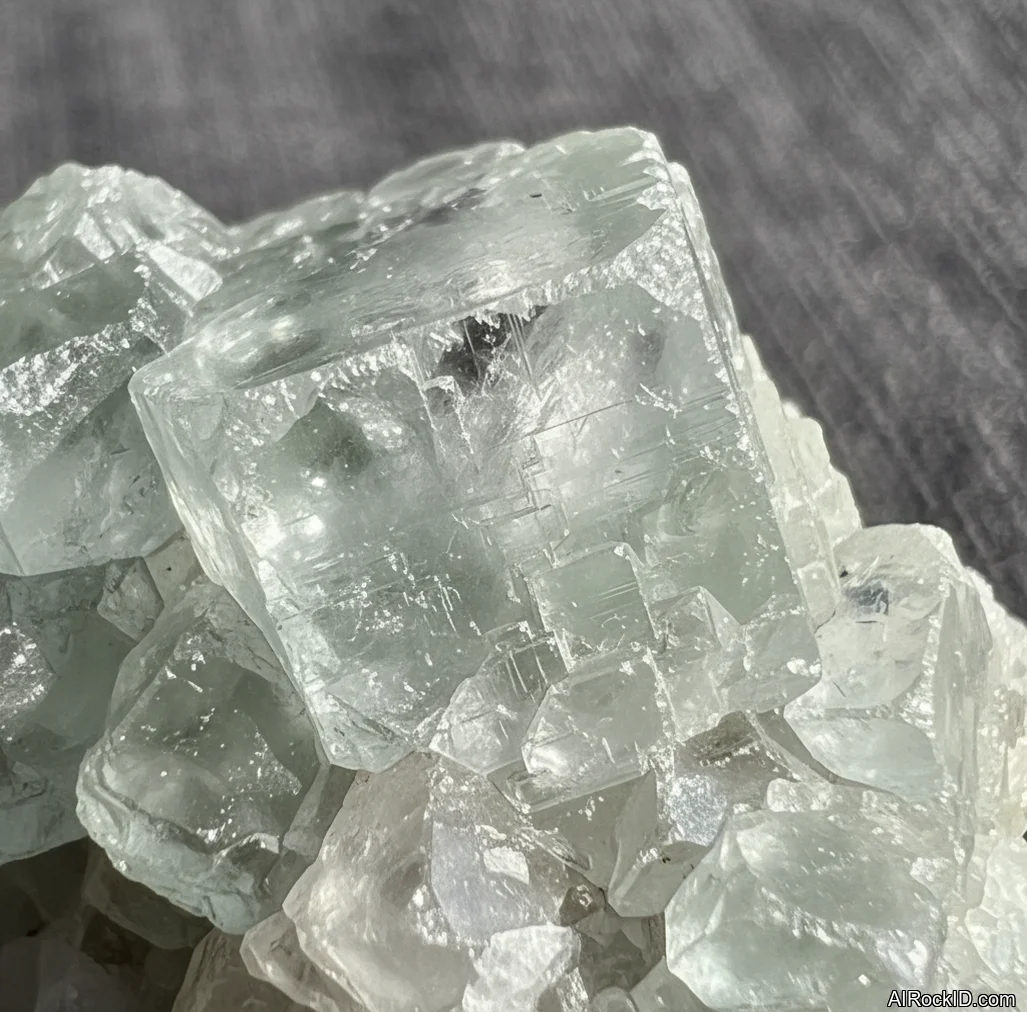
It also gets confused with natrolite or mesolite constantly. And yeah, I’ve watched dealers slap “scolecite” on anything white and needle-y because people recognize the name. But when you get the classic radiating sprays (you know the look), sometimes sitting with clear calcite or apophyllite nearby, that’s when it clicks. That combo just screams Deccan Traps material to me. And it’s absolutely the kind of specimen you end up babying on the shelf.
Origin & History
Scolecite’s official starting point is 1802, when the German mineralogist A.G. Werner described it. The name comes from the Greek “skolex,” meaning “worm,” since the mineral curls or writhes when you heat it in a flame. And no, that’s not some flowery metaphor. You can literally watch it happen.
I’ve done the quick heat test myself on tiny crumbs chipped off busted pieces (never a good specimen). It doesn’t just sit there like quartz. It can actually flex and twist as the water in its structure drives off. That little squirm is a classic zeolite tell, and it’s part of why the old mineral books bothered to point it out.
Where Is Scolecite Found?
Scolecite shows up in basalt cavities and hydrothermal zones worldwide, but the most common collector pieces on the market are from western India’s Deccan Traps.
Formation
Most scolecite shows up late in a basalt flow’s life, once the rock’s cooled enough to crack and leave those open little pockets behind. Groundwater works its way through the cracks, picks up calcium, aluminum, and silica, then drops zeolites out in layers as the chemistry shifts. You’ll spot it as sprays, fibrous clumps, or tiny radiating balls lining a vug (the kind you can feel with a fingertip when you run it along the pocket wall).
Look, if you stare at a mixed zeolite pocket long enough, you can usually read the order things formed in. I’ve got Indian pieces where chunky stilbite sits underneath, then there’s a crust of clear apophyllite, and the scolecite needles show up last, like a thin frost laid over everything. But it’s not always that tidy. Some pockets are just a snarl of intergrown needles, and you can’t tell where one mineral stops and the next starts without a loupe, or at least decent light hitting it at the right angle.
How to Identify Scolecite
Color: Most scolecite is white, off-white, or colorless, sometimes with a faint peach or gray tint from iron-stained matrix. It’s usually translucent in the needles and more opaque in thicker masses.
Luster: Silky to vitreous, especially on clean needle sprays.
Pick up the specimen and gently rock it under a single light source. Scolecite often gives a silky sheen that tracks along the needles, kind of like satin fabric. The real test is comparing it to natrolite or mesolite side-by-side because all three can look identical in photos. If you’ve got the tools, scolecite is typically biaxial and has slightly higher refractive indices than natrolite, but in the field most collectors go by habit, locality, and crystal habit.
Properties of Scolecite
Physical Properties
| Crystal System | Monoclinic |
| Hardness (Mohs) | 5-5.5 (Medium (4-6)) |
| Density | 2.16-2.40 |
| Luster | Silky |
| Diaphaneity | Transparent to translucent |
| Fracture | Uneven |
| Streak | White |
| Magnetism | Non-magnetic |
| Colors | White, Colorless, Off-white, Pale gray, Very pale peach |
Chemical Properties
| Classification | Silicates (tectosilicate, zeolite) |
| Formula | CaAl2Si3O10·3H2O |
| Elements | Ca, Al, Si, O, H |
| Common Impurities | Fe, Mg, Na, K |
Optical Properties
| Refractive Index | 1.507-1.521 |
| Birefringence | 0.014 |
| Pleochroism | None |
| Optical Character | Biaxial |
Scolecite Health & Safety
Normal handling is safe, and if it gets splashed or you rinse it quickly, that’s usually totally fine. Thing is, the real danger isn’t some chemical reaction. It’s you bumping it, dropping it, or snagging an edge and chipping the specimen.
Safety Tips
If you’re trimming matrix or doing any lapidary work, put on eye protection and stick to wet methods so the dust stays down. That grit gets everywhere, and it only takes one tiny chip to bounce up and ruin your day.
Scolecite Value & Price
Price Range
Rough/Tumbled: $10 - $250 per specimen
Price really comes down to how clean the piece is and how many of the needles are still intact, plus whether it’s sitting with apophyllite, stilbite, or tucked into a showy basalt vug. The big, undamaged sprays always run higher, mostly because they snap if you so much as look at them wrong when they’re being shipped.
Durability
Fragile — Scratch resistance: Fair, Toughness: Poor
Stable in normal indoor conditions, but the needle crystals chip and snap easily with handling or vibration.
How to Care for Scolecite
Use & Storage
Store it where it won’t rattle around. I keep scolecite in a padded flat or a stable display case because the needles hate being bumped.
Cleaning
1) Blow off loose dust with a bulb blower or canned air held back at a distance. 2) If needed, rinse quickly with cool water and a drop of mild soap, then swish gently. 3) Pat dry and let it air-dry fully before putting it back in a closed box.
Cleanse & Charge
For a metaphysical-style cleanse, stick to smoke, sound, or a quick pass under cool running water. Skip salt bowls since they can leave crusts in the needle clusters.
Placement
Put it somewhere calm, like a nightstand or a desk corner, where it won’t get brushed by sleeves. Soft light makes the silky luster look best.
Caution
Skip ultrasonic and steam cleaners. They’ll rattle the piece so hard the little spray prongs can loosen (and once one bends, it never quite lines up again). And don’t just drop it in your pocket or a bag next to harder stones either, because those sprays will snap.
Works Well With
Scolecite Meaning & Healing Properties
Most folks who pick up scolecite for metaphysical stuff are chasing that quiet, floaty headspace. That lines up with what I’ve felt, too. When I’m sorting a flat of zeolites late at night, scolecite is the one I leave out on the table because it comes off gentle and clean, not all buzzy like some high-sparkle quartz points.
But here’s the real limiter. A lot of what people swear they “feel” from scolecite depends on how they’re using it: low light, slow breathing, and actually sitting still for once. Put the exact same piece under bright kitchen LEDs while you’re hammering through emails and it’s just a pretty white spray. So I treat it more like a cue. It nudges me to downshift. That isn’t medical care, and it’s not a replacement for sleep hygiene, therapy, or anything like that.
Compared to selenite, scolecite feels less chalky and more airy in my hand, and it doesn’t have that instant slick wand thing going on. The needles stay cool even after you’ve been holding it for a while (which is kind of weird when you notice it), and that little sensory detail is a big part of why I think people link it with calming and meditation. Just don’t mix up “calming” with “fixing.” If you’re anxious, a mineral on the shelf can help a little, sure, but it’s not the solution.
Identify Any Crystal Instantly
Snap a photo and get properties, value, care instructions, and healing meanings in seconds.