Himalayan Quartz
What Is Himalayan Quartz?
“Himalayan Quartz” is basically a trade name for natural quartz crystals, silicon dioxide (SiO2), that are collected from the Himalayan region, most often Nepal and northern India.
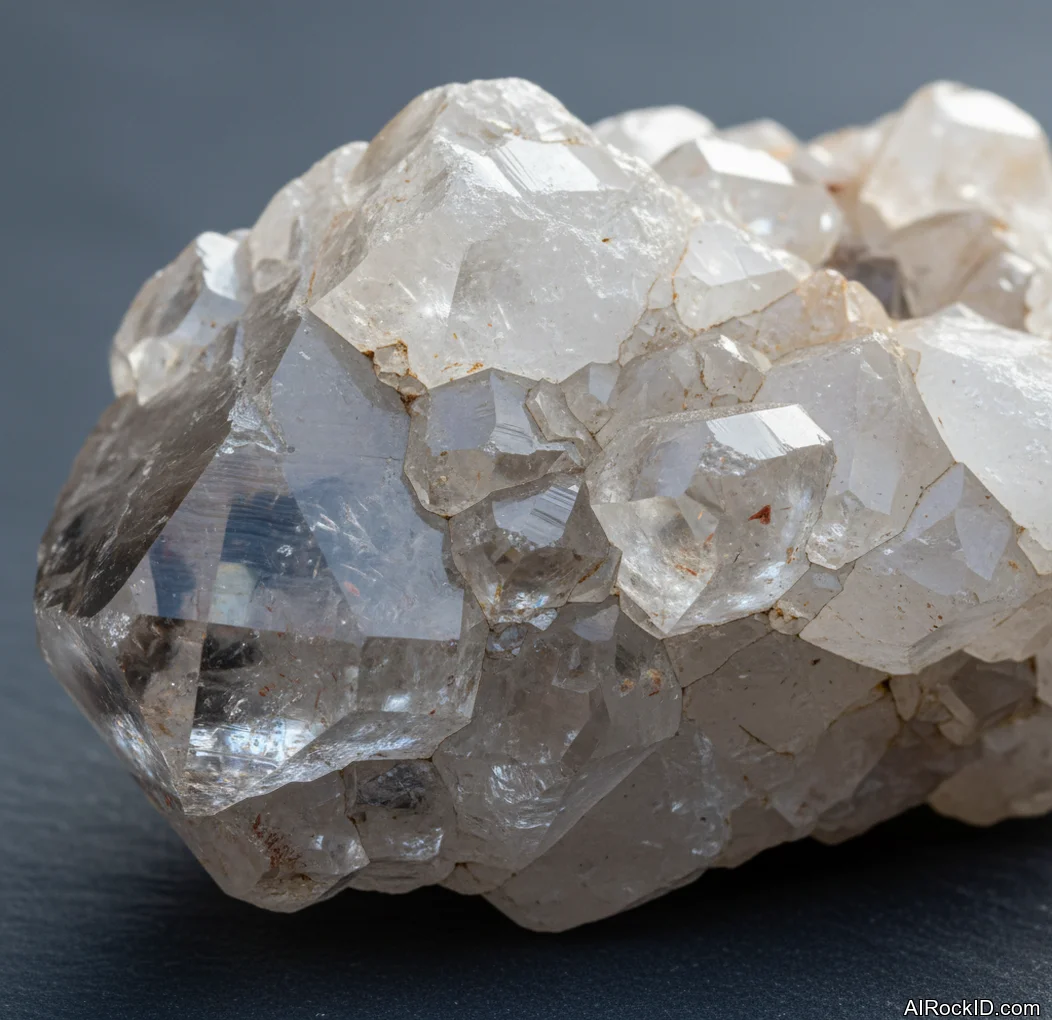
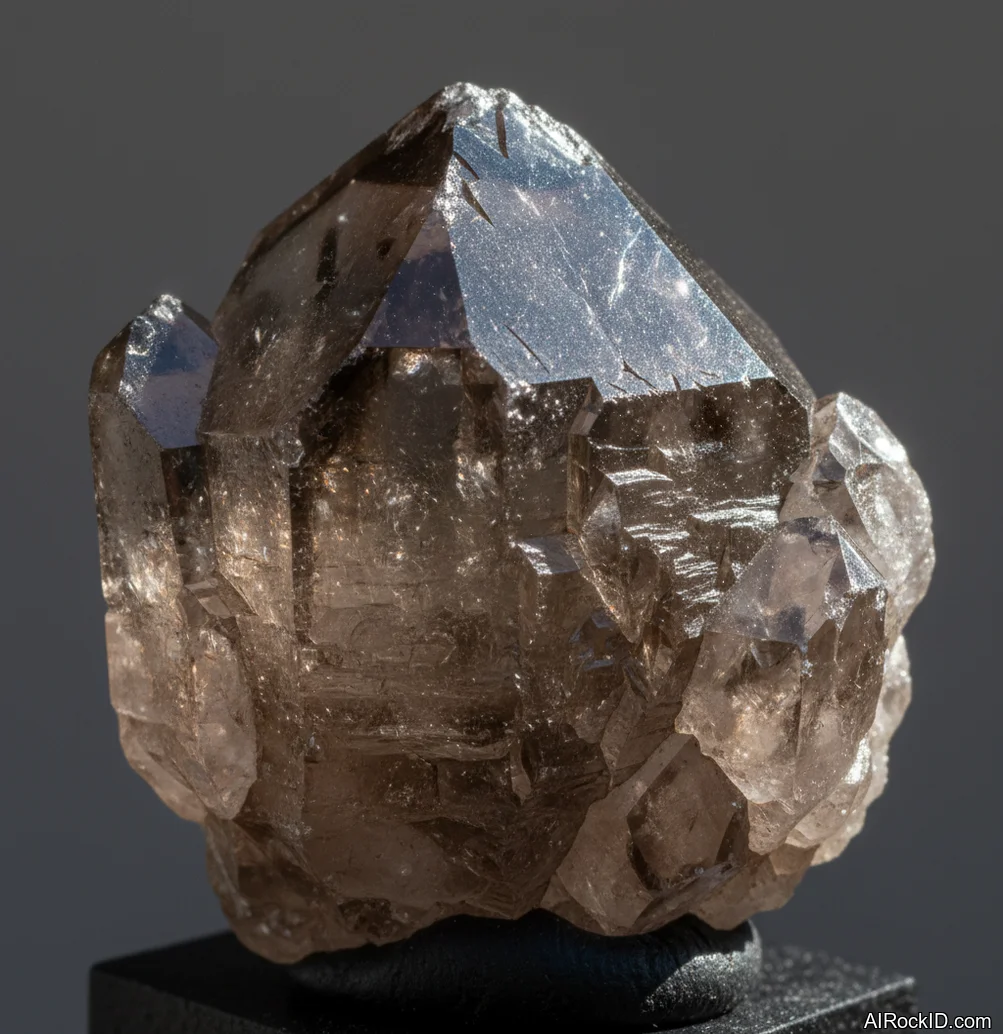
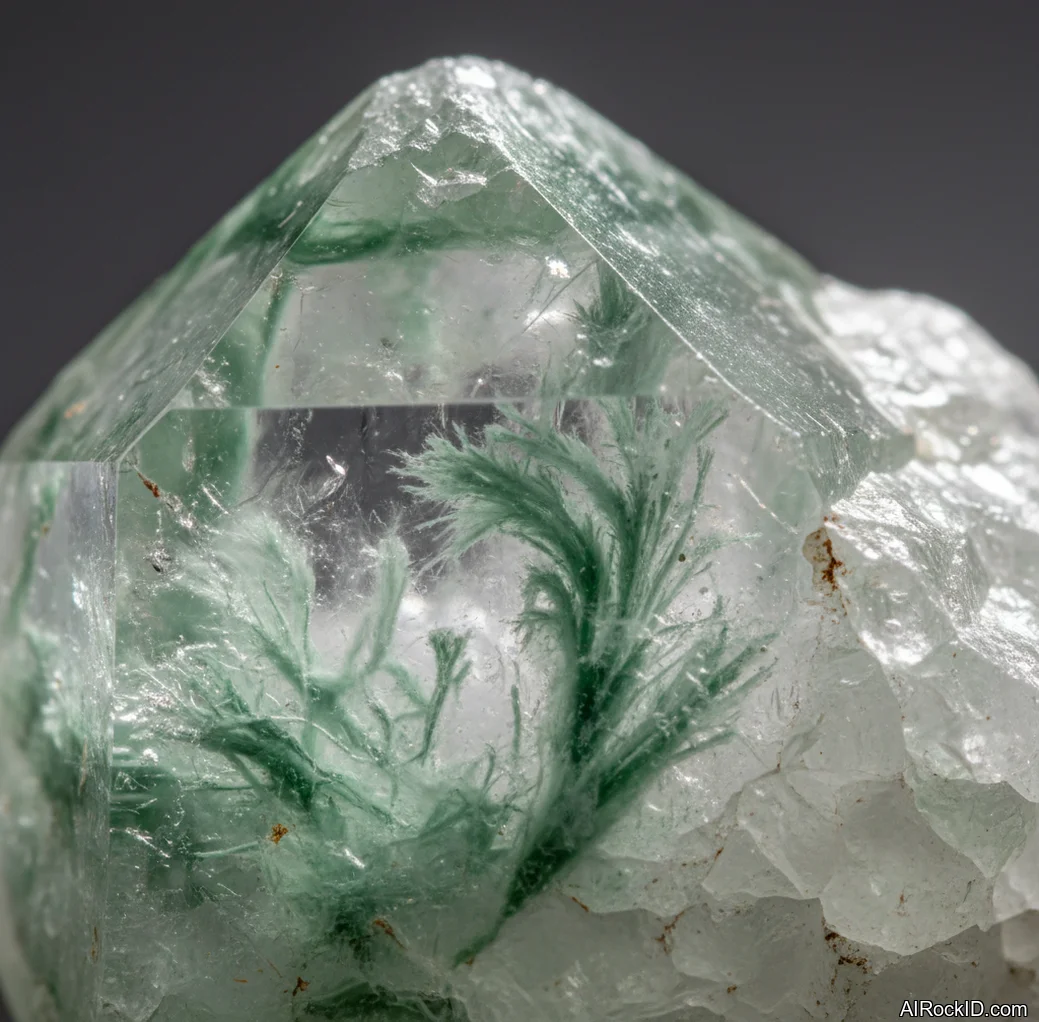
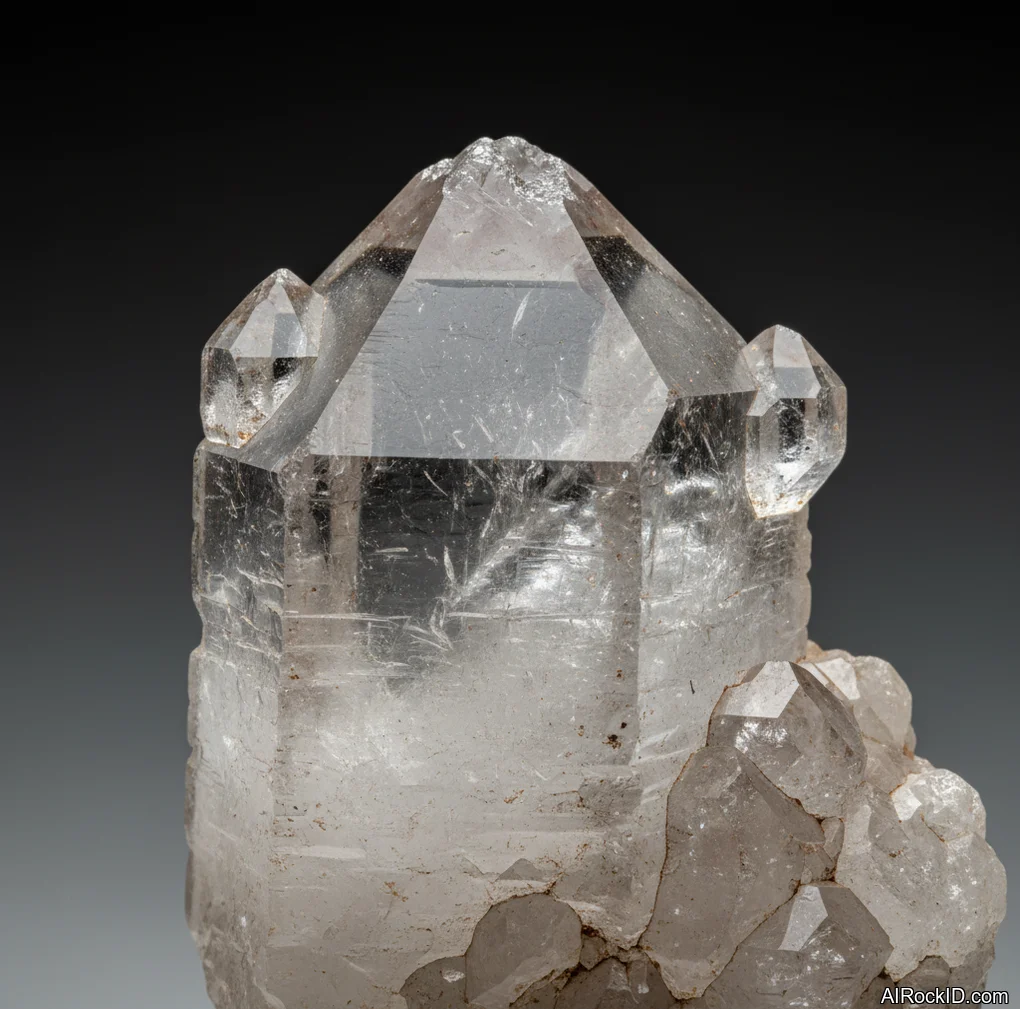
Pick up a decent point and you’ll clock a couple things fast. It hangs onto that cool feel longer than glass does, and the edges can feel weirdly sharp, like a fresh razor line, even when the crystal itself looks a little banged up. A lot of what gets sold as “Himalayan” has that familiar clear-to-milky body, with snowy phantoms, veils, or thin wisps caught inside. And if you tilt it under a lamp, you might see faint chlorite staining or tiny black inclusions that look like pepper sprinkled in there (you kind of have to catch them at the right angle).
But “Himalayan” isn’t its own mineral variety. It’s mostly a locality tag, plus a certain market vibe people recognize. The real stuff often shows up with dings, bruised tips, and natural etching from harsh growth conditions and rough transport, the kind that leaves little scuffs you can feel if you run a fingernail along the faces. And honestly, that’s the whole appeal for some people. Especially if you like natural points, not perfectly polished towers.
Origin & History
Quartz itself has been written up since the earliest days of mineralogy. But “Himalayan Quartz”? That’s basically a newer trade label, not some official geological term you’ll find pinned down in a textbook.
The word quartz comes from the German “Quarz,” a term miners used around central Europe, and scientists later pulled it into formal naming. Pretty straightforward.
So the crystals tied to the Himalayan region started showing up a lot more in Western mineral and metaphysical shops in the late 20th century, once Nepal and India got better connected to export markets. You’d see the little paper tags tucked under them in display trays (sometimes half curled from the lamp heat), and suddenly “Himalayan” was on everyone’s lips.
Most dealers don’t point to a single “first description” for Himalayan Quartz, because it isn’t a separate mineral. Thing is, provenance is the whole point. A label that says “Ganesh Himal, Nepal” changes the conversation and the price fast. Why? Because that location line is what people are really buying.
Where Is Himalayan Quartz Found?
Most Himalayan Quartz on the market is said to come from Nepal and northern India, with some material also attributed to nearby high-mountain regions across the range.
Formation
Way up in mountain belts, quartz usually grows in cracks and pockets where hot, silica-rich fluids can snake through the rock, then cool off nice and slow. In the Himalayas, it’s a mash-up of metamorphic ground and granitic intrusions, so you end up with veins and little open pockets where quartz actually has space to build points, clusters, and sometimes those platey chunks of intergrown crystals.
Look at the crystal faces up close and you’ll often spot natural etching, tiny growth steps, and that faint frosting that doesn’t look like it ever saw a tumbler. The texture’s a bit rough, and that tracks for crystals that formed in stressed rock, then got jostled on the way out of steep, high-elevation workings. And yeah, a lot of pieces show minor bruising right at the termination. Totally normal. Perfect tips are out there, but you’ll pay for them.
How to Identify Himalayan Quartz
Color: Usually colorless to white (clear to milky), sometimes with faint smoky tones, chlorite-green staining, or dark needle and speck inclusions.
Luster: Vitreous luster on clean faces, turning slightly dull or frosty where naturally etched.
If you scratch it with a steel nail, it won’t bite, but it will scratch a plain glass bottle easily. The real test is feel and edges: quartz feels hard and “glassy-cool,” and broken chips show curved, shell-like conchoidal fracture instead of a flat cleavage plane. Cheap versions are often just generic clear quartz re-labeled, so ask for a specific locality and look for natural wear patterns rather than perfect, factory-clean surfaces.
Properties of Himalayan Quartz
Physical Properties
| Crystal System | Trigonal |
| Hardness (Mohs) | 7 (Hard (6-7.5)) |
| Density | 2.65 g/cm3 |
| Luster | Vitreous |
| Diaphaneity | Transparent to translucent |
| Fracture | Conchoidal |
| Streak | white |
| Magnetism | Non-magnetic |
| Colors | colorless, white, milky white, very pale smoky gray, green (chlorite staining), black (inclusions) |
Chemical Properties
| Classification | Silicates |
| Formula | SiO2 |
| Elements | Si, O |
| Common Impurities | Fe, Al, Ti, Li, Na, K, Cl |
Optical Properties
| Refractive Index | 1.544-1.553 |
| Birefringence | 0.009 |
| Pleochroism | None |
| Optical Character | Uniaxial |
Himalayan Quartz Health & Safety
Himalayan Quartz is non-toxic, so it’s safe to pick up and handle (it just feels like a hard, glassy chunk in your hand). But don’t grind or cut it unless you’ve got the right protection, because that’s how you end up with dust. And silica dust is a lung hazard, so the goal is simple: don’t make dust in the first place.
Safety Tips
If you have to cut or drill quartz, do it wet so the dust stays down, and put on a real respirator rated for fine particulate. Quartz dust gets everywhere, too, like that gritty film you’ll still feel on your fingers after you think you’ve cleaned up.
Himalayan Quartz Value & Price
Price Range
Rough/Tumbled: $10 - $250 per piece
Cut/Polished: $2 - $20 per carat
Prices jump when the locality’s actually verified, the terminations are clean, and the inclusions look good, like little green chlorite dusting or those razor-sharp internal phantoms you can catch when you tilt it under a lamp. Big clusters are where the money usually goes. But don’t assume the small stuff is cheap. A single point can still cost a lot if it’s clean, well-formed, and doesn’t have those annoying chips right on the tip (you know the ones).
Durability
Very Durable — Scratch resistance: Excellent, Toughness: Good
Quartz is stable in normal home conditions, but it can chip on sharp edges and bruised tips show up fast if you toss it in a box with other minerals.
How to Care for Himalayan Quartz
Use & Storage
Store points so the tips can’t knock into harder stuff like corundum or even other quartz points. I like a little wrap or a compartment box because terminations bruise easier than people expect.
Cleaning
1) Rinse under lukewarm water to remove grit from etched faces. 2) Use a soft toothbrush with a drop of mild dish soap for crevices, then rinse well. 3) Pat dry and let it air-dry fully before putting it back on a shelf.
Cleanse & Charge
If you do energetic cleansing, smoke, sound, or a quick rinse works fine for quartz. Avoid long salt soaks if the piece has lots of fractures, since salt can crust into tiny cracks.
Placement
A windowsill looks great for sparkle, but direct sun can make internal haze stand out and can fade any smoky tint over time. On a desk, set it on a little ring stand so it doesn’t roll and chip.
Caution
Don’t hit included or coated pieces with harsh acids or bleach. Just don’t. And if a point’s already cracked, skip the ultrasonic cleaner too, because that buzzing can push water into the fracture and make it worse. If someone’s selling a “Himalayan” crystal but it looks like it came straight off a factory polishing wheel, glassy smooth, no natural scuffs or edge wear at all, assume you’re paying for the label, not the origin.
Works Well With
Himalayan Quartz Meaning & Healing Properties
Compared to a lot of named quartz types, Himalayan Quartz gets a lot of its pull from the place it’s supposed to come from. Crystal people talk about it like a “clean signal” stone, basically clear quartz but with extra meaning layered on because it’s tied to high mountain terrain and remote collecting. I can’t back medical claims, and I’m not going to pretend I can. But I’ve seen plenty of customers grab a slightly beat-up Himalayan point, the kind with a chipped tip and a little dusty grit stuck in a crease, over a flawless, lab-clean tower because the rough, natural look feels more honest to them.
Hold a cluster in your hand and you’ll see why it ends up in meditation setups. Light skips across all those tiny faces, and your eye keeps snagging on new little windows, then a cloudy veil, then another sharp edge you didn’t notice a second ago. For some folks, that’s the whole point. Something to stare at that isn’t a screen. And if you’re the type who likes a ritual, quartz is forgiving. It doesn’t crumble, it doesn’t stink in water, and it won’t make you treat it like glass.
But there’s a headache with the market. “Himalayan” gets slapped on plain clear quartz all the time, and the story can drift (or flat-out change) as the crystal moves from hand to hand. If you’re buying it for metaphysical reasons, maybe that doesn’t matter. If you’re buying it because you actually care about place and provenance, it matters a lot. I always tell friends: pay for the crystal in front of you first, then pay extra only if the locality info is specific and believable. Who wants to spend more money on a vague story?
Identify Any Crystal Instantly
Snap a photo and get properties, value, care instructions, and healing meanings in seconds.