Honey Calcite
What Is Honey Calcite?
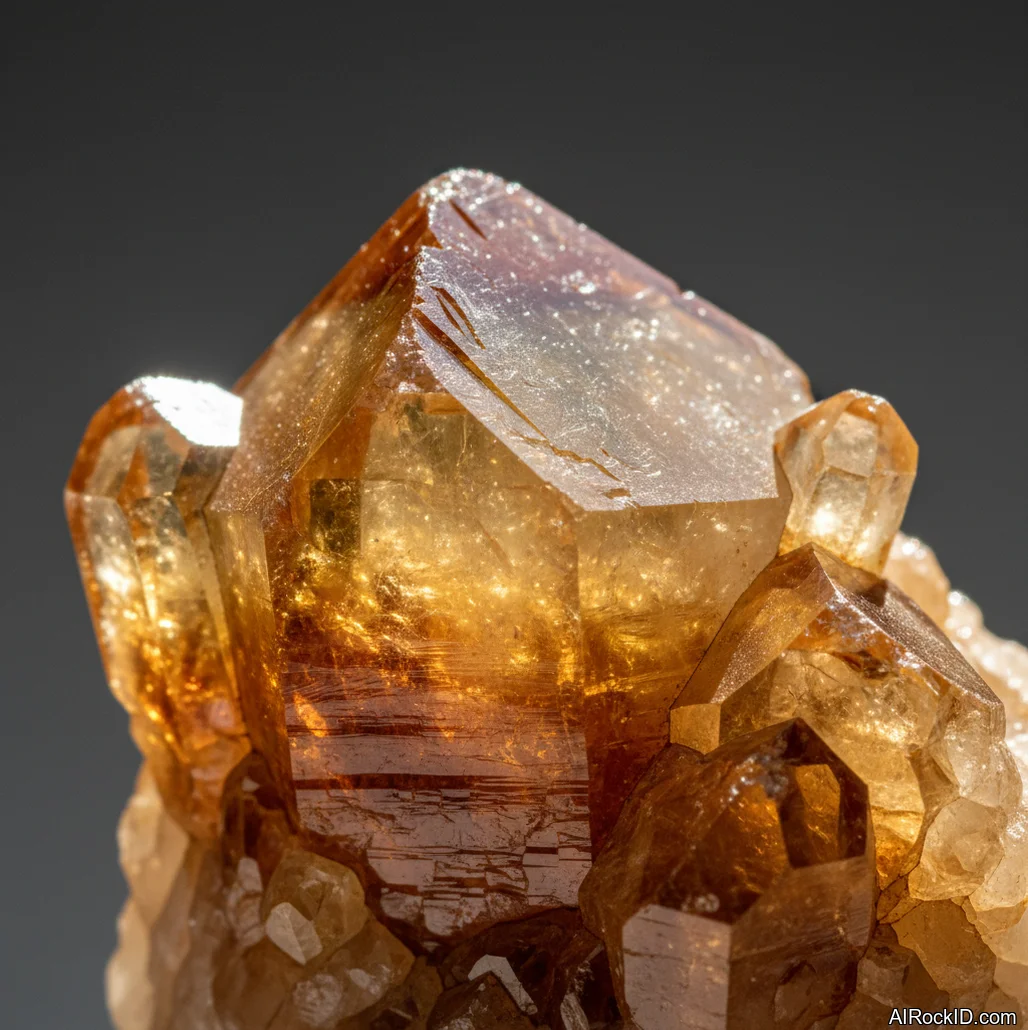
Honey Calcite is the yellow to amber kind of calcite (calcium carbonate), and it gets that color from impurities plus the way it grew. Grab a chunk and you’ll clock it fast. It’s a bit heavier than you’d expect for something that looks like hardened honey, and it keeps that cool-to-the-touch feel in your hand for a moment.
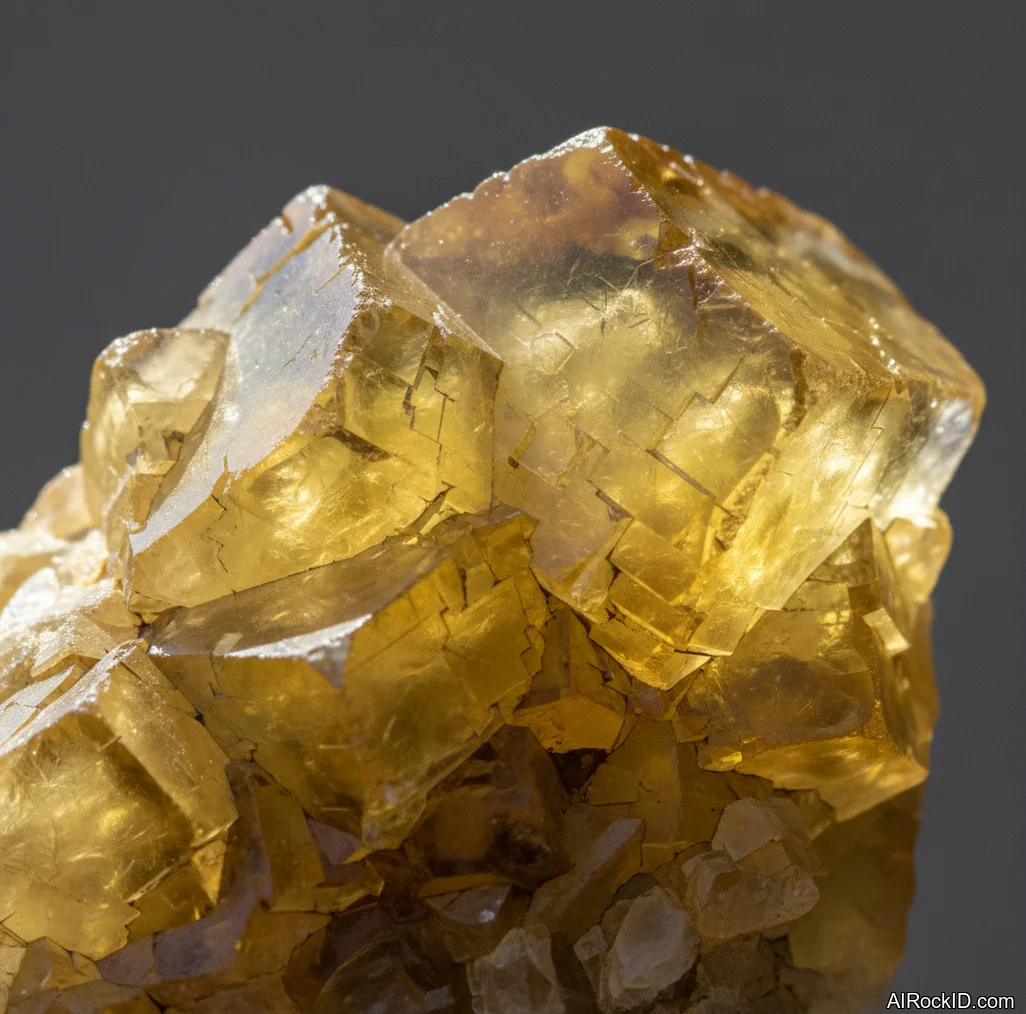
In photos, it can pass for citrine. But in real life? Totally different. Honey calcite has this soft, waxy glow around the edges when you backlight it, and the flat cleavage faces kick off little flashes when you tilt it under a shop light (the kind that makes everything sparkle a little too much). Those faces don’t fake it. You can see the rhombohedral break, and the angles repeat like the stone’s working off some strict template.
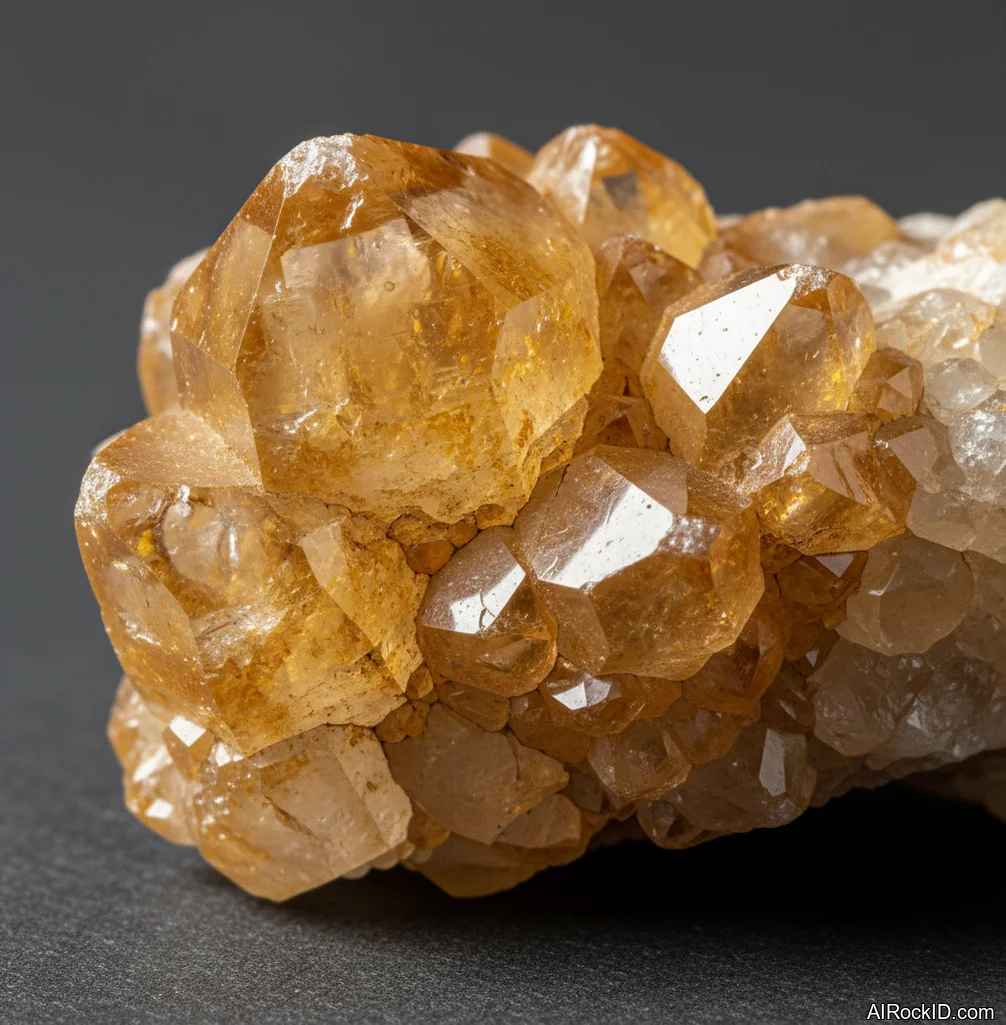
Most pieces you’ll run into are tumbled stones, polished freeforms, or chunky raw bits that still show a couple decent cleavage planes. Clean, naturally formed calcite crystals do exist, but the honey color shows up less often than the usual clear or white material. Thing is, honey calcite bruises easily. So a truly “perfect” piece usually costs more than you’d guess for such a common mineral.
Origin & History
Calcite got its official write-up as a mineral species in 1845, thanks to Wilhelm von Haidinger. The name traces back to the Latin “calx,” which just means lime. And “honey calcite”? That isn’t a separate species at all. It’s a trade label collectors and shops slap on yellow to golden calcite.
Calcite’s been tangled up with science for ages. Iceland spar, that insanely clear variety, was a big deal for early work on double refraction, because if you peer through a good crystal the text underneath literally looks doubled. Honey calcite usually doesn’t show up that optically perfect, but it’s still the same mineral underneath, just wearing those warmer colors.
Where Is Honey Calcite Found?
Honey-colored calcite shows up anywhere calcite forms, but a lot of the shop-grade material comes from Mexico and Brazil, with other batches turning up from Peru, India, Pakistan, and Madagascar.
Formation
Look at where calcite actually shows up and it’s the same story over and over: carbon-rich water sneaks through cracks, caves, or hot rock, then it dumps calcium carbonate once something shifts. Could be temperature. Could be pressure. CO2 levels change. Or the water just evaporates in a cave and leaves the mineral behind.
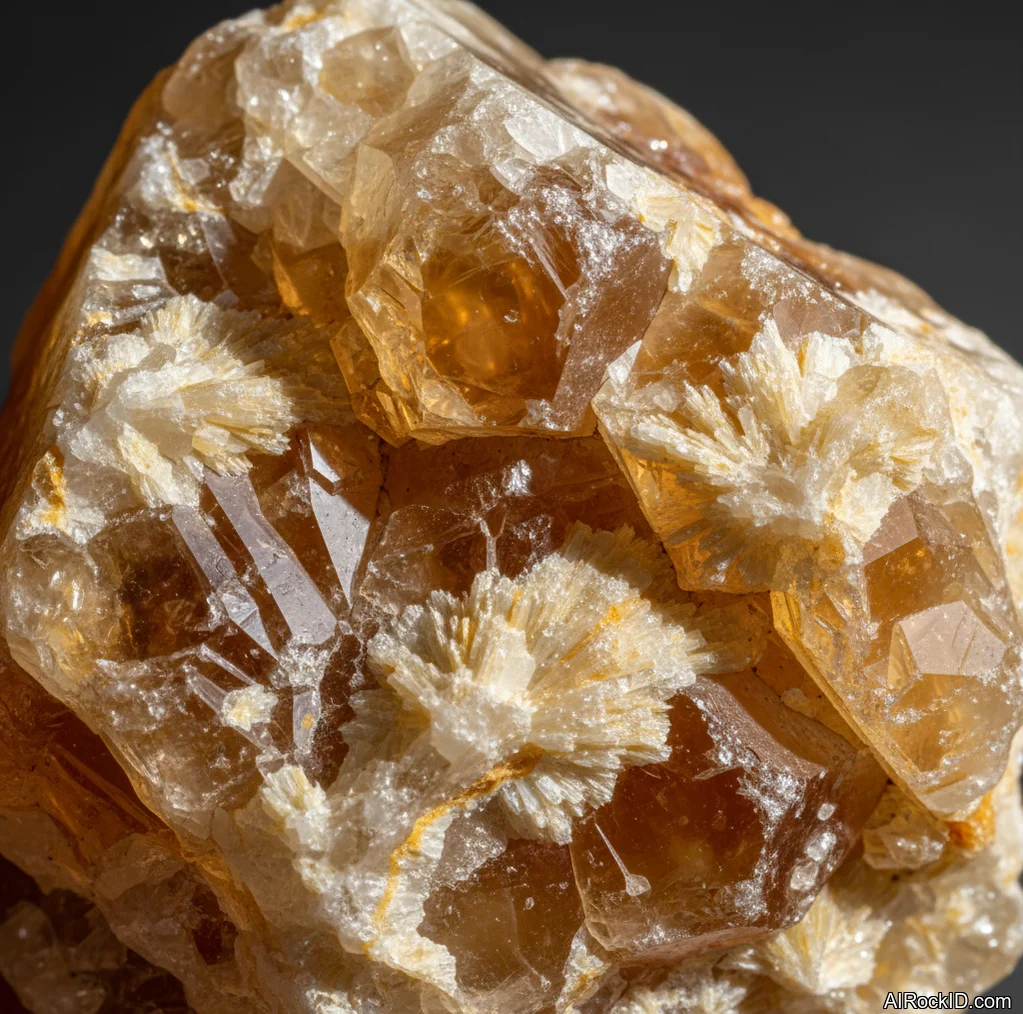
That honey color usually comes from tiny bits of iron or organic staining getting caught in the crystal as it grows. I’ve held honey calcite in the field and at shows that formed as chunky vein fill, the kind that feels a little waxy when you rub it with your thumb, and I’ve also seen banded pieces where the color slides from pale butter yellow to deeper amber in layers you can trace with your fingernail. But don’t treat it like quartz. Calcite has cleavage, so it breaks along flat planes, and even if it grew as a clean block, it’ll still want to split like a deck of cards the moment it takes a sharp hit.
How to Identify Honey Calcite
Color: Honey Calcite ranges from pale yellow to warm amber, sometimes with brownish zoning or creamy white patches. The color often looks deeper at the center and lighter at thin edges.
Luster: Vitreous on fresh faces, often pearly on cleavage surfaces.
If you scratch it with a copper penny, it’ll usually mark pretty easily since calcite is Mohs 3. The real test is cleavage: break edges and flat planes show up fast, and they tend to meet in that classic rhomb shape. And if you’ve got a 10x loupe, check for tiny step-like cleavage terraces instead of the glassy, shell-like breaks you’d expect from quartz.
Properties of Honey Calcite
Physical Properties
| Crystal System | Trigonal |
| Hardness (Mohs) | 3 (Soft (2-4)) |
| Density | 2.71 g/cm3 |
| Luster | Vitreous |
| Diaphaneity | Transparent to translucent |
| Fracture | Uneven |
| Streak | White |
| Magnetism | Non-magnetic |
| Colors | Honey yellow, Golden yellow, Amber, Pale yellow, Yellow-brown, Cream |
Chemical Properties
| Classification | Carbonates |
| Formula | CaCO3 |
| Elements | Ca, C, O |
| Common Impurities | Fe, Mn, Mg |
Optical Properties
| Refractive Index | 1.486-1.658 |
| Birefringence | 0.172 |
| Pleochroism | None |
| Optical Character | Uniaxial |
Honey Calcite Health & Safety
Honey Calcite isn’t toxic, and it’s fine to handle with bare hands. The real issue isn’t your skin or anything like that, it’s the stone itself. Knock it against a countertop edge or drop it on tile and you’ll hear that sharp little click, then notice a fresh chip or scratch (usually right along a corner). That’s the main risk here: damaging the calcite, not hurting you.
Safety Tips
If you’re cutting or grinding it, handle it like any other lapidary job. Calcite itself isn’t considered toxic, sure, but you still don’t want that dust in your lungs (it gets everywhere, and you can taste it). So wear a mask and keep the dust down.
Honey Calcite Value & Price
Price Range
Rough/Tumbled: $5 - $60 per piece
Prices climb when the clarity’s better, the faces look cleaner, and the stone’s larger without any fractures. A bright, even honey color usually moves quicker, but visible banding and those natural, uneven shapes can also bump a piece up into the higher end.
Durability
Nondurable — Scratch resistance: Poor, Toughness: Poor
Stable in normal indoor conditions, but it scratches easily and cleaves cleanly if it’s dropped or knocked.
How to Care for Honey Calcite
Use & Storage
Store it where it won’t rub against harder stones. I keep calcite in its own little tray or a soft bag because one tumble against quartz will leave a dull scratch line.
Cleaning
1) Rinse quickly with lukewarm water if needed. 2) Use a soft cloth or a very soft brush with mild soap. 3) Pat dry and don’t soak it for long periods, especially if it has natural fractures.
Cleanse & Charge
For metaphysical routines, I stick to smoke cleansing, sound, or resting it on a dry selenite plate. Avoid salt bowls since they can etch softer carbonates over time.
Placement
Put it somewhere it won’t get knocked off a shelf, like a low table or a display case. Window sills are risky because people bump them, and calcite doesn’t forgive falls.
Caution
Skip acids and acidic cleaners, vinegar included, because calcite reacts fast and you’ll end up with little pits in the surface. And go easy on it. Don’t bang it around or drop it in a mixed crystal bowl where it’ll get knocked up against harder stones.
Works Well With
Honey Calcite Meaning & Healing Properties
Grab honey calcite when you want something that feels bright, but not floaty. In my own stash, it’s the one I reach for when I’ve got paperwork piling up or I’m trying to grind through study notes, because it feels steady and kind of practical compared to the flashier stones that mostly just sit there looking nice. It’s not a magic switch. It’s more like that little nudge that says, okay, do the next step.
In crystal circles, people link yellow calcite with motivation, confidence, and clearing mental fog. And I’ll put it the same way I do in the shop: if you’re anxious, having a palm stone gives your hands a job, and that alone can take the edge off. The surface is slick and cool at first, then it warms up fast once it’s been in your hand for a minute, and that warm, held feeling is honestly a big part of why people keep coming back to it.
But look, it’s still a soft carbonate mineral. If somebody tells you to toss it in your pocket with keys, you’re basically volunteering it to get scratched (and it will). And none of this is a substitute for medical care. Use it as a personal tool, like a focus object or a cue to check in on your habits, not as treatment.
Identify Any Crystal Instantly
Snap a photo and get properties, value, care instructions, and healing meanings in seconds.