Yellow Fluorite
What Is Yellow Fluorite?
Yellow Fluorite is just fluorite (calcium fluoride, CaF2) that happens to be yellow. It crystallizes in the cubic system, and it has perfect cleavage.
Grab a chunk and you’ll notice a couple things fast. For one, it stays cool in your palm longer than glass. And even when it’s snapped, it still feels kind of blocky, because fluorite really wants to break along those flat cleavage planes. Angle a clean face under a lamp and it’ll throw a quick little flash, then go flat again the second you tip it a few degrees. Blink and you miss it.
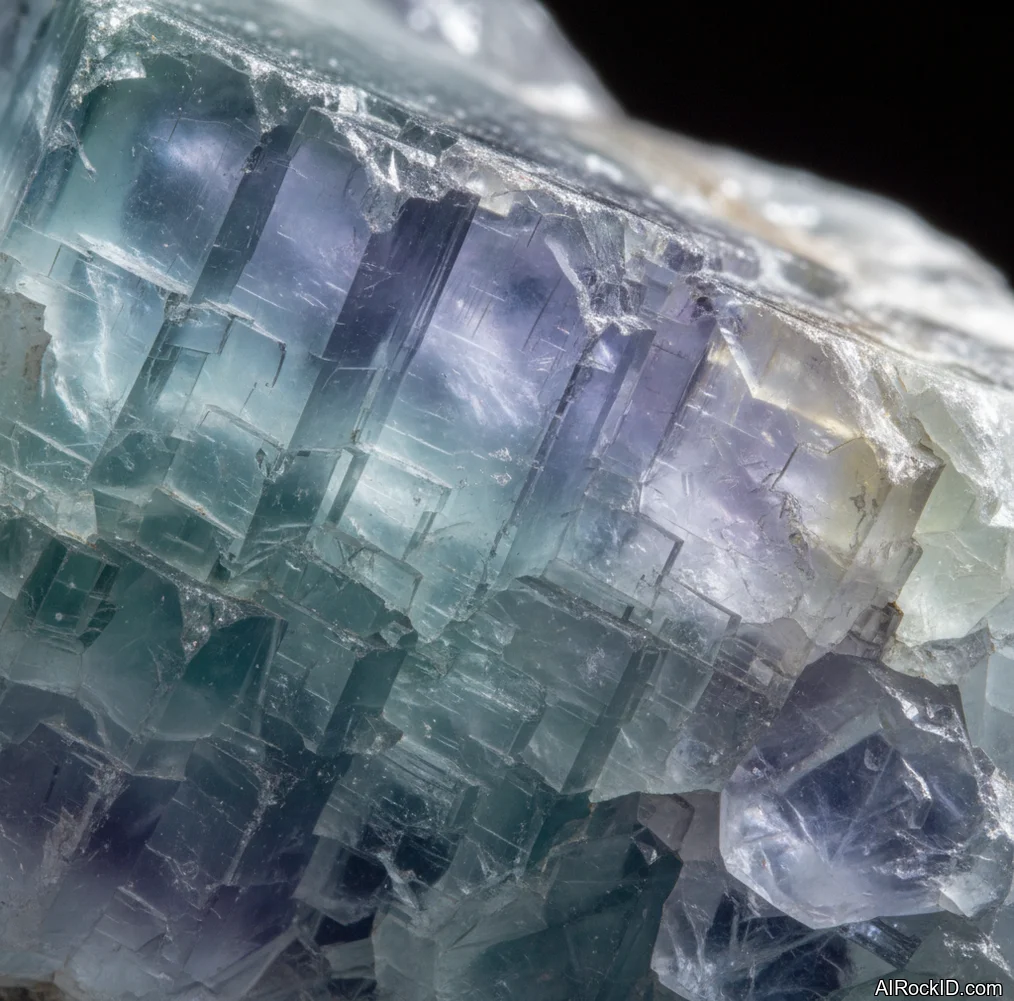
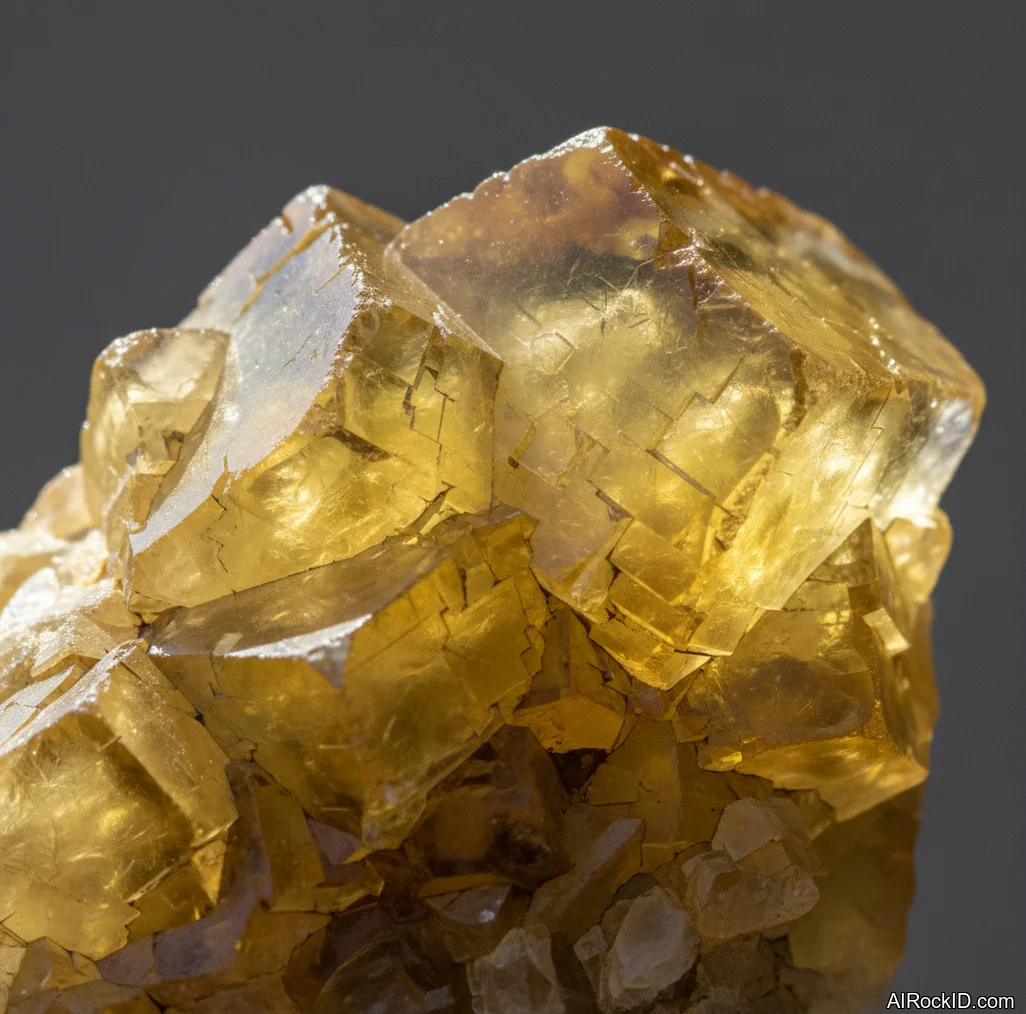
Color-wise, the yellow ranges from pale lemonade up to that warm honey look, and sometimes you’ll see green or purple zoning creeping along the edges (like a faint band that only shows when you turn it). A lot of what you see for sale is tumbled, honestly, because raw cubes with sharp edges chip ridiculously easily. So, if you’re buying a display piece, look over the corners and the base for tiny bruises or scuffs from shipping. They’re common.
Origin & History
Fluorite got its official mineral write-up in 1797, thanks to Carlo Antonio Galeani Napione. The word “fluorite” comes from the Latin *fluere*, meaning “to flow,” and that’s not some poetic thing. It’s because people literally used it as a flux in smelting, where it helped metals melt and run easier (you can picture that glossy, glassy melt moving when the furnace is really cooking).
Collectors sometimes lose sight of how practical this mineral really is. In old mining districts in England, and in parts of Europe, fluorite showed up as a gangue mineral alongside lead and zinc ores, and it didn’t just sit in a display case. It wound up in steelmaking and early optical work, the kind of stuff you’d only appreciate after handling a chunk and noticing how it cleaves into those clean faces that catch the light just right.
And the yellow pieces? Same mineral species story, just with chemistry and radiation history pushing the color toward the warm end of the palette. Different look in the hand, but it’s still fluorite.
Where Is Yellow Fluorite Found?
Yellow fluorite turns up in hydrothermal vein districts and carbonate-hosted deposits. China and parts of Europe are common sources for clean yellow cubes and zoned pieces.
Formation
Most yellow fluorite shows up when hot, mineral-loaded fluids push through little cracks in the host rock, then drop out crystals as the fluid cools off. You’ll usually spot it in hydrothermal veins sitting right next to calcite, quartz, barite, galena, and sphalerite. But you can also find it in carbonate rocks, where there’s more open space and the crystals can actually take their time and grow into clean cubes.
If you’ve got a decent specimen in your hand, you can kind of “read” how it grew. Color zoning is pretty common. Maybe it’s got a pale center and then the yellow gets stronger toward the edges, or you’ll see thin bands like somebody brushed on layers of color (it really does look painted sometimes). Thing is, that yellow tone usually comes from trace elements and color centers, not because the fluorite has totally different chemistry, and that’s why you can get mixed-color fluorite in a single pocket.
How to Identify Yellow Fluorite
Color: Yellow fluorite ranges from pale lemon to golden honey, sometimes with green or purple zoning. The color can look stronger at the edges of cubes or along banding.
Luster: Vitreous on fresh faces, sometimes slightly dull on worn cleavage.
If you scratch it with a steel nail, it’ll mark pretty easily since fluorite is Mohs 4. The real test is cleavage: it breaks into smooth, flat faces, and those faces often meet at right angles because it’s cubic. Under a UV light, some pieces fluoresce blue or purple, but don’t rely on that alone because plenty of fluorite barely reacts.
Properties of Yellow Fluorite
Physical Properties
| Crystal System | Cubic |
| Hardness (Mohs) | 4 (Soft (2-4)) |
| Density | 3.18 g/cm3 |
| Luster | Vitreous |
| Diaphaneity | Transparent to translucent |
| Fracture | Subconchoidal to uneven |
| Streak | White |
| Magnetism | Non-magnetic |
| Colors | Yellow, Honey, Pale gold, Yellow-green (zoned), Colorless (zoned) |
Chemical Properties
| Classification | Halides |
| Formula | CaF2 |
| Elements | Ca, F |
| Common Impurities | Y, Ce, Sm, Eu, Fe, Mn |
Optical Properties
| Refractive Index | 1.433-1.435 |
| Birefringence | None |
| Pleochroism | None |
| Optical Character | Isotropic |
Yellow Fluorite Health & Safety
Handling yellow fluorite is pretty low risk for most people. The bigger worry is the specimen itself: it’s fragile, and it’ll chip or split along its cleavage planes if you bump it on a hard table (you can almost feel that sharp “snap” when a corner gives).
Safety Tips
If you’re going to lap it, carve it, or run it through a saw, don’t do it dry. Keep a steady trickle of water on the work (you’ll see that gritty slurry build up fast), make sure you’ve got good ventilation, and wear a proper respirator so you’re not breathing in that fine mineral dust.
Yellow Fluorite Value & Price
Price Range
Rough/Tumbled: $8 - $120 per specimen
Cut/Polished: $3 - $20 per carat
Clean cubes with crisp, sharp edges, decent transparency, and a solid, even yellow are what get the real money. Big pieces look great in the hand (and yeah, they’re tempting), but the second you’ve got little chips along the edges or a corner that’s been repaired, the value falls off fast.
Durability
Nondurable — Scratch resistance: Fair, Toughness: Poor
It’s stable in normal room conditions, but it cleaves easily and can fade or look washed if left in strong sunlight for long periods.
How to Care for Yellow Fluorite
Use & Storage
Store it wrapped or in a box with padding so the corners don’t knock into harder stones. If it’s a cube cluster, keep it where it won’t rattle around when you open a drawer.
Cleaning
1) Rinse quickly with lukewarm water and a drop of mild soap. 2) Use a soft toothbrush to lift dirt out of cracks without scraping the faces. 3) Pat dry and let it finish air-drying before putting it back on a shelf.
Cleanse & Charge
For a metaphysical-style reset, I stick with smoke, sound, or a quick pass under running water, then let it rest in a shaded spot. Skip long sun baths since some pieces look lighter after weeks on a windowsill.
Placement
Put it somewhere it won’t get bumped, like the back of a desk or inside a cabinet with lighting. Under a small LED, the cleavage flashes look great without heating it up.
Caution
Skip ultrasonic cleaners, harsh chemicals, or hot water. And don’t just shove it in your pocket next to quartz, because it’ll come back out with new scratches and little chips along the edges.
Works Well With
Yellow Fluorite Meaning & Healing Properties
Compared to purple or green fluorite, the yellow stuff gets picked for “brain and motivation” work in a lot of modern crystal circles. Thing is, in real life it feels a lot less mystical than that. People grab it when they want something bright that still feels clean and organized, not floaty or dreamy. Put a yellow fluorite cube on your desk and it looks like a little block of sunlight, but the vibe is crisp and squared-off, not hazy.
Pick up a polished piece and run your thumb over it. Slick. Almost like glass. But not quite. It stays a little cool to the touch, and the surface has that tight, smooth glide that makes you want to keep rubbing it (especially when you’re stuck on a problem). That sensation is honestly a big reason people keep it nearby during study or planning, like a physical cue to slow down and sort the chaos into neat little piles.
But I’ve also seen people talk up fluorite like it can handle getting knocked around in a pocket all day, and that’s where the real world steps in. It chips. It scratches. Drop it once on a hard floor and you might find a fresh little ding on an edge. So if you want a “pocket stone” with the same kind of clean, focused feel, go with something harder and leave the fluorite at your desk.
And on anything health-related: keep crystal talk in the personal, traditional lane, not the medical one. That’s just how it is.
Identify Any Crystal Instantly
Snap a photo and get properties, value, care instructions, and healing meanings in seconds.