Inesite
What Is Inesite?
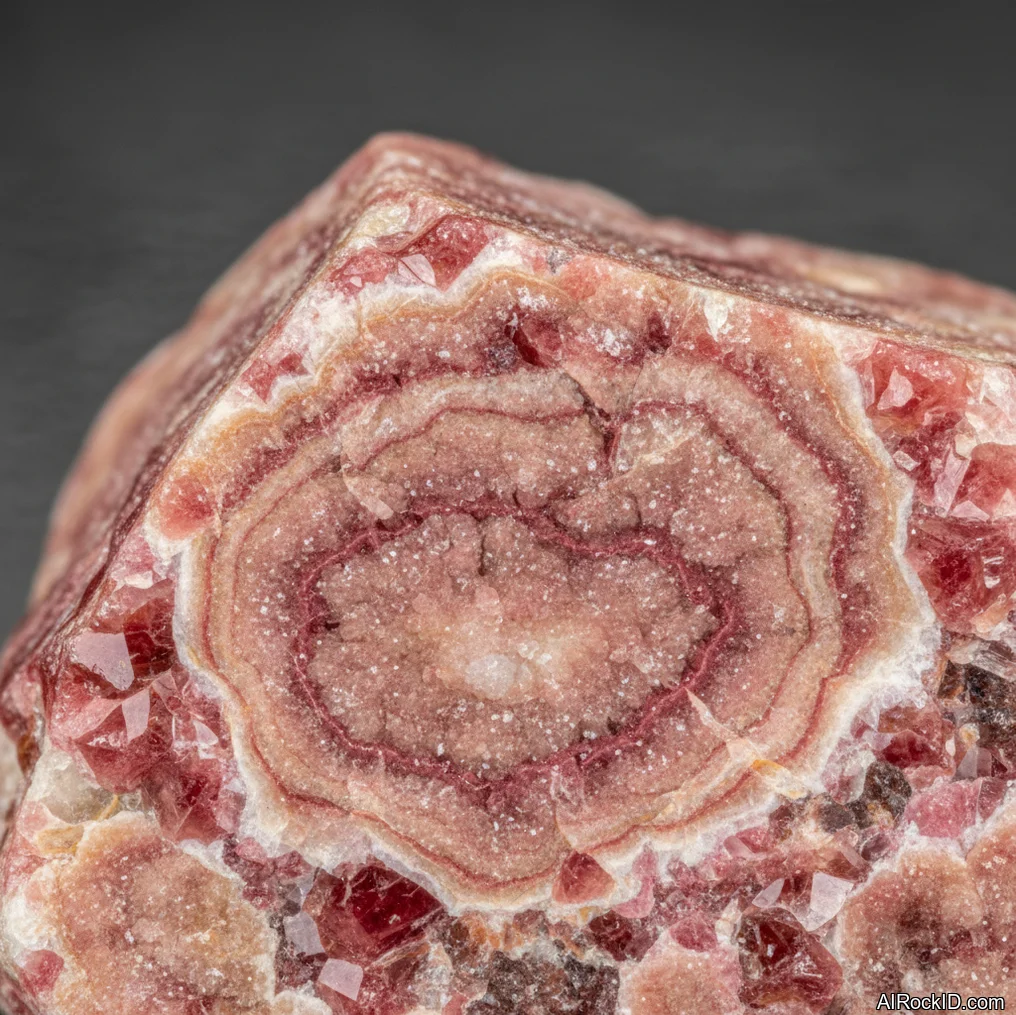
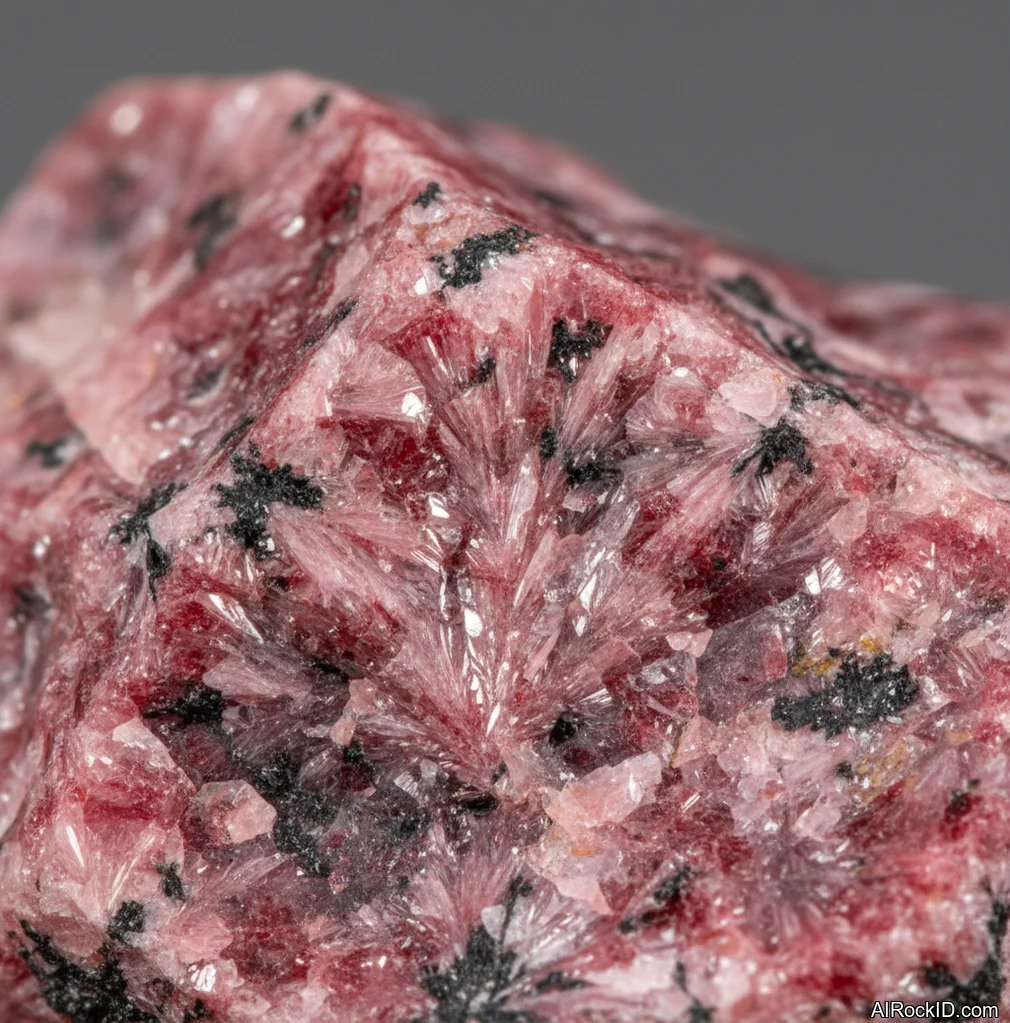
Inesite’s a pretty rare mineral: a pink manganese-calcium silicate hydroxide that usually shows up as fibrous crystal clusters that radiate out from a point.
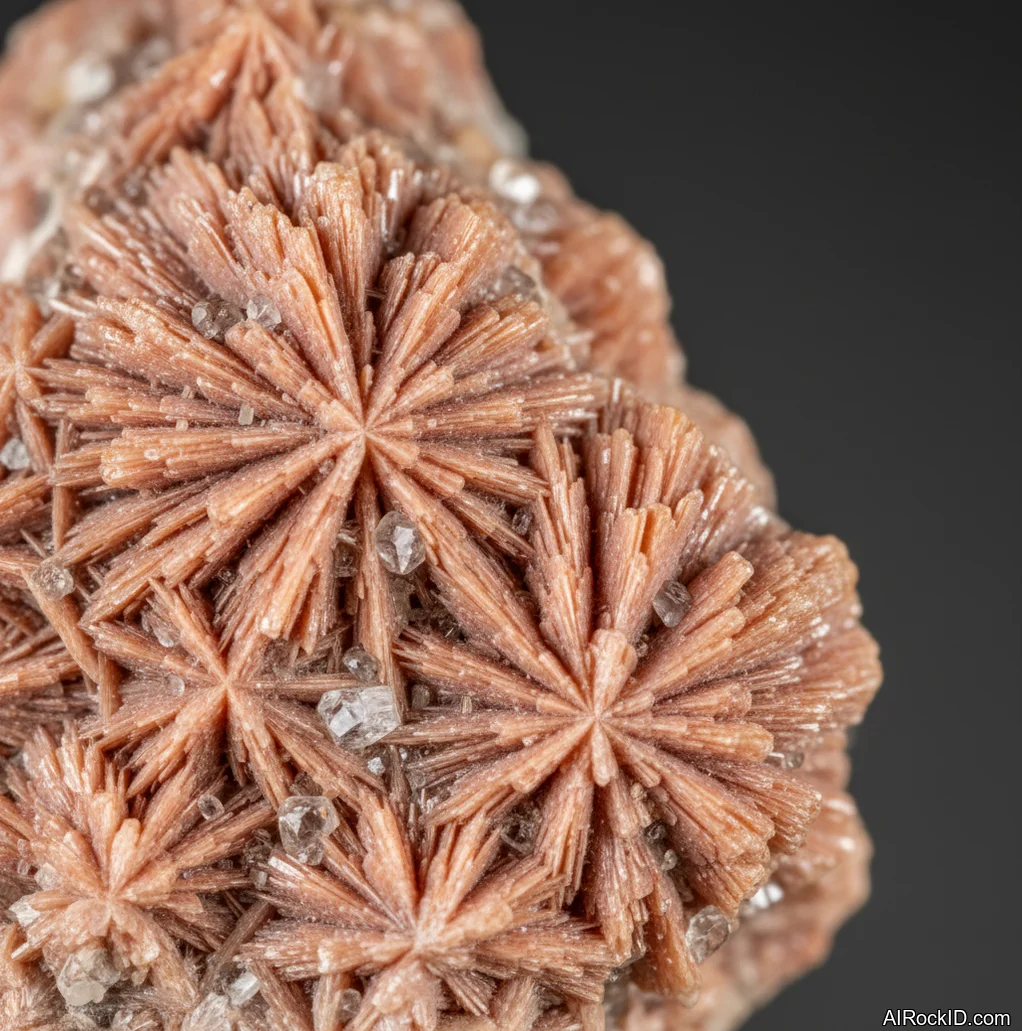
Hold a decent cluster in your hand and it messes with your head a little. It looks almost cottony, like it ought to be soft, but then you feel the weight and the hard, rocky “realness” of it. The really good specimens have tight little sprays and rosettes, and each fiber grabs the light like a tiny ribbon. And when you tip it under a desk lamp, there’s this gentle flash that camera shots never quite catch.
Most pieces you’ll run into are on matrix, usually with white calcite or some gray host rock stuck to it (sometimes you can feel the rough grit of that matrix on your fingertips). The contrast makes the pink look louder, like it’s turned up a notch.
People mix it up with rhodochrosite or even pink calcite at first, which makes sense. But it has its own thing going on. Rhodochrosite often looks banded, or it cleaves into neat rhombs. Inesite, on the other hand, tends to look like an explosion, like someone tossed pink needles into a little starburst.
Thing is, it can be a letdown if you’re expecting gemmy, crisp crystals. A lot of it comes out fuzzy, fractured, or with dull spots where the fibers got smashed during mining or prep. Happens more than you’d think.
Origin & History
Back in 1887, a German mineralogist named Albin Weisbach formally described inesite from the manganese deposits at the Långban area in Värmland, Sweden. Långban’s one of those places that just keeps coughing up strange species, so inesite turning up there doesn’t exactly make you blink.
The name comes from the Greek “ines,” meaning fibers, and yeah, that’s dead-on once you’ve actually had a piece in your hand. The first time I saw a real one at a show, I kept thinking, “pink fiber mineral,” because the structure is basically the whole story. And you can see it even before you pick it up: that fuzzy, hairlike sparkle under the case lights, the way the strands catch when you tilt it a little. Dealers still lean hard on that look when they label flats in the case.
Where Is Inesite Found?
Most collector-grade inesite comes from manganese deposits, with famous specimens from Sweden and the Kalahari manganese mines in South Africa. It also turns up in classic localities like Franklin, New Jersey, plus scattered finds in Russia, China, Japan, and Brazil.
Formation
You usually run into inesite in manganese-rich skarns and metamorphosed manganese deposits. That’s where hot fluids push through carbonate rocks, bump into silica, and the whole thing reacts.
It’s very much a “chemistry happened here” mineral, not the kind that just crystallizes out of a melt and calls it a day. Think metasomatism. Lots of manganese. And enough calcium plus silica in the mix to build a pyroxenoid-type chain silicate.
Look at the matrix on a lot of specimens and you can tell what kind of neighborhood it lives in. Calcite shows up a ton. Rhodochrosite too. You’ll also see tephroite, other manganoan minerals, and sometimes things like aegirine or bustamite, depending on the mine (it really varies).
The radiating habit makes more sense when you picture it growing in little open pockets where it had room to fan out. But cram it into tight seams and it ends up crushed and matted. Kind of flattened. Which is why so many pieces look like they’ve been pressed down.
How to Identify Inesite
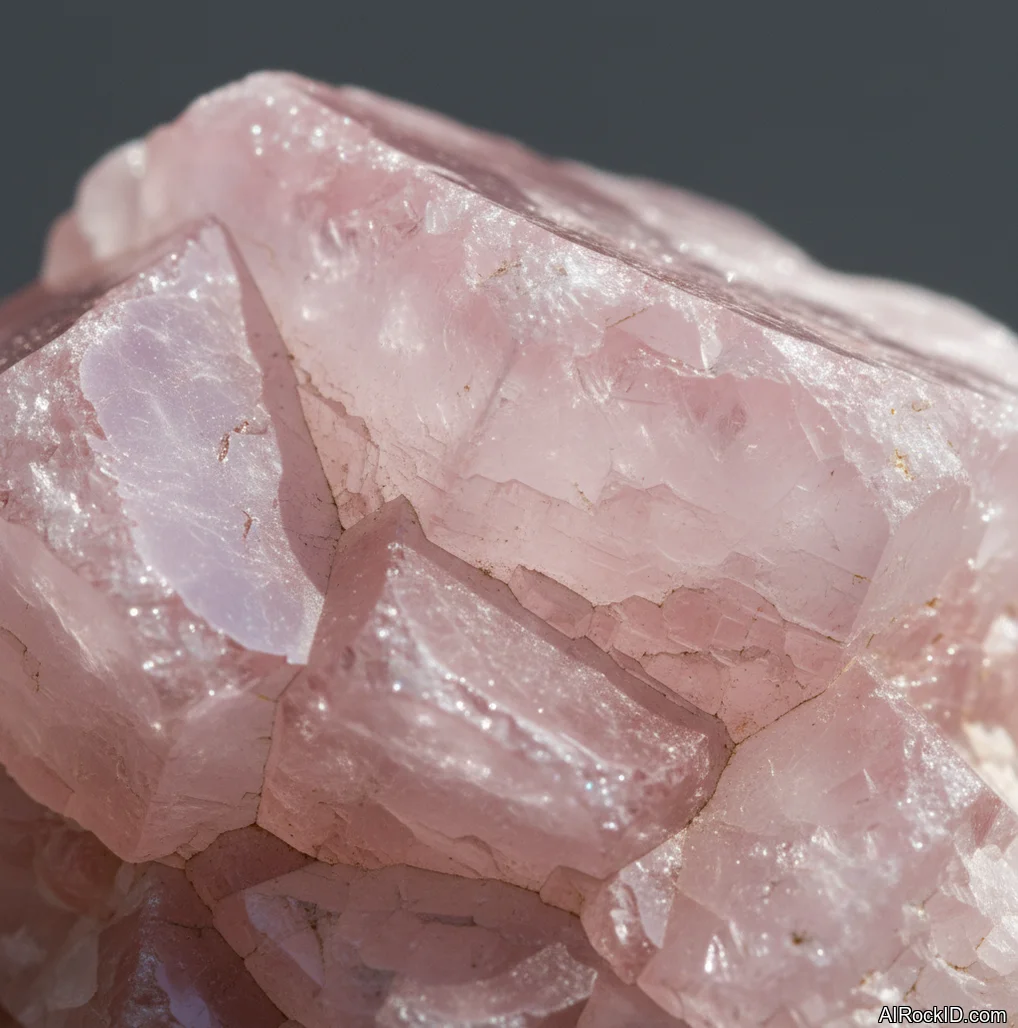
Color: Inesite is most often rose pink to salmon pink, sometimes leaning orange-pink or pale red depending on manganese content and lighting. Color zoning can happen, but it’s usually subtle compared to banded carbonates.
Luster: Luster ranges from vitreous to silky, especially on fibrous sprays.
Pick up a piece and tilt it slowly under a single light source. Those fibrous bundles throw a silky sheen that rhodochrosite and pink calcite just don’t do in the same way. The real test is the habit: inesite wants to radiate, form tufts, or make rosettes, not chunky cleavage blocks. If you scratch it with a steel needle, you can usually mark it, but it shouldn’t crumble like chalk unless it’s already damaged. And watch labels at shows: “pink rhodo” gets slapped on anything pink from manganese mines, so train your eye on the fiber sprays and you’ll dodge most of that confusion.
Properties of Inesite
Physical Properties
| Crystal System | Triclinic |
| Hardness (Mohs) | 5.5 - 6 (Medium (4-6)) |
| Density | 3.00 - 3.20 g/cm3 |
| Luster | Vitreous |
| Diaphaneity | Translucent |
| Fracture | Uneven |
| Streak | white |
| Magnetism | Non-magnetic |
| Colors | pink, rose pink, salmon, orange-pink, pale red |
Chemical Properties
| Classification | Silicates |
| Formula | Ca2Mn7Si10O28(OH)2·5H2O |
| Elements | Ca, Mn, Si, O, H |
| Common Impurities | Fe, Mg |
Optical Properties
| Refractive Index | 1.640 - 1.680 |
| Birefringence | 0.040 |
| Pleochroism | Weak |
| Optical Character | Biaxial |
Inesite Health & Safety
It’s safe to handle with normal care. The main thing to watch out for is dust if you grind it or sand it (that’s when it really gets into the air and you’ll feel it settle on your hands). And if the specimen’s already fragile, the fibers can shed tiny fragments just from being moved around.
Safety Tips
If you’re going to trim a piece, don’t do it dry. Use water, keep the area ventilated (windows open, fan running), wear a real respirator, and when you’re done, wipe up the wet slurry instead of sweeping up dust.
Inesite Value & Price
Price Range
Rough/Tumbled: $40 - $600 per specimen
Prices swing all over the place depending on where it came from, the color, and whether the fibers are still crisp or kind of mashed. Those tight, sparkling sprays sitting on a clean matrix (the kind that almost catches the light when you tilt it) go for way more than fuzzy clumps or rosettes that’ve been banged up.
Durability
Moderate — Scratch resistance: Fair, Toughness: Fair
It’s reasonably stable on the shelf, but the fibrous aggregates chip easily if they knock against harder minerals.
How to Care for Inesite
Use & Storage
Store it so the crystal sprays don’t rub anything. I keep inesite in a perky box or a cabinet spot where nothing can bump the fibers when the door closes.
Cleaning
1) Blow off loose dust with a bulb blower or very gentle compressed air from a distance. 2) Use lukewarm water and a soft brush only on the matrix, not straight into the fibers. 3) Pat dry and let it air-dry fully before putting it back in a box or display case.
Cleanse & Charge
If you do energetic cleansing, stick to smoke, sound, or a short rest on a dry selenite plate. Skip salt soaks and anything abrasive.
Placement
A stable shelf with low traffic is best, especially if you’ve got pets or kids. Side lighting makes the silky flash pop, so a small lamp aimed across the surface works great.
Caution
Don’t ultrasonic clean it. And don’t go at the fibrous spots with a scrub brush either, because those little sprays fray fast once they start catching on bristles. Also, skip the tumble bag. Don’t store it loose next to quartz points, since the sharp tips will knock around and chew the sprays up (you’ll see the ends look fuzzy and snapped off).
Works Well With
Inesite Meaning & Healing Properties
In metaphysical circles, inesite gets framed as this heart-centered stone people reach for when relationships feel frayed. And yeah, I can see the appeal. That dusty, warm pink lands in the same emotional neighborhood as rhodochrosite, but inesite doesn’t shout. It’s softer-looking, kind of hush-hush, like it’s trying not to make a scene.
Thing is, if you grab a piece on a rough day, there’s a plain, practical reason it can help without any big promises: it forces you to slow down. Those little crystal sprays are sharp and fussy. They snag on a sleeve, they poke your fingertip, and if you’re not careful you’ll feel it right away. So you end up holding it more gently, watching what your hands are doing, breathing a bit steadier. Paying attention. That’s not magic, that’s your body responding to the fact that the stone basically punishes clumsy handling.
But keep the boundary clear. This isn’t medical treatment, and I would never tell anyone to trade a doctor for a mineral. If you like using stones as reminders or as focus tools, inesite seems best for the quiet, everyday work: journaling, talking things out, or just cooling off before you text back (because who hasn’t regretted hitting send).
Identify Any Crystal Instantly
Snap a photo and get properties, value, care instructions, and healing meanings in seconds.