Rhodochrosite
What Is Rhodochrosite?
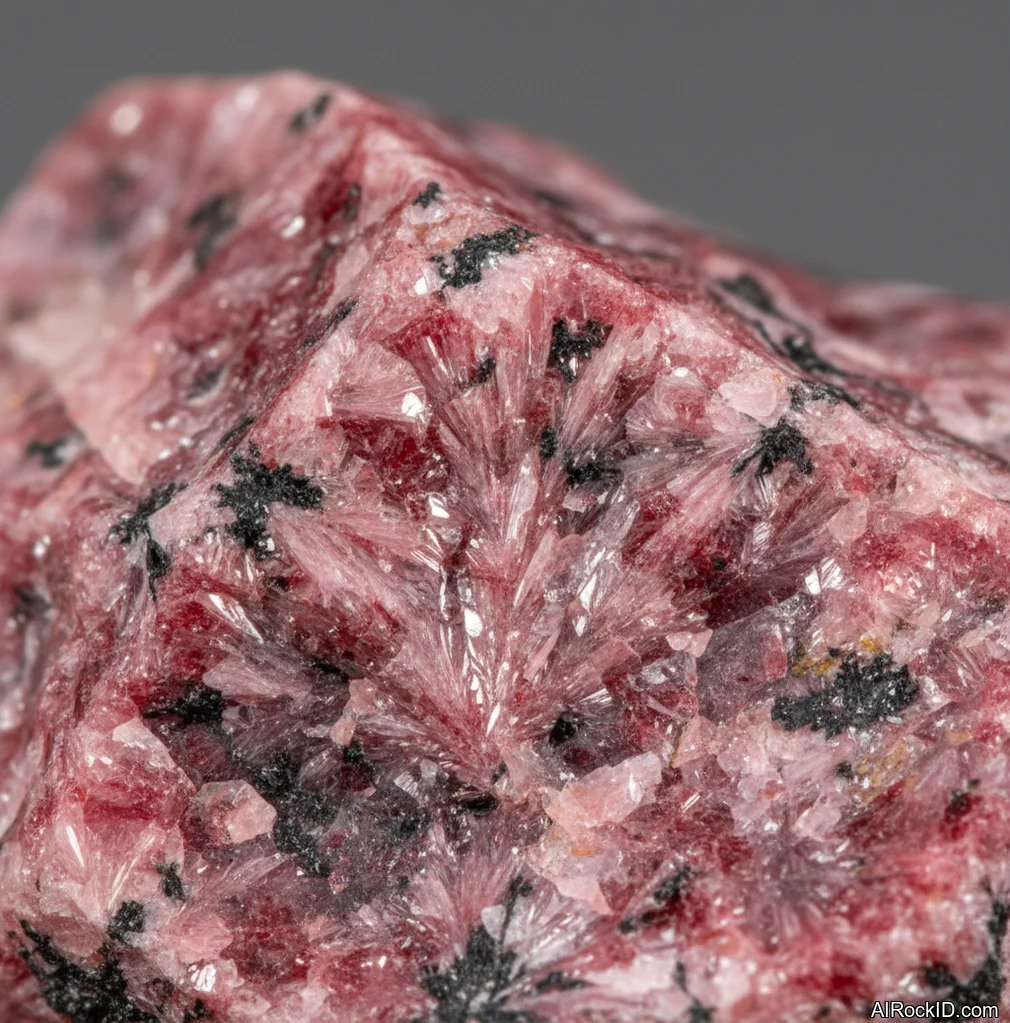
Rhodochrosite is a manganese carbonate mineral (MnCO3). It forms pink to red crystals, plus those banded masses people love to polish.
Thing is, the first time you pick up a chunk, it surprises you. It’s heavier than you expect for something that looks so soft and candy-colored.
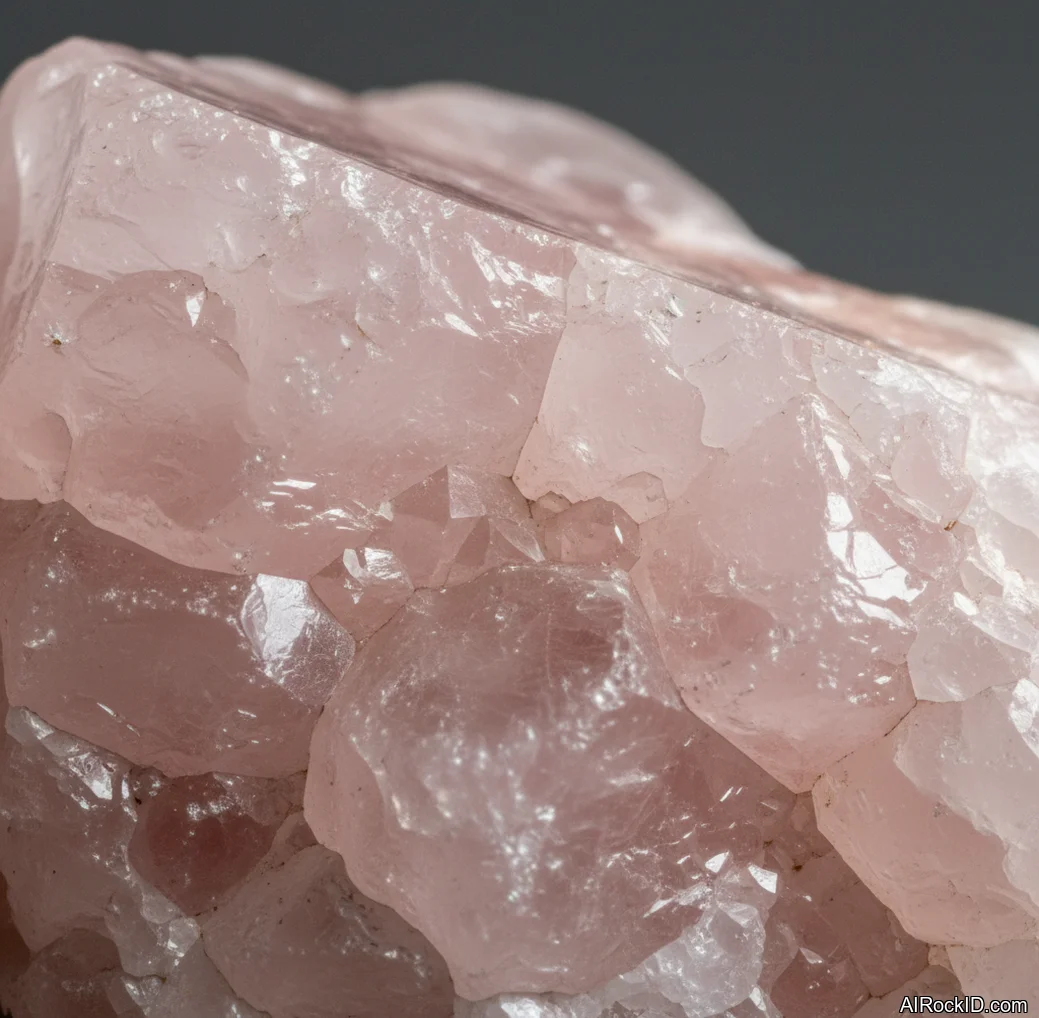
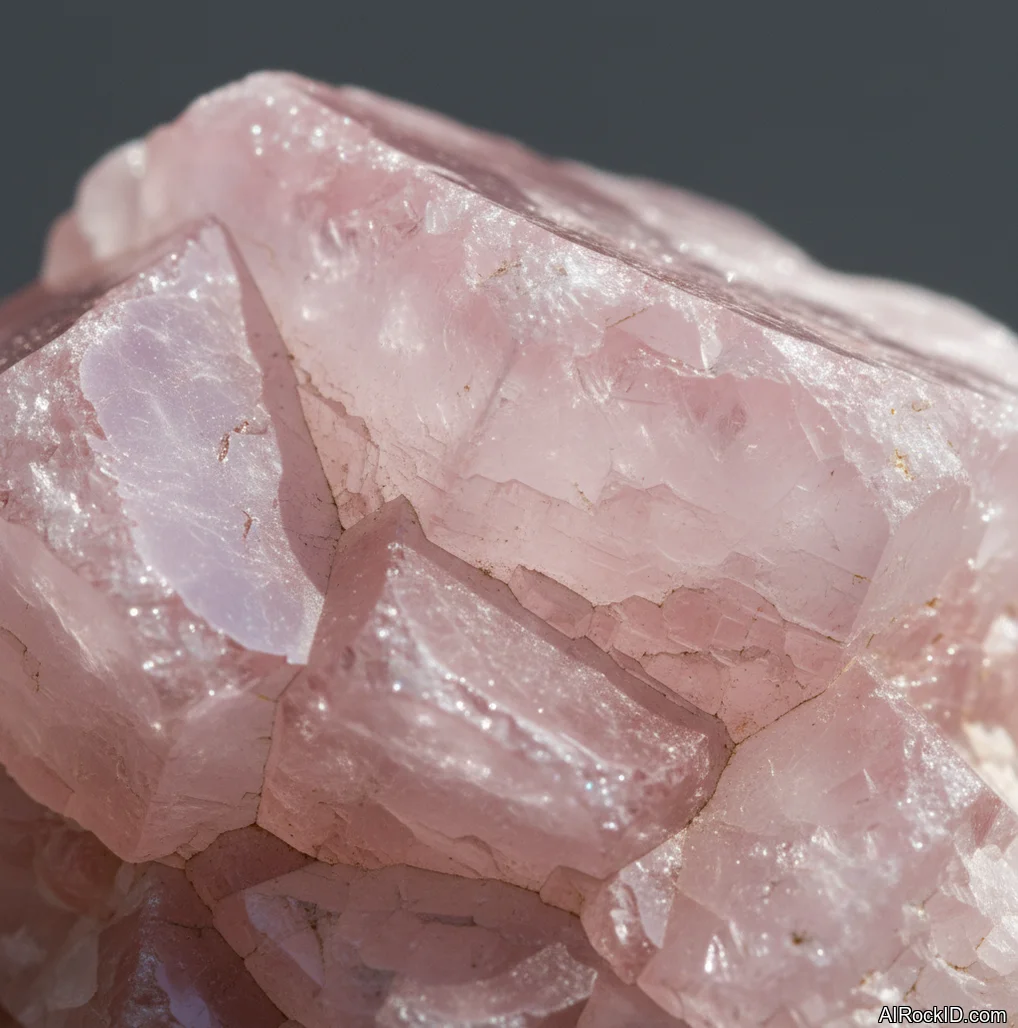
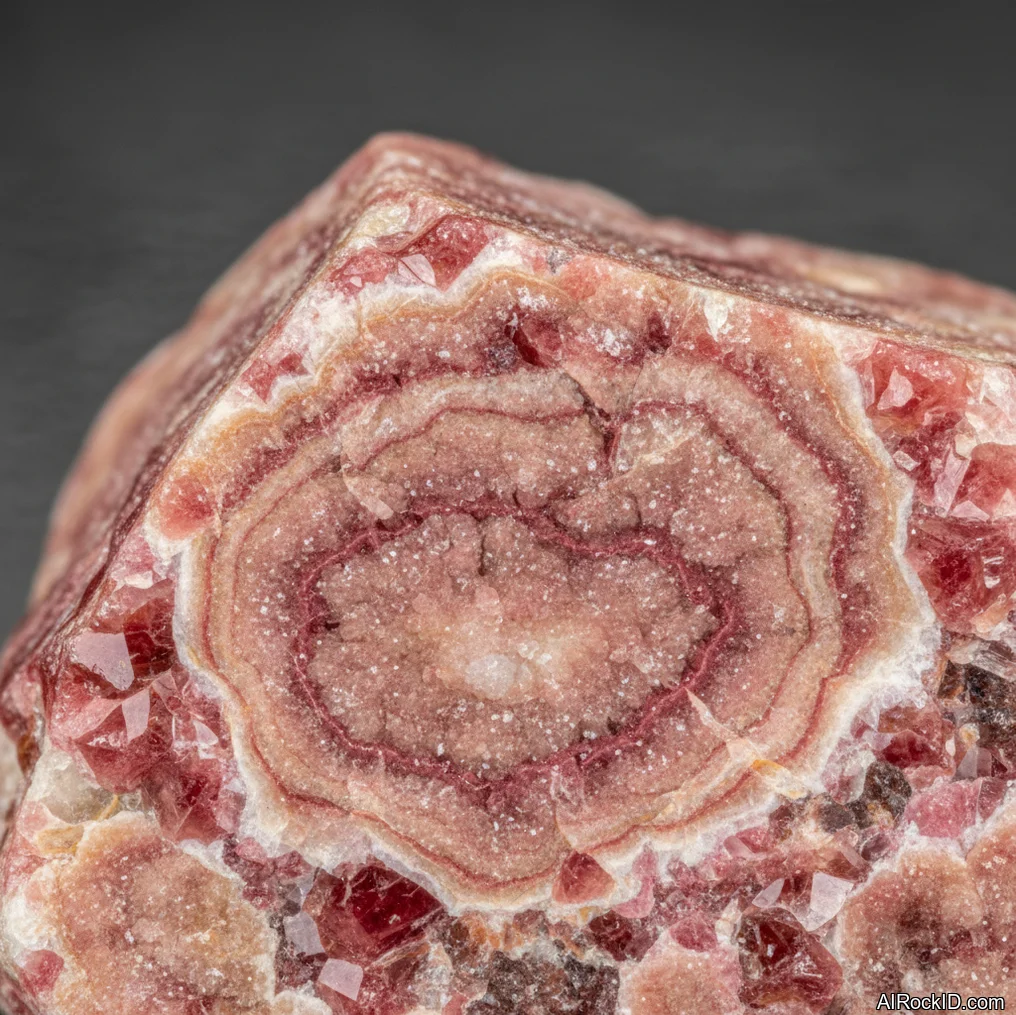
Most people run into the polished banded material first, all pink ribbons with cream stripes. But the pieces that really stop collectors in their tracks are the transparent to translucent crystals with crisp rhombohedral faces. Under a display light those faces can look almost glassy, then you tip the specimen a few degrees and the shine cuts out fast because of the cleavage (it’s kind of dramatic, honestly).
At a glance, folks mix it up with rhodonite or even dyed calcite. But rhodochrosite has that warm “strawberry milk” look, and the surface can swing waxy or glassy depending on how it’s cut. And it bruises, too. I’ve literally watched a dealer set a crystal cluster down a little too hard, then freeze when a corner pinged off. That’s the kind of mineral it is.
Origin & History
The name’s straight out of Greek: *rhodon* (rose) and *chrosis* (color). Johann Friedrich Ludwig Hausmann first described it as a mineral species back in 1813, and the name stuck for a simple reason. The good material really does look like it’s got this pink tint coming from inside the stone, like somebody turned on a soft light under the surface.
Collectors still like to toss around the old “Inca Rose” nickname for the banded material from Argentina. But that’s just a trade name, not a separate mineral. And honestly, you can see why it caught on once you’ve held a polished piece, smooth as glass, with those creamy bands running through it. It also hints at how long people have been carving and polishing it into jewelry boxes, cabochons, and souvenir pieces.
Thing is, the modern crystal market didn’t really explode until classic localities like Sweet Home in Colorado started turning out those jaw-dropping display specimens. You know the kind. The ones that make you stop mid-scroll and just stare.
Where Is Rhodochrosite Found?
You’ll see banded material most often from Argentina, while sharp collector crystals are famous from Colorado (Sweet Home) and a handful of classic European and South African mines.
Formation
Most rhodochrosite comes out of hydrothermal veins, where manganese-rich fluids push through cracks, cool off, and start dropping carbonates along with sulfides like galena and sphalerite. It turns up in carbonate replacement deposits too, and in some metamorphosed manganese deposits, but the stuff you actually see lined up in shop trays usually ties back to hydrothermal systems.
Look, if you stare at a crystal specimen long enough, the growth story is basically written on it. You’ll spot scalenohedral or rhombohedral forms, sometimes with slightly curved faces, and you might see quartz, fluorite, or pyrite right there beside it in the matrix. But this isn’t a “set it and forget it” mineral sitting safe in a pocket. One solid knock in the mine or a rough ride in shipping (you can almost picture it rattling in a box), and the cleavage finishes the job.
How to Identify Rhodochrosite
Color: Colors range from pale pink to deep rose-red, often with white banding or cloudy zones. Iron can push it toward brownish or duller tones, while clean manganese-rich material stays bright pink-red.
Luster: Vitreous to pearly, especially on cleavage faces.
If you scratch it with a copper coin, it may mark, and a steel knife will scratch it easily because it’s only Mohs 3.5–4. The real test is cleavage: breakage tends to follow rhombohedral planes, and fresh faces flash pearly under a strong light. Compared to rhodonite, rhodochrosite usually looks lighter and more “milky,” and it doesn’t have the same black manganese-oxide veining pattern.
Properties of Rhodochrosite
Physical Properties
| Crystal System | Trigonal |
| Hardness (Mohs) | 3.5-4 (Soft (2-4)) |
| Density | 3.5-3.7 |
| Luster | Vitreous |
| Diaphaneity | Transparent to translucent |
| Fracture | Uneven |
| Streak | White |
| Magnetism | Non-magnetic |
| Colors | Pink, Rose-red, Red, Pinkish-brown, White (banding) |
Chemical Properties
| Classification | Carbonates |
| Formula | MnCO3 |
| Elements | Mn, C, O |
| Common Impurities | Fe, Ca, Mg, Zn |
Optical Properties
| Refractive Index | 1.597-1.816 |
| Birefringence | 0.218 |
| Pleochroism | Weak |
| Optical Character | Uniaxial |
Rhodochrosite Health & Safety
Handling is fine. But once you start doing lapidary work, you’ll kick up carbonate dust, and that stuff needs to be treated like a respiratory hazard. Don’t breathe it in. Wear a mask if you’re cutting or grinding, and rinse your hands well after you’ve been handling it a lot (that fine, chalky film can cling to your skin).
Safety Tips
If you’re going to cut it or sand it, do it wet, keep the air moving with decent ventilation, and wear a real respirator (not one of those floppy dust masks). And if it’s just a display piece, the main thing is simple: keep it where kids can’t grab it and stick it in their mouth.
Rhodochrosite Value & Price
Price Range
Rough/Tumbled: $10 - $300 per piece
Cut/Polished: $5 - $60 per carat
Prices can swing all over the place depending on the color, how see-through it is, and if you’re looking at banded lapidary rough or crisp, damage-free crystals. And yeah, clean Sweet Home crystals and well-prepped cabinet specimens can jump into the thousands fast, especially when the faces are sharp and not all scuffed up from being knocked around in a flat.
Durability
Nondurable — Scratch resistance: Poor, Toughness: Poor
Rhodochrosite cleaves easily and scratches readily, so it holds up better as a display specimen than an everyday-wear ring stone.
How to Care for Rhodochrosite
Use & Storage
Store it so it can’t knock against harder stones. I keep mine in a perky box with foam because even quartz points will scuff it up over time.
Cleaning
1) Rinse quickly with lukewarm water and a drop of mild soap. 2) Use a soft brush only on sturdy surfaces and avoid prying at cleavage edges. 3) Pat dry and let it fully air-dry before putting it back in a closed box.
Cleanse & Charge
If you do energetic cleansing, stick to gentle options like brief smoke cleansing or setting it on a dry selenite plate. Skip salt bowls and long soaks.
Placement
A shelf spot away from direct sun and away from “clinky” items is best. If it’s a banded polished piece, it looks great under warm light, but don’t park it on a windowsill.
Caution
Soft stone, perfect cleavage. Don’t ultrasonic clean it. Don’t steam clean it. And don’t just toss it loose in a pocket or bag where it’ll knock around against harder minerals (you’ll end up with fresh little chips and scratches before you even notice).
Works Well With
Rhodochrosite Meaning & Healing Properties
Most dealers and buyers tie rhodochrosite to heart stuff and emotional healing. Plain English: it’s the stone people grab when they’re trying to loosen the grip of old grief or learn to be a little gentler with themselves, without making it some big dramatic ritual. I’ve seen customers pick up a polished slab, let it sit in their palm for maybe a minute, and you can literally watch their shoulders sink down a notch from the heft and that cool, slick feel against the skin.
But look, a stone isn’t a stand-in for therapy, meds, sleep, or a hard talk you’ve been dodging. What it can do (if you’re into this side of the hobby) is work like a physical reminder. You catch those pink bands, you remember what you meant to do, you slow your roll. I’ve kept a small tumbled one in my jacket pocket during rough weeks, and the biggest “result” was simple: it nudged me to take a breath before I snapped off a text.
So if you’re putting one on an altar or a nightstand, keep your expectations realistic. Some folks like to pair it with calmer, clearer stones so it doesn’t feel like emotional overload. And since it’s soft, you end up handling it carefully, almost automatically. That careful touch becomes part of the whole practice, which honestly feels pretty on-brand for rhodochrosite. Right?
Identify Any Crystal Instantly
Snap a photo and get properties, value, care instructions, and healing meanings in seconds.