Jade
What Is Jade?
Jade is one gemstone name that gets slapped on two totally different minerals: jadeite and nephrite. And in your hand, both of them feel smoother and tougher than you’d expect from something that can look sort of soft and milky. That toughness is the whole reason jade got used for tools and carvings long before anyone started treating it like a luxury gem.
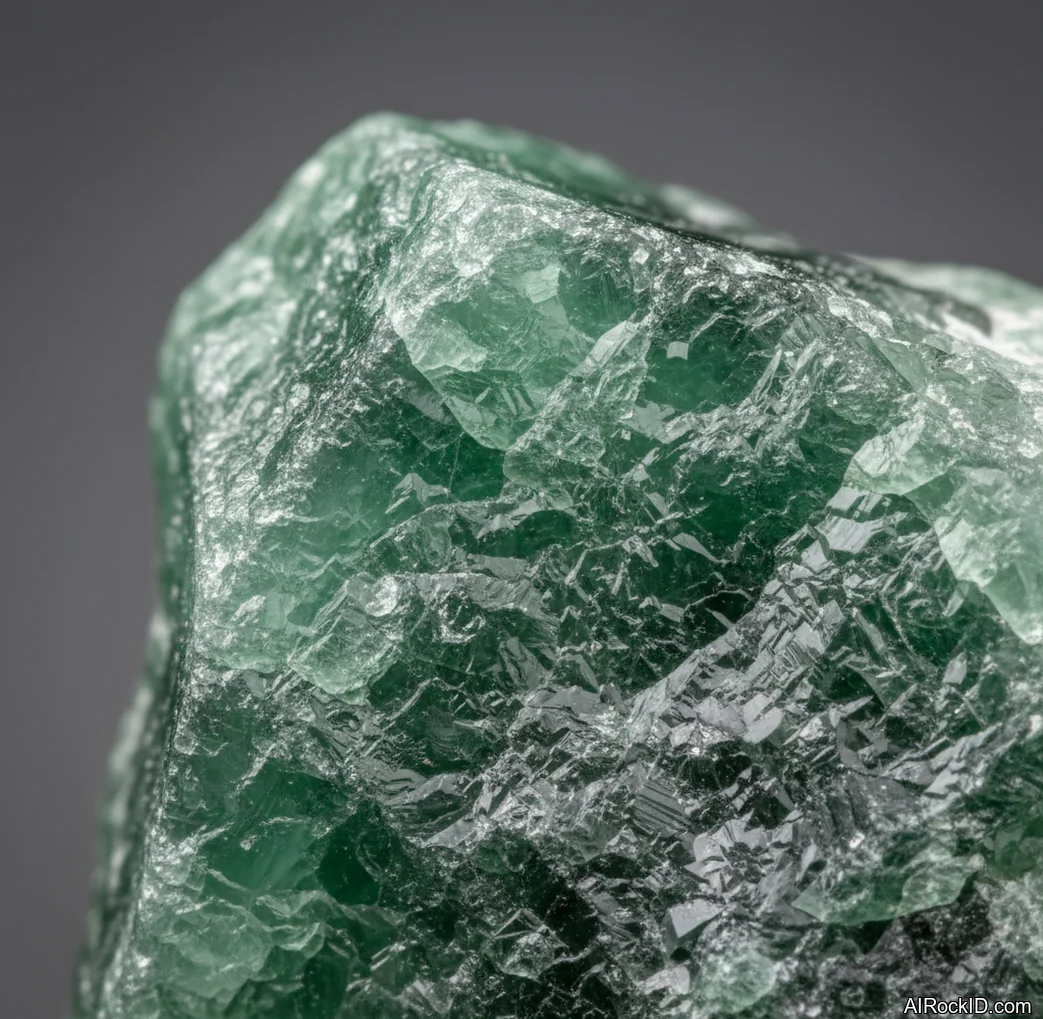
Grab a good palm stone and you notice the weight first. It just sits there, heavy and calm, and the polish has this slightly waxy drag to it, not that glassy slip you get from quartz (you can feel it catch a tiny bit when you roll it under your thumb). People assume all “jade” is the same at a glance. But the market splits fast: jadeite can hit those electric emerald greens and higher translucency, while nephrite leans creamy, spinach-green, or smoky gray and still takes a killer polish.
Thing is, here’s the friction: most “jade” you see online is either treated (bleached and polymer filled) or it’s not jade at all. I’ve handled dyed quartzite and even glass that looked decent in photos, then felt warm and slick in person. Real jade tends to stay cool longer, and the surface texture feels dense and tight, like it’s holding together under pressure. How many stones actually feel like that? Not many.
Origin & History
“Jade” comes from the Spanish *piedra de ijada*, basically “stone of the side,” because people used to connect it with kidney pain. And that’s also where “nephrite” gets its name, through the Greek *nephros* for kidney. So yeah, the kidney thing is baked right into the words.
On the science-history side, jadeite got described as its own mineral species in 1863 by Alexis Damour. That happened after people figured out the best “imperial” carving material from Burma wasn’t actually the same stuff as the tougher nephrite used in places like China and New Zealand. Dealers still kind of mush the terms together (it happens), but gem labs won’t. They’ll label jadeite vs nephrite, and they’ll flag treatments too.
Where Is Jade Found?
Jadeite is best known from Myanmar and Guatemala, while nephrite shows up in big tough masses in Canada, Russia, China, New Zealand, and parts of the USA.
Formation
Most jade has a metamorphic backstory. Not the “open vug full of crystals” kind. Jadeite forms under high pressure and relatively low temperature, the sort of conditions you see in subduction zones where ocean crust gets shoved down and chemically remodeled. And it’s often tied to serpentinite bodies and those messy boundaries where different rock packages get mashed together.
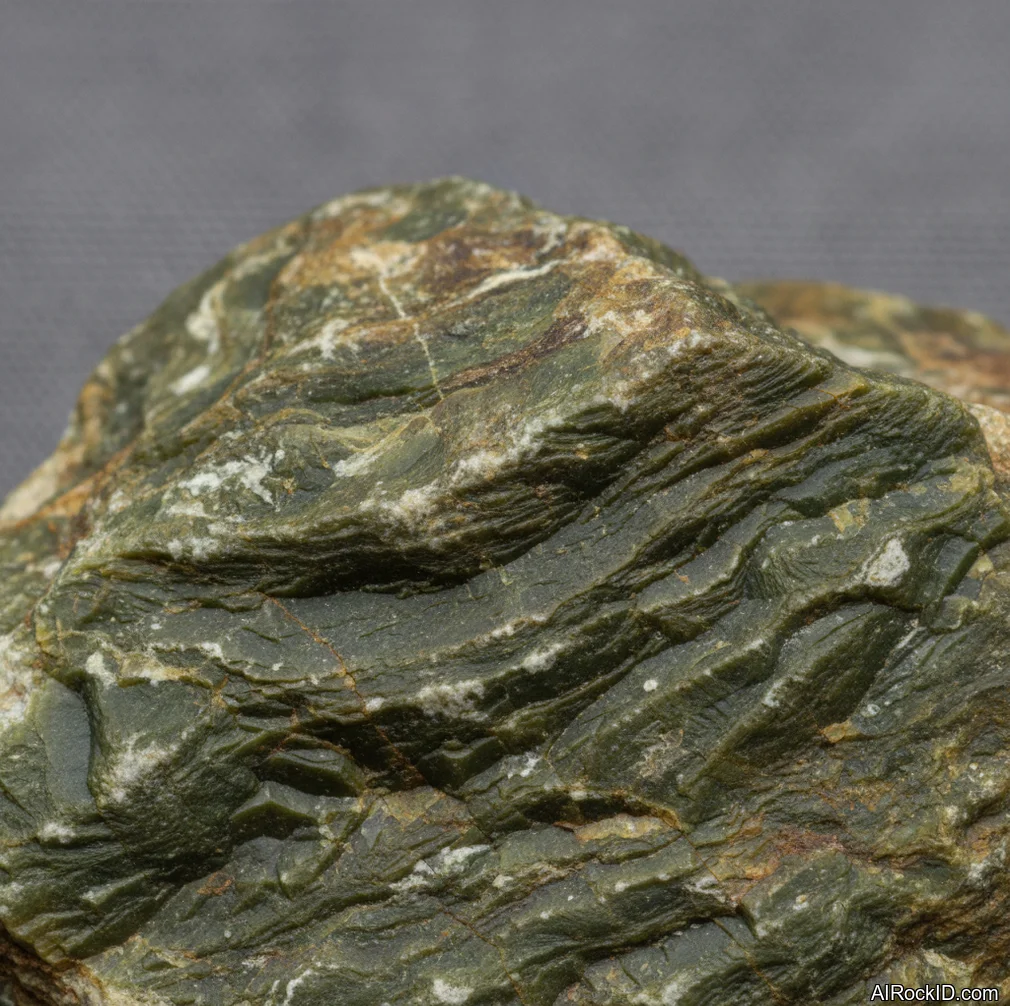
Nephrite, on the other hand, usually forms when fluids react with ultramafic rocks and the surrounding country rock, building that felted, interlocking amphibole texture. That texture is exactly why it’s so tough. I’ve handled nephrite boulders at shows that looked dead plain under the overhead fluorescents, but then you hit them with a bright light and slowly roll them in your hands. The internal fibers grab the light in this soft, greasy way, like the stone’s lit from inside (but only at the right angle). Kind of spooky, honestly.
How to Identify Jade
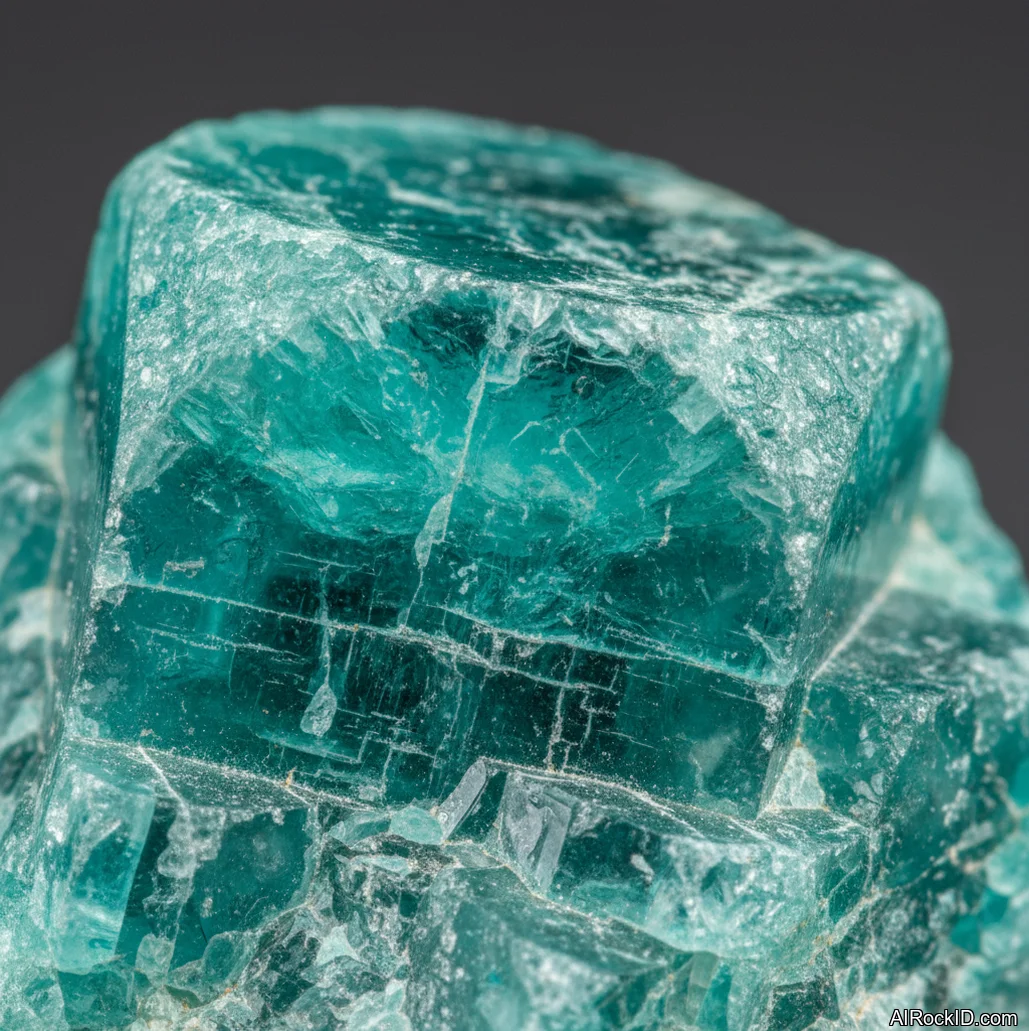
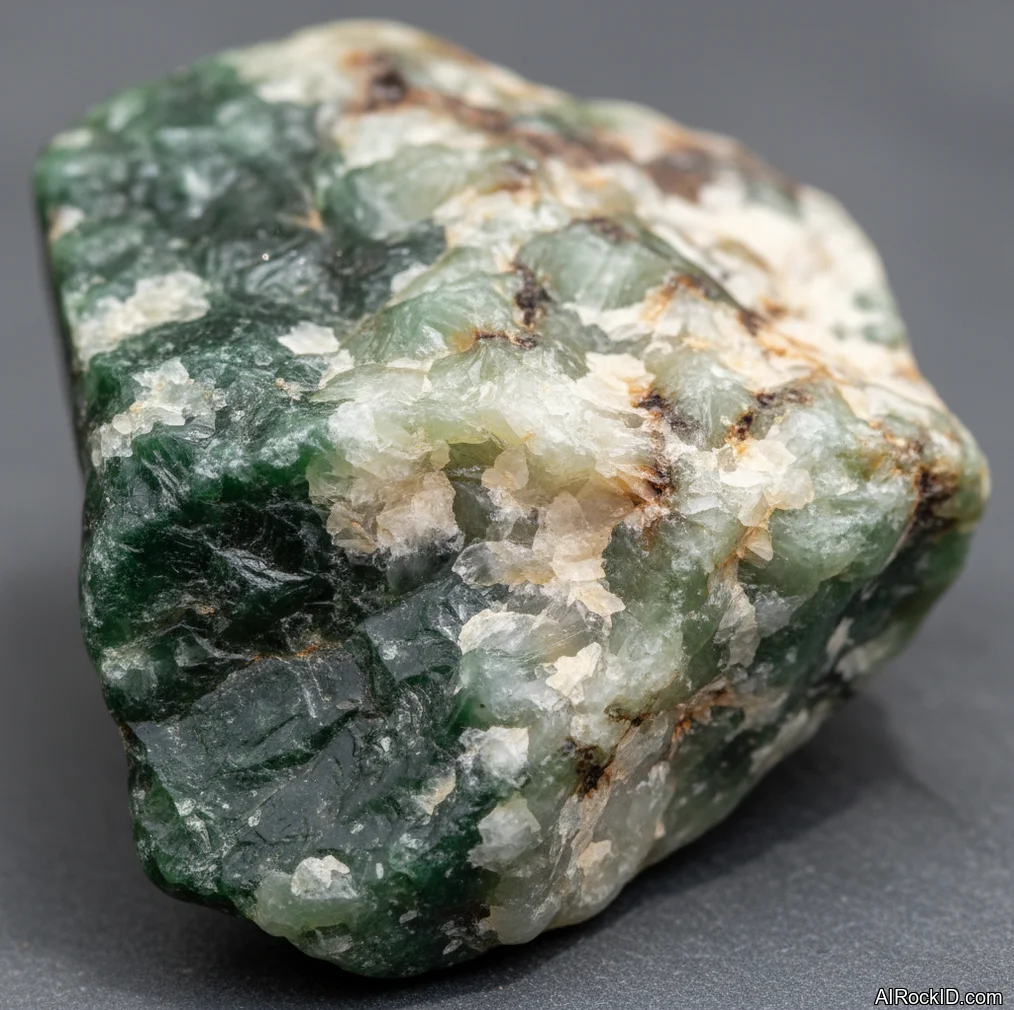
Color: Jade ranges from white, gray, and black to many greens, plus lavender and even orange-brown in jadeite. Natural color is usually a little uneven, with clouds, streaks, or mottling rather than flat, paint-like green.
Luster: Polished jade typically has a waxy to greasy luster rather than a crisp glassy shine.
Pick up a piece and check temperature and feel: real jade usually feels cool and dense, with a “tight” surface that doesn’t feel plasticky. Look closely with a loupe for dye concentrating in cracks or around grain boundaries, especially in very bright green bargain pieces. The real test is lab testing for treatments and species, but in the shop I’ll also tap two pieces together gently; jade gives a higher, cleaner ring than most look-alikes.
Properties of Jade
Physical Properties
| Crystal System | Monoclinic |
| Hardness (Mohs) | 6.0-7.0 (Hard (6-7.5)) |
| Density | 2.90-3.40 g/cm3 |
| Luster | Waxy |
| Diaphaneity | Translucent to opaque |
| Fracture | Splintery |
| Streak | White |
| Magnetism | Non-magnetic |
| Colors | Green, White, Gray, Black, Lavender, Yellow, Brown, Orange |
Chemical Properties
| Classification | Silicates |
| Formula | NaAlSi2O6 (jadeite) or Ca2(Mg,Fe)5Si8O22(OH)2 (nephrite) |
| Elements | Na, Al, Ca, Mg, Fe, Si, O, H |
| Common Impurities | Cr, Fe, Ti, Mn |
Optical Properties
| Refractive Index | 1.60-1.67 |
| Birefringence | 0.012-0.020 |
| Pleochroism | Weak |
| Optical Character | Biaxial |
Jade Health & Safety
Solid jade is safe to touch, and it’s totally fine if it gets wet. The only real concern? Dust. If you’re cutting or grinding it, you don’t want to be breathing in that fine powder that hangs in the air and settles on your fingers.
Safety Tips
If you’re cutting or shaping jade, do it wet and wear a real respirator. Keep that muddy gray-green slurry off your skin too until you can rinse up. Seriously, don’t just wipe it on your jeans and call it good.
Jade Value & Price
Price Range
Rough/Tumbled: $10 - $500 per piece
Cut/Polished: $5 - $300 per carat
Price can swing all over the place depending on the species, the color, how translucent it is, and whether it’s been treated. Fine, untreated jadeite is the stuff that can shoot into the four to six figures at the true high end. But most of what you see in tourist shops, that souvenir-grade material that feels kind of waxy and lightweight in the hand? It stays cheap.
Durability
Very Durable — Scratch resistance: Good, Toughness: Excellent
Jade is stable for everyday wear, but it can chip on sharp edges and it hates harsh chemicals and heat used during some cleaning methods.
How to Care for Jade
Use & Storage
Store jade away from harder gems like sapphire or diamond since they can scratch the polish over time. I keep bangles in soft pouches because they love to clack against everything in a drawer.
Cleaning
1) Rinse with lukewarm water and a drop of mild soap. 2) Gently scrub with a soft toothbrush around carvings and holes. 3) Rinse well and pat dry with a microfiber cloth.
Cleanse & Charge
If you’re doing the metaphysical side, simple is best: running water rinse and a quiet spot overnight works fine. Avoid salt soaks if you don’t know the piece’s treatments or if it has fractures.
Placement
On a desk, jade reads calm and tidy, especially the lighter greens and whites. For jewelry, smooth cabochons and bangles hold up better than sharp faceted edges.
Caution
Don’t steam-clean jade. Just don’t. And skip ultrasonic cleaners too, especially if you’re dealing with treated jadeite or a piece that’s already full of fractures (the kind where the cracks catch the light when you tilt it). Be careful with bleach, acids, and solvents as well. They can mess with surface treatments and the polish, and once that glossy finish looks cloudy, you’re not really getting it back. Why risk it?
Works Well With
Jade Meaning & Healing Properties
In the crystal world, jade gets used in a pretty down-to-earth way: people grab it when they want steady, slow support, not something that hits like a lightning bolt. Stick a jade palm stone in your pocket for a week and you’ll see why it has fans. It’s not flashy. It’s more like a worry stone that actually holds up (even after getting knocked around).
Look closely at what people do with it in shops. They rub it with their thumb on autopilot, like the surface is asking for it. And yeah, that’s a real physical thing. Jade has this cool, slick feel at first, then it warms up in your hand, and the edges get that slightly rounded, almost soapy smoothness from being handled. I’d bet a lot of the “jade vibe” comes from that grounded, tactile feel, plus the way green reads as healthy and settled to our brains. Why else would people keep reaching for the same stone?
But none of that is medical care. If someone’s talking about kidneys, blood pressure, or anything serious, that’s doctor territory. I’m totally fine calling jade a calming token, a focus object, a little personal reminder you can carry every day, mostly because it’s tough enough to survive pockets, keys, and real life.
Identify Any Crystal Instantly
Snap a photo and get properties, value, care instructions, and healing meanings in seconds.