Meteoric Amethyst Canadian
What Is Meteoric Amethyst Canadian?
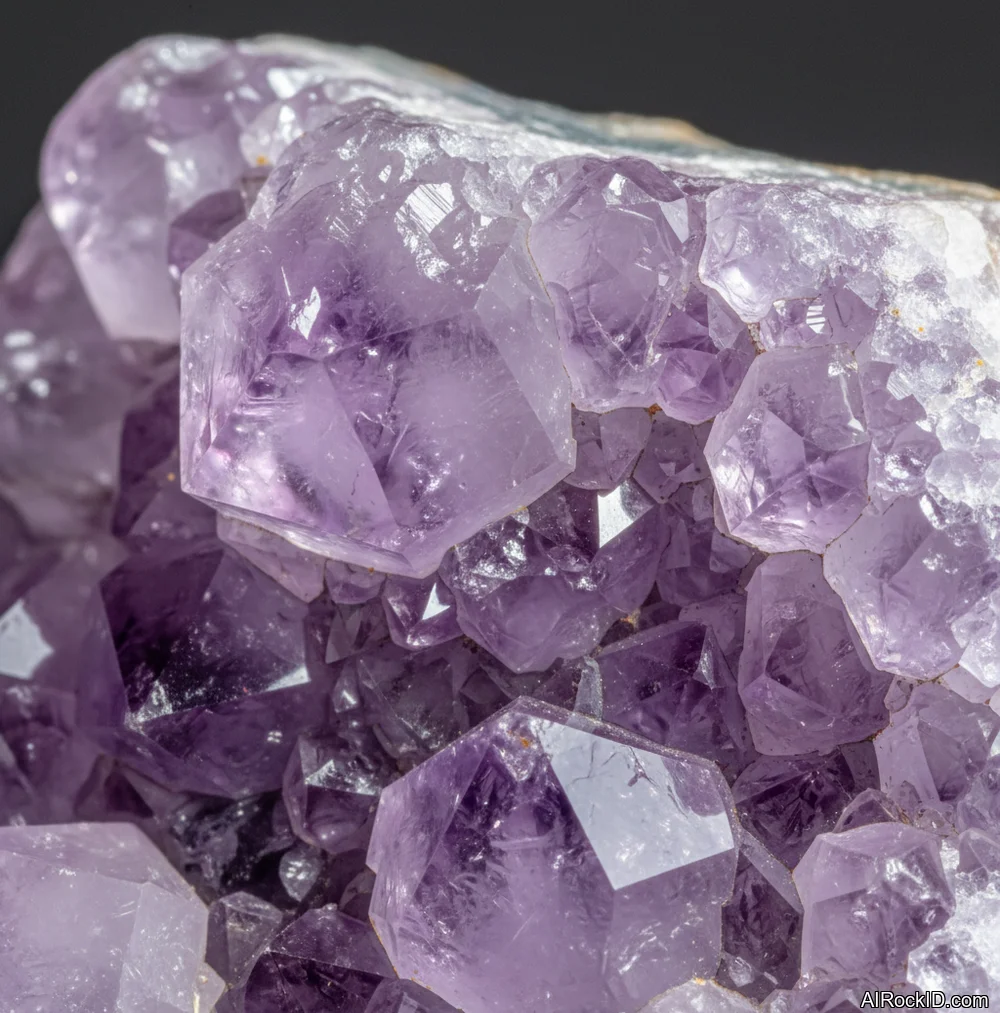
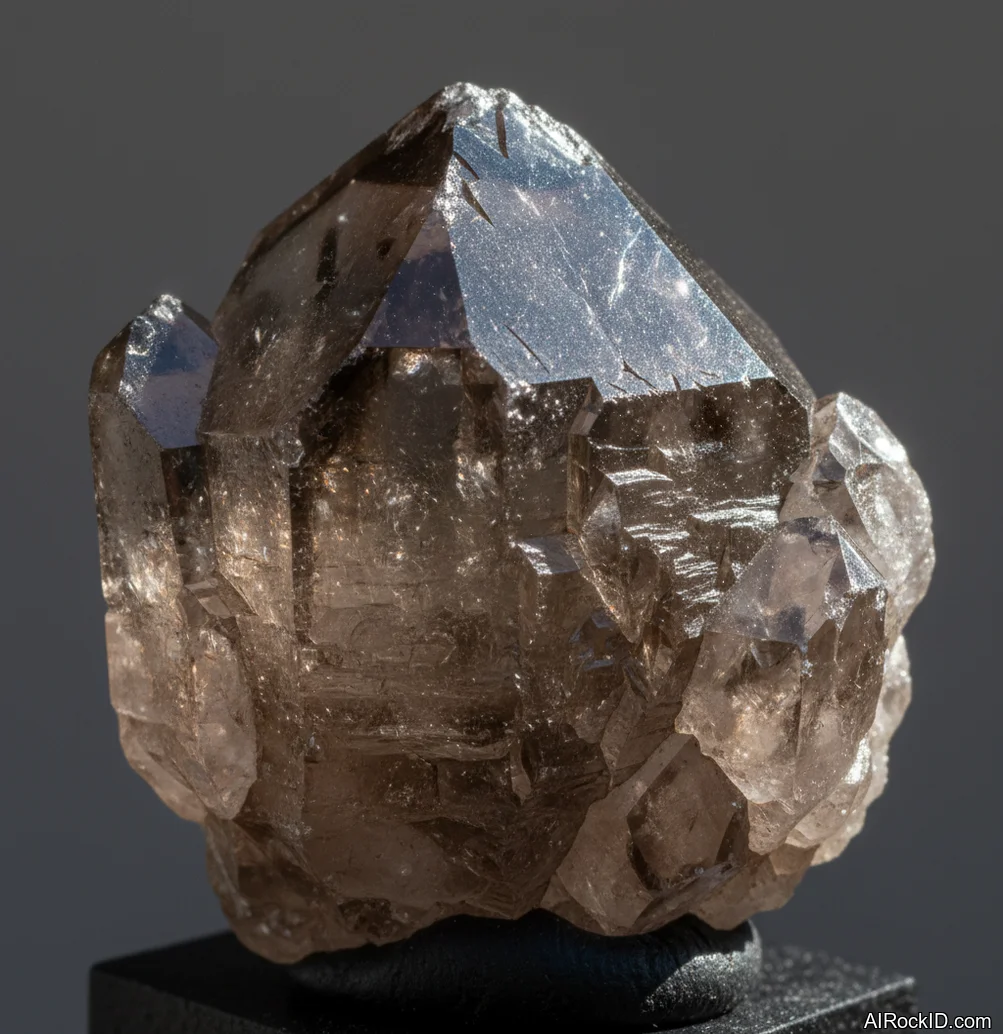
Meteoric Amethyst Canadian is just a trade name for Canadian amethyst, the purple quartz from Ontario that often comes with reddish hematite staining and a little smoky tone mixed in.
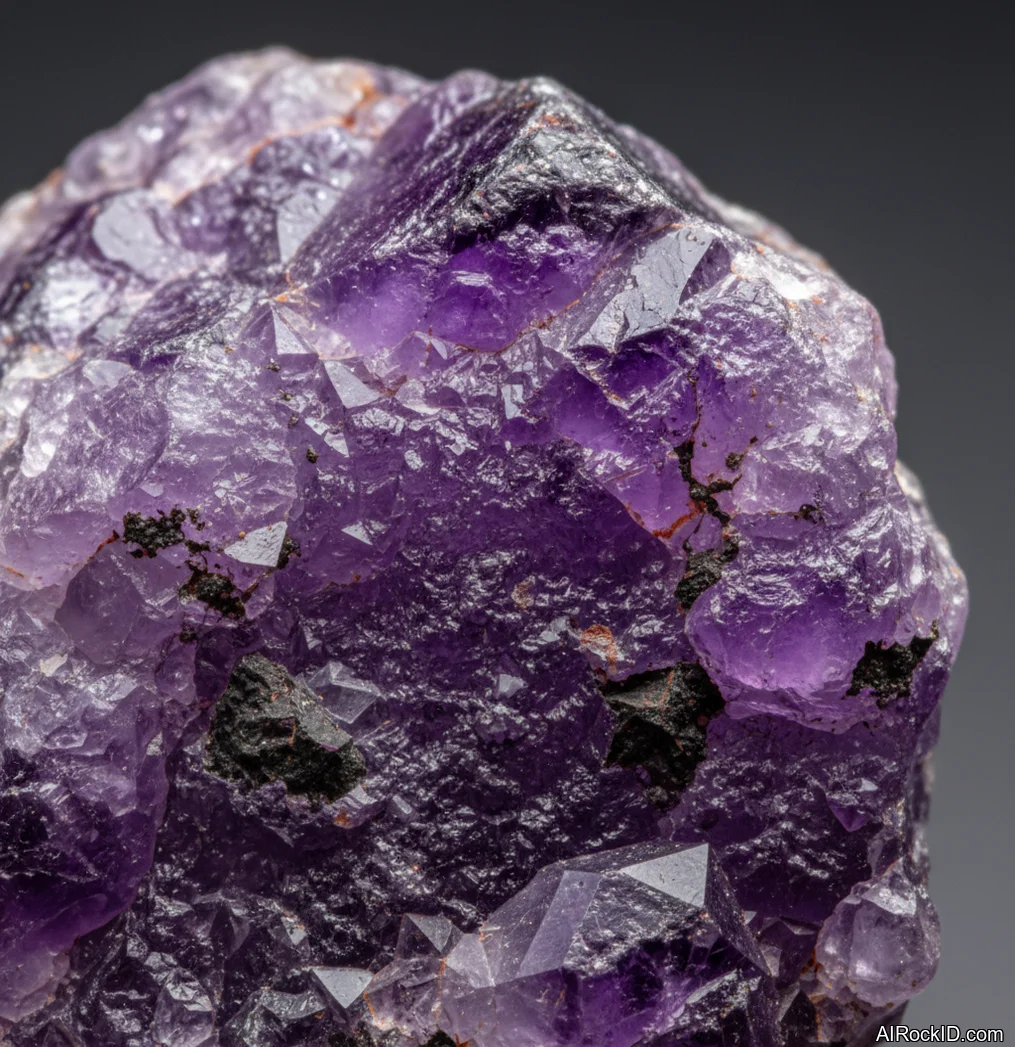
Pick up a Thunder Bay chunk and you notice the weight immediately. Real quartz has that solid, honest heft. And it stays cool in your palm longer than a piece of glass would, even after you’ve been holding it for a bit. The broken surfaces catch light with that sugary, grit-like sparkle, even when the points are scuffed up (you know, the kind of dings that happen when it’s been rattling around in someone’s pocket). Color-wise, Canadian material usually sits in that grape-jelly purple zone, then it’ll dip into inky patches, and you’ll see rusty red along cracks or down at the base where iron oxides worked their way through.
The “meteoric” part is where people start getting loose with the wording. Some sellers just mean it looks like it came from space because of the dark matrix and the red streaking. But other sellers hint at an impact-related origin, and that’s a different claim. Thing is, in practice you’re still buying amethyst (SiO2) from a known Canadian district. If you want it for the look, fine. If you’re paying extra because you think it’s literally from a meteorite, slow down. Ask for paperwork. Why guess?
Origin & History
Amethyst as a name has been around forever. It comes from the Greek *amethystos*, basically meaning “not drunk,” and people have linked it with sobriety for a long time. That’s the basic amethyst backstory.
But Canadian amethyst is a newer, collector and jewelry-market thing tied to Ontario’s Lake Superior region, especially around Thunder Bay. Stuff from that area really started getting widely known in the late 20th century, once the deposits were developed for specimens and lapidary work. And “Meteoric Amethyst Canadian”? That isn’t a formal mineral term. It’s a marketing label you’ll run into online and at shows, and it usually just means that darker, iron-stained Canadian look, not a new mineral or some new quartz variety.
Where Is Meteoric Amethyst Canadian Found?
It’s found in Ontario, Canada, most famously in the Thunder Bay area where amethyst forms in veins and cavities tied to ancient volcanic rocks around Lake Superior.
Formation
Most Canadian amethyst shows up after silica-rich fluids squeeze through cracks and little open pockets in hard rock, then cool slowly enough that quartz crystals actually have time to form. The purple comes from tiny bits of iron in the quartz, plus natural radiation doing its thing over a long stretch of time. Simple recipe. Reliable.
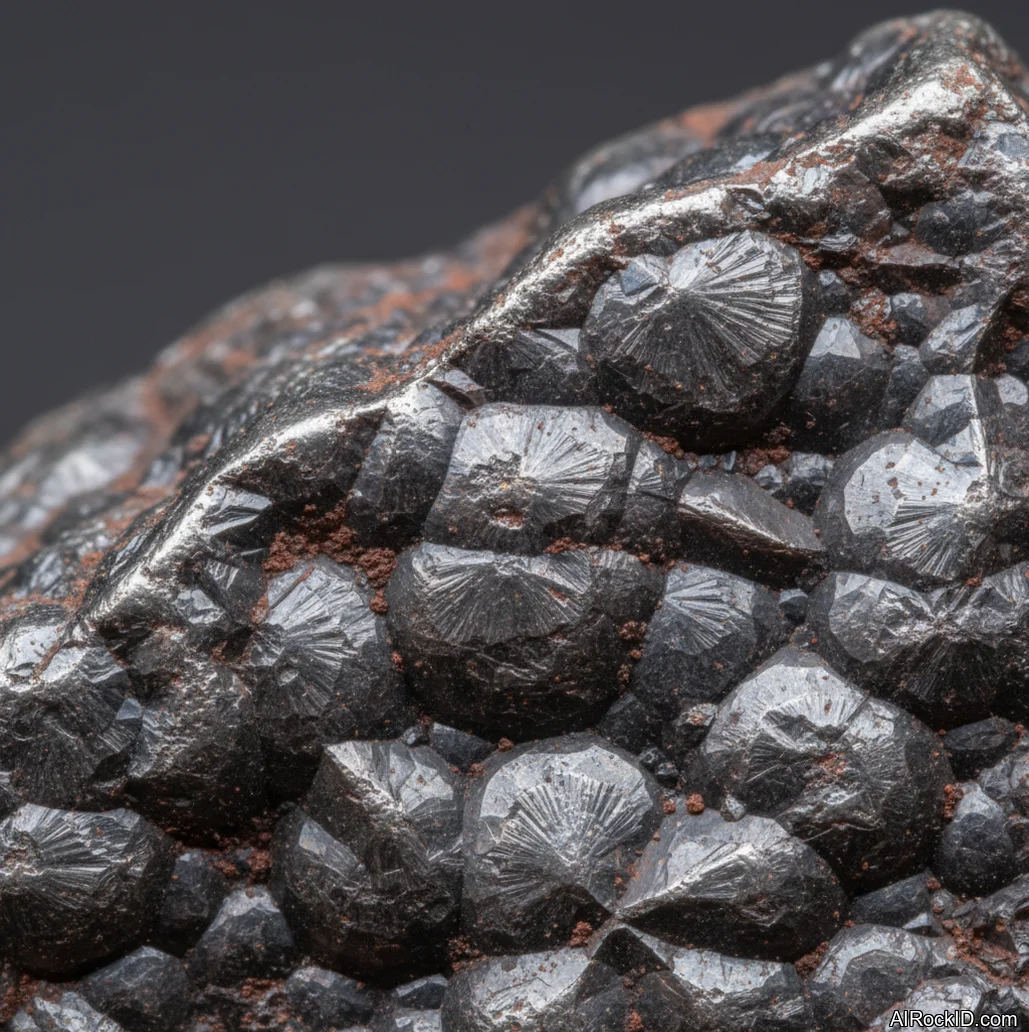
And around Thunder Bay, you’ll usually spot the amethyst perched on a darker host rock with iron oxides hanging around it. That rusty red hematite staining isn’t paint. It’s iron that got moved along with the fluids and then oxidized, and it likes settling into seams and coating exposed faces (especially where the rock feels a bit rough and gritty). Look closer and you can sometimes catch color zoning in the points, like pale lavender toward the core with deeper purple at the tips, especially when you hit it with a bright LED. Who doesn’t do that the first time they see one?
How to Identify Meteoric Amethyst Canadian
Color: Purple to violet quartz, often with smoky gray tones and frequent reddish-brown hematite staining along fractures or on the matrix. Color can be patchy, with zoning from pale lilac to deep grape purple.
Luster: Vitreous (glassy) luster on clean crystal faces and fresh breaks.
If you scratch it with a steel nail, the nail won’t bite, but the quartz will scratch glass easily. Look closely at the red areas: hematite staining sits in cracks and on surfaces, it doesn’t usually soak uniformly through the whole crystal like dyed material. The real test is temperature and feel, too. Natural quartz stays cool and has sharp edges on broken bits, while a lot of resin fakes feel warm and slightly tacky when you rub them.
Properties of Meteoric Amethyst Canadian
Physical Properties
| Crystal System | Trigonal |
| Hardness (Mohs) | 7 (Hard (6-7.5)) |
| Density | 2.65 g/cm3 |
| Luster | Vitreous |
| Diaphaneity | Transparent to translucent |
| Fracture | Conchoidal |
| Streak | White |
| Magnetism | Non-magnetic |
| Colors | Purple, Violet, Lavender, Smoky gray, Reddish-brown (hematite staining) |
Chemical Properties
| Classification | Silicates |
| Formula | SiO2 |
| Elements | Si, O |
| Common Impurities | Fe, Al, Mn, Ti |
Optical Properties
| Refractive Index | 1.544-1.553 |
| Birefringence | 0.009 |
| Pleochroism | Weak |
| Optical Character | Uniaxial |
Meteoric Amethyst Canadian Health & Safety
It’s non-toxic, so you can handle it without worrying, and plain water isn’t going to mess it up. The one thing to watch out for? Drop it, and you might chip off the sharp points.
Safety Tips
If you’re going to cut or grind it, put on safety glasses and a real respirator rated for silica dust. And keep a little water running over the cut to knock the dust down, because that fine grit gets everywhere fast (you can feel it on your teeth).
Meteoric Amethyst Canadian Value & Price
Price Range
Rough/Tumbled: $10 - $120 per specimen
Cut/Polished: $2 - $15 per carat
Prices jump fast once you’ve got strong saturation, clean terminations, and that crisp hematite contrast that actually pops when you tilt the piece under a light. Bigger clusters? Sure, you see those all the time. But the points that are genuinely sharp, with no bruised tips or little edge chips (the kind you notice the second you run a fingernail near them), plus deep color, will cost way more than most people expect.
Durability
Durable — Scratch resistance: Excellent, Toughness: Good
It’s stable for normal handling, but hard knocks will chip points and long sun exposure can slowly fade color.
How to Care for Meteoric Amethyst Canadian
Use & Storage
Store it where the points won’t rub against other quartz. I keep nicer clusters in a box with foam because amethyst points love to chip each other in a crowded shelf.
Cleaning
1) Rinse with lukewarm water to remove grit. 2) Use a soft toothbrush with a drop of mild soap for clay in crevices. 3) Rinse well and air-dry; don’t bake it in direct sun on a windowsill.
Cleanse & Charge
If you do the metaphysical cleanse thing, smoke, sound, or a quick rinse works fine. Avoid long, hot sunlight sessions if you care about color staying strong.
Placement
Looks best under a neutral white LED so you can see zoning and hematite. If it’s in a bright window, rotate it and expect some fading over a long stretch of time.
Caution
Don’t hit it with harsh acids or bleach. And don’t throw it in a tumbler unless you’re totally fine with the crisp edges getting rounded off and the shine dulling down. Heat can shift the color. Impact, even a quick knock on a countertop, will chip the terminations.
Works Well With
Meteoric Amethyst Canadian Meaning & Healing Properties
Most dealers talk about amethyst like it’s an on/off switch for sleep. In my experience, it’s not that. It’s more of a “turn the volume down” stone.
Set a chunky Canadian cluster on your desk, the kind with those tight little points that catch dust in the crevices (you’ll find yourself brushing it out with a soft paintbrush), and people usually describe the same thing: the room feels quieter, less buzzy. Like you’re a little less likely to spiral on the exact same thought for an hour. That isn’t medical care. But it’s a real pattern I’ve heard from customers for years.
Canadian material has its own vibe because of the iron staining. And yeah, that’s subjective. Still, it lines up with how people react to hematite, smoky quartz, and even heavier-feeling black stones in general. I’ve literally handed someone a pale Brazilian point that looks almost see-through at the tip, then passed them a dark Thunder Bay piece, and they’ll pick the darker one for grounding almost every time. The red seams do something to the feel. Less airy. More anchored. You can almost see it when you tilt it under a lamp and the color goes wine-dark instead of lilac.
But don’t let the “meteoric” label shove you into fantasy pricing or big claims. If you’re using it as a reminder to slow down, journal, meditate, whatever, cool. Keep it in the same bucket as candles, playlists, a warm mug in your hands (stuff that helps). Supportive tools. Not treatment.
Identify Any Crystal Instantly
Snap a photo and get properties, value, care instructions, and healing meanings in seconds.