Nundoorite
What Is Nundoorite?
Nundoorite is basically a trade-name sellers use for a stone in the crystal market. It isn’t a formally recognized mineral species with one agreed set of properties.
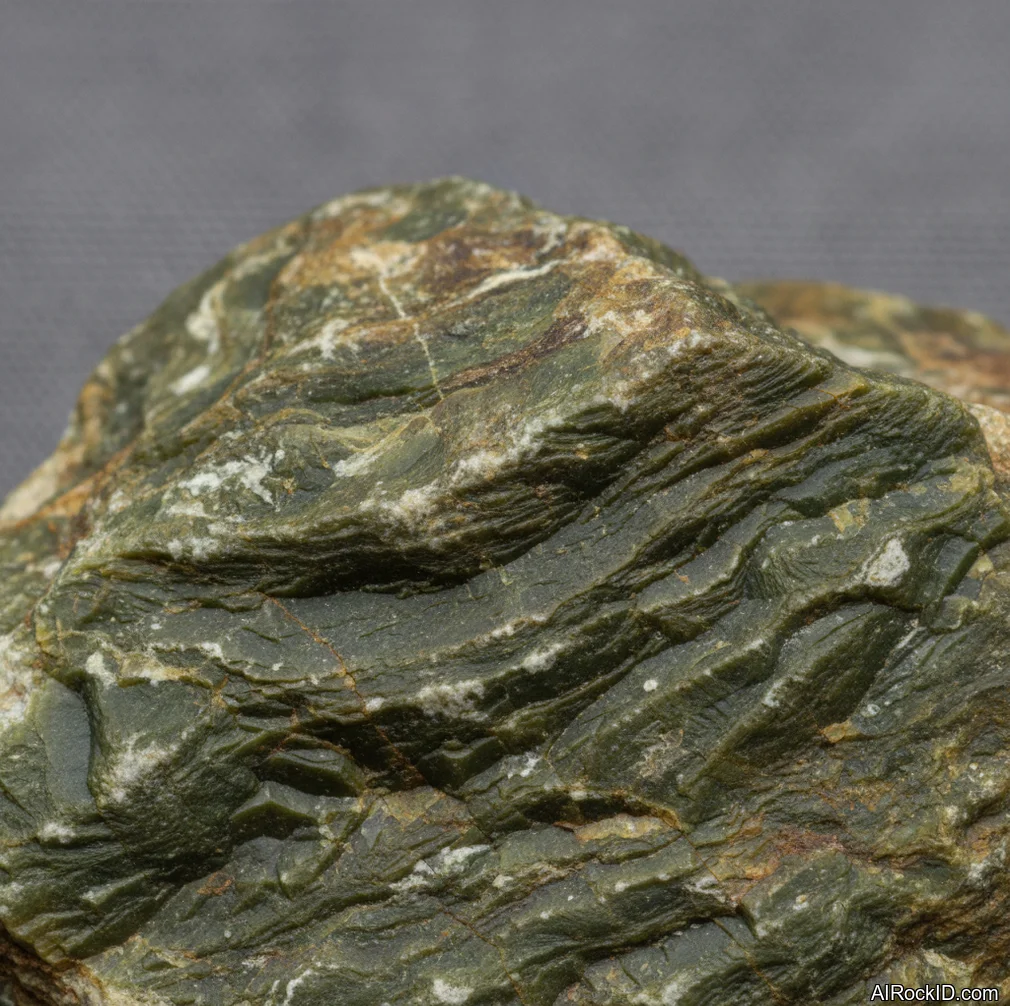
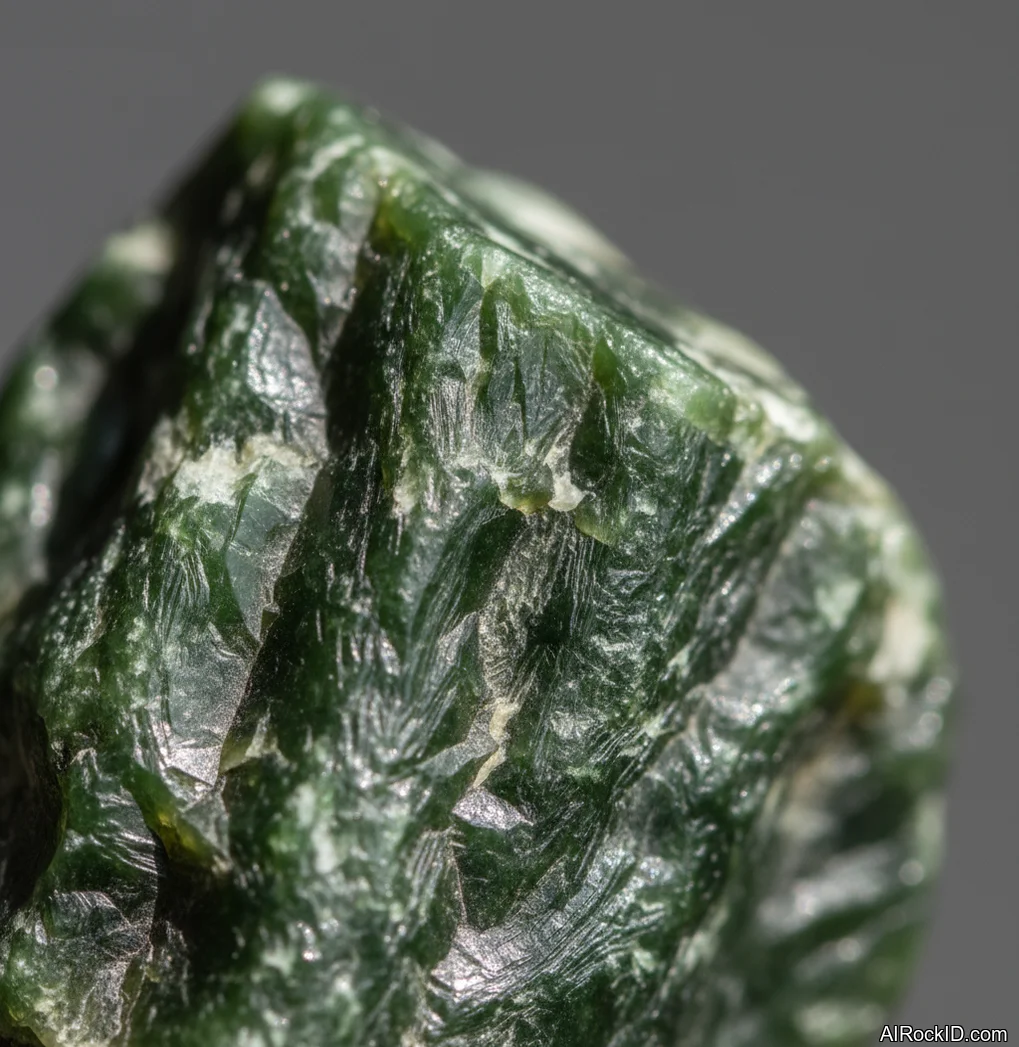
Pick up a piece and you’ll see the issue right away: it can be all over the place depending on who you buy it from. I’ve handled “Nundoorite” that felt like a dense, fine-grained rock with a waxy polish (the kind that almost drags a little under your thumb), and I’ve also run into material with the same label that acted more like a softer serpentine mix. That’s the trade-name headache. It’s handy shorthand at a gem show table when you’re flipping through bowls of stones, but it gets messy fast if you’re trying to nail down hardness, density, or optics.
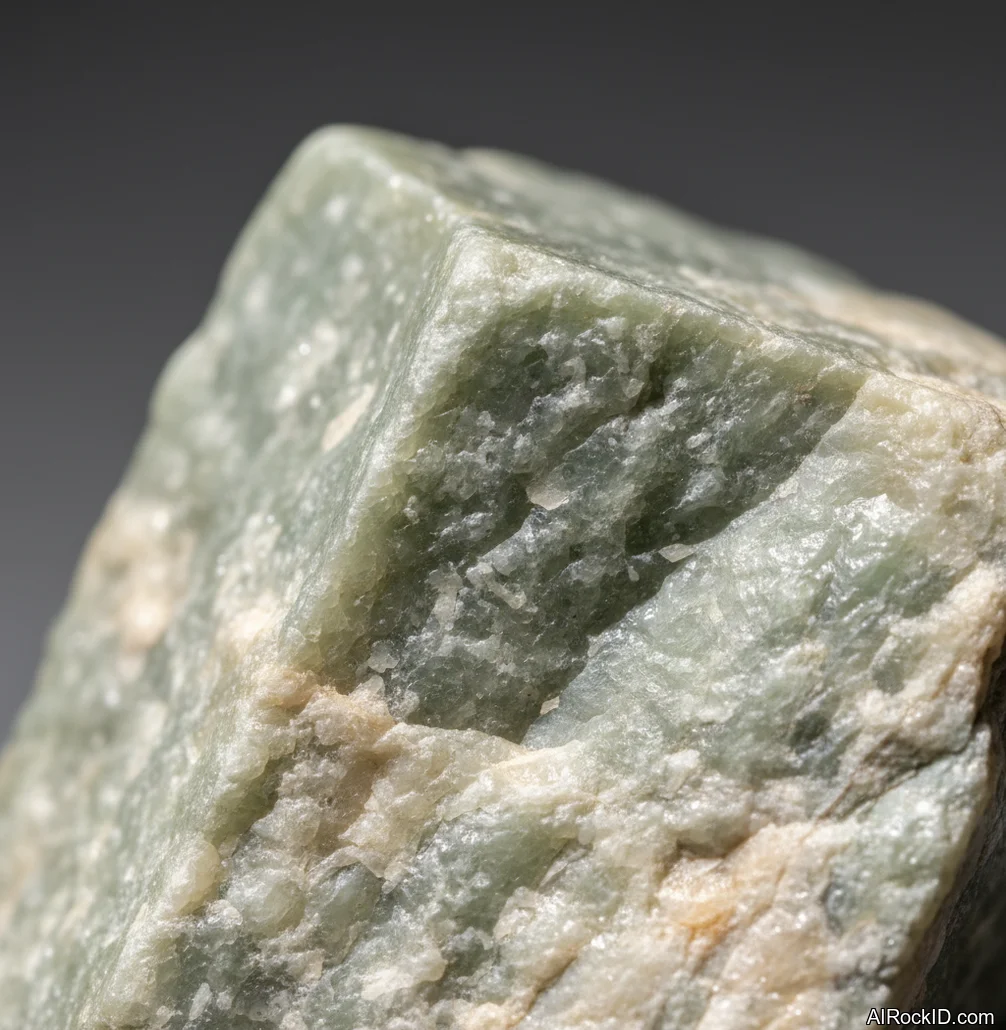
From what I’ve seen, most of the stuff sold as Nundoorite is opaque and will take a pretty decent tumble polish, usually in muted greens, smoky grays, plus those little cloudy patches that look like someone swirled milk into it. It’s the sort of material people grab as a worry stone or palm stone because it just feels good in your hand. But if you collect by species, you’re going to want a real ID, not just a tag stuck in a bowl.
Origin & History
I can’t really give you a clean, official “first described by” origin story for Nundoorite, because it doesn’t show up as an approved mineral name in the standard references collectors usually lean on. In the real world, it behaves more like a market nickname, kind of like when a dealer sells “green moonstone” and, once you’ve actually got it in your hand, it turns out to be something else.
Thing is, the name sure looks like it was built off a place name. And yeah, I’ve heard sellers claim it comes from a specific locality, but I’ve never been shown paperwork that holds up once you get past the sales pitch. Most dealers aren’t trying to scam anyone, either. They’re usually just repeating what they were told when they bought the parcel (you see that a lot). But if you want certainty, you’ve got to test it.
Where Is Nundoorite Found?
Because “Nundoorite” is used as a trade name, reported localities vary by seller and can’t be treated as reliable without supporting documentation.
Formation
Thing is, with trade-name stuff, how it formed depends entirely on what the “stone” really is under the hood. The batches I’ve actually had in my hands that feel serpentine-ish probably came from altered ultramafic rock, where hot fluids move through, swap minerals around, and you end up with that slick, waxy feel that almost seems to grab your skin a bit when you rub it.
But I’ve also run into “Nundoorite” that didn’t read as serpentine at all. Little pale flecks scattered through it, a kind of mixed-rock look, and the texture just wasn’t the same. So what’s the point of guessing? The only way to stop hand-waving is basic gemology or a lab ID. Once you’ve nailed down the actual species or rock type, the formation story clicks into place instead of staying a shrug.
How to Identify Nundoorite
Color: Most pieces sold as Nundoorite are opaque gray-green to olive, sometimes with smoky gray patches or pale clouding. Color is usually uneven, more mottled than banded.
Luster: Polished surfaces usually read waxy to dull-vitreous, depending on the exact material in the batch.
Look closely at the polish. If it has that slightly greasy, soapstone-like feel and a soft-looking shine, you might be in serpentine territory. If you scratch it with a steel pin and it marks easily, don’t assume it’s a harder gemstone just because it’s shiny. And if you’ve got a loupe, check for tiny sparkly grains versus a smooth, microcrystalline look. Those clues tell you if you’re holding a single mineral, or a rock mix being sold under one name.
Properties of Nundoorite
Physical Properties
| Crystal System | Amorphous |
| Hardness (Mohs) | Unknown (Medium (4-6)) |
| Density | Unknown |
| Luster | Waxy |
| Diaphaneity | Opaque |
| Fracture | Uneven |
| Streak | Unknown |
| Magnetism | Non-magnetic |
| Colors | gray-green, olive green, smoky gray |
Chemical Properties
| Classification | Unknown |
| Formula | Unknown |
| Elements | |
| Common Impurities |
Optical Properties
| Refractive Index | Unknown |
| Birefringence | None |
| Pleochroism | None |
| Optical Character | Isotropic |
Nundoorite Health & Safety
Handling it is usually pretty low-risk. But if you start sawing or grinding some random stone you can’t ID, you’re going to kick up a fine, gritty dust that can irritate your throat and lungs (it gets on your hands too, like chalky grit). And if it turns out the material is from a serpentine family, dust control suddenly matters a lot more. Why gamble?
Safety Tips
Use wet cutting. Wear a proper respirator (not one of those flimsy paper masks). And when you’re done, wipe up the slurry while it’s still damp, instead of sweeping up dry dust and kicking it back into the air.
Nundoorite Value & Price
Price Range
Rough/Tumbled: $5 - $30 per palm stone
Price mostly comes down to how well it’s polished, how big it is, and whether the surface looks clean or kind of scuffed up under a bright light. Thing is, the main thing holding it back is nobody being totally sure what it actually is (that question mark scares people), so serious collectors just won’t pay much.
Durability
Moderate — Scratch resistance: Fair, Toughness: Fair
Most pieces sold under this name handle normal use fine, but softer batches will pick up scratches and edge dings quickly.
How to Care for Nundoorite
Use & Storage
Keep it in a soft pouch if it rides around in a pocket or bag. Softer pieces will get that hazy scuffed look fast if they rub against quartz or metal.
Cleaning
1) Rinse under lukewarm water. 2) Use a drop of mild soap and your fingers or a soft toothbrush to lift skin oils. 3) Rinse well and pat dry with a microfiber cloth.
Cleanse & Charge
For non-physical cleansing, smoke, sound, or a quick moonlight sit all work fine. If you’re unsure of hardness, skip salt scrubs since they can leave micro-scratches.
Placement
I like it as a palm stone on a desk or by the bed because it’s comfortable to hold. Just don’t park it on a sunny windowsill if the color seems prone to fading in your batch.
Caution
Don’t let the shiny finish fool you. If you can put a little pressure on it with the tip of a knife and it scratches, assume it’s a softer stone. So skip anything that’ll grind on it, bang it around, or get it dragged through rough wear.
Works Well With
Nundoorite Meaning & Healing Properties
People who pick up Nundoorite in the metaphysical world are usually after something steady. Grounding. The kind of stone you clamp in your palm when your brain starts doing that late night spiral thing and you just want it to stop, right?
That matches what I’ve felt with it. The pieces I’ve actually handled are usually cool when you first grab them, like they’ve been sitting on a windowsill out of the sun, and they’ve got that plain heaviness that’s oddly calming. Not shiny. Not trying to impress you. And honestly, when a stone isn’t screaming for attention, it’s way easier to use it as a simple focus object.
But, thing is, there’s a catch. “Nundoorite” doesn’t pin down one single mineral, so the “feel” can change depending on what you really bought. I’ve had one batch that felt almost buttery under my thumb (kind of like it wanted to slide), and then another batch that was drier and harder, almost gritty, like it could’ve been a different rock altogether. If you’re doing energy work, you’re reacting to that exact piece in your hand, not some tidy textbook description.
And none of this is medical advice. If you’re reaching for it as part of a stress routine or for sleep, treat it like a physical cue. Hold it. Breathe. Put your phone down. Build the habit. A stone can fit into the ritual, sure. It can’t replace treatment.
Identify Any Crystal Instantly
Snap a photo and get properties, value, care instructions, and healing meanings in seconds.