Orpiment
What Is Orpiment?
Orpiment is that bright yellow arsenic sulfide mineral with the chemical formula As2S3.
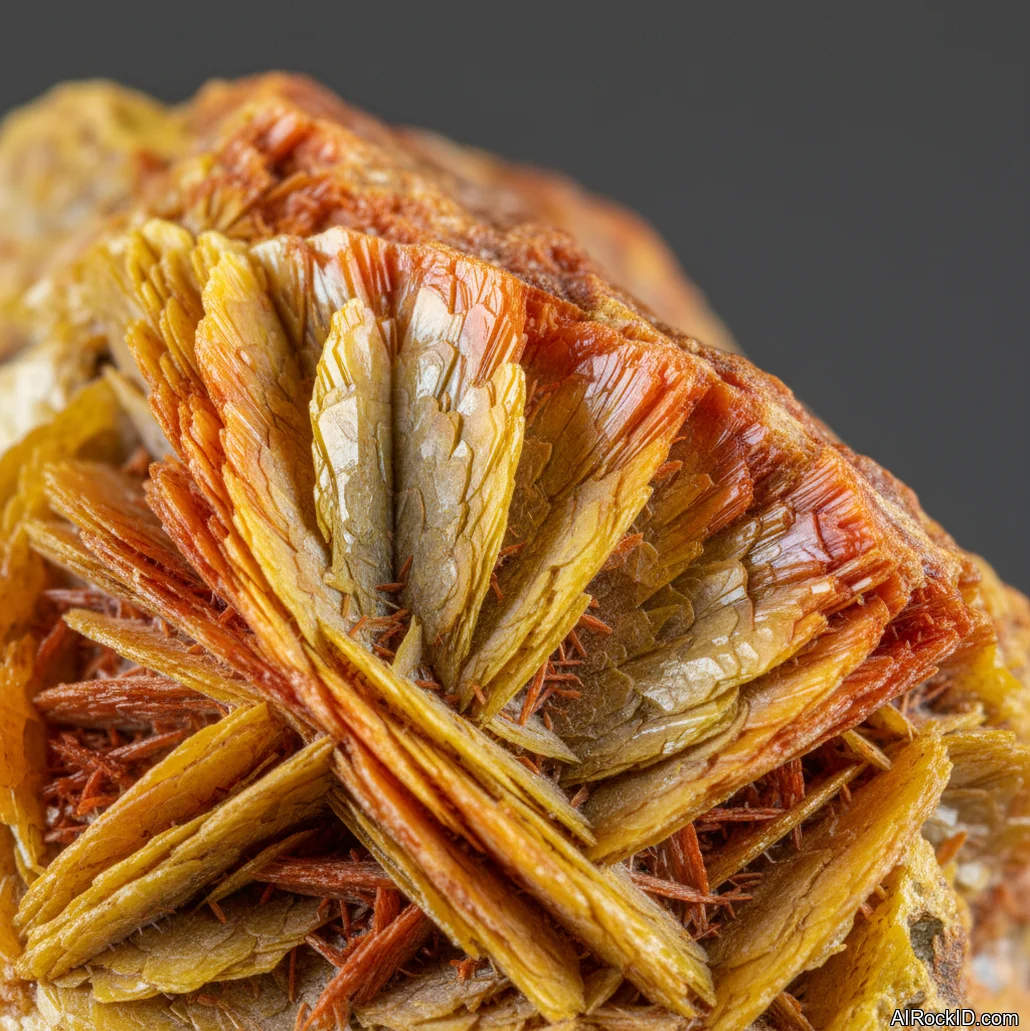
Grab a decent cabinet piece and, honestly, the first thing you notice is the feel. Soft. Almost waxy along the edges, like it wants to smear instead of chip if you bump it. The color can look fake in the best way. Sometimes it’s straight lemon-yellow, other times it goes deep gold, and you’ll even catch a slightly greenish cast when there’s realgar sitting nearby.
But this isn’t a “wear it every day” kind of mineral. I’ve watched beautiful plates get scuffed from nothing more than sliding around in a flat. And if you’ve handled one of the flaky specimens, you already know what happens next: those powdery bits cling to your fingers (and then you wonder where else they’ve ended up).
Tilt it under a desk lamp and you see why people put up with the hassle. Fresh faces have this resinous, slightly greasy shine that flashes as you move it. Thing is, it doesn’t forgive rough handling at all, and sunlight can be brutal over time. Keep it out of the window. Seriously.
Origin & History
Pliny the Elder mentioned this yellow arsenic mineral people ground up for pigment, and honestly, that old paint trade is pretty much why orpiment ever got famous in the first place. The name traces back to the Latin *auripigmentum*, which literally means “gold pigment,” since powdered orpiment made a sharp, bright yellow paint way before modern pigments were even a thing.
As an actual mineral species, orpiment got pinned down in the early days of mineralogy when folks started sorting “yellow arsenic” out from similar-looking stuff like sulfur or yellow ochre. You see it all over old mining and alchemy writing too, partly because it shows up alongside realgar and other weird hydrothermal minerals that made people stop and stare (I mean, who wouldn’t?).
Where Is Orpiment Found?
Orpiment turns up in low-temperature hydrothermal areas and hot-spring style deposits, often with realgar, stibnite, and quartz.
Formation
Most of the orpiment I’ve handled at shows seems to come out of low-temperature hydrothermal setups, where arsenic-bearing fluids creep through fractures and little cavities. Late-stage mineralization, basically. It’ll paint the insides of vugs, stack up as bladed or foliated clumps, or show up as these paper-thin crusts that really do look like someone brushed yellow pigment onto the rock.
Compared to a hard, stubborn sulfide like pyrite, orpiment just feels like it grew under gentler conditions. You’ll usually see it hanging out with realgar (the orange-red arsenic sulfide), and sometimes the two fade into each other in the same pocket. But it can also show up later as a secondary mineral when other arsenic minerals alter, especially near the surface when oxygen and water get involved.
How to Identify Orpiment
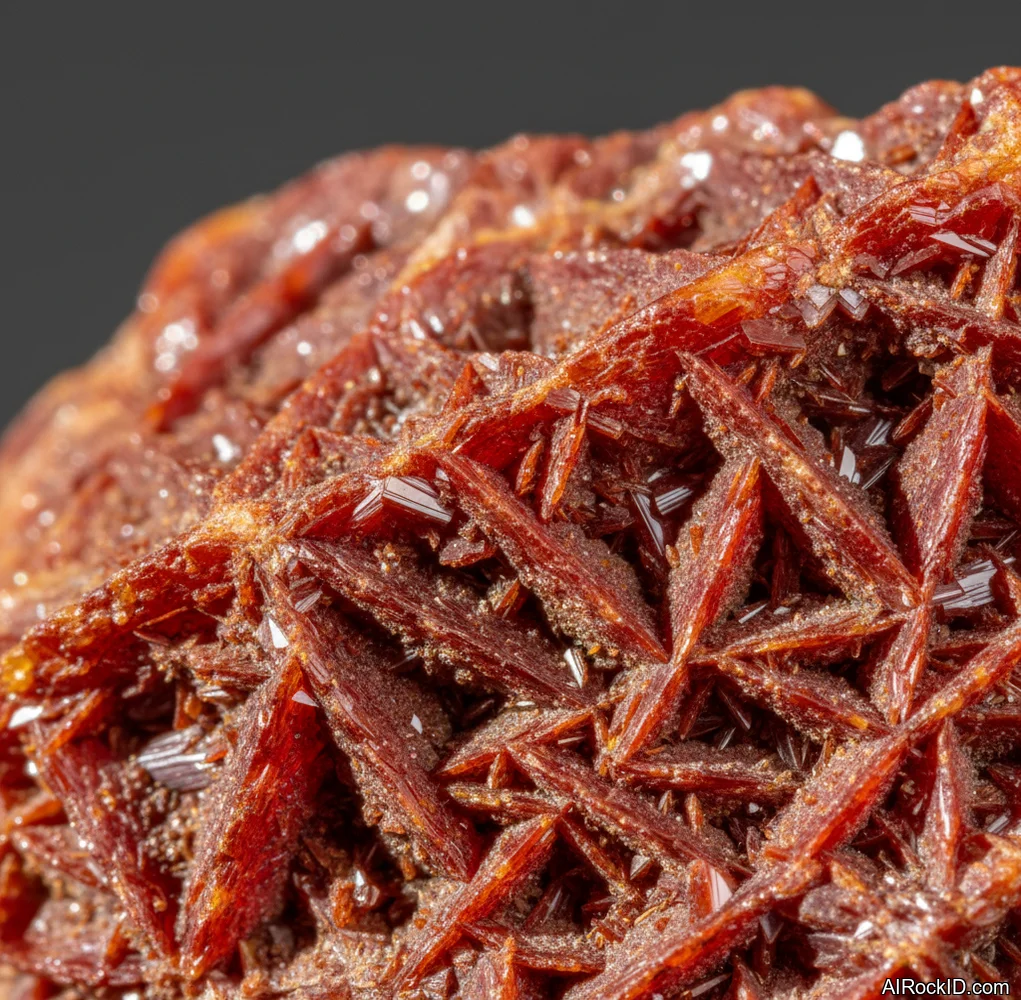
Color: Typically bright lemon-yellow to golden yellow; can shift slightly greenish-yellow when mixed visually with nearby realgar or other arsenic minerals.
Luster: Resinous to pearly on cleavage surfaces.
If you scratch it with a fingernail, it’ll often mark or flake, because it’s down around Mohs 1.5–2. The real test is the feel: good orpiment has a slightly greasy, soft look on edges, not the gritty look you get with sulfur crusts. And don’t do taste tests or blow on dust. I’ve watched people handle crumbly pieces at a table and then eat snacks. Don’t be that person.
Properties of Orpiment
Physical Properties
| Crystal System | Monoclinic |
| Hardness (Mohs) | 1.5-2 (Very Soft (1-2)) |
| Density | 3.45-3.50 g/cm3 |
| Luster | Resinous |
| Diaphaneity | Transparent to translucent |
| Fracture | Uneven |
| Streak | pale yellow |
| Magnetism | Non-magnetic |
| Colors | lemon-yellow, golden yellow, yellow-green |
Chemical Properties
| Classification | Sulfides |
| Formula | As2S3 |
| Elements | As, S |
| Common Impurities | Sb, Hg, Se |
Optical Properties
| Refractive Index | 2.40-2.65 |
| Birefringence | 0.12 |
| Pleochroism | Strong |
| Optical Character | Biaxial |
Orpiment Health & Safety
Solid, unbroken pieces are usually fine to pick up for a moment, but don’t scrape them or do anything that kicks up dust. And when you’re done, wash your hands, even if they don’t look dirty. But don’t use it for elixirs, soaking in water, or anything else where bits could end up in your mouth. Why risk transferring material like that?
Safety Tips
Use a tray when you carry it, then put it straight into a closed box. Don’t rub or brush any fragile spots. Seriously, just don’t. (Even a soft brush can snag.) Wash your hands when you’re done, and keep it away from kids, pets, plus anywhere food’s handled.
Orpiment Value & Price
Price Range
Rough/Tumbled: $20 - $600 per specimen
Prices jump fast when the color’s clean and the crystals are crisp, with those sharp edges you can feel if you run a fingertip along the face, not that crumbly, sandy stuff that sheds grit. Big, intact plates with barely any dings (no chipped corners, no crushed points) and solid provenance go for way more than the little crusty chunks.
Durability
Fragile — Scratch resistance: Poor, Toughness: Poor
It scratches extremely easily and can degrade or fade with prolonged light exposure and rough handling.
How to Care for Orpiment
Use & Storage
Store it alone in a perky box or a closed acrylic case so it doesn’t get rubbed by harder minerals. I keep mine in a drawer, not on a sunny shelf.
Cleaning
1) Do not use water, ultrasonic cleaners, or steam. 2) Use a soft air puffer or very gentle, dry artist brush to move loose dust without grinding the surface. 3) If crumbs are present, leave them alone and stabilize the specimen in a box rather than trying to “clean it up.”
Cleanse & Charge
If you do the metaphysical side, stick to smoke, sound, or moonlight at a distance. Don’t bury it in soil or rinse it.
Placement
Best placement is inside a display case where it won’t be touched and won’t get direct sun. Keep it away from humidity and anywhere it can get bumped.
Caution
Toxic arsenic mineral. Seriously, don’t breathe the dust. Don’t put it in water. Don’t use it for crystal elixirs (why risk it?). And when you’re done handling it, wash your hands well, like you’ve got that faint gritty residue on your fingertips.
Works Well With
Orpiment Meaning & Healing Properties
At first glance, orpiment looks like someone trapped sunlight inside a rock, so a lot of people sort it straight into the “confidence and willpower” category. I get it. When I’m labeling a tray at a show, that yellow grabs you from the other side of the table like a fresh swipe of highlighter ink. In personal practice, folks tie it to mental sharpness, holding boundaries, and actually saying the hard thing out loud (even when your throat tightens a little).
But here’s the honest collector reality: you don’t handle orpiment the way you handle quartz or agate. It’s soft, it’s toxic as dust, and it’s the kind of piece you admire from a bit of distance. If you’ve ever had it in hand, you know the surface can look almost satiny in the light, and you start thinking, “Yeah, I probably shouldn’t be rubbing this all day.” So if someone wants to work with it, I usually point them toward using it as a visual anchor in a case while journaling or meditating, not as a pocket stone. And no “water charging.” Just don’t.
On the emotional side, people tend to link yellow stones with confidence, focus, and getting unstuck. If you’re into that framework, orpiment usually gets treated like a sharp, bright tool, not a cozy comfort stone. Keep it grounded. Keep it practical. And look, none of this is medical care, and it shouldn’t replace it.
Identify Any Crystal Instantly
Snap a photo and get properties, value, care instructions, and healing meanings in seconds.