Pargasite


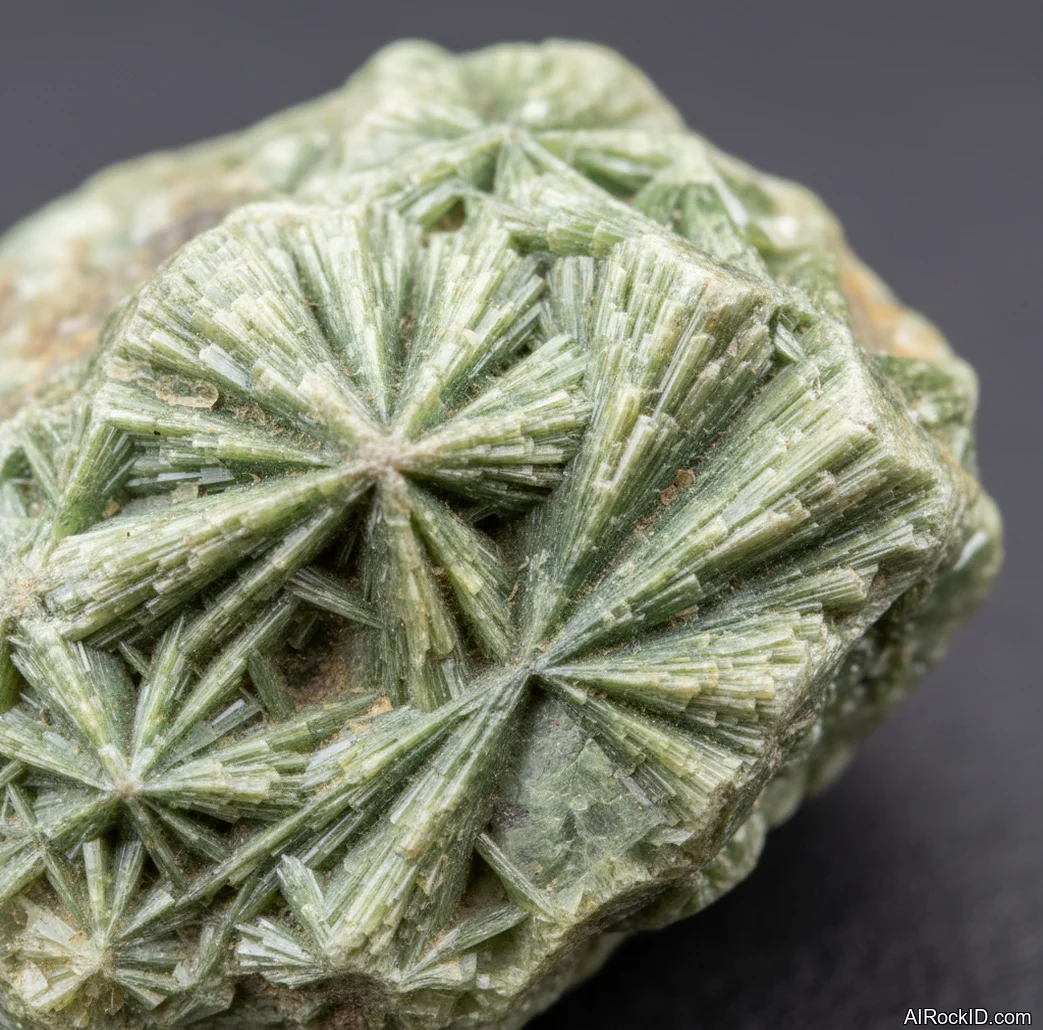
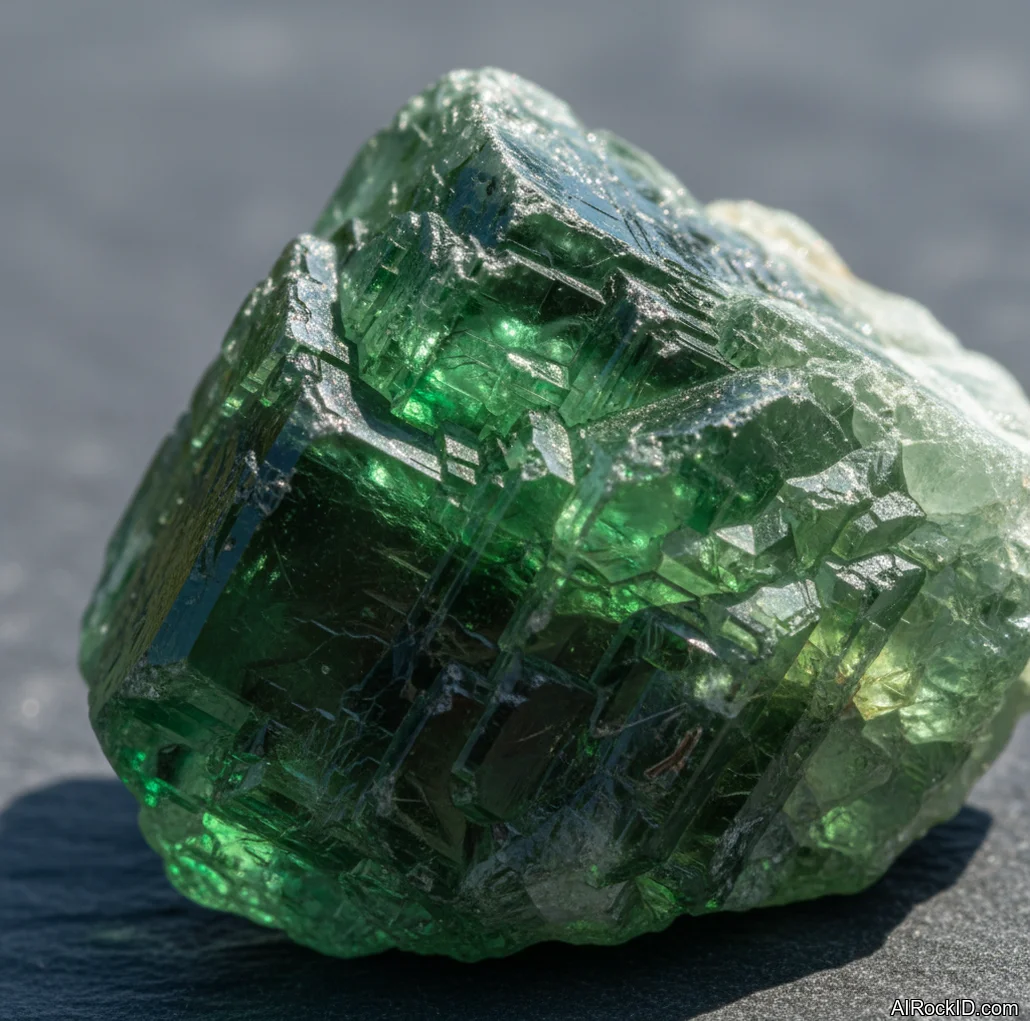
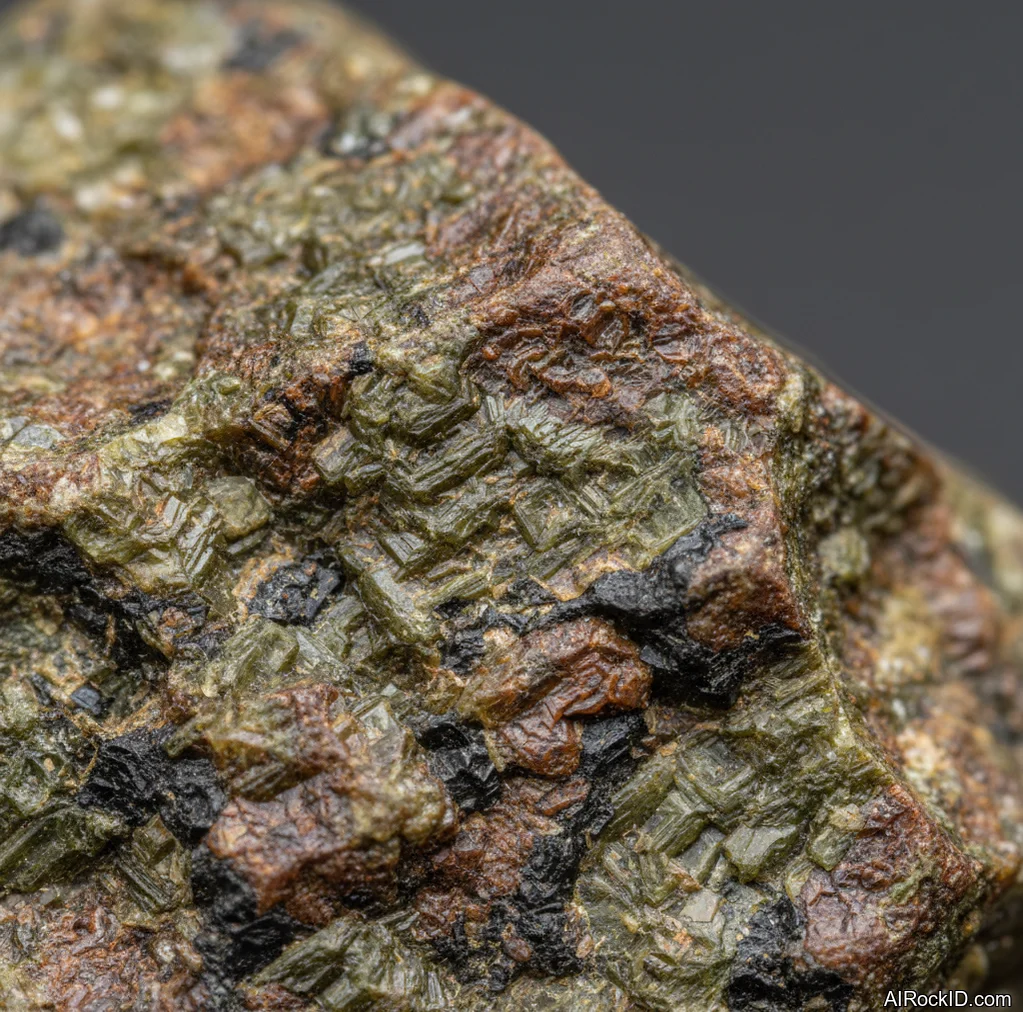
Quick answer: Pargasite is a calcium-rich amphibole typically seen in dark green, brownish green, gray-green, or black crystals and granular masses. It is most often identified by its amphibole cleavage, vitreous to dull luster, and occurrence in metamorphic rocks such as marbles and skarns.
AI Rock ID can help compare a suspected pargasite specimen with visually similar amphiboles and pyroxenes using color, crystal habit, and cleavage clues. RockIdentifier.io provides reference information that can support visual identification, but lab testing may be needed for confident amphibole species confirmation.
Good fit
- Collectors interested in amphibole-group minerals
- Specimens with dark green to black prismatic crystals
- Geology collections focused on metamorphic or skarn minerals
- Buyers who are comfortable with mineral IDs that may require locality and testing support
Not a good fit
- Anyone expecting a bright, transparent faceted gemstone
- Buyers who need a species-level ID without laboratory confirmation
- Households where fragile splinters or mineral dust may be mishandled
Most commonly confused with
- Hornblende: Hornblende is a broader amphibole name often used for dark amphiboles; pargasite is a more specific calcic amphibole species.
- Actinolite: Actinolite is commonly lighter green and may form fibrous or bladed habits, while pargasite is often darker and more blocky to prismatic.
- Diopside: Diopside is a pyroxene with cleavage near 90 degrees, unlike amphiboles such as pargasite that show cleavage near 56 and 124 degrees.
- Tourmaline: Dark tourmaline commonly has striated, three-sided prismatic crystals and lacks the characteristic amphibole cleavage pattern.
Pargasite vs. Similar Dark Green Minerals
| Feature | Pargasite | Common Lookalike |
|---|---|---|
| Mineral group | Calcic amphibole | Diopside is a pyroxene |
| Cleavage | Two directions near 56° and 124° | Pyroxenes show cleavage closer to 90° |
| Typical color | Dark green, gray-green, brownish green, black | Actinolite is often lighter green |
| Crystal habit | Prismatic, blocky, granular, or massive | Tourmaline may show strongly striated prisms |
| Best ID clue | Amphibole cleavage plus confirmed chemistry | Color alone is not reliable |
AI identification confidence
AI identification of pargasite is usually moderate rather than definitive because many dark amphiboles look alike in photos. Confidence improves when images show cleavage faces, crystal cross-sections, matrix rock, scale, and a known locality.
When AI gets it wrong
- The specimen is labeled only by color, such as “green-black crystal,” without visible cleavage.
- The photo shows a polished surface where crystal habit and cleavage are hidden.
- The mineral occurs in a mixed metamorphic rock with several dark silicates.
- Lighting makes black hornblende, dark diopside, or tourmaline appear similar to pargasite.
Final recommendation
For buying, treat pargasite as a collector mineral rather than a common jewelry stone. A reliable listing should include locality, crystal size, matrix description, and any supporting analytical information if the species-level ID matters.
How to Verify a Pargasite Label
A pargasite label is strongest when it includes a specific locality and when the specimen matches known pargasite occurrences from that area. Visual inspection can suggest an amphibole, but distinguishing pargasite from related amphiboles often requires chemical analysis such as electron microprobe or Raman-supported study. Older labels may use broad names like hornblende, so provenance and testing matter for exact identification.
Buying Tips for Pargasite Specimens
Look for listings that show multiple angles, natural crystal faces, and the host rock rather than only a dark polished surface. Be cautious with vague names such as “green hornblende,” “black crystal,” or “amphibole” if the seller claims the specimen is specifically pargasite without locality data. Fine, well-formed crystals on matrix usually carry more collector interest than broken massive pieces.
Best Photos for Pargasite Identification
Use sharp, well-lit photos that show the crystal termination, side faces, broken surfaces, and any cleavage reflections. Include a ruler or coin for scale and photograph the specimen both dry and from different angles. If possible, include the label or locality information because pargasite identification is strongly supported by geological context.
What Is Pargasite?
Pargasite is a calcic amphibole mineral. It’s usually dark green to black, and it tends to grow as prismatic crystals with two good cleavages that meet at about 56 and 124 degrees.
Grab a hand specimen and the first thing you notice is what it isn’t. It’s not “feathery” like the really fibrous amphiboles. Most pargasite I’ve handled just feels blocky and solid in your fingers, and it stays cool in your palm the way fresh-broken silicates do (that almost damp-cool feel, even when it’s bone dry). Indoors it can look nearly black. Then you step under a brighter lamp and, suddenly, it throws this bottle-green flash off a cleavage face.
People mix it up with hornblende at a glance, and yeah, that’s fair, since pargasite sits in the hornblende family. But if you’ve got a clean face to work with, the amphibole cleavage gives it away fast. Tilt it slowly and you’ll catch those flat planes meeting at that classic not-quite-90-degree angle. It’s more of a collector mineral than a “crystal shop” stone, and most pieces come out pretty matrixy, not as neat single crystals.
Origin & History
Pargasite got its first proper description in 1814, when Anders Gustaf Ekeberg worked it up from material collected at Pargas (Parainen), Finland. The name’s just the place name lifted straight off the map, which is how a bunch of amphiboles ended up being named in that era.
But it’s not just trivia. Pargasite sits in a slice of the amphibole series that petrologists actually lean on, and spotting it in a rock can clue you in on pressure, temperature, and fluid conditions during metamorphism. So even if a piece isn’t “display perfect” (maybe it’s a bit dull, edges scuffed, or the crystal faces aren’t all there), it still carries a real story.
Where Is Pargasite Found?
You’ll run into pargasite in metamorphosed limestones and skarns, plus some mafic to ultramafic rocks. Finland is the classic name locality, but good collector material pops up in Canada, the Alps, and a handful of other metamorphic belts.
Formation
Pargasite usually turns up where hot fluids have been chewing on carbonate rocks. Skarns are the classic spot. When magma bakes limestone or dolostone and starts pushing silica and aluminum through the rock, amphiboles like pargasite can grow right there with calcite, diopside, garnet, scapolite (and, yeah, a lot of dust in your hand lens if you’ve been breaking fresh surfaces).
Compared to tremolite-actinolite, pargasite generally wants more aluminum and sodium in the recipe. So it shows up in higher-grade metamorphic settings, and that’s also why it’s annoying to ID just by gut feel. In the field, most people call it hornblende until they’ve got a microscope or chemistry to back it up, unless the area is already known for pargasite.
How to Identify Pargasite
Color: Most pieces run dark green, greenish black, or nearly black. Thin edges can show a clearer green when backlit.
Luster: Vitreous on fresh cleavage faces, turning a bit dull on weathered surfaces.
Pick up a broken chip and rotate it under a single light source. Those two amphibole cleavages will flash like little mirrors and they meet at angles that aren’t 90 degrees. If you scratch it with a steel nail, you won’t get far, but a quartz point will bite it. And in hand, it often looks “blacker than it is” until you put it next to true opaque minerals like magnetite.
Common Look-Alikes
Pargasite is sometimes confused with these materials:
- Hornblende (common amphibole sold as “black amphibole”; cleavage angles and stubby prisms overlap a lot)
- Actinolite (dark green massive chunks, especially when it’s not obviously fibrous)
- Augite (dark pyroxene; can look the same until you check cleavage at ~90 degrees vs amphibole’s 56/124)
- Epidote (dark pistachio to near-black grains; people mix it up when pargasite is granular instead of prismatic)
- Dyed serpentine or dyed “jade” (green material with color sitting in cracks and along saw marks, used in cheap carvings)
- Black glass sold as “onyx” or “black stone” (uniform inky black, no cleavage, lighter feel than a real amphibole chunk)
Market Cautions & Treatments
When AI Can Get This Wrong
Phone cameras love to flatten dark green-black minerals into the same blob, so AI will bounce between hornblende, augite, and even black tourmaline. The real test is cleavage: pargasite/hornblende shows two shiny breaks meeting at about 56 and 124 degrees, while augite wants that blocky near-90-degree cleavage. Pick up the piece if you can, rotate it under a single light, and look for that amphibole “flash” off cleavage faces that tourmaline and glass usually don’t give.
Properties of Pargasite
Physical Properties
| Crystal System | Monoclinic |
| Hardness (Mohs) | 5-6 (Medium (4-6)) |
| Density | 3.00-3.26 g/cm3 |
| Luster | Vitreous |
| Diaphaneity | Transparent to translucent |
| Fracture | Uneven |
| Streak | white to pale gray |
| Magnetism | Non-magnetic |
| Colors | dark green, greenish black, black, brownish green |
Chemical Properties
| Classification | Silicates |
| Formula | NaCa2(Mg4Al)(Si6Al2)O22(OH)2 |
| Elements | Na, Ca, Mg, Al, Si, O, H |
| Common Impurities | Fe, Ti, Mn, F |
Optical Properties
| Refractive Index | 1.613-1.635 |
| Birefringence | 0.022 |
| Pleochroism | Moderate |
| Optical Character | Biaxial |
Pargasite Health & Safety
Solid pargasite is safe to handle and put on display. But like any silicate, you don’t want to breathe in the dust if you’re cutting or grinding it (that fine powder gets everywhere).
Safety Tips
If you’re going to lap or saw it, keep water running, make sure the area’s well ventilated, and wear a proper respirator that’s actually rated for fine particulates (not just a flimsy dust mask).
Pargasite Value & Price
Price Range
Rough/Tumbled: $15 - $250 per specimen
Cut/Polished: $20 - $120 per carat
Prices swing all over the place depending on the crystal form and whatever locality name is stuck on the label. A dark, chunky piece still sitting in matrix, the kind that feels heavier than it looks when you pick it up, is usually cheap. But a clean, transparent green bit you can actually facet? That price shoots up fast, because there just isn’t much of it.
Durability
Moderate — Scratch resistance: Fair, Toughness: Fair
It’s generally stable in a cabinet, but cleavage means sharp knocks can chip edges and pop off slivers.
How to Care for Pargasite
Use & Storage
Keep it in a padded box or on a stable stand so the cleavages don’t get dinged. I don’t stack pargasite with quartz points because quartz will scuff it over time.
Cleaning
1) Rinse with lukewarm water and a drop of mild dish soap. 2) Use a soft toothbrush to work around cleavage steps and matrix pockets. 3) Rinse well and pat dry, then air-dry fully before putting it back in a closed box.
Cleanse & Charge
For a simple reset, I use smoke, sound, or a quick rinse and dry. If you do moonlight, don’t leave it in a sunny window afterward just because you forgot it there.
Placement
A desk shelf is fine, but don’t put it where it’ll get bumped. Angling one bright cleavage face toward a lamp makes the green show up way better than overhead room light.
Caution
Skip ultrasonic cleaners and any aggressive tumbling. Cleavage is sneaky like that, and it can take a clean, crisp edge and leave you with a little pile of chips before you even realize what happened. And don’t just toss it loose in your pocket next to harder stones, because they’ll knock it around and scuff it up fast.
Works Well With
Pargasite Meaning & Healing Properties
Most pargasite doesn’t come off like some “love-and-light” crystal. It’s darker. Heavier. Kind of serious in the hand. When I toss a small piece in my pocket, I can feel it sitting there like a quiet nudge to slow down and handle the practical stuff first. No mystical fireworks. Just steady.
But look, here’s the real limitation: a lot of pargasite out there is so dark you can barely see anything, and people walk in expecting bright green. If your piece is basically black, you’re not really bonding with it through color. It’s more about the feel, the weight, that slightly gritty edge when you rub your thumb over it. I’ve got one slabby chunk where the cleavage will catch the light in quick little flashes when I tilt it, and that’s the moment it feels “awake” to me (for whatever that’s worth).
If you’re using it in a metaphysical way, keep it in the “support” lane, not the “treatment” lane. I’ve seen people pair amphiboles with breathwork or meditation since the mineral itself formed under pressure and heat, and that story hits home for them. But don’t skip real care if you’re anxious or unwell. Seriously.
Common mistakes
- Identifying pargasite by dark green color alone
- Assuming every dark amphibole is pargasite rather than hornblende or another related amphibole
- Confusing amphibole cleavage with pyroxene cleavage in hand specimens
- Relying on polished stones for species-level identification
- Ignoring locality information when evaluating a seller’s label
Identify Pargasite from a photo
Compare Pargasite traits, care tips, value clues, and common lookalikes with a clear photo.