Phoenix Stone
What Is Phoenix Stone?
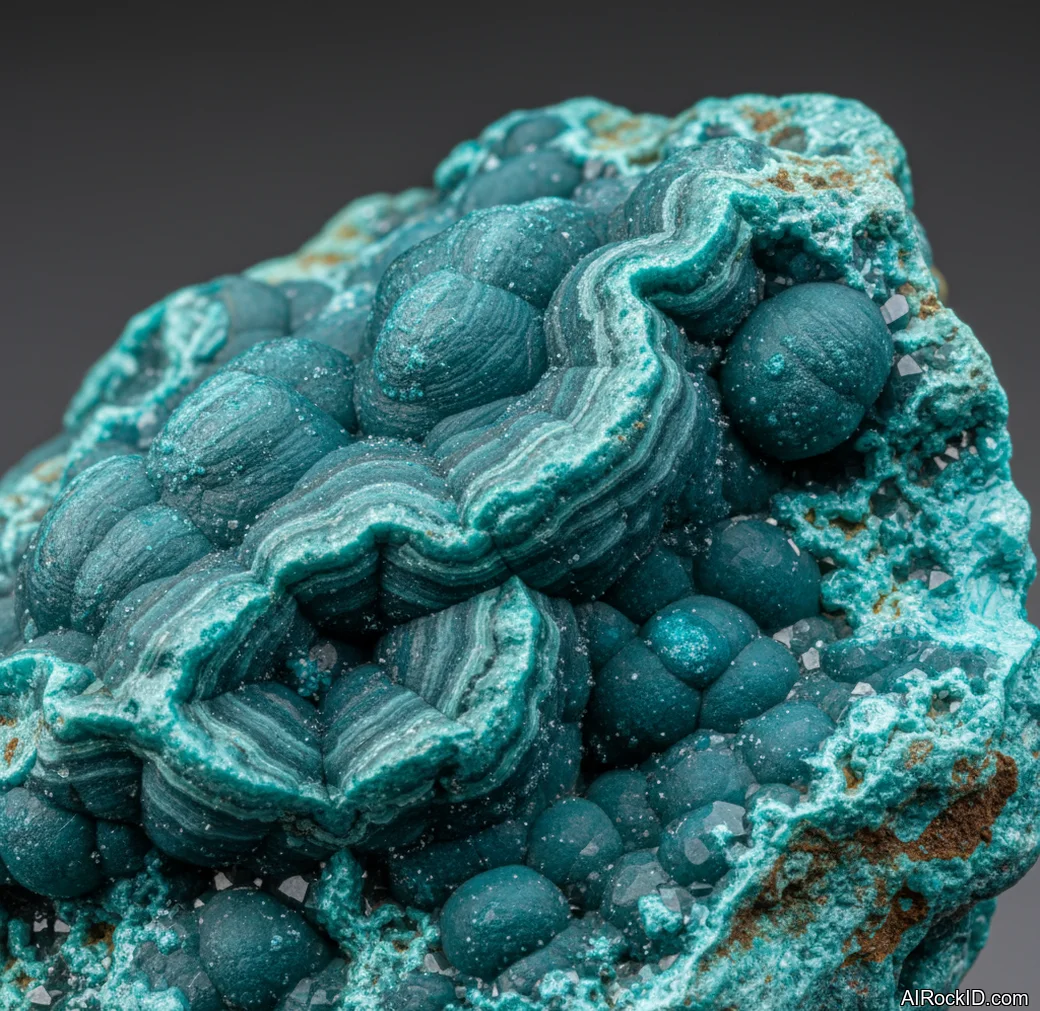
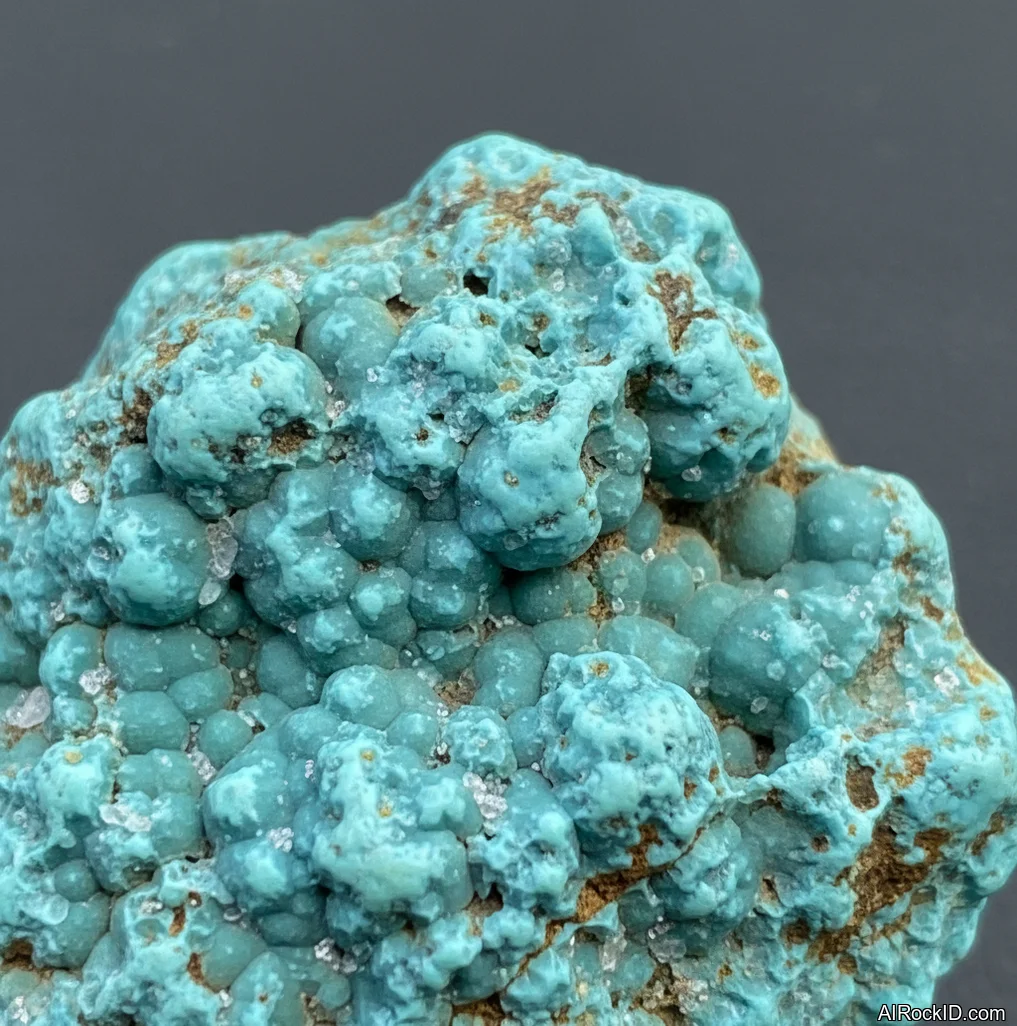
Phoenix Stone is basically a trade name for chrysocolla-rich material. Most of the time it’s intergrown with quartz plus other copper minerals, then cut and sold as a blue-green ornamental stone.
Pick up a piece and the first thing you feel is the temperature. It stays cool in your palm, the way silicate minerals do, and the better pieces have this waxy-to-vitreous look where the surface almost seems lit from inside when you tilt it under a lamp.
People glance at it and expect turquoise behavior. But it usually doesn’t. It’s typically softer, and the polish can be a bit moodier. Some pieces will take a pretty glassy shine when there’s a lot of quartz in the mix, and others stay more satin-looking with tiny pits you can catch with a fingernail (that’s the softer chrysocolla getting undercut during polishing).
Origin & History
Phoenix Stone isn’t a formally recognized mineral species name. It’s a lapidary and market label people use for material coming out of the copper district around Phoenix, Arizona. Rockhounds and cutters started paying attention because, when you slab it and hit it with a little water, you can get that classic Southwest look right away: blue-green chrysocolla sitting in white quartz, with darker copper-oxide webbing running through it like little veins.
Chrysocolla, though, was described long before anyone started calling anything “Phoenix Stone.” The name traces back to Greek words for “gold glue,” which points to ancient metalworking. But in a modern shop, Phoenix Stone usually just means that good-looking Arizona chrysocolla plus quartz mix, not some old historical reference (most people aren’t thinking about ancient metallurgy at the saw table, are they?).
Where Is Phoenix Stone Found?
Most material sold as Phoenix Stone is tied to Arizona copper mines and nearby workings, with similar chrysocolla-quartz mixes also coming from other copper districts.
Formation
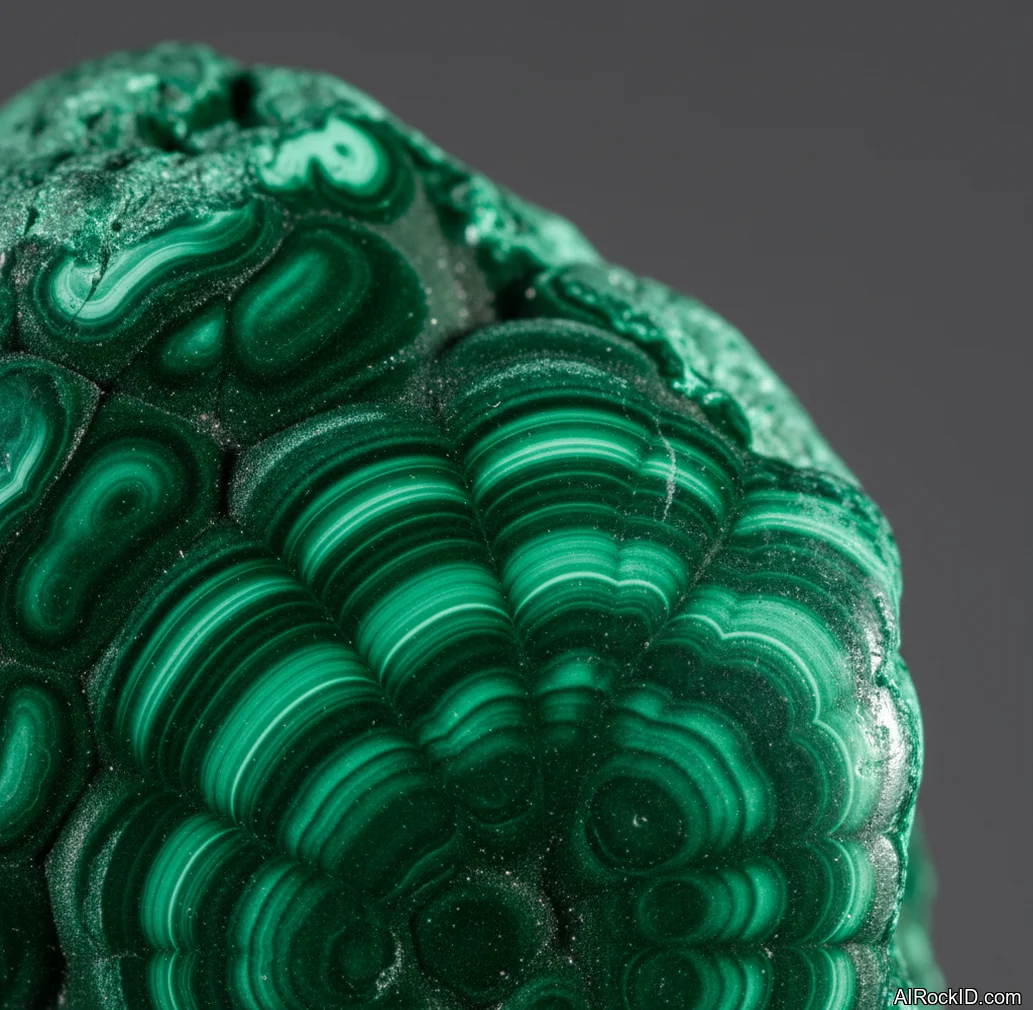
Look at where this stuff actually shows up in the ground and it’s really just a weathering-zone tale. Phoenix Stone forms up in the oxidized parts of copper deposits, where groundwater and oxygen chew on the primary sulfides, and out of that you end up with secondary copper minerals like chrysocolla, malachite, cuprite, tenorite, and friends.
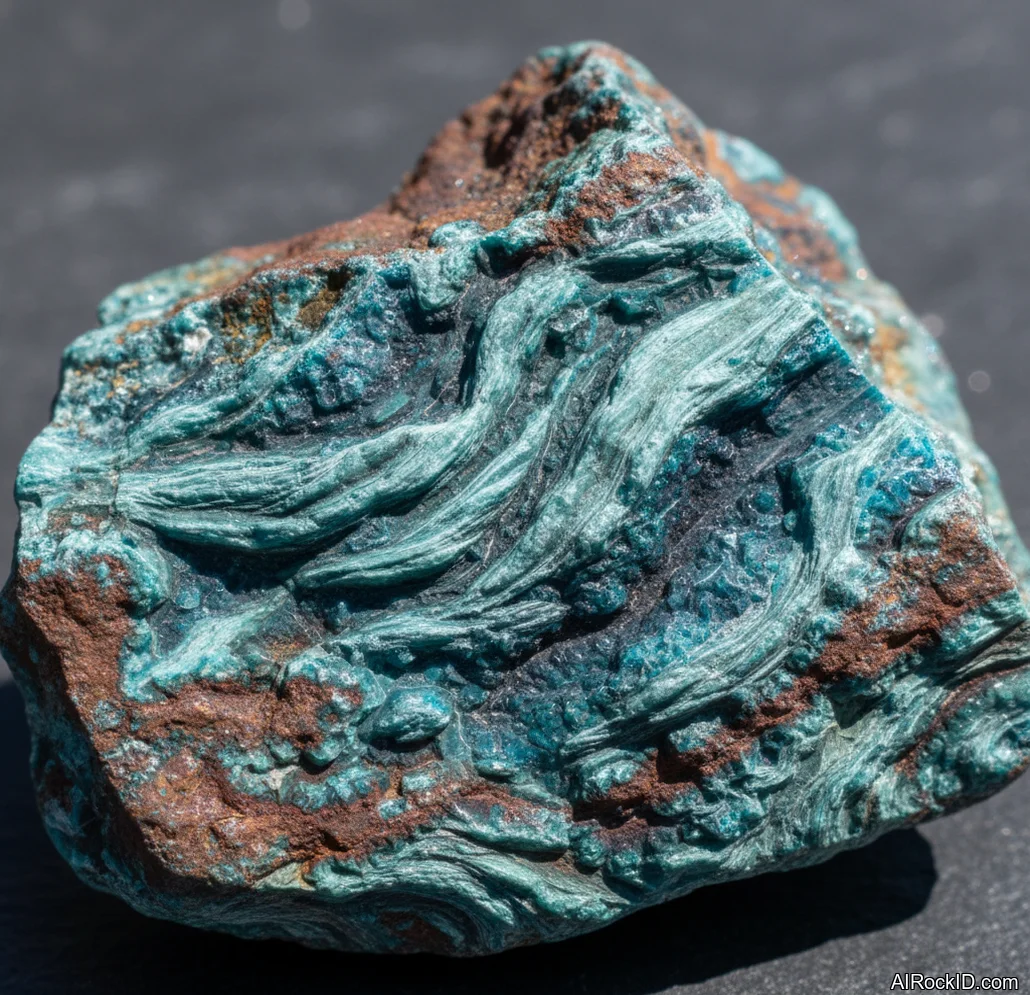
But unlike those clean, single-mineral crystals, Phoenix Stone is usually more of a patchwork. Chrysocolla can gel up and seep into little fractures, then quartz can move in later and “freeze” it in place, and iron oxides will often stain the edges (you’ll see that rusty halo line). So one slab will take a polish like glass, and the next one from the same pile will feel a bit chalky on the back. Weird? Not really. That mixed, mosaic texture is exactly why.
How to Identify Phoenix Stone
Color: Most pieces run blue-green to green, often with white or gray quartz, and occasional brown to black webbing from iron or copper oxides. The color can be patchy, with cloudy zones next to clearer, more “gel-like” areas.
Luster: Luster ranges from waxy to vitreous, depending on how much quartz is present and how well the surface is polished.
Pick up a polished cab and tilt it under a hard overhead light. If it flashes glassy in spots, that’s usually quartz-rich material holding the chrysocolla together. If you scratch it with a steel needle in an inconspicuous spot and it leaves a mark easily, you’re in soft chrysocolla territory, not turquoise. The problem with online listings is they’ll call anything blue-green “Phoenix,” so ask for a close photo of the back and edges where you can see the mix and any undercut pits.
Properties of Phoenix Stone
Physical Properties
| Crystal System | Amorphous |
| Hardness (Mohs) | 2-4 (Soft (2-4)) |
| Density | 2.0-2.4 |
| Luster | Waxy |
| Diaphaneity | Translucent to opaque |
| Fracture | Uneven |
| Streak | blue-green |
| Magnetism | Non-magnetic |
| Colors | blue-green, green, turquoise blue, white, gray, brown, black |
Chemical Properties
| Classification | Silicates |
| Formula | Cu2H2Si2O5(OH)4·nH2O |
| Elements | Cu, H, Si, O |
| Common Impurities | Fe, Al, Mn |
Optical Properties
| Refractive Index | 1.50-1.55 |
| Birefringence | None |
| Pleochroism | None |
| Optical Character | Isotropic |
Phoenix Stone Health & Safety
For day-to-day stuff, it’s pretty low risk. But if you’re doing lapidary work, don’t breathe the dust. Seriously. Handle it the same way you’d handle any soft copper-mineral blend when you’re grinding or polishing (wet work helps, and that fine green-blue powder sticks to everything).
Safety Tips
If you need to cut it, do it wet so the dust doesn’t go everywhere. And wear a properly fitted respirator that’s actually rated for fine particulates, not just a loose mask. Once you’re done, that cutting sludge gets on everything (it’s gritty and slick at the same time), so wash your hands after handling it.
Phoenix Stone Value & Price
Price Range
Rough/Tumbled: $8 - $60 per tumbled stone or small cab
Cut/Polished: $2 - $15 per carat
Prices bounce around, but there’s still a pretty clear pattern if you’ve spent any time handling the stuff. Dense, quartz-rich material that takes a glassy high polish and holds a strong blue color costs more. But if it’s porous, or has that dry, chalky feel that almost drags under your finger, it’ll sell cheap and might need stabilization.
Durability
Nondurable — Scratch resistance: Poor, Toughness: Fair
It can scratch easily and some material is porous, so it doesn’t love rough wear or abrasive cleaning.
How to Care for Phoenix Stone
Use & Storage
Store it in a small pouch or separate compartment so harder stones don’t scuff it. If you’ve got a mixed bowl of tumbles, keep Phoenix Stone out of it.
Cleaning
1) Rinse quickly with lukewarm water and a drop of mild soap. 2) Use a soft toothbrush for crevices, very light pressure. 3) Pat dry and let it air-dry fully before putting it away.
Cleanse & Charge
If you do energetic cleansing, keep it simple: smoke, sound, or a quick pass over a selenite plate. Long soaks aren’t necessary, and they can be rough on porous pieces.
Placement
I like it where you’ll actually see the color, like a desk or shelf with indirect light. Direct sun can be hard on some copper-mineral colors over time, so don’t bake it on a windowsill.
Caution
Skip ultrasonic cleaners, steam cleaners, and anything harsh or chemical-heavy. And don’t wear it doing stuff where it’s going to bang into things, because it scratches pretty easily and the edges can chip.
Works Well With
Phoenix Stone Meaning & Healing Properties
Grab Phoenix Stone when your head’s buzzing and your chest is doing that tight, locked-in thing. That’s usually when I end up reaching for those blue-green copper minerals in general, not because I think they’re magic, but because that color plus the cool, slick feel in your palm can interrupt the spiral fast.
But look, I’m not going to sell it as some medical tool. In my own routine it’s better as a reminder object. I’ll hold it while I take a few slow breaths, or I’ll leave a polished piece on my desk where I can feel it with my fingertips and remember to unclench my jaw and, honestly, drink some water.
And yeah, most dealers lean hard on the “rebirth” angle because of the name, and I get why that sticks. The material is literally formed out of oxidation and change in a copper deposit, so the story kind of writes itself. The practical part is simpler: it’s a calming hand-stone, and the nicer quartz-rich pieces feel smoother and less chalky (that dusty draggy feeling), which makes you actually want to pick them up and use them.
Identify Any Crystal Instantly
Snap a photo and get properties, value, care instructions, and healing meanings in seconds.