Azurite
What Is Azurite?
Azurite is a deep blue copper carbonate hydroxide mineral with the formula Cu3(CO3)2(OH)2.
Grab a decent hand specimen and the first thing you feel is the heft. It’s weirdly heavy for a rock that size, like it’s got a little lead shot hiding inside. And the color, wow. On a fresh break the blue can look almost like wet paint, especially under a desk lamp or in sunlight coming through a window.
People see that saturated blue and assume it’ll be tough like lapis. But it’s softer. Those cleavage directions are no joke, either. One careless squeeze and you can pop a clean little step right off an edge (ask me how I know). Sharp bits, too.
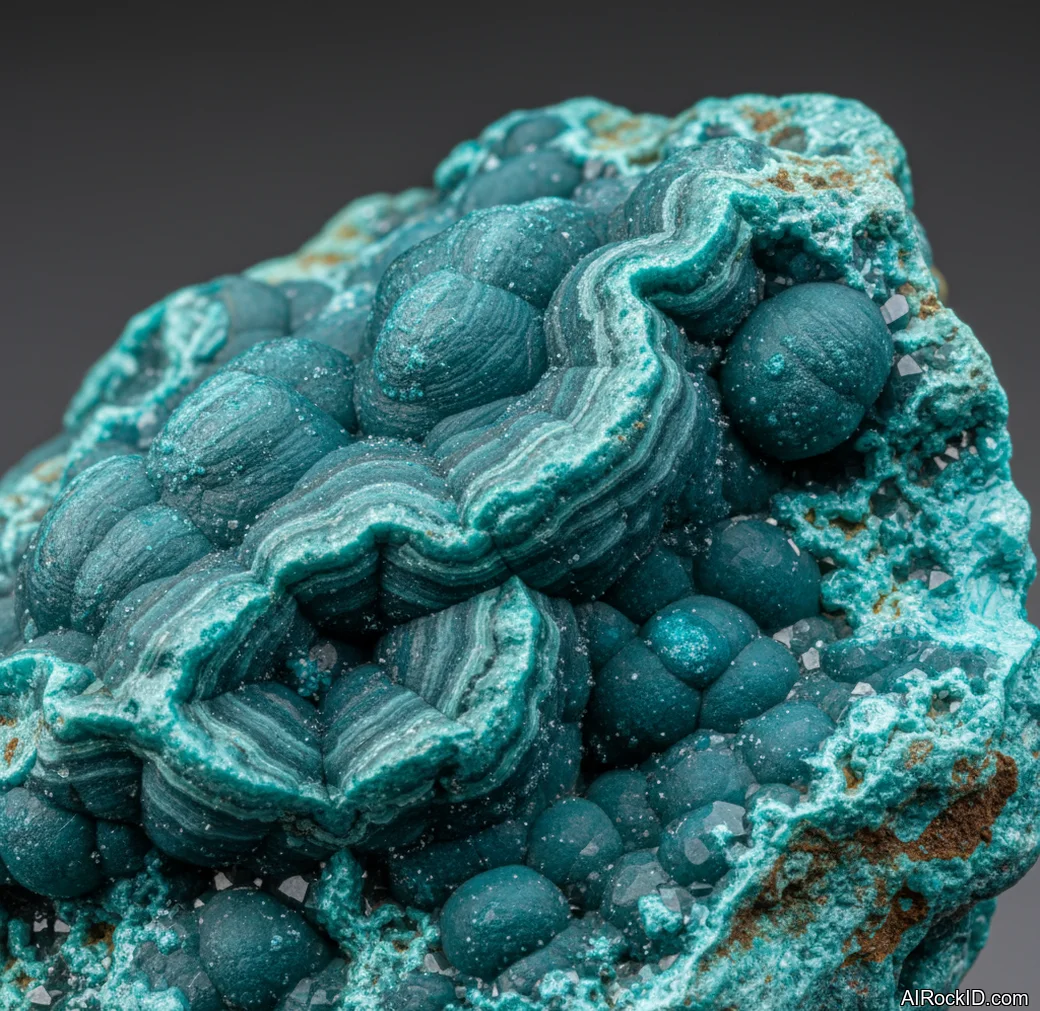
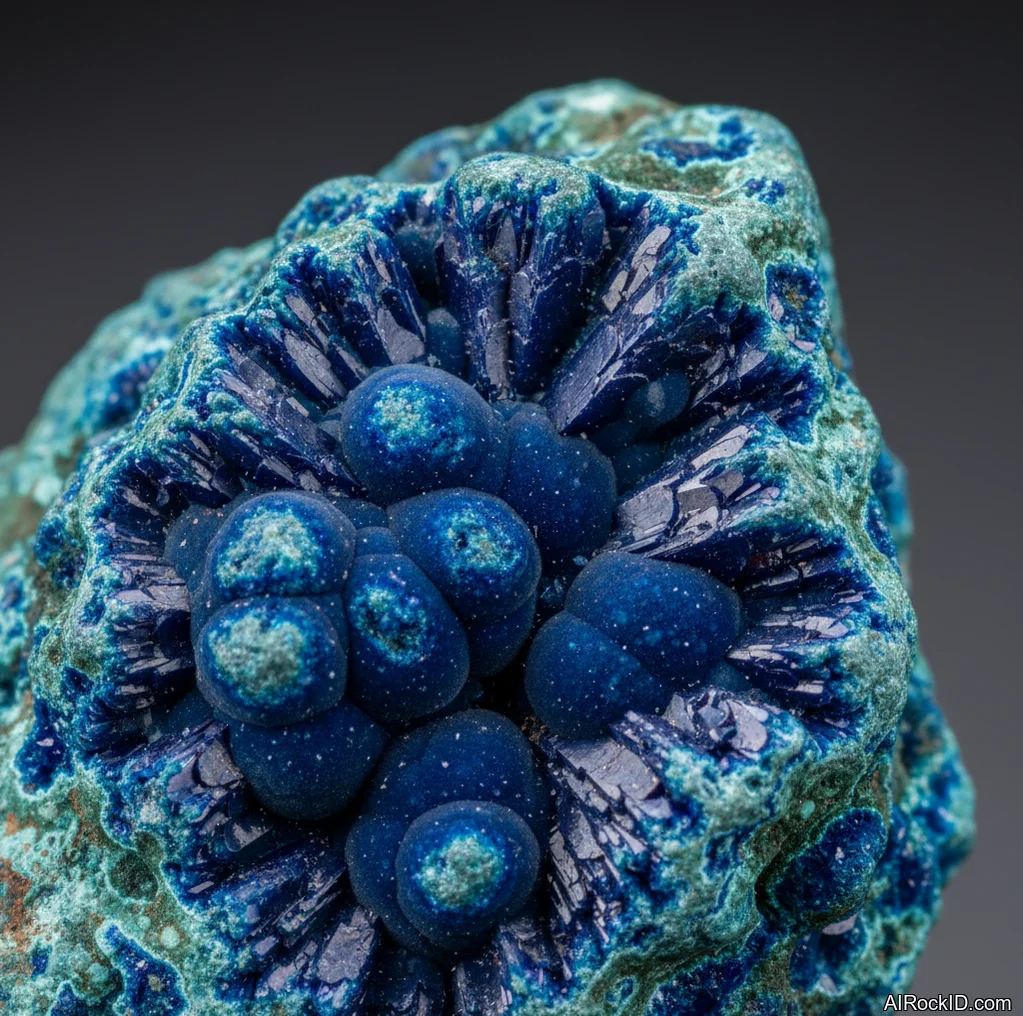
If you get one with good crystal faces, you start to see why collectors get obsessed. Sharp monoclinic crystals can flash bright when the light hits just right, then turn inky-dark the second you tilt the piece. A lot of what shows up for sale is botryoidal or drusy on brown limonite matrix, and plenty of it shifts into green malachite in swirls and seams. That blue-green combo? Classic copper country.
Origin & History
Most books peg the modern name to the French “azur,” basically “sky blue,” and yeah, that’s exactly right when you’re holding a clean, unweathered piece. Fresh azurite has that inky, midnight-blue look, and it’ll even leave a faint blue smudge on your fingertips if you rub a soft spot (ask me how I know). But let it sit around and weather, and the color can dull out fast.
The older collector name “chessylite” comes from Chessy-les-Mines near Lyon, France. That place was a big deal in the 1800s, when classic azurite from there was famous and, in a very real way, helped nail down the species for European mineralogists. You’ll see “chessylite” pop up in older labels for that reason.
Azurite’s also been used as a blue pigment, and you still run into it in older art and paint references. But for collectors, the story is more about the 19th century European localities and then later major finds in Morocco and the American Southwest. That’s what really pushed it into display cases and onto show tables.
Where Is Azurite Found?
Azurite shows up in oxidized zones of copper deposits worldwide. The stuff you see most at shows tends to be Morocco, Arizona, and older European localities when provenance is solid.
Formation
Most azurite shows up where copper sulfides are starting to rot out near the surface, in that oxidized zone. Groundwater moves through and grabs copper, carbonate, and hydroxide. Then it drops azurite into fractures, little vugs, and any porous host rock it can seep into, once the chemistry clicks and the CO2 levels are just right. So you end up seeing it right alongside malachite, cuprite, chrysocolla, plus that rusty limonite staining that loves to creep across the rock.
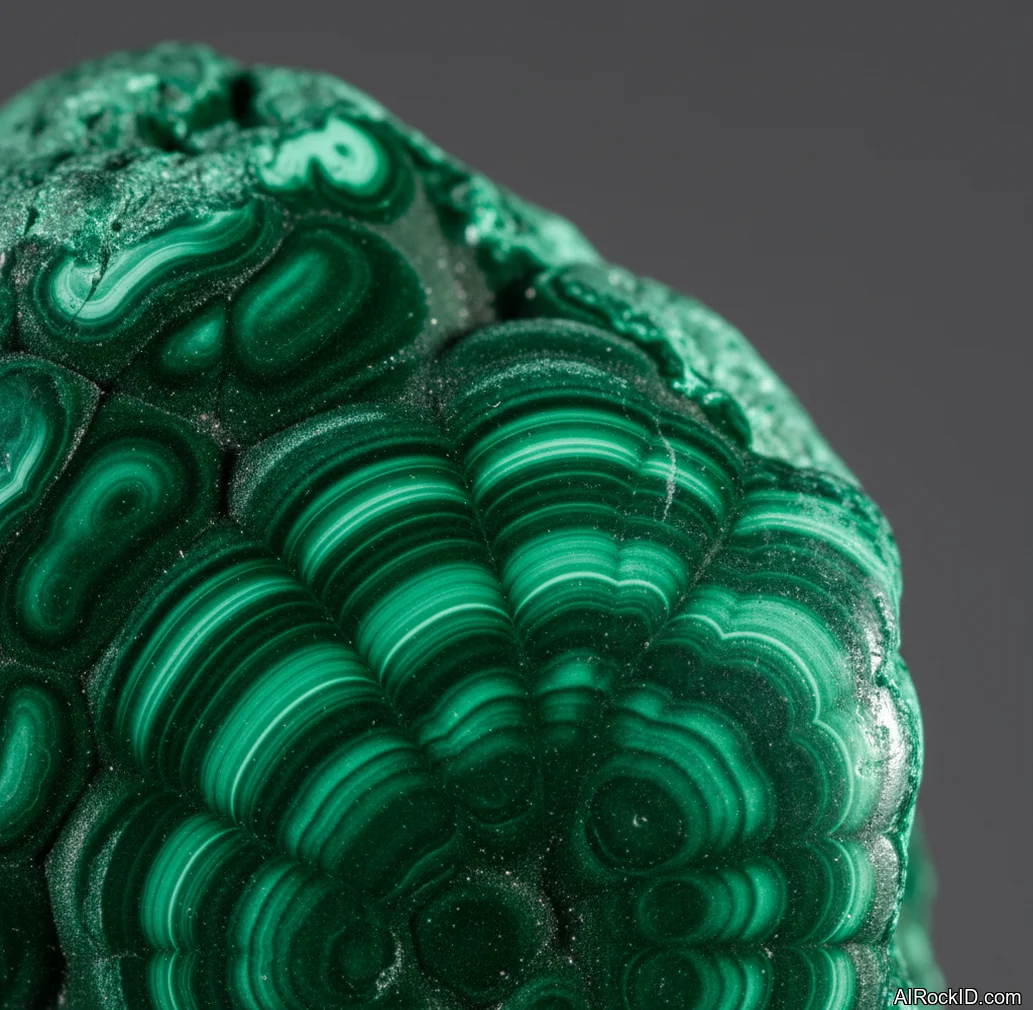
But azurite doesn’t want the exact same setup as malachite. It’s close. Not identical. And with extra water over time, azurite can straight-up turn into malachite. I’ve had older pieces where the blue edges slowly went a bit green and fuzzy right along the rims, especially on spots that got touched a lot or sat in a humid room. You can feel it sometimes, too. The surface loses that crisp, slightly gritty “dry” look and starts to seem a little duller (almost chalky). Not overnight. But it happens.
How to Identify Azurite
Color: Deep azure blue to indigo is the headline color, sometimes almost black-blue in thick crystals. Many specimens show mixed zones with green malachite or lighter blue crusts.
Luster: Vitreous on clean crystal faces, and more dull to earthy on massive or weathered areas.
If you scratch it with a copper coin or a steel nail, it won’t behave like quartz. It’ll mark and powder easier than people expect, and the streak is a light blue. The real test is in your hand: azurite feels dense and cool, and broken bits show bright, fresh blue inside even when the outside looks dusty.
Properties of Azurite
Physical Properties
| Crystal System | Monoclinic |
| Hardness (Mohs) | 3.5-4 (Soft (2-4)) |
| Density | 3.77-3.89 g/cm3 |
| Luster | Vitreous |
| Diaphaneity | Translucent to opaque |
| Fracture | Conchoidal |
| Streak | Light blue |
| Magnetism | Non-magnetic |
| Colors | Deep blue, Azure blue, Indigo, Blue-green (with malachite), Dark blue-black |
Chemical Properties
| Classification | Carbonates |
| Formula | Cu3(CO3)2(OH)2 |
| Elements | Cu, C, O, H |
| Common Impurities | Fe, Mn, Zn |
Optical Properties
| Refractive Index | 1.730-1.850 |
| Birefringence | 0.120 |
| Pleochroism | Strong |
| Optical Character | Biaxial |
Azurite Health & Safety
Handling intact azurite is usually fine. But don’t do anything that makes dust, and don’t soak it in water. Just treat it like a copper mineral, because that’s what it is.
Safety Tips
Wash your hands after you’ve handled it. Keep it out of the kitchen and away from any food prep surfaces. And if you ever have to cut, drill, or mess with the material, don’t do it dry. Wear a respirator and use wet methods so dust doesn’t end up in your nose, on your sleeves, or all over the bench.
Azurite Value & Price
Price Range
Rough/Tumbled: $10 - $300 per specimen
Cut/Polished: $3 - $25 per carat
Sharp, glassy crystals sitting on a contrasting matrix are what really get people to open their wallets, especially when there’s a solid locality label on the box. Big, solid-blue chunks show up all the time, but once you’ve got clean crystals that don’t crumble when you nudge them (or leave blue grit on your fingertips), that’s when the price shoots up in a hurry.
Durability
Fragile — Scratch resistance: Poor, Toughness: Poor
Azurite is soft with perfect cleavage and can slowly alter to malachite in damp conditions or if constantly handled.
How to Care for Azurite
Use & Storage
Store azurite in a padded box or a cabinet where it won’t get knocked around, and keep it out of humid spots like bathrooms. I keep my better crystals in perky boxes because one drop can turn a great piece into blue gravel.
Cleaning
1) Use a soft, dry brush or a puff of air to remove loose dust. 2) If it needs more, wipe gently with a barely damp microfiber cloth, then dry right away. 3) Skip ultrasonic cleaners, steam, and long rinses.
Cleanse & Charge
For non-water methods, use smoke, sound, or a short rest on dry selenite. Avoid salt water and long moon-soaks since moisture can stress the surface over time.
Placement
A shelf away from direct sun and away from the kitchen sink is ideal. If you display it under bright lights, give it airflow and don’t trap it in a damp glass dome.
Caution
Don’t soak azurite. Seriously. And skip the harsh cleaners too. Also, don’t cut it or sand it unless you’ve got proper dust control and the right PPE, because that fine blue dust gets everywhere (it clings to your fingers and leaves a faint chalky smear). Keep it away from small kids and pets that might lick rocks. Why risk it?
Works Well With
Azurite Meaning & Healing Properties
Most dealers, and plenty of collectors who’ve been around forever, call azurite a “mind” stone, and yeah, I can see it. Hold a dark blue chunk in your palm and it kind of yanks your focus upward and inward, like your eyes want to lock onto one tiny dot. Not subtle, either. For me it’s less woo and more day-to-day: I keep one on my desk when I’m reading, labeling flats, or trying not to bounce between tasks every five minutes.
But here’s what people gloss over. Azurite’s fragile, and that changes the whole relationship. I wouldn’t carry it loose in a pocket unless you’re cool with blue dust ground into the seams of your jeans (and under your fingernails, honestly). Some folks treat it like a worry stone, rub it all day, then act surprised when the surface goes dull. If you want the feel without having to baby it, an azurite-malachite cab is usually tougher than one of those crumbly crystal clusters.
And on the emotional side, I’ve heard people tie it to insight and doing an honest self-check. That fits, at least with how the color reads: deep, serious, not sugary. Still, it’s not medicine. If someone’s dealing with anxiety, sleep problems, or anything clinical, crystals can be a comfort object and a reminder to slow down, but they don’t replace real care.
Identify Any Crystal Instantly
Snap a photo and get properties, value, care instructions, and healing meanings in seconds.