Pink Aventurine
What Is Pink Aventurine?
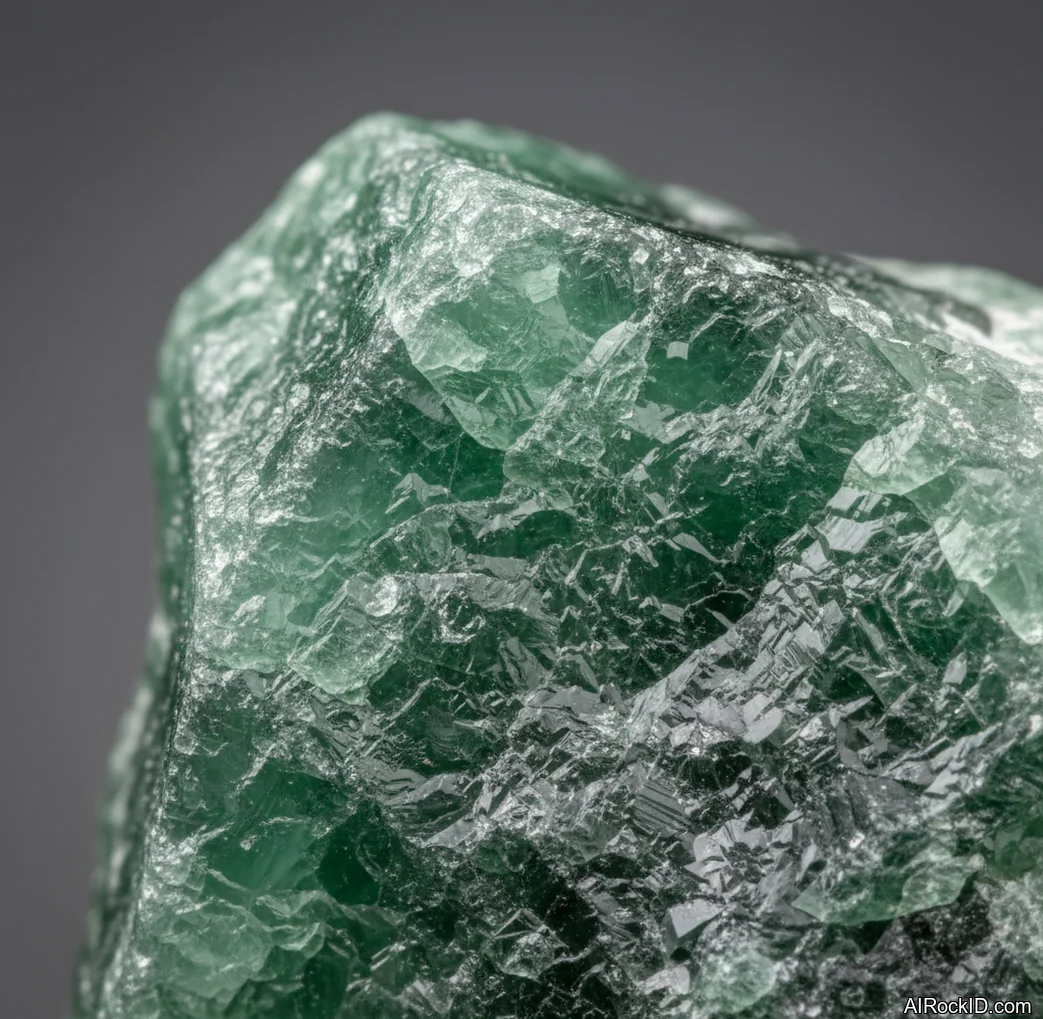
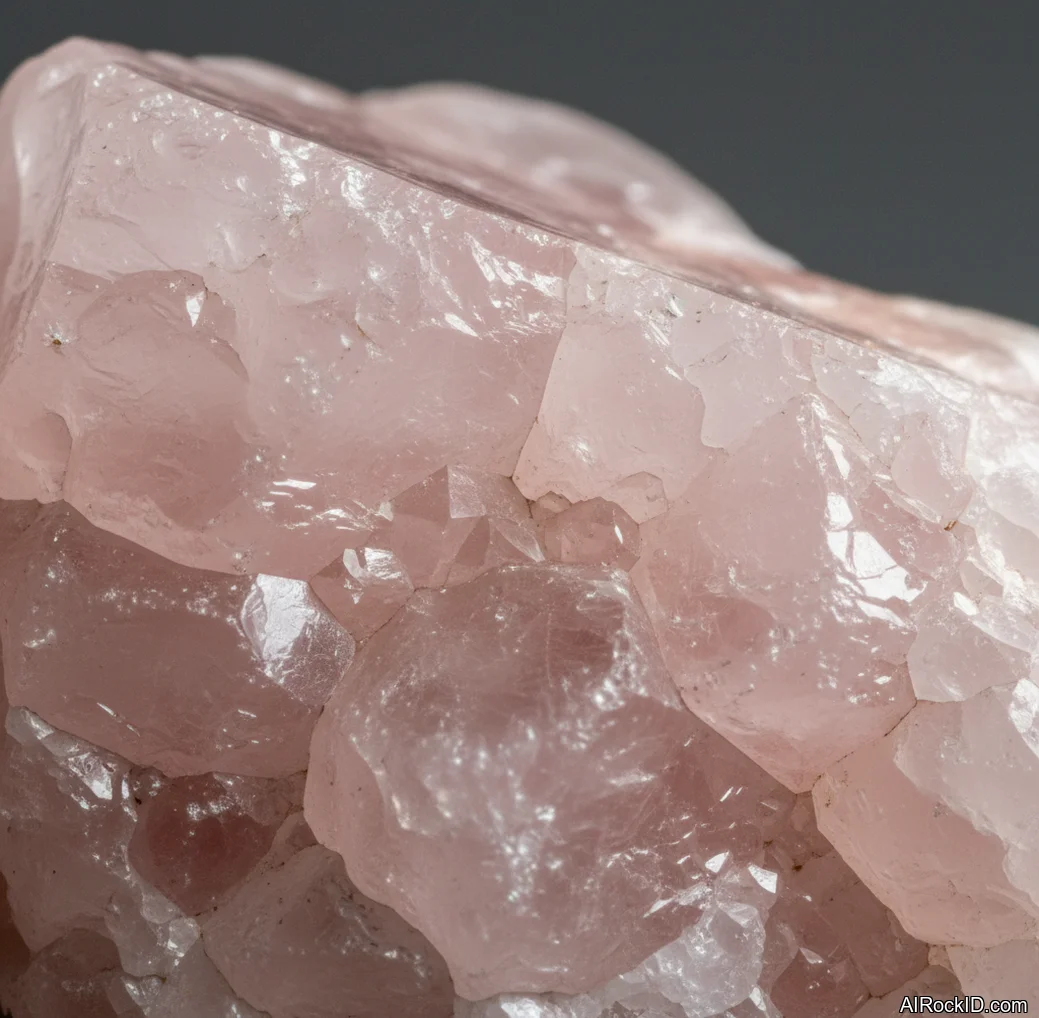
Pink Aventurine is a pink variety of quartz that shows aventurescence, that quiet little glitter you get from tiny, plate-like mineral inclusions.
Pick up a piece and you’ll feel it immediately. Cool in the hand. Not plasticky. And there’s that slightly “sugary” look along the edges where the light kind of breaks up through the tiny grains. The better material has a soft shimmer that slides around when you tip it under a lamp, not some loud metallic flash that smacks you in the face. It’s usually sold tumbled, because clean, crystal-shaped quartz points with true aventurescence are just a lot less common in pink.
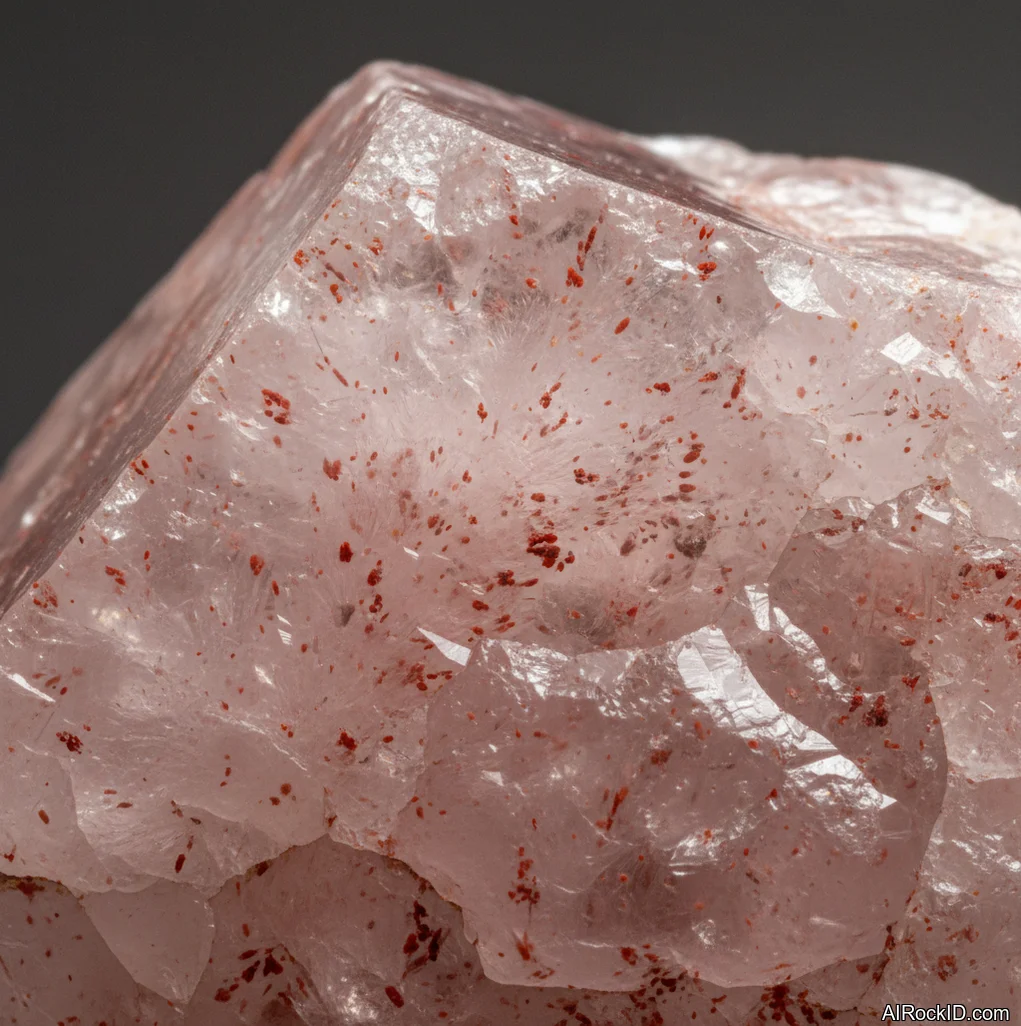
People confuse it with rose quartz all the time. But rose quartz usually looks milkier and more uniform, like fogged glass, while pink aventurine tends to have little specks or a faint sheet of glitter tucked inside (sometimes you only catch it at one angle). And the color can drift from peachy to dusty pink depending on what’s actually in there. I’ve handled batches where half the “pink aventurine” was really just pink quartzite with zero sparkle, so yeah, that shimmer test matters.
Origin & History
“Aventurine” comes from the Italian *a ventura*, which basically means “by chance.” It’s tied to that old story about accidental glass, the kind called aventurine glass or goldstone, where copper filings ended up in the melt and left this glittery, spangled look when the glass cooled.
And at some point mineral dealers started borrowing the word for natural stones that throw off the same sparkly effect.
In the gem trade, aventurine has been used as a named quartz variety for a long time, and green is the classic color everyone thinks of first. Pink aventurine is a later, more market-facing label that shows up as supply chains widened and more quartzite and fine-grained quartz from places like India and Brazil started landing in the bead and tumble market. So you’ll also see it lumped under “aventurine quartz” at older shows, especially when sellers don’t want to get into a whole argument about whether a piece is true aventurine or just a pretty pink quartzite (because who has time for that at a booth?).
Where Is Pink Aventurine Found?
Most pink material in shops is cut from quartzite or massive quartz from India and Brazil, with smaller amounts from Russia, Tanzania, and a few US localities.
Formation
Aventurine happens when quartz grows, or later recrystallizes, with a tight, fairly even dusting of tiny inclusions that catch the light as flat little plates. In green aventurine, that glitter is often from fuchsite mica. With pink material, the flash can come from mica too (muscovite or lepidolite), or from hematite platelets, and the overall pink tone can also be pushed along by iron oxides or other trace stuff.
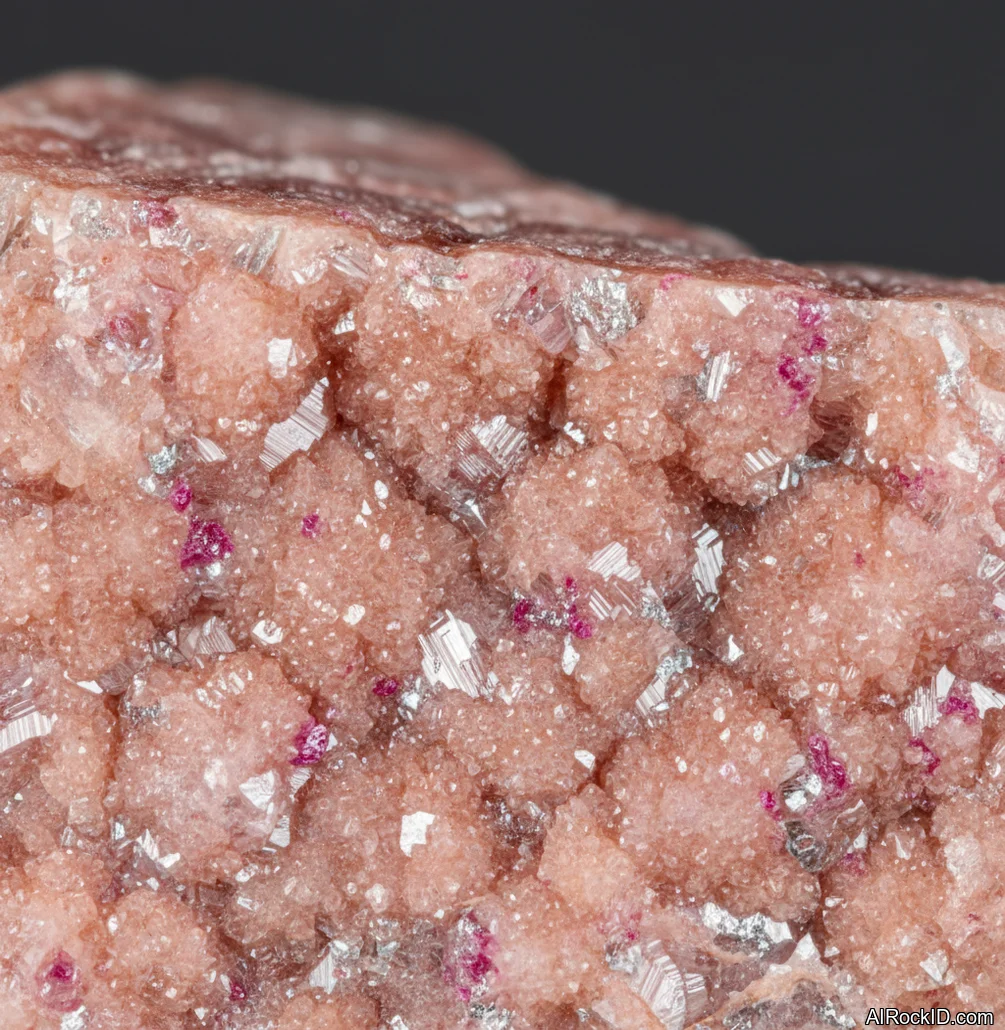
But here’s the thing: a lot of what’s sold as pink aventurine is actually quartzite, basically sandstone that got cooked and squeezed until the quartz grains welded together. That’s why so many pieces look kind of sugary or granular when you put them under a loupe. And it also explains the color zones and those little streaks that track the old rock fabric, instead of the clean, glassy look you’d expect from single-crystal quartz.
How to Identify Pink Aventurine
Color: Soft pink to peach-pink, sometimes with salmon or dusty rose tones; color is often slightly uneven with speckling.
Luster: Vitreous overall, with a localized sparkly aventurescent glitter on some surfaces.
Look closely under a single point light source and tilt it slowly. Real aventurescence looks like tiny, flat flashes that blink on and off, not a uniform sheen like metallic paint. The real test is a 10x loupe: you’ll often see fine reflective flakes inside, and the surface may show a “sugary” quartzite texture instead of waxy chalcedony. If a seller calls it pink aventurine but it stays dead matte with no sparkle from any angle, you’re probably holding pink quartzite or dyed material.
Properties of Pink Aventurine
Physical Properties
| Crystal System | Trigonal |
| Hardness (Mohs) | 6.5-7 (Hard (6-7.5)) |
| Density | 2.65 g/cm3 |
| Luster | Vitreous |
| Diaphaneity | Translucent to opaque |
| Fracture | Conchoidal |
| Streak | White |
| Magnetism | Non-magnetic |
| Colors | Pink, Peach, Salmon, Dusty rose |
Chemical Properties
| Classification | Silicates |
| Formula | SiO2 |
| Elements | Si, O |
| Common Impurities | Fe, Mn, Al, K |
Optical Properties
| Refractive Index | 1.544-1.553 |
| Birefringence | 0.009 |
| Pleochroism | None |
| Optical Character | Uniaxial |
Pink Aventurine Health & Safety
Picking up quartz-based aventurine and even getting it a little wet is usually fine. The thing to watch out for is the silica dust, but that only really comes up if you’re cutting it, grinding it, or sanding it (that gritty, powdery stuff you don’t want in your lungs).
Safety Tips
If you’re going to cut it like a lapidary, do it wet. Seriously. And put on real respiratory protection, because you don’t want to breathe in that super-fine silica dust (it gets everywhere).
Pink Aventurine Value & Price
Price Range
Rough/Tumbled: $3 - $25 per piece
Cut/Polished: $0.50 - $4 per carat
Prices jump when the aventurescence is stronger, the polish comes out cleaner, and the pieces get bigger without turning that weird chalky-looking pink. Most dealers still tag it like any other tumble-grade quartz, but the genuinely sparkly pink stuff in large, nicely shaped cabochons? That’ll run higher.
Durability
Durable — Scratch resistance: Good, Toughness: Good
It’s stable quartz, but surfaces can lose shine if it bangs around with harder stones or gets gritty dust ground into it.
How to Care for Pink Aventurine
Use & Storage
Store it in a soft pouch or a divided box if you’ve got a lot of tumbles. Quartz is tough, but it’ll still get scuffed by harder stuff and even by grit in a pocket.
Cleaning
1) Rinse with lukewarm water to remove dust. 2) Use a drop of mild soap and a soft brush for skin oils in creases. 3) Rinse again and pat dry with a microfiber cloth.
Cleanse & Charge
If you do energetic cleansing, a quick rinse and a night on a windowsill away from harsh midday sun is plenty. I avoid long sunbaths because some pink stones look washed out over time.
Placement
On a desk it reads as calm and friendly, especially under warm light where the glitter shows up. In a bowl with other tumbles, put it on top so it doesn’t get sanded dull.
Caution
If the piece has fractures, or it’s packed with that flaky mica that likes to crumble when you touch it, skip the harsh chemicals and don’t use an ultrasonic cleaner either. And when you’re cutting or drilling, don’t breathe in the dust. (It hangs in the air longer than you’d think.)
Works Well With
Pink Aventurine Meaning & Healing Properties
Next to rose quartz, pink aventurine just feels more “textured” in my hand when I’m sitting quietly with it. Not stronger. Just different. The little glittery bits inside catch the light, and my eyes sort of latch onto that instead of bouncing around. And honestly, that can help when you’re trying to slow your breathing and stop your brain from hunting for the next problem to solve.
Most dealers file it under the heart-space thing, which is fine. In my own box, it’s the one I’ll drop in a pocket when I want my mood softer, but I don’t want that dreamy, milky rose quartz feel. Pink aventurine comes off a little more grounded to me, probably because it’s still quartz at the end of the day. But I’m not going to dress it up as medicine. If you’re dealing with anxiety or depression, use the real tools that actually help, and let stones stay what they are: a small ritual (and maybe a reminder to pause).
One practical thing I’ve noticed at shows: people handle it more gently. They hold onto it longer. They’ll roll it between their fingers because the polish is slick and cool, and that sparkly flash gives your thumb something to “find” without thinking. That fidgety comfort is real, even if you keep the whole explanation completely secular. Who hasn’t needed that once in a while?
Identify Any Crystal Instantly
Snap a photo and get properties, value, care instructions, and healing meanings in seconds.