Pink Chalcedony
What Is Pink Chalcedony?
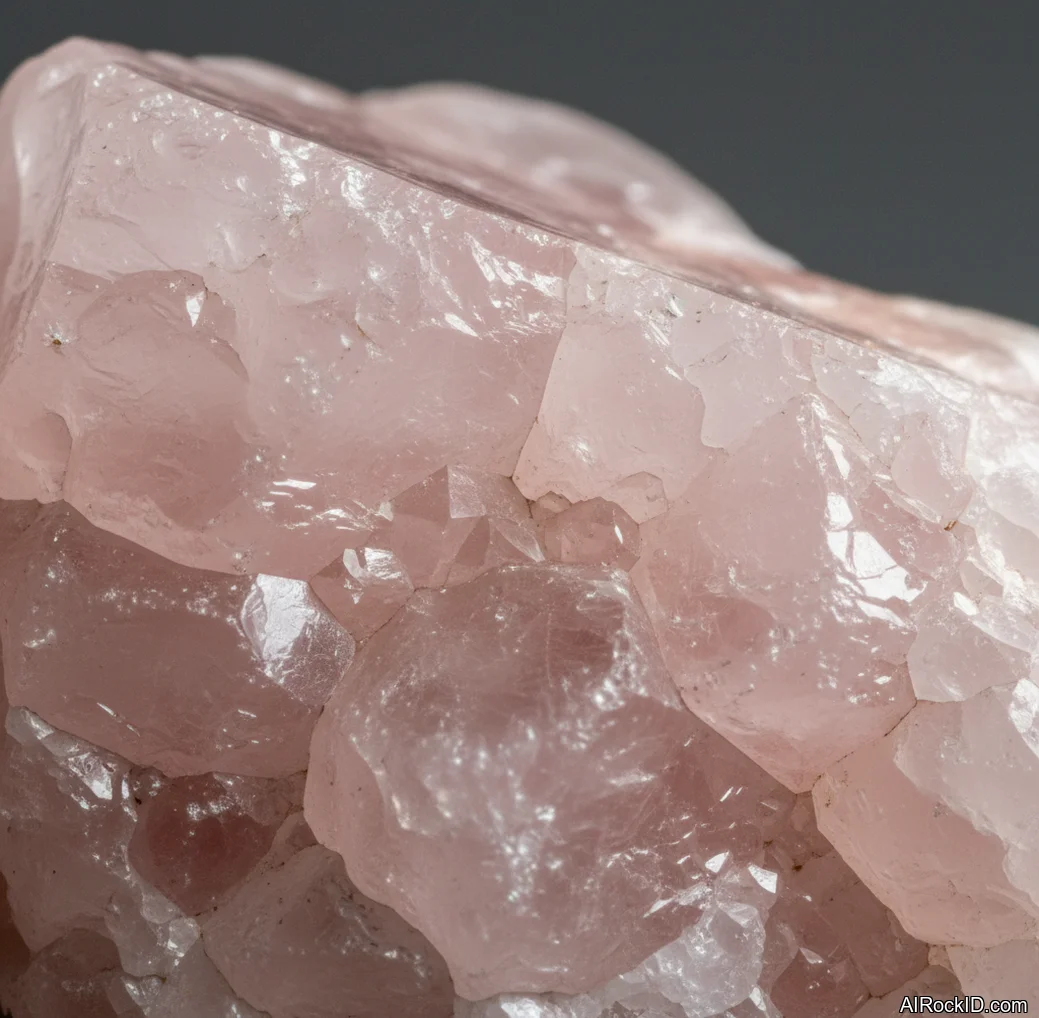
Pink chalcedony is just chalcedony that happens to be pink, and chalcedony itself is the microcrystalline form of quartz (SiO2). The color usually lives somewhere between blush and peach, and it has that cloudy, milky look instead of the crisp clarity you get from big quartz crystals.
Pick up a tumbled piece and you can feel how it kind of “grabs” light rather than bouncing it back at you. Not flashy. More like it glows from the inside, especially around the rounded edges where the polish gets a bit thinner and the light can sink in. I’ve handled plenty at shows, and the best pieces really do look like strawberry milk under booth LEDs, but most of the everyday material is paler, with a slightly gray cast.
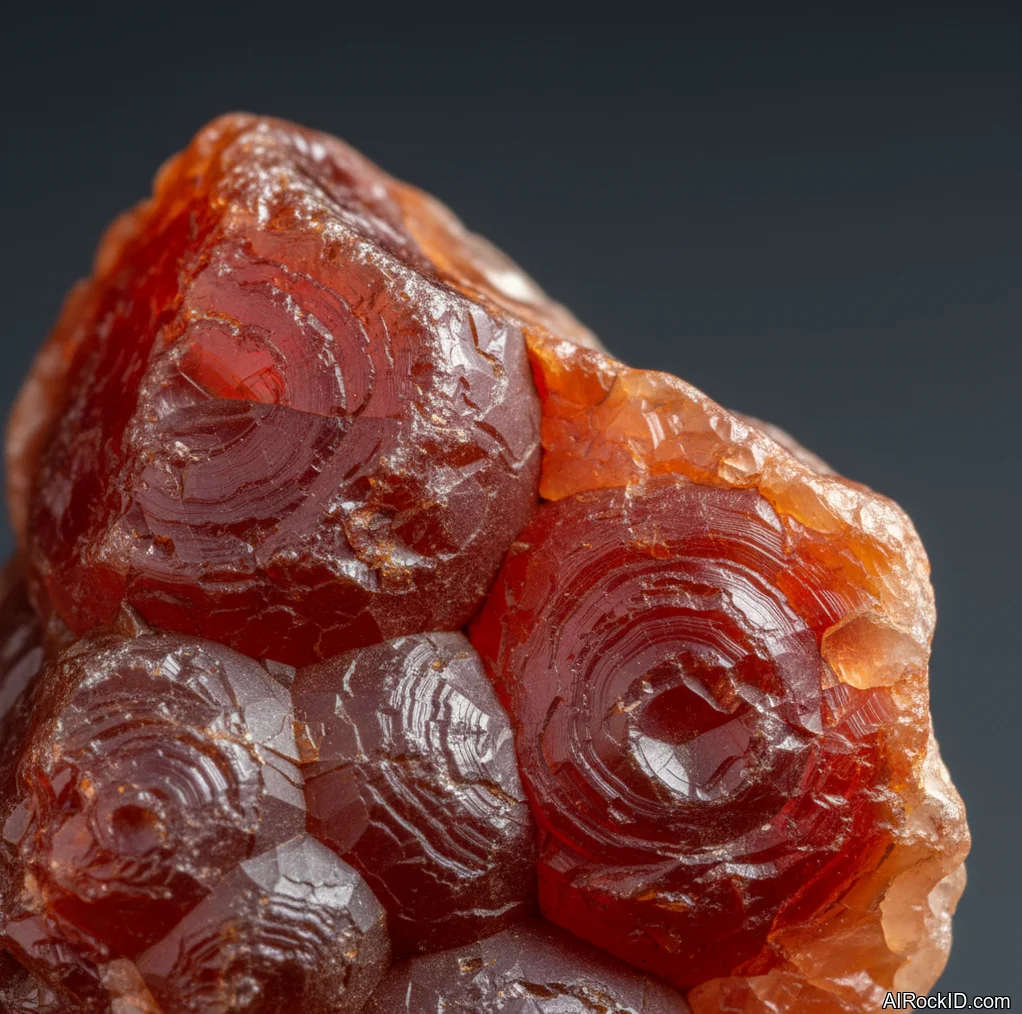
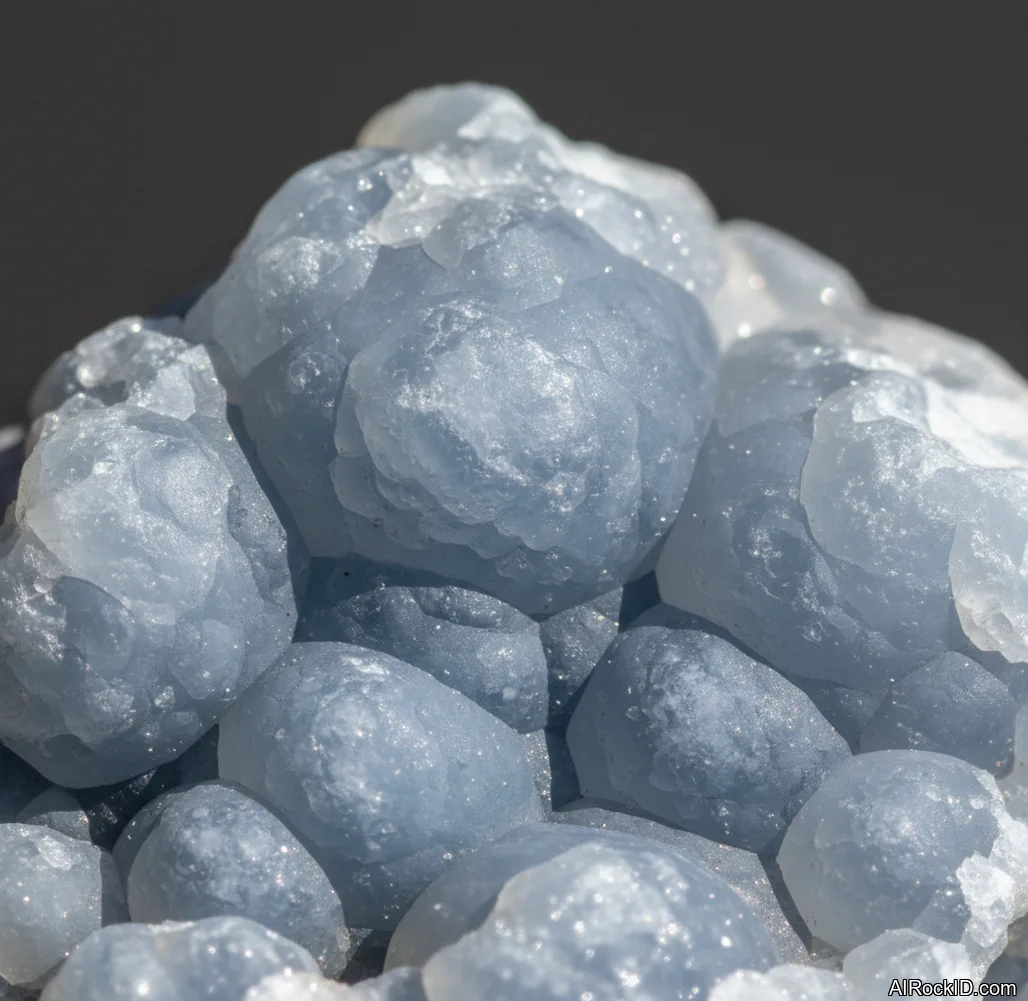
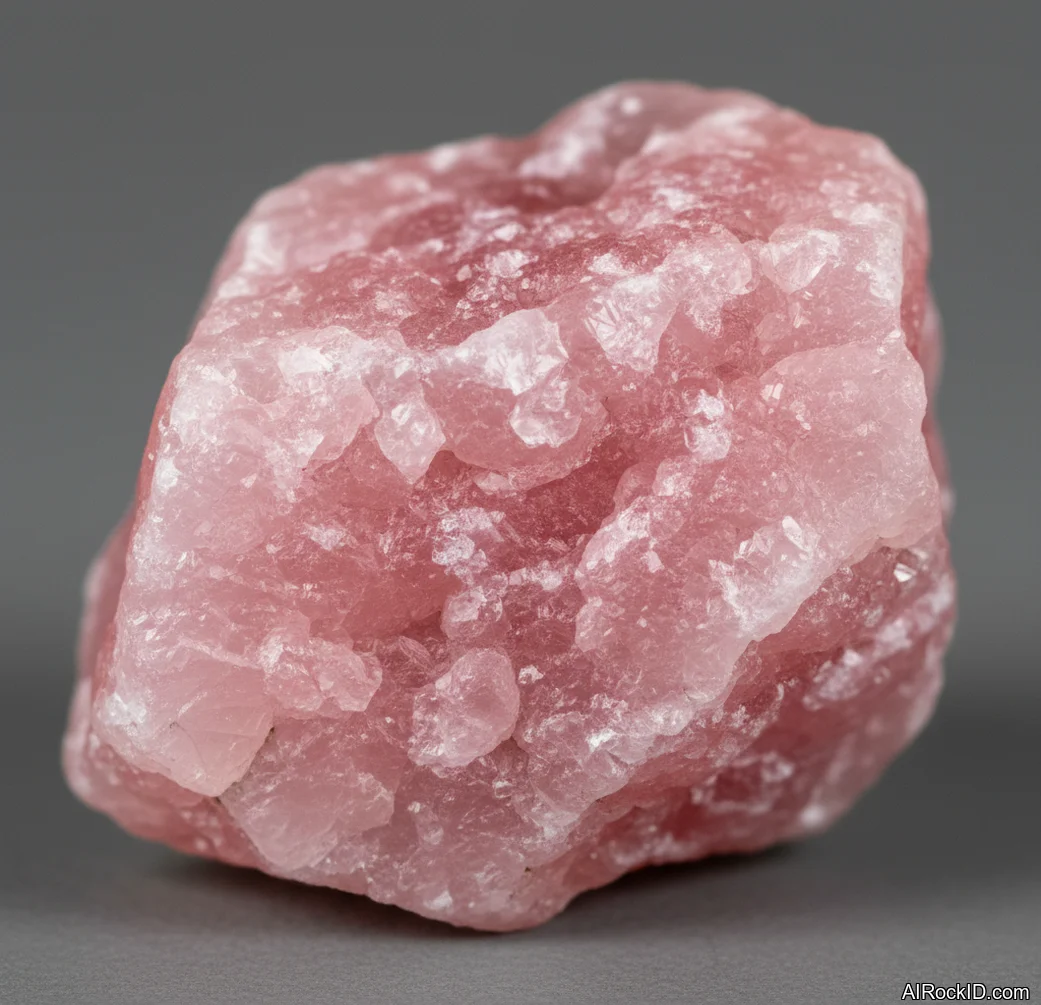
Most of what’s for sale ends up as cabs or tumbled stones, because chalcedony doesn’t grow those nice, pointy crystals the way rock crystal does. And when you do see it as rough, it’s usually knobby nodules or seam material with a rind on the outside. That rind matters, too. Crack it open and you’ll often see the pink is strongest in the center, then it fades as you move out toward the edges.
Origin & History
“Chalcedony” traces back to the old port town of Chalcedon (right by modern Kadıköy in Istanbul). That place-name basically got stuck to these waxy, microcrystalline quartzes through early trade. And people were using the material ages before anyone bothered to pin a modern mineral name on it, mostly because it carves cleanly, doesn’t chip in a fussy way, and it’ll take a high polish that feels almost slick under your thumb.
Once mineralogy really got going in Europe in the 1700s and 1800s, chalcedony was treated as quartz. Pink chalcedony isn’t its own separate species with one tidy “first discoverer” like some rare minerals have. Thing is, it’s more like a color lane inside a big quartz family, and dealers have been drifting in and out of that lane for a long time, depending on what people are buying.
Where Is Pink Chalcedony Found?
Pink chalcedony shows up wherever silica-rich fluids can fill cavities or replace rock, especially in volcanic terrains and sedimentary seams. Brazil, Madagascar, India, Mexico, and parts of the western USA are steady sources in the trade.
Formation
Most chalcedony shows up when silica-rich water threads its way through rock and then drops microcrystalline quartz as it cools off or the chemistry shifts. It’s basically quartz that didn’t get the room or the time to grow big crystal faces. So it crams itself in tight, in tiny fibers and grains, and that’s why it feels so smooth and tough when you’ve actually got a piece in your hand.
Look, if you stare at a fresh break on rough material, you can sometimes catch faint banding or a little change in translucency, even when it’s not doing the classic “agate stripes” thing. The pink color usually comes from trace inclusions or impurities, often tied to iron or manganese, and sometimes from microscopic mineral specks that stain the silica. But it’s not steady. I’ve cracked nodules where one side comes out a warm, solid pink and the other side in the exact same piece fades to almost white. Weird, right?
How to Identify Pink Chalcedony
Color: Soft pink to peachy-pink, usually milky to translucent with a cloudy internal texture rather than clear transparency.
Luster: Waxy to vitreous when polished, with a gentle glow instead of sharp sparkle.
Pick up a real piece and it stays cool to the touch for a while, especially compared to plastic or resin fakes that warm up fast. If you scratch it with a steel knife, it shouldn’t bite easily, and it will scratch ordinary glass (Mohs 6.5–7). The problem with dyed chalcedony is the color can pool in tiny cracks or along the rind, so check edges and drill holes with a loupe.
Properties of Pink Chalcedony
Physical Properties
| Crystal System | Trigonal |
| Hardness (Mohs) | 6.5-7 (Hard (6-7.5)) |
| Density | 2.58-2.64 |
| Luster | Waxy |
| Diaphaneity | Translucent |
| Fracture | Conchoidal |
| Streak | White |
| Magnetism | Non-magnetic |
| Colors | Pink, Peach, Rose, Pale salmon, Whitish-pink |
Chemical Properties
| Classification | Silicates |
| Formula | SiO2 |
| Elements | Si, O |
| Common Impurities | Fe, Mn, Al |
Optical Properties
| Refractive Index | 1.530-1.539 |
| Birefringence | 0.009 |
| Pleochroism | None |
| Optical Character | Uniaxial |
Pink Chalcedony Health & Safety
Pink chalcedony is non-toxic to touch and handle. But if you cut it or sand it, you can kick up respirable silica dust, the kind that hangs in the air and gets into your lungs (especially when the grit starts piling up as a fine, pale powder on the bench). Finished stones, though, are safe for normal use.
Safety Tips
If you’re going to cut it or grind it, do it wet if you can, keep the airflow moving with solid ventilation, and wear a real respirator that’s actually rated for fine silica dust.
Pink Chalcedony Value & Price
Price Range
Rough/Tumbled: $5 - $60 per piece
Cut/Polished: $2 - $15 per carat
Prices jump when the stone’s got that clean translucency, an even pink all the way through, and rough that’s been cut well without those chalky, dead-looking patches. And the big, solid pink chunks without major fractures always run higher, because so much rough comes with washed-out zones or a thick rind that just turns into sludge on the saw.
Durability
Durable — Scratch resistance: Good, Toughness: Good
It holds polish well and handles daily wear decently, but sharp knocks can still chip edges because it breaks with conchoidal fracture.
How to Care for Pink Chalcedony
Use & Storage
Store it in a pouch or a divided box if it’s polished, because it can scratch softer stones and get scuffed by harder ones. I keep my chalcedony away from topaz and corundum in the same tray.
Cleaning
1) Rinse with lukewarm water and a drop of mild soap. 2) Gently scrub with a soft toothbrush around seams or drill holes. 3) Rinse well and pat dry; skip harsh chemicals and abrasive cleaners.
Cleanse & Charge
If you do energetic cleansing, smoke, sound, or a quick rinse works fine since it’s stable quartz. I wouldn’t leave it baking in direct sun for days because pale pink material can look washed out over time.
Placement
On a desk or nightstand, it reads best under warm light where the pink looks less gray. In a display case, set it against a dark background so the translucency shows at the edges.
Caution
Try not to breathe in the dust when you’re cutting or drilling (it gets everywhere, even on your shirt). Silica dust is the thing that’ll actually mess you up. And skip the ultrasonic cleaner if the piece has any fractures or it’s got a bunch of pits. Why risk it?
Works Well With
Pink Chalcedony Meaning & Healing Properties
Next to the louder, sparkly stones, pink chalcedony is basically the quiet one. When I’m sorting a tray at the shop, it’s the piece I catch myself rubbing with my thumb without even thinking, because the polish feels satiny, almost like worn sea glass, and the color doesn’t beg for attention. And yeah, that touchy-feely part matters more than people think, since it changes how you actually reach for it day to day.
In modern crystal culture, pink chalcedony gets linked to gentle emotional support, softer communication, and calming the body’s stress response. I treat that as a personal practice thing, not a medical claim (big difference). If someone tells me they’re using it for anxiety, I give the same speech I give for any stone: it can be a reminder, a focus object, something to hold when your brain’s spinning, but it doesn’t replace therapy, medication, or actual sleep. Seriously, sleep.
But here’s the catch. A lot of what’s sold as “pink chalcedony” is either so pale it reads almost white in real life, or it’s dyed material getting pushed as something rarer. So if it’s going to be part of your routine, make sure you like it in normal daylight, not just under a booth light that turns everything cotton-candy pink. (Those lights can make anything look magical, can’t they?)
Identify Any Crystal Instantly
Snap a photo and get properties, value, care instructions, and healing meanings in seconds.