Pink Halite
What Is Pink Halite?
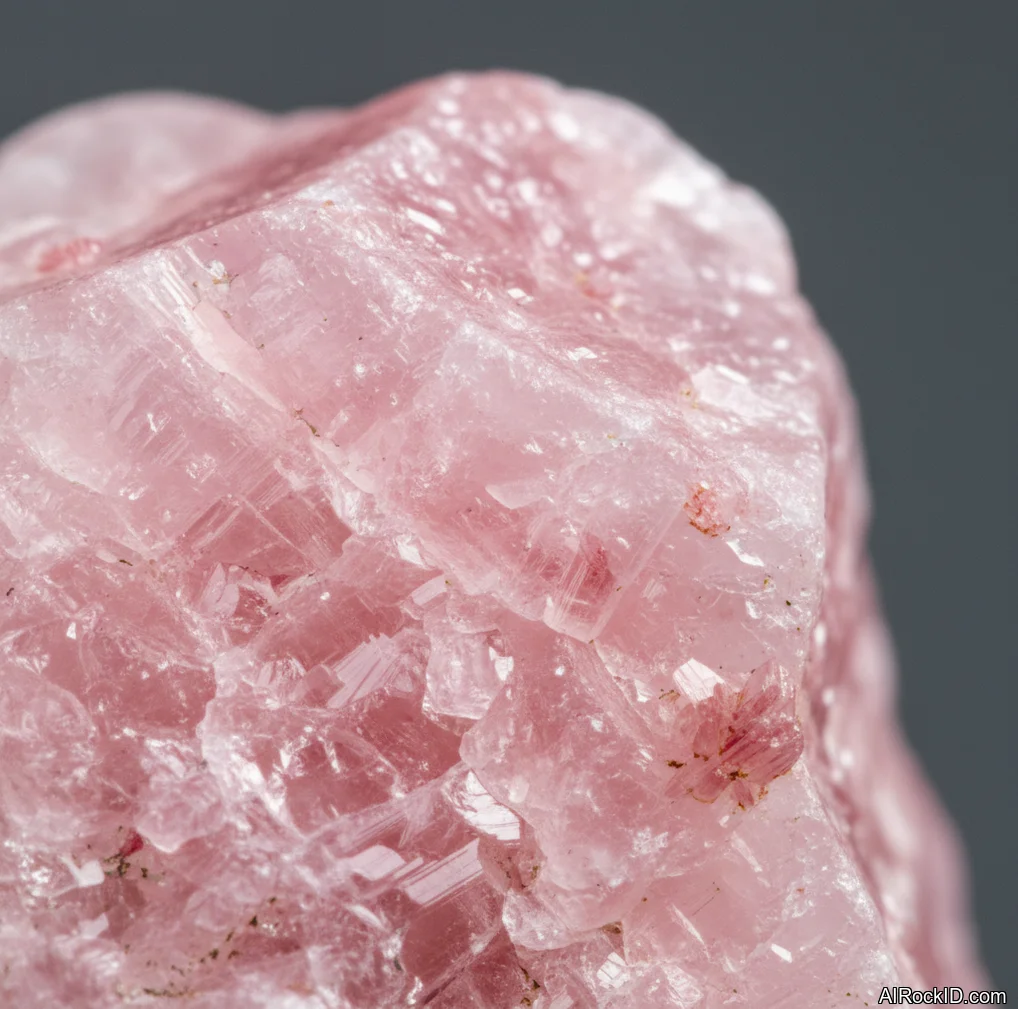
Pink halite is just halite (sodium chloride, NaCl) that happens to be pink.
Pick up a chunk and it’s a weird combo. It looks like candy. But it feels like a mineral that’s halfway to melting. Most pieces are pretty light in your hand, and if the air’s humid the surface can get slightly tacky, like it wants to grab your skin. I’ve moved pieces around in a tray and ended up with that faint salty grit on my fingertips afterward. And when it’s fresh and clean, those cleavage faces can kick back sharp flashes, like tiny mirrors catching a lamp.
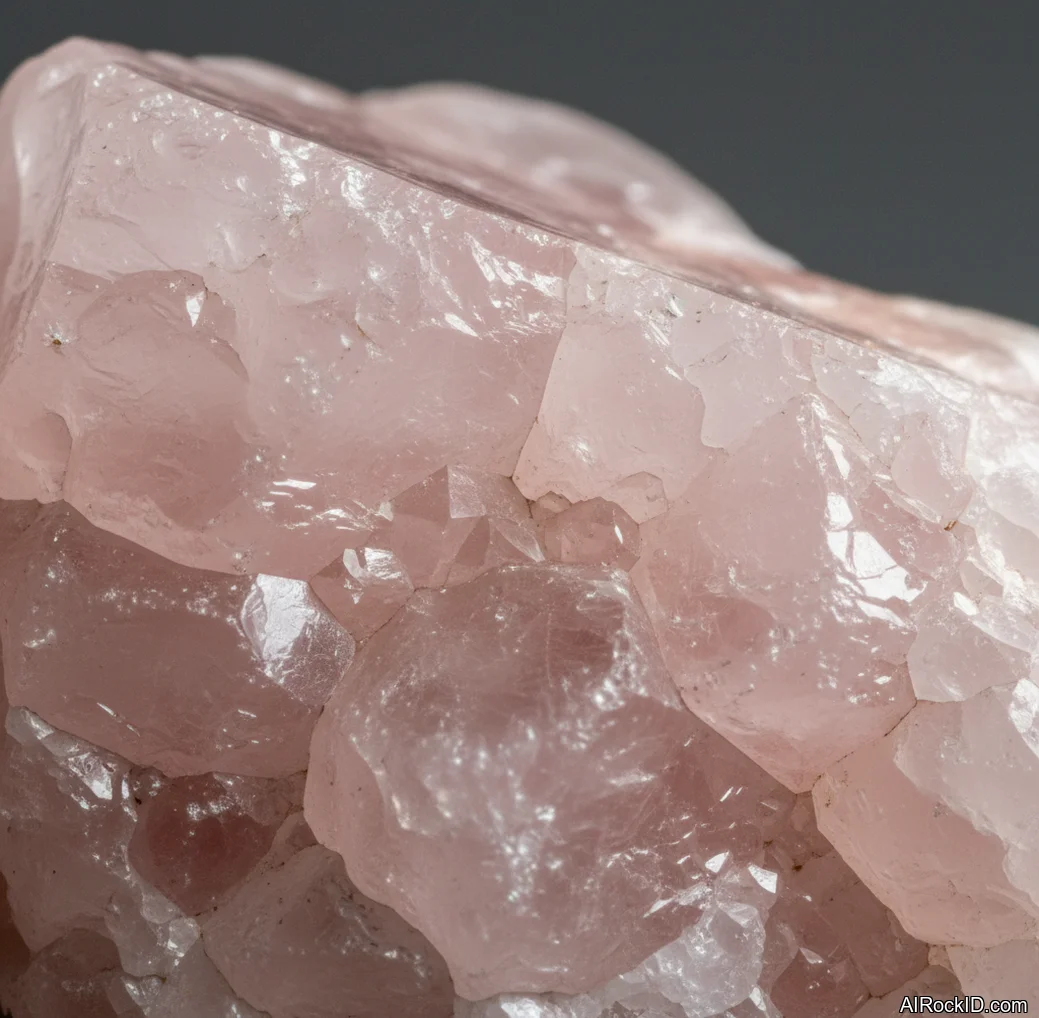
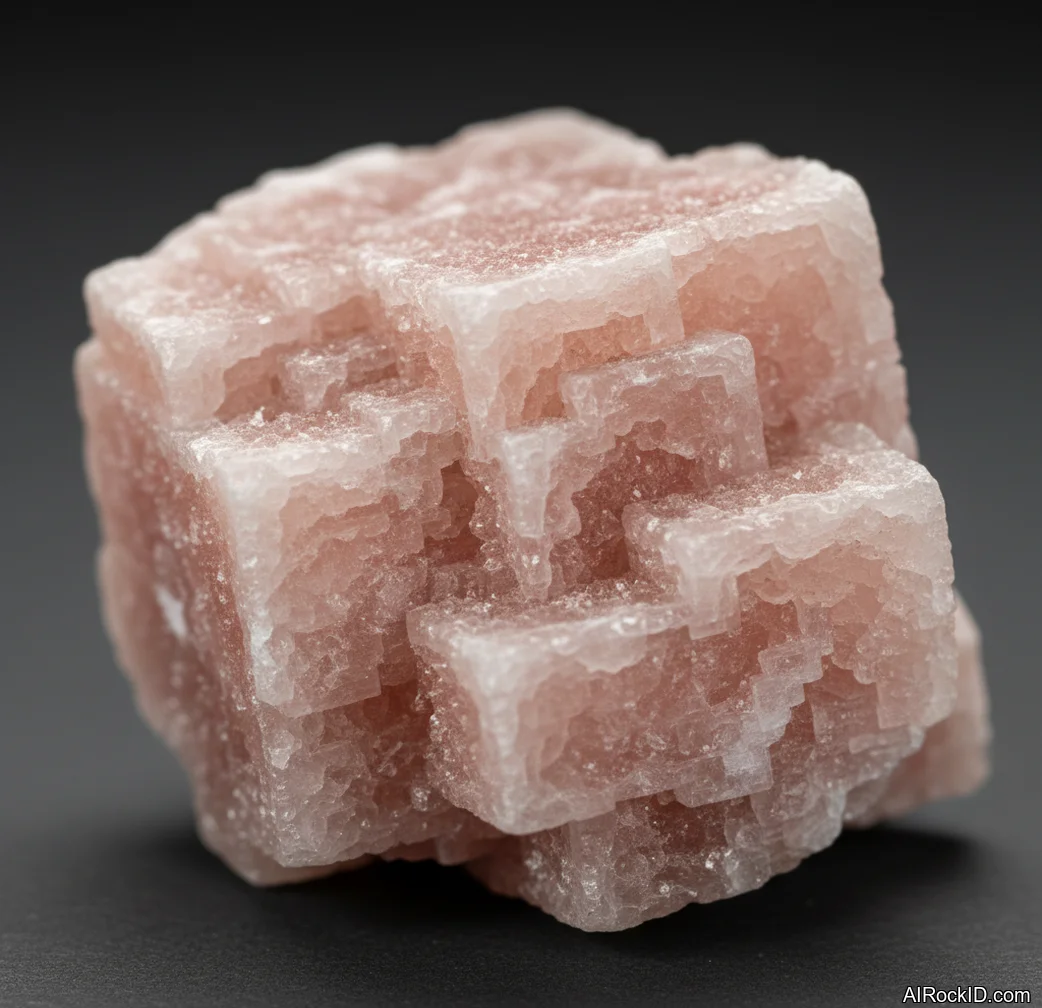
In photos it can pass for rose quartz or pink calcite at a glance. In person? Different story. Halite breaks into clean cubes, not those lumpy conchoidal chips. The pink runs from pale blush to warm salmon, and you’ll sometimes see milky zones or tiny specks inside that make it look a little cloudy (almost fogged up). Thing is, it’s a display mineral first. Try wearing it, or leave it in a steamy bathroom, and you’ll learn that lesson fast.
Origin & History
Halite’s been on mineralogists’ radar since the early days, but the official species write-up really locks in with modern classification getting organized in the 1700s and 1800s. The word “halite” comes from the Greek “hals,” which just means salt. Hard to get more straightforward than that.
And the pink stuff? It isn’t some separate mineral species, it’s just halite with a color twist. Dealers will usually label it “pink halite” when the color is natural and strong enough that it doesn’t look washed out sitting in a flat, dry display case (the kind where the surface stays clean, not that slightly tacky feel you get when humidity creeps in). Salt’s historical importance is enormous, sure, but that’s salt as a commodity. As a collectible crystal, halite’s always been kind of niche, mostly because it’s so soft and it gets picky about moisture fast. Why fight a specimen that can start looking sad just because the air’s damp?
Where Is Pink Halite Found?
Pink halite shows up in evaporite basins, salt mines, and dry lake deposits where brines concentrate and crystallize. Strongly colored pieces are most often tied to very arid environments or protected mine settings.
Formation
Most halite forms in a pretty straightforward way. Salty water evaporates, the dissolved ions run out of room, and they end up snapping into place as crystals. In closed basins, salt flats, or ancient seas that got cut off, that cycle can repeat for ages and stack up thick evaporite layers. If you’ve ever watched a shallow pan of brine dry and leave crunchy little salt crystals stuck to the bottom (and along the rim where it dries first), it’s the exact same thing, just on a much bigger scale.
The pink color usually comes from trace impurities or tiny inclusions. Iron oxides can tint it, and some deposits have organic material or microscopic inclusions that nudge the color toward peach or salmon. But don’t expect every pink piece to look “perfectly” pink. A lot of halite is blotchy. And the color can fade or seem weaker once the surface gets scuffed, or when it starts to hydrate in damp air (ever notice how it can go a little dull or slightly wet-looking?).
How to Identify Pink Halite
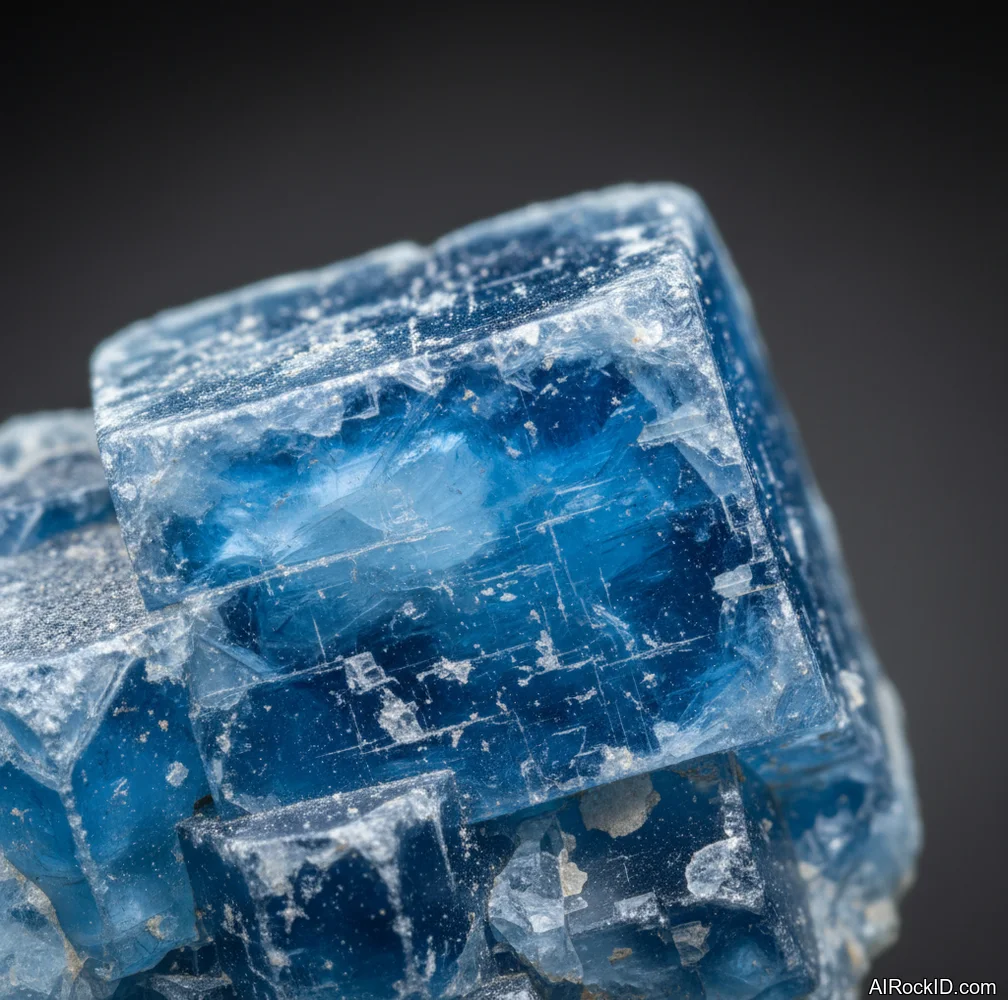
Color: Pink halite ranges from pale blush to salmon-pink, sometimes with white or clear zones and cloudy internal veils. Color can be uneven, with bands or spots tied to impurities.
Luster: It has a vitreous luster on fresh cleavage faces, turning duller and more granular where it’s weathered.
Look closely for cubic cleavage and right-angle breaks. If you scratch it with a fingernail, it’ll mark easily, and a copper coin can gouge it without trying. The real test is moisture: set it out in a humid room and the surface can start to sweat and dull, which doesn’t happen with quartz or calcite.
Properties of Pink Halite
Physical Properties
| Crystal System | Cubic |
| Hardness (Mohs) | 2.0-2.5 (Soft (2-4)) |
| Density | 2.16-2.17 g/cm3 |
| Luster | Vitreous |
| Diaphaneity | Transparent to translucent |
| Fracture | Conchoidal |
| Streak | white |
| Magnetism | Non-magnetic |
| Colors | pink, salmon, peach, colorless, white |
Chemical Properties
| Classification | Halides |
| Formula | NaCl |
| Elements | Na, Cl |
| Common Impurities | Fe, K, Mg, Ca, organic inclusions, clay minerals |
Optical Properties
| Refractive Index | 1.544 |
| Birefringence | None |
| Pleochroism | None |
| Optical Character | Isotropic |
Pink Halite Health & Safety
Biggest risk here isn’t really to you. It’s to the specimen, since water and humidity are what mess it up. And yeah, it can nick you if you handle it wrong. Some of the sharp edges will scratch skin, kind of like broken, glassy salt crystals, especially if you grab it too hard.
Safety Tips
Handle it over a tray. Keep it dry. And if you’ve been sorting through old, dusty pieces from mine lots, go wash your hands right after (that gritty dust gets everywhere, doesn’t it?).
Pink Halite Value & Price
Price Range
Rough/Tumbled: $10 - $120 per specimen
Price mostly comes down to color strength, clarity, and how crisp the cubes and cleavage faces look. Bigger, clean, saturated pink chunks get pricey, since most halite you’ll see for sale is on the small side, with chipped corners or a slightly dulled, humid look (that faint surface haze).
Durability
Fragile — Scratch resistance: Poor, Toughness: Poor
It’s water-soluble and will pit, dull, or even deform in humid conditions.
How to Care for Pink Halite
Use & Storage
Keep it in a sealed display box or a zip bag with a small desiccant pack. If you live somewhere humid, don’t leave it out on an open shelf for months.
Cleaning
1) Use a dry, soft brush to knock off dust. 2) Wipe gently with a dry microfiber cloth on flat faces. 3) If there’s grime you can’t remove dry, skip water and just accept a little patina rather than damaging the crystal.
Cleanse & Charge
Avoid water or salt baths since it will dissolve. If you do energy-style cleansing, stick to dry methods like smoke, sound, or setting it near (not on) a dry selenite plate.
Placement
Best spot is a dry cabinet away from windows and vents that cycle humid air. I keep mine up high, because one knocked-off-the-shelf fall and you’re sweeping up salty gravel.
Caution
Don’t soak or rinse pink halite. It’ll dissolve in water. And keep it out of bathrooms and kitchens. Skip humidifiers too. Any direct contact with sweaty skin or a damp cloth is a bad idea. Why risk it?
Works Well With
Pink Halite Meaning & Healing Properties
Next to flashier stones like kunzite or rhodochrosite, pink halite comes off kind of plainspoken. When I plop a piece on my desk, it gives me that clean-counter feeling, like you just wiped everything down and put the sponge away. Not dramatic. Just tidy. But it also keeps whispering this reminder that it’s temporary in a way quartz isn’t, and that changes how you relate to it.
Most dealers just toss it in the same bucket as other pink stones and start talking about love and softness. Sure. Pink is pink, and people immediately slap heart stuff on it. In my own collecting circle, people grab it when they want a gentle reset, like letting go of mental clutter or cooling off after a tense day (you know the feeling). And if you’re into meditation, it works as a visual anchor because the color is calm without shouting for attention.
But look, I’ll say it straight: this isn’t a set-it-and-forget-it crystal. Pink halite reacts to the real world. Humidity. Fingerprints. A damp windowsill. You can even feel it sometimes, that slightly tacky, salty “film” you get if you handle it too much, and then you’re stuck thinking, great, now what did I do? That fragility is part of the practice for some people, and for others it’s just irritating. None of this is medical care, and it’s not a substitute for actual treatment. It’s a mineral you live with, carefully, and you start noticing your own habits while you’re trying to keep it pristine.
Identify Any Crystal Instantly
Snap a photo and get properties, value, care instructions, and healing meanings in seconds.