Pink Lace Chalcedony
What Is Pink Lace Chalcedony?
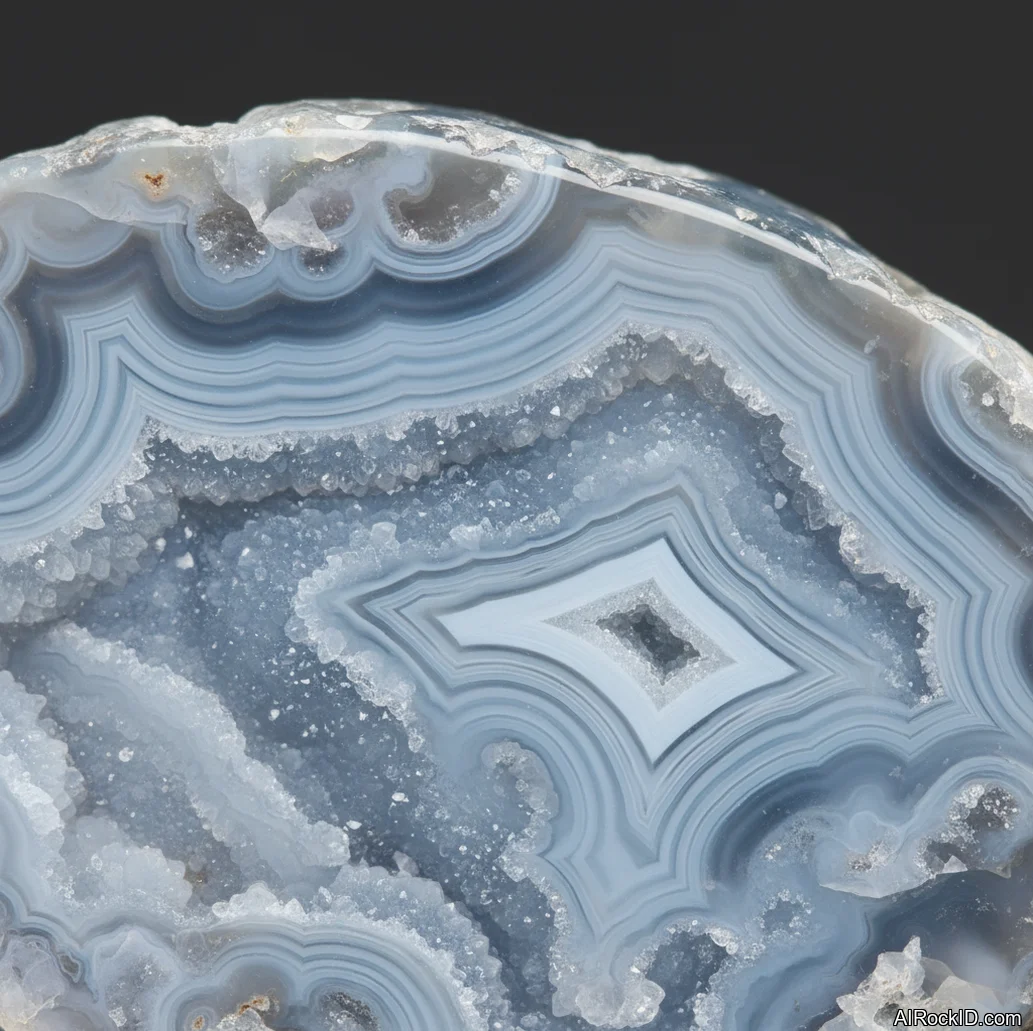
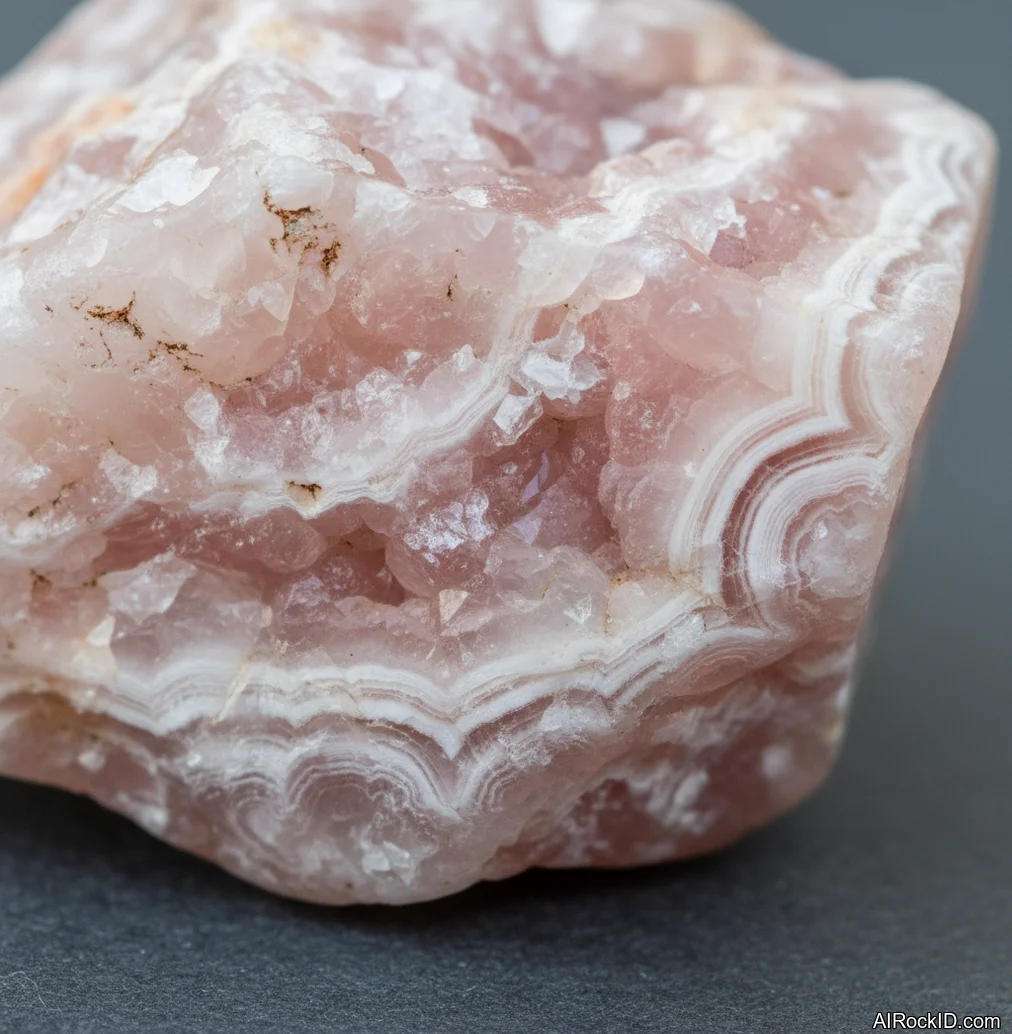
Pink Lace Chalcedony is a pink, banded variety of chalcedony (microcrystalline quartz), and it shows those soft lacey, ribbon-like layers people go nuts for.
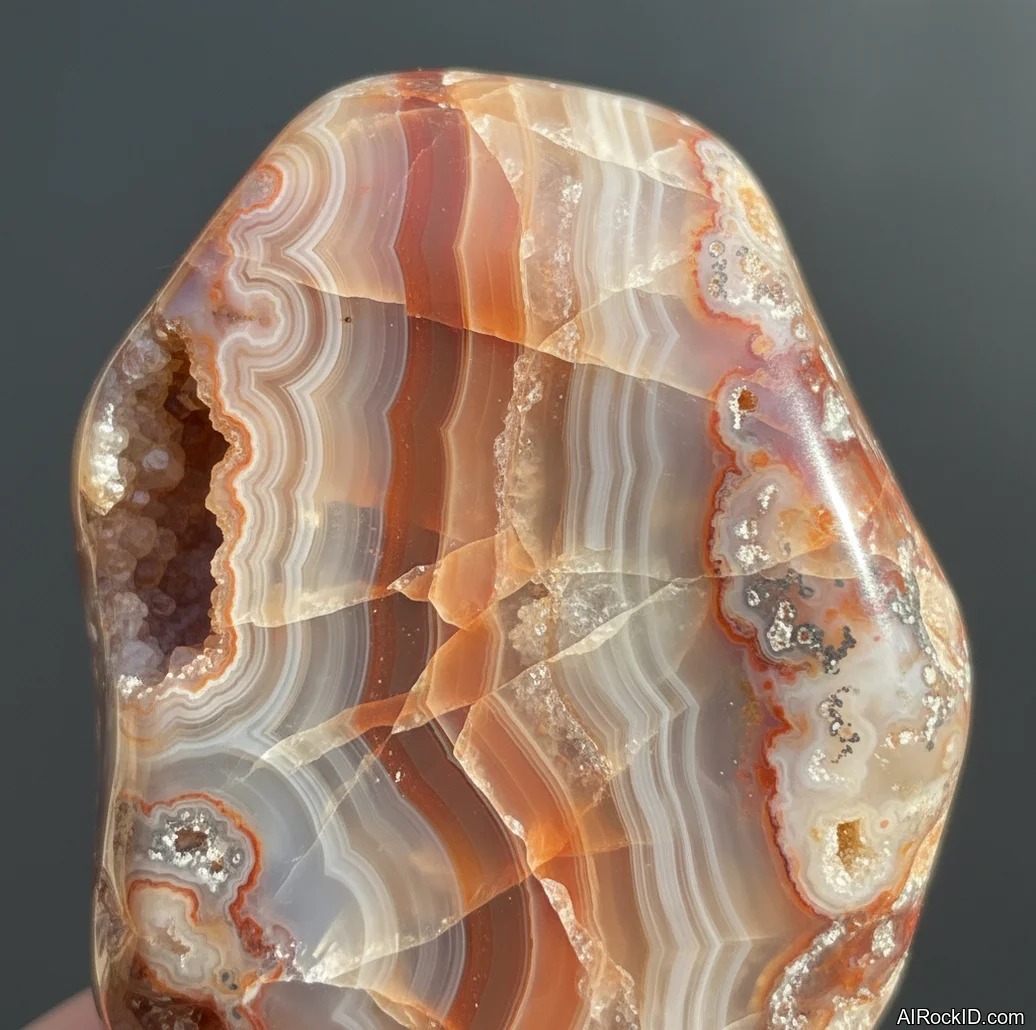
Grab a nicely polished piece and, honestly, the first thing that hits you is the feel. It’s smooth, kind of “buttery” in your palm, and it stays cool longer than glass or plastic does. The bands can be so thin they look like little hairlines, or they can come in thicker ribbon stripes. Most of the time it’s pink with white or cream, and every now and then you’ll see a grayish layer in there that makes the pink stand out more.
And yeah, at a glance a lot of folks call it “pink agate.” In shop-talk, that isn’t really wrong. But the name gets messy fast. Some of it has true agate-style banding, some is just banded chalcedony, and some stuff sold as “pink lace” is dyed quartz that looks way too even and way too loud. Real pieces usually shift gently from band to band, and if you tip one under a bright light you’ll often catch a little bit of cloudiness in there (tiny, but it’s there).
Origin & History
Chalcedony is an old name, the kind that reaches back into the ancient world. It’s usually linked to Chalcedon, a port city on the Bosporus near modern Istanbul. And people have been using the word for ages to mean that waxy, microcrystalline quartz, even back when nobody had a microscope to spell out what, exactly, they were holding in their hand.
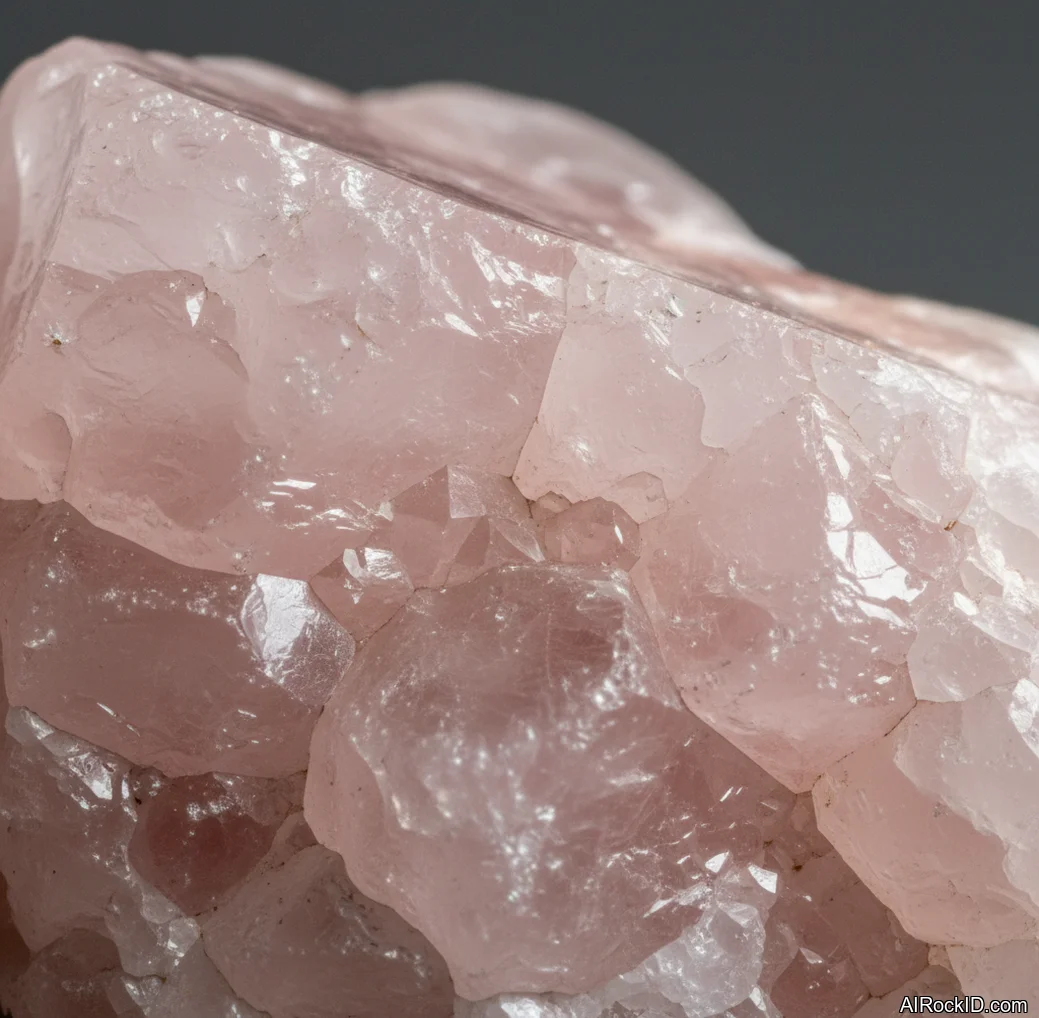
“Pink lace chalcedony” isn’t some formally defined mineral variety. It’s basically a trade name. I remember first seeing it show up all the time on show tables in the late 1990s and early 2000s, mostly as tumbled stones and bead strands, with that soft feel and those banded pink swirls you notice as soon as you roll it between your fingers. Dealers leaned on the name to separate that softer, banded pink material from brighter pink rhodonite and the glassier look of rose quartz. Why? Because on a crowded table, quick labels matter.
Where Is Pink Lace Chalcedony Found?
Banded pink chalcedony shows up in silica-rich volcanic and sedimentary settings in multiple countries, with a lot of lapidary-grade material coming through Brazil and the broader global agate trade.
Formation
Look at the banding for a second and you’re basically watching silica show up, little by little. Chalcedony forms when silica-rich fluids move through cavities, fractures, or porous rock, and then they drop microcrystalline quartz in layers. Those layers pile up kind of like tree rings. Except here the “rings” come from shifts in chemistry, temperature, and how fast the fluid is actually moving.
That pink tone? It usually comes from tiny traces of iron or manganese-related inclusions, or from really fine dispersions that stain the silica. And no, the banding isn’t paint. It’s the real structure. If you take a thicker cab and hit it with a flashlight, you can often see those layers running inward through the stone, not just sitting on the surface like some kind of coating. Pretty hard to fake that, right?
How to Identify Pink Lace Chalcedony
Color: Pale to medium pink with white, cream, or light gray banding in lace-like or ribbon patterns. The pink is usually soft rather than neon.
Luster: Waxy to slightly vitreous when well polished.
Pick up the stone and let it sit on your palm for a few seconds. Real chalcedony stays cool longer than plastic or resin fakes. The real test is a loupe: the band edges look slightly fuzzy or micro-granular, not like crisp printed lines. If the color looks aggressively uniform across cracks and pits, assume dye until proven otherwise.
Properties of Pink Lace Chalcedony
Physical Properties
| Crystal System | Trigonal |
| Hardness (Mohs) | 6.5-7 (Hard (6-7.5)) |
| Density | 2.58-2.64 |
| Luster | Waxy |
| Diaphaneity | Translucent |
| Fracture | Conchoidal |
| Streak | White |
| Magnetism | Non-magnetic |
| Colors | Pink, White, Cream, Light gray |
Chemical Properties
| Classification | Silicates |
| Formula | SiO2 |
| Elements | Si, O |
| Common Impurities | Fe, Mn, Al |
Optical Properties
| Refractive Index | 1.530-1.540 |
| Birefringence | None |
| Pleochroism | None |
| Optical Character | Uniaxial |
Pink Lace Chalcedony Health & Safety
Pink Lace Chalcedony is safe to pick up and handle, and it’s fine around water too. The real issue only comes up if you’re cutting it or sanding it, because that’s when you can end up breathing in silica dust (the kind you see as that fine, chalky powder that settles on your fingers and the work surface).
Safety Tips
If you’re grinding or drilling, don’t do it dry. Keep a steady trickle of water on the bit, make sure you’ve got real ventilation (a fan pulling dust away from your face, not just blowing it around), and wear a proper respirator rated for fine silica dust.
Pink Lace Chalcedony Value & Price
Price Range
Rough/Tumbled: $3 - $25 per tumbled stone
Cut/Polished: $2 - $12 per carat
Price shoots up when the lace banding is crisp and tight, and the stone has that nice see through look when you hold it up to a window. But if you’re seeing muddy gray layers, little fractures (those whitish lines you catch when you tilt it), or any obvious dye treatment, the value drops fast.
Durability
Durable — Scratch resistance: Good, Toughness: Good
It handles daily wear pretty well, but hard knocks can still chip edges because it breaks with a classic conchoidal fracture.
How to Care for Pink Lace Chalcedony
Use & Storage
Store it in a soft pouch or separate compartment so it doesn’t get scuffed by corundum, topaz, or even harder quartz points. And keep polished pieces from rattling together if you care about the shine.
Cleaning
1) Rinse with lukewarm water and a drop of mild soap. 2) Use a soft toothbrush to get into pits or banded grooves. 3) Rinse well and pat dry; avoid harsh cleaners that can dull the polish over time.
Cleanse & Charge
For non-woo cleaning, a quick rinse and a wipe is plenty. If you do energetic routines, most people use moonlight or a few hours on a selenite plate.
Placement
On a desk it reads calm and tidy because the banding isn’t visually loud. I like it near a window but not in blasting sun all day, since some pale pink material can look washed out over time.
Caution
Don’t use an ultrasonic cleaner if the piece already has fractures or pits that reach the surface. That buzzing vibration can turn a small weak spot into a bigger problem fast. And if you’re cutting it, don’t breathe in the dust. Seriously, why risk that?
Works Well With
Pink Lace Chalcedony Meaning & Healing Properties
Next to louder pink stones like rhodonite, Pink Lace Chalcedony comes off way quieter when you actually use it. The feeling people are chasing is more steady and soft, like turning the volume down, not flipping some big switch. I’ve kept a little tumbled one in my pocket on long show days, the kind where your brain feels crispy from fluorescent lights, constant chatter, and haggling. It’s not magic. But it’s a solid tactile reset. Smooth stone, slow breath. Keep moving.
But I’m going to be straight about the market side. There’s a lot of “pink lace” floating around that’s dyed or just flat-out mislabeled, and if you’re buying it for emotional comfort, the honesty of the piece matters to some people. If you pick up two stones and one is bubblegum-bright with sharp, perfect stripes, that one usually has this slightly glassy feel in your hand too (almost slick, like it wants to skate out of your fingers). The real stuff tends to show gentler, slightly cloudy bands and that waxy glow you notice when you tilt it under a booth light.
Metaphysically, people link pink banded chalcedony with calmer communication and easing stress patterns that get stuck in the body. That’s tradition and personal experience, not medicine. If you’re dealing with anxiety, panic, or anything clinical, treat the stone like a support object, in the same lane as a worry coin or a smooth pebble you rub with your thumb, not a replacement for care. Right?
Identify Any Crystal Instantly
Snap a photo and get properties, value, care instructions, and healing meanings in seconds.