Plumbogummite
What Is Plumbogummite?
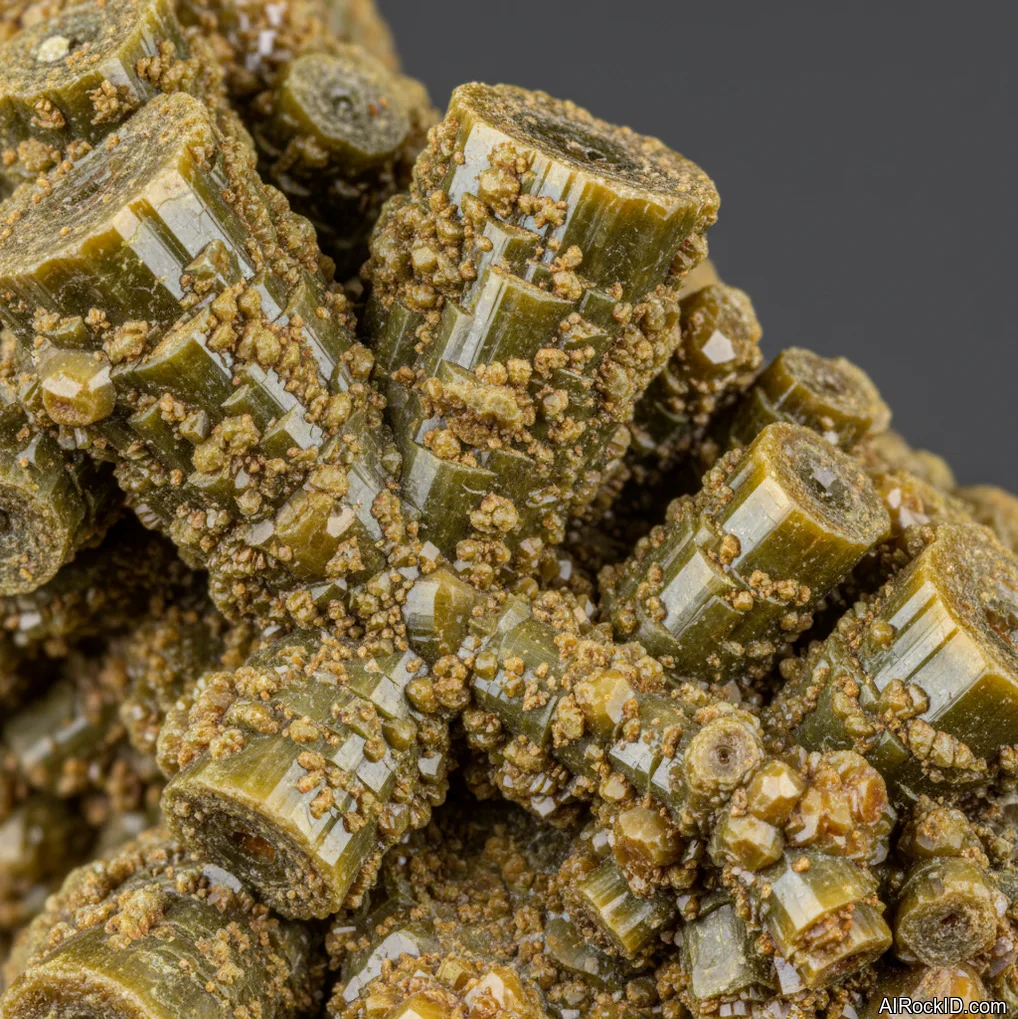
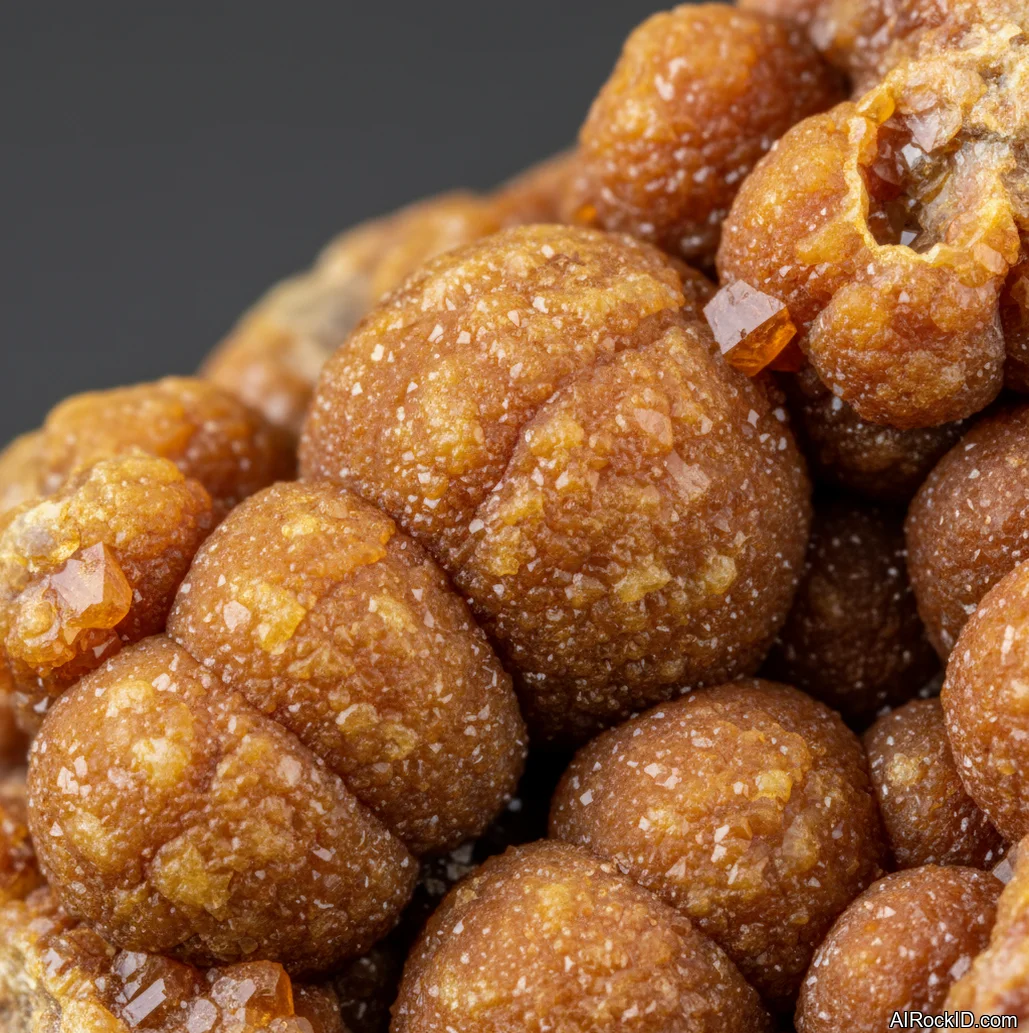
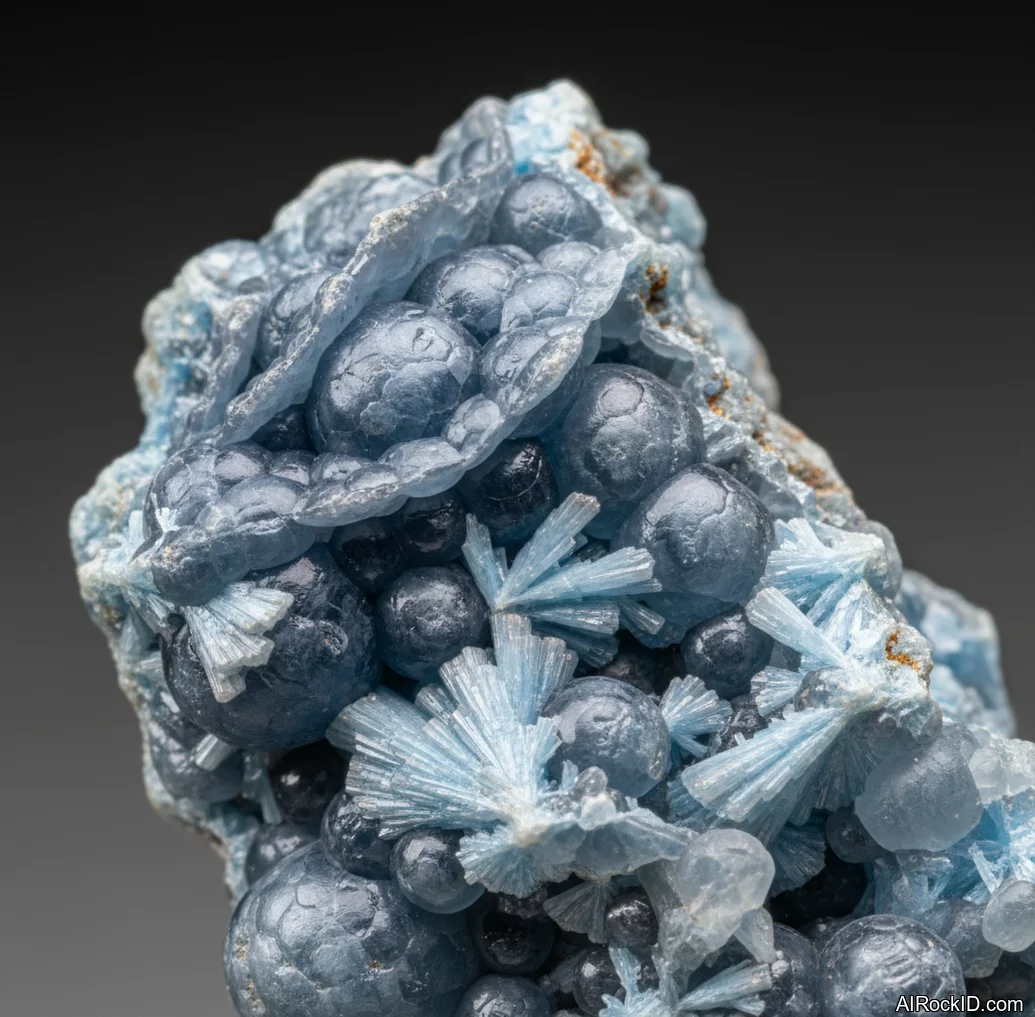
Plumbogummite is a lead aluminum phosphate mineral, and it usually shows up as a secondary coating or tiny crystals in the oxidized zones of lead ore deposits. Most specimens you’ll actually see for sale aren’t big, sharp crystals at all. They’re more like pastel crusts or those lumpy botryoidal patches sitting on rusty limonite. And honestly, that’s the point. It’s a collector mineral that doesn’t have to scream to be worth your time.
Pick one up and you notice the feel immediately. It’s weirdly light for something with lead in the chemistry, mostly because it’s commonly mixed with porous iron oxides and other phosphates (you can almost feel that airy, pitted base through the crust). The surface can be a little chalky. Run your thumb across a crusty spot and, yeah, sometimes you’ll get a faint dusty smear on your skin, especially if the material is softer and more microcrystalline. Messy. In a good way.
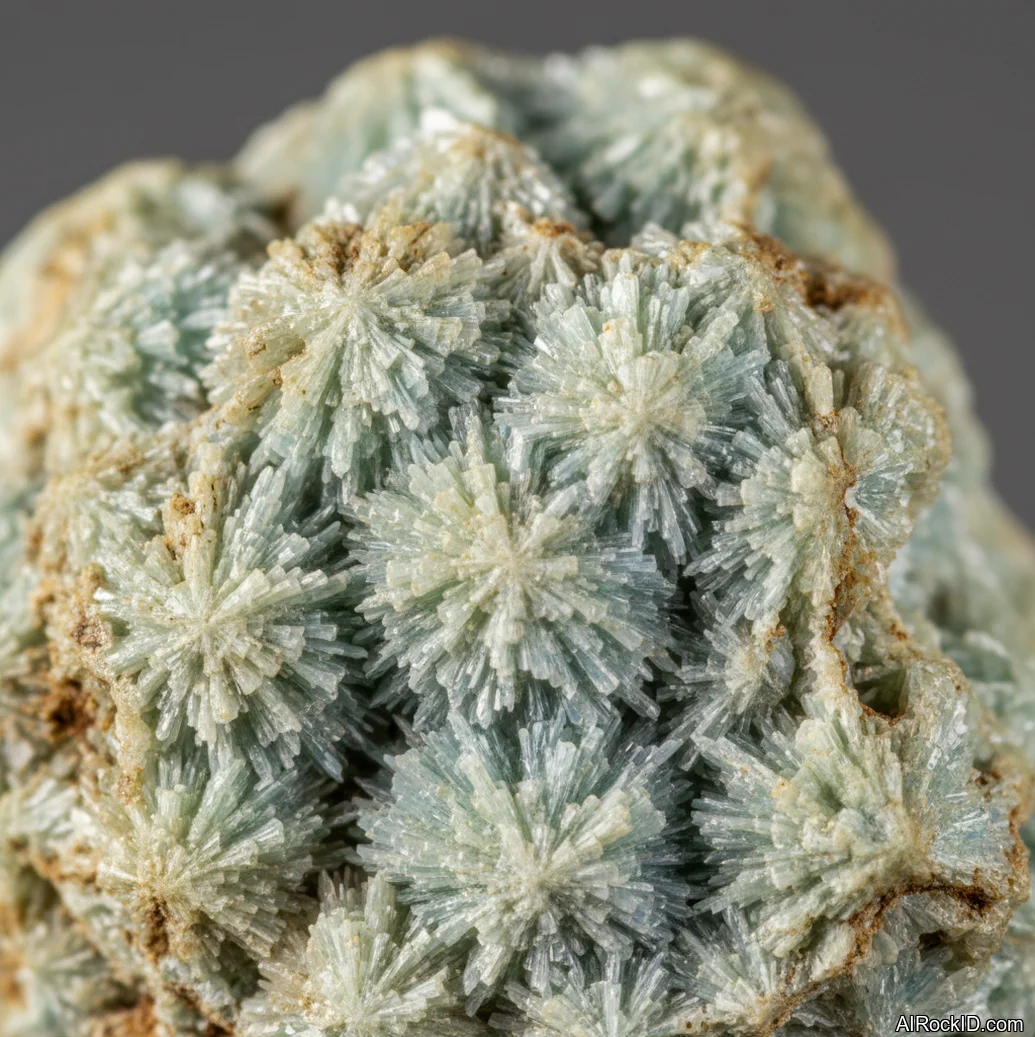
Look, shine a lamp across it from the side and you might catch tiny sparkly faces, kind of sugar-grain looking, perched on top of that waxy crust. The color range is sneaky too. I’ve had “blue” pieces that read green in daylight, then slide toward a soft robin’s-egg tone under warmer indoor bulbs. But don’t expect gem glow. Most of it stays quiet, and that’s exactly why people mislabel it or just walk right past it at shows.
Origin & History
The name is basically straight out of the chemistry: *plumbum* for lead, and *gummite*, which was the old word people used for those gummy-looking alteration products you see on uranium and lead minerals. Plumbogummite really does fit the term, too, because it usually shows up as rounded, crusty alteration coatings, not clean, sharp standalone crystals. Kind of lumpy. Kind of “stuck on there.” That’s the whole look.
It got described in the 19th century, back when people were finally sorting oxidized ore minerals into actual species instead of tossing everything into the catch-all bin of “earthy coatings.” A lot of the early work leaned on old European localities, and you still run into classic specimens linked to lead mining districts where collectors were poking around oxidized pockets long before modern micromineral culture really took off.
Where Is Plumbogummite Found?
It shows up in oxidized lead deposits worldwide, usually as a secondary phosphate with other lead minerals. Good collector specimens often come from old lead districts and a few well-worked pockets in places like Minas Gerais.
Formation
Out in the field, plumbogummite feels like a late-stage cleanup mineral. You’re standing in the oxidized zone of a lead deposit, fluids are sneaking through fractures, and there’s phosphate around from other minerals breaking down or from the surrounding rocks. Lead gets freed up from primary sulfides like galena, aluminum can come out of clays or feldspars as they crumble, and once the chemistry lines up, these crandallite-group phosphates drop out and start to form.
Most of the time you’ll see it as crusts, earthy masses, or tiny crystals lining vugs (the kind of little pockets that get dusty the second you touch them). And it likes company. If you’ve ever tried sorting a mixed phosphate lot, you know the headache: plumbogummite can sit right beside pyromorphite, libethenite, turquoise-ish copper phosphates, and that catch-all “green crust” nobody wants to name. The oxidized zone coughs up a bunch of minerals in the same color range, so what do you do? You lean on context and habit, and sometimes you’ve got to run a test to be sure.
How to Identify Plumbogummite
Color: Common colors run pale blue, blue-green, green, and yellow-green, often in soft, pastel tones. On matrix it can look like a thin paint layer or rounded botryoidal patches.
Luster: Luster ranges from dull to waxy, and tiny crystals can look vitreous when you catch the right angle.
At first glance it can look like turquoise paint or a generic green phosphate crust, so check the habit: plumbogummite is often botryoidal or crusty with a slightly waxy skin. If you scratch it with a copper penny, some material will mark easily because Mohs is only about 4 to 5, but don’t do this on a display piece. The real test is association and texture: I’ve handled plumbogummite that feels faintly chalky and dry on the surface, while many copper phosphates feel smoother and heavier for their size.
Properties of Plumbogummite
Physical Properties
| Crystal System | Trigonal |
| Hardness (Mohs) | 4-5 (Medium (4-6)) |
| Density | 4.0-4.5 g/cm3 |
| Luster | Waxy |
| Diaphaneity | Translucent to opaque |
| Fracture | Uneven |
| Streak | white |
| Magnetism | Non-magnetic |
| Colors | pale blue, blue-green, green, yellow-green, colorless, white |
Chemical Properties
| Classification | Phosphates |
| Formula | PbAl3(PO4)2(OH)5·H2O |
| Elements | Pb, Al, P, O, H |
| Common Impurities | Fe, Cu, Zn, Ca |
Optical Properties
| Refractive Index | 1.670-1.690 |
| Birefringence | 0.010-0.020 |
| Pleochroism | Weak |
| Optical Character | Uniaxial |
Plumbogummite Health & Safety
Solid specimens are fine to keep on a shelf and pick up now and then, as long as you use basic hygiene (wash your hands after and don’t eat while you’re handling it). But don’t grind it or drill into it. Anything that makes dust is asking for trouble because of the lead content. And skip the water soak. If it’s got lead-bearing secondary minerals on it, that stuff can leach into the water and contaminate it. Why risk it?
Safety Tips
Wash your hands after you’ve handled it, and don’t bring it anywhere near where food gets made or plated. Need to clean it? Use as little water as you can. And don’t touch power tools unless you’ve got the right PPE on and you’ve set up proper containment (dust goes everywhere, fast).
Plumbogummite Value & Price
Price Range
Rough/Tumbled: $25 - $400 per specimen
Prices bounce around depending on the color, how much of the rock is actually covered, how hard the crystals catch the light when you tilt it, and how clean the ID is. A labeled piece with solid provenance usually runs higher than some unlabeled “green crust” that could honestly be three different minerals (I’ve seen that exact situation more than once).
Durability
Nondurable — Scratch resistance: Fair, Toughness: Poor
It’s stable on the shelf, but crusty surfaces can powder or bruise if you handle it a lot or let it rattle around in a box.
How to Care for Plumbogummite
Use & Storage
Store it in a perky box or a padded flat, not loose in a drawer, because those crusts chip easily. I keep mine in micro boxes so nothing rubs the surface.
Cleaning
1) Blow off dust with a bulb blower or canned air held at a distance. 2) If it needs more, use a soft dry brush and very light pressure. 3) For stubborn dirt, do a quick damp cotton swab on the matrix only, then dry right away.
Cleanse & Charge
For a non-water method, use smoke-free airflow, sound, or just a night on a shelf away from sunlight. If you do moonlight, keep it out of dew and condensation.
Placement
A stable cabinet shelf is best, ideally away from direct sun and household humidity swings. Put it where it won’t get bumped, because one knock can turn a pretty crust into crumbs.
Caution
Don’t soak it in water. Don’t use acids. And don’t tumble it around in a tumbler. Thing is, it’s got lead in it, so you really don’t want to kick up any dust (that fine, chalky stuff that gets on your fingers). Handle it, then wash your hands right after. Why risk it?
Works Well With
Plumbogummite Meaning & Healing Properties
Compared to the flashy pieces people like to wave around at crystal shops, plumbogummite is pretty quiet. When I’m holding a chunk of it, I get that old mine-pocket feeling, like something you’d pull out of a dusty seam and it’d leave a faint grit on your fingertips. It’s less “big dramatic energy” and more slowing down long enough to actually notice what’s going on. That’s just how it hits me.
Most dealers don’t even bother putting it on the metaphysical table, and honestly? Fine by me. If you do want to use it that way, I’d keep it in the lane of reflection and steadiness. I’ve seen people pair lead minerals with grounding habits like journaling, sitting still for ten minutes with a timer, or just doing a slow check-in with your breathing, because the whole vibe reads heavy, settling, and kind of serious.
But here’s the practical part. It contains lead, so I wouldn’t put it in an elixir. I wouldn’t sleep with it under a pillow. And I definitely wouldn’t hand it to kids as a “worry stone” (no thanks). Display it, hold it for a minute, then wash your hands. And if you’re dealing with stress or health stuff, let the mineral be a nudge to do the real-world things that help, like talking to a professional and getting actual rest.
Identify Any Crystal Instantly
Snap a photo and get properties, value, care instructions, and healing meanings in seconds.