Wavellite
What Is Wavellite?
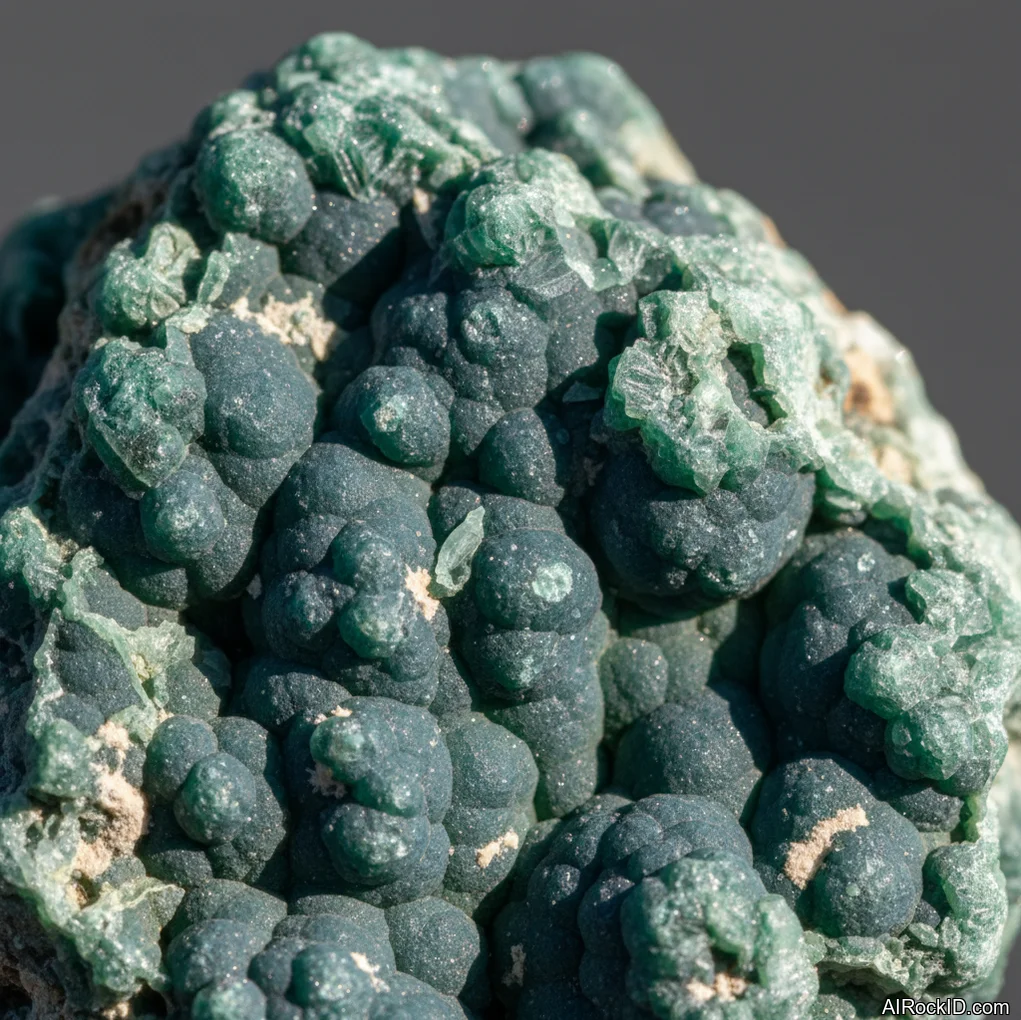
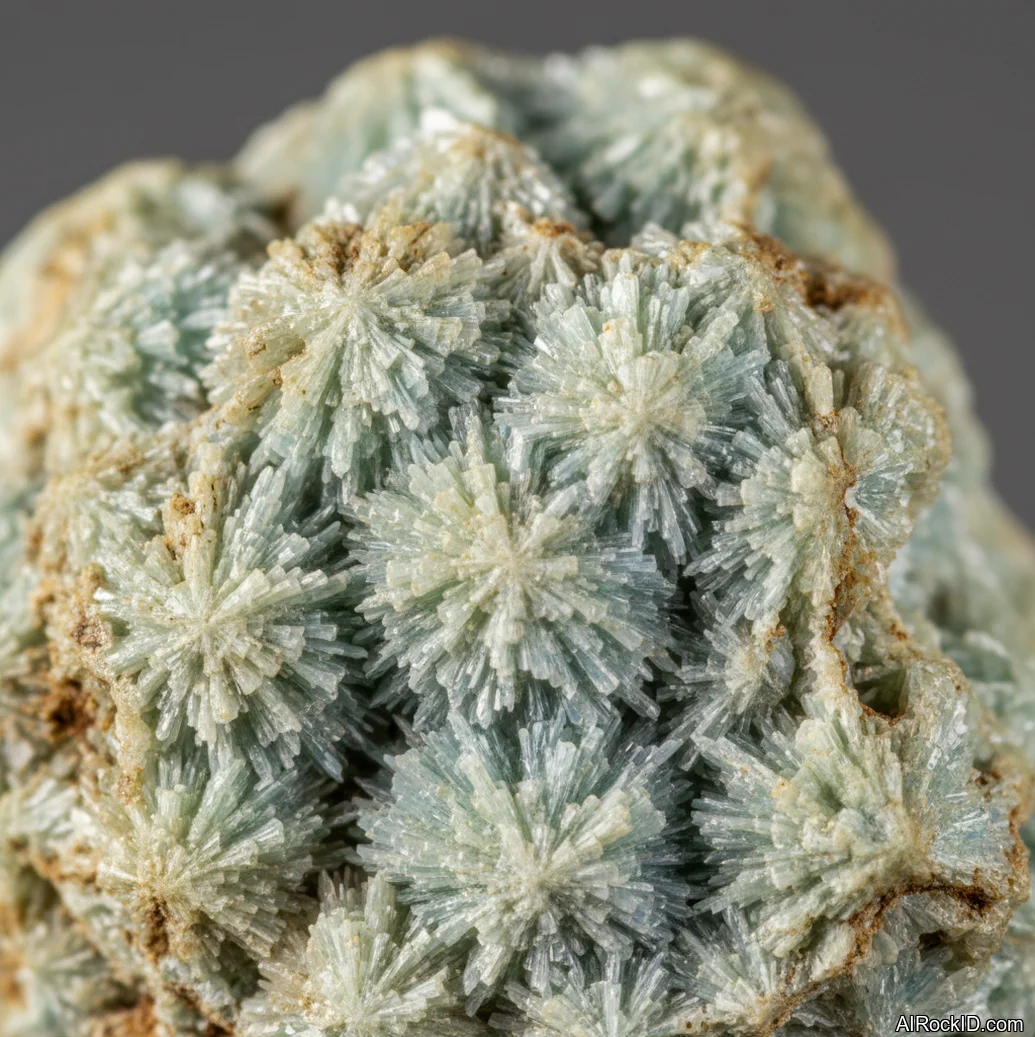
Wavellite is a hydrated aluminum phosphate mineral that usually shows up as radiating, starburst-style clusters.
Hold a decent plate in your hand and your eyes lock onto the sprays right away. Tiny green fireworks, just stopped mid-bloom. And the texture hits different than the usual “sparkly” starter minerals. It isn’t that cold, glassy quartz-point feel. It’s got this softer look, almost velvety at the tips of the needles, especially when the crystals are packed in tight and your fingertip kind of skates over them.
A lot of people glance at it and call it a “green zeolite,” or swear it’s some botryoidal prehnite. But wavellite’s got that strict radial growth that gives it away fast. Tip it under a shop light and you’ll see little bands where the luster flips from silky to dull as the fibers change angle. I’ve had pieces that looked boring in a flat photo (honestly, kind of disappointing), then you turn them in your hand and boom, the starbursts jump out.
Origin & History
Back in 1805, William Babington was the first to describe wavellite, working from material found in Devon, England. He named it after William Wavell, who was involved in turning up the original specimens.
For collectors, it’s one of those minerals that’s been sitting in old cabinets forever, and then it still catches you off guard. Why? Because the best pieces don’t look like “crystals” in that usual pointy, textbook way. The old British specimens can feel pretty classic, sure, but most of what I see being traded now comes out of a handful of newer localities, where the sprays grow bigger and the color tips into a brighter green.
Where Is Wavellite Found?
Wavellite turns up in phosphate-rich zones, often in weathered aluminous rocks and in some hydrothermal settings. In the US, Arkansas is the name people recognize, but there’s solid material from Europe and Brazil too.
Formation
Most wavellite shows up as a secondary mineral. Picture groundwater creeping through rock, grabbing phosphate along the way, then dumping it back out once the chemistry flips in a crack or a little pocket. You usually find it in aluminous settings, so the aluminum’s already sitting there, and the phosphate rolls in later from the breakdown of apatite or other phosphate sources.
Look close at a plate and you can often tell it grew in tight, cramped spaces. The sprays kick off from a single point, then shove outward until they bump into each other and turn the whole surface into a carpet of starbursts. But it doesn’t always come out neat. Some pieces have half-formed spherules where growth stalled, and you’ll catch the matrix peeking through, like little dark islands between the green fans.
How to Identify Wavellite
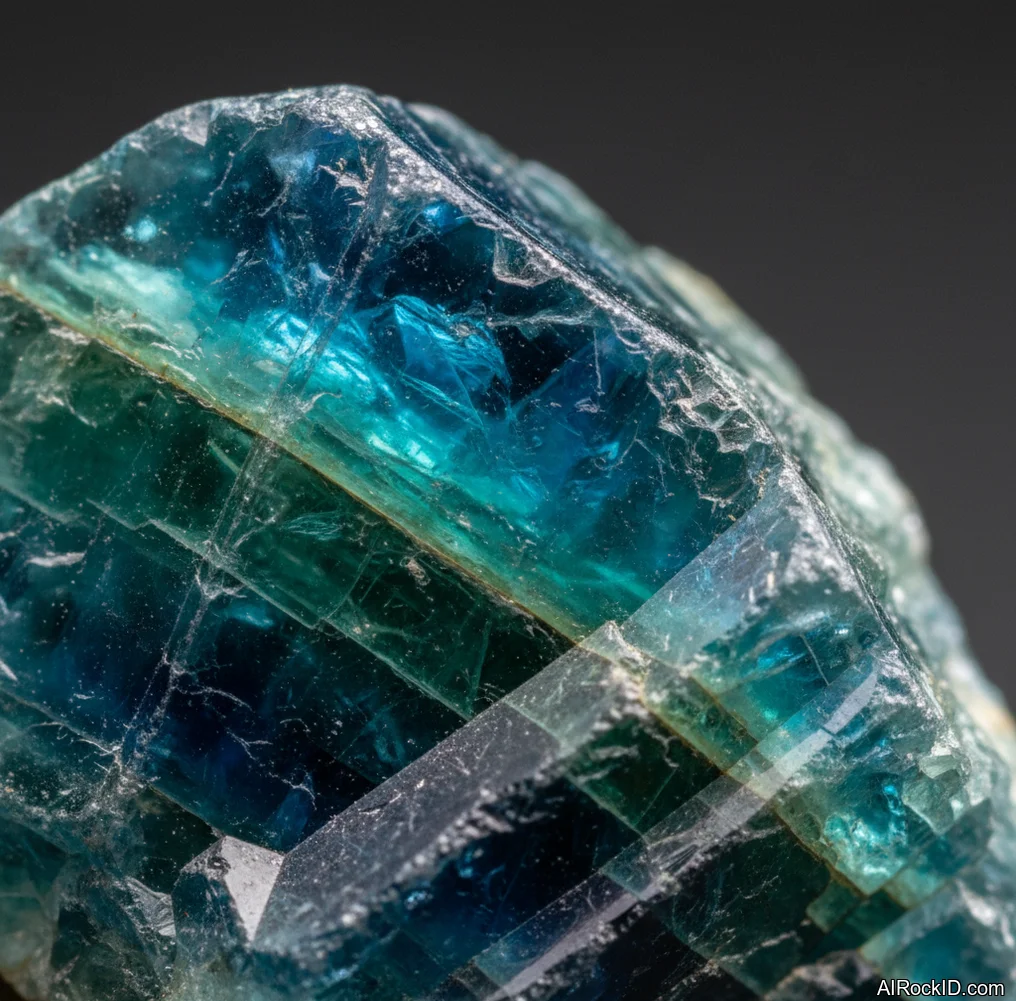
Color: Most wavellite is apple-green to yellow-green, but it can also be white, tan, brown, or even bluish-green depending on trace elements and the matrix. The color often looks strongest right at the tips of the radiating fibers.
Luster: Luster ranges from vitreous to silky, especially on fibrous, radiating aggregates.
Pick up the specimen and roll it under a single light source. Real wavellite will “sheen” in bands because the fibers are aligned, and the starburst pattern stays consistent across the plate. If you scratch it with a copper penny, many pieces will mark or at least take a faint scratch, which is a quick reality check against harder green minerals people confuse it with. The problem with judging from photos is scale, so I always look for a ruler shot or a hand shot since tiny wavellite sprays can look like big ones online.
Properties of Wavellite
Physical Properties
| Crystal System | Orthorhombic |
| Hardness (Mohs) | 3.5-4 (Soft (2-4)) |
| Density | 2.30-2.36 g/cm3 |
| Luster | Vitreous |
| Diaphaneity | Translucent |
| Fracture | Uneven |
| Streak | White |
| Magnetism | Non-magnetic |
| Colors | Green, Yellow-green, White, Tan, Brown, Blue-green |
Chemical Properties
| Classification | Phosphates |
| Formula | Al3(PO4)2(OH,F)3·5H2O |
| Elements | Al, P, O, H, F |
| Common Impurities | Fe, Mn |
Optical Properties
| Refractive Index | 1.52-1.54 |
| Birefringence | 0.010 |
| Pleochroism | Weak |
| Optical Character | Biaxial |
Wavellite Health & Safety
It’s usually safe to pick up, and a quick splash of water isn’t a big deal as long as the specimen is solid. But the real issue isn’t the water, it’s snapping those delicate sprays; they’re the kind that can chip if you squeeze too hard or bump an edge.
Safety Tips
If you need to move it, wrap it up so nothing’s pressing right on the crystal face, and make sure it can’t rattle around in the box (that tapping sound is the worst).
Wavellite Value & Price
Price Range
Rough/Tumbled: $15 - $250 per specimen
Prices jump around a lot depending on the spray size, the color, and whether the spherules are clean and not dinged up. Big sprays with sharp radial clusters sitting on a contrasting dark matrix usually get tagged higher. But if it’s a crumbly plate that sheds grit when you pick it up, the price drops fast.
Durability
Nondurable — Scratch resistance: Poor, Toughness: Fair
Wavellite is fine on a shelf, but the radiating crystals can chip or crush if they’re bumped or packed loose.
How to Care for Wavellite
Use & Storage
Store wavellite in a padded box or a display case where it won’t get knocked around. I keep my best plates face-up, because setting them crystal-side down is asking for crushed sprays.
Cleaning
1) Use a soft, dry brush or a hand blower to remove dust. 2) If it really needs it, rinse briefly with cool water and a drop of mild soap, then rinse again. 3) Pat dry and let it air-dry fully before putting it back in a closed box.
Cleanse & Charge
If you do energy-style care, stick to gentle methods like smoke, sound, or setting it on a dry selenite plate. I skip salt bowls because the grit can scratch, and salty residue is annoying to remove from the fibers.
Placement
Put it where side light hits it, like near a lamp or a window with indirect light, so the radial texture shows. Keep it out of high-traffic shelves where sleeves, pets, or vacuum hoses can clip the surface.
Caution
Skip ultrasonic cleaners, steam cleaners, and any heavy-duty scrubbing. And don’t just drop it into a pocket or bag rattling around with harder stones, because at Mohs 3.5-4 it’ll get chewed up fast (those little scuffs show up right away).
Works Well With
Wavellite Meaning & Healing Properties
Compared to the flashier stuff, wavellite is quiet. You pick it up and it doesn’t scream for attention, but then you catch yourself rotating it under a lamp anyway, because those repeating little starbursts keep snapping your focus back into the same simple shape. And that “pattern focus” is exactly what a lot of people lean on for meditation or studying.
In crystal-shop language, wavellite gets talked about as a stone for sorting your thoughts and clearing mental clutter. Look, the way I put it to customers is this: it’s handy when your brain feels like five browser tabs are all playing audio at once and you can’t find which one. But it’s not medicine. It’s not a substitute for real support if you’re dealing with anxiety or anything bigger than just a bad day.
Thing is, it has a grounding feel too, which throws some people off because it’s green and they expect strictly heart vibes. When I’m holding a heavier Arkansas plate, it sits dense in the palm and feels steady, almost like the matrix is doing half the work (you can feel that “stuck to the rock” weight). So if you like setting intentions, wavellite goes well with journaling, because it keeps you in a small loop you can actually follow: look, breathe, write, repeat. Simple. Effective. Why fight it?
Identify Any Crystal Instantly
Snap a photo and get properties, value, care instructions, and healing meanings in seconds.