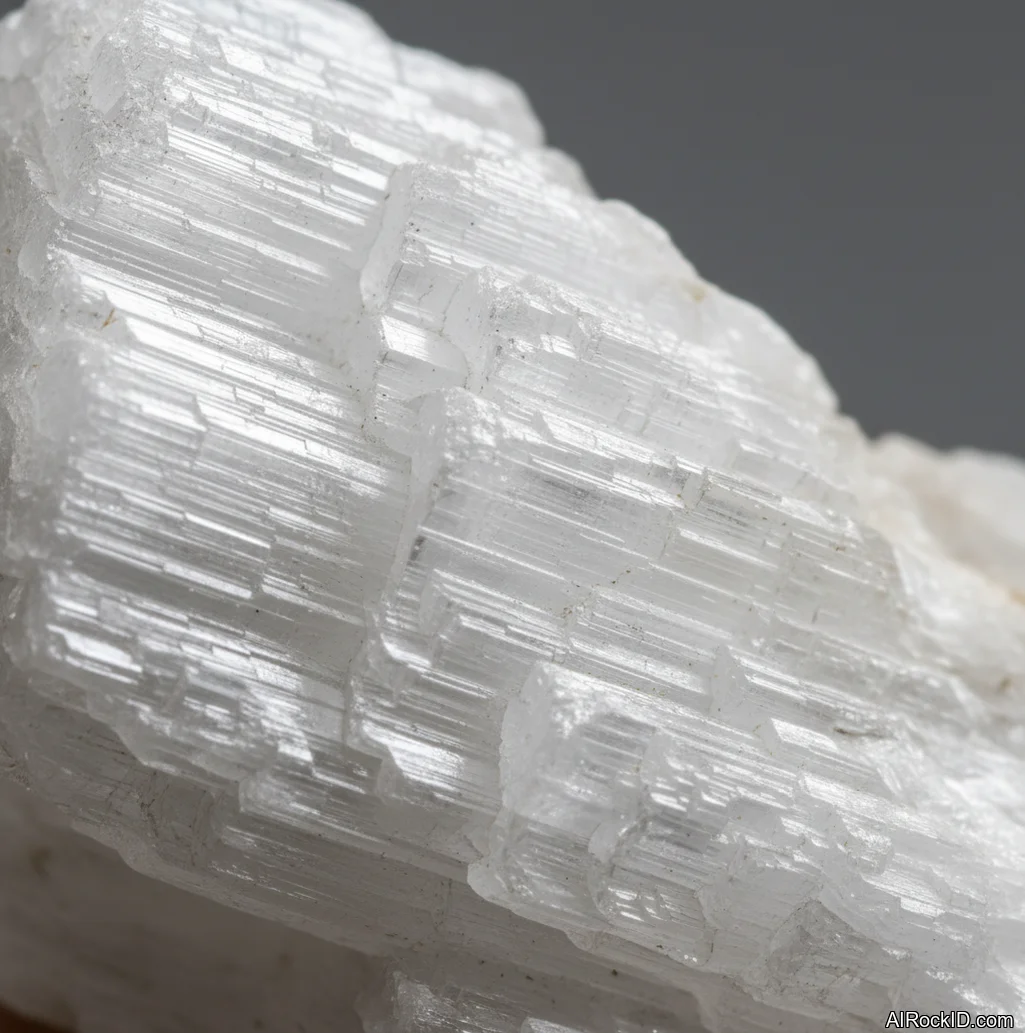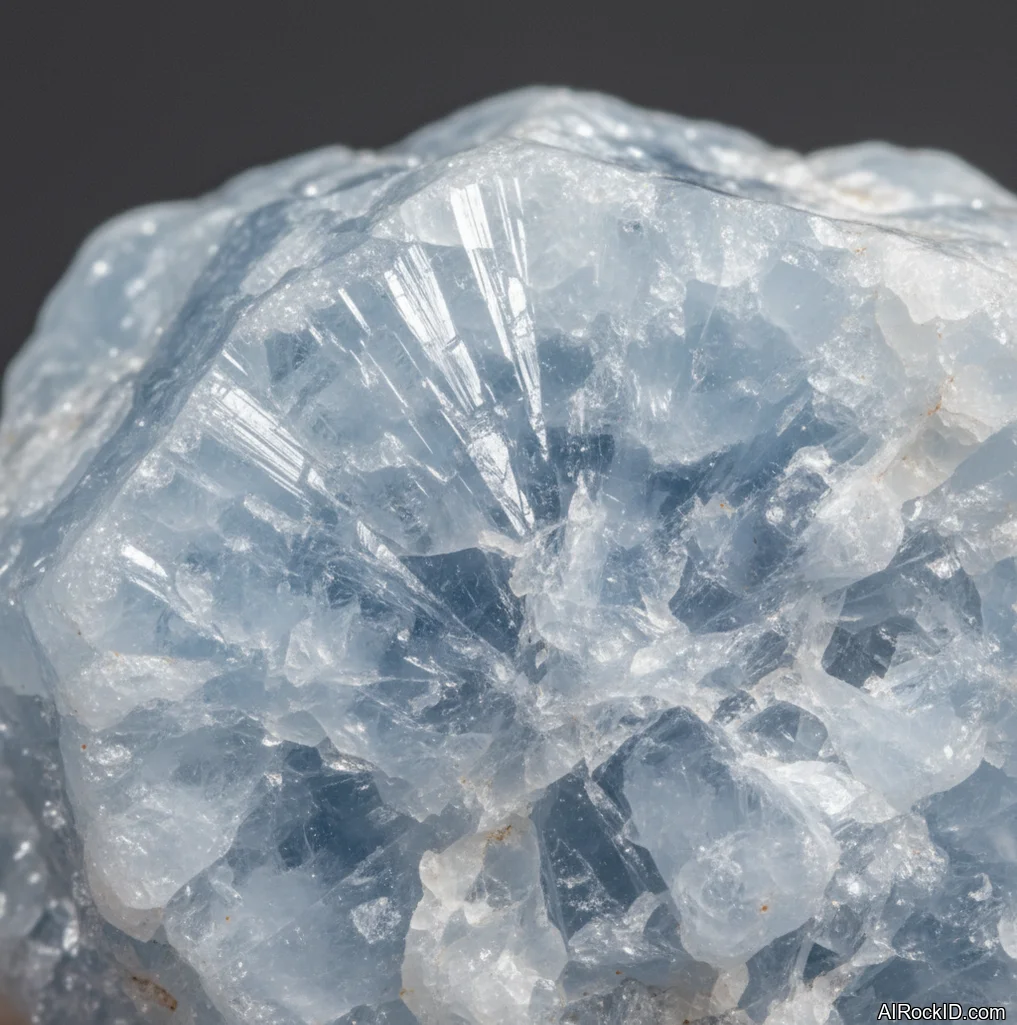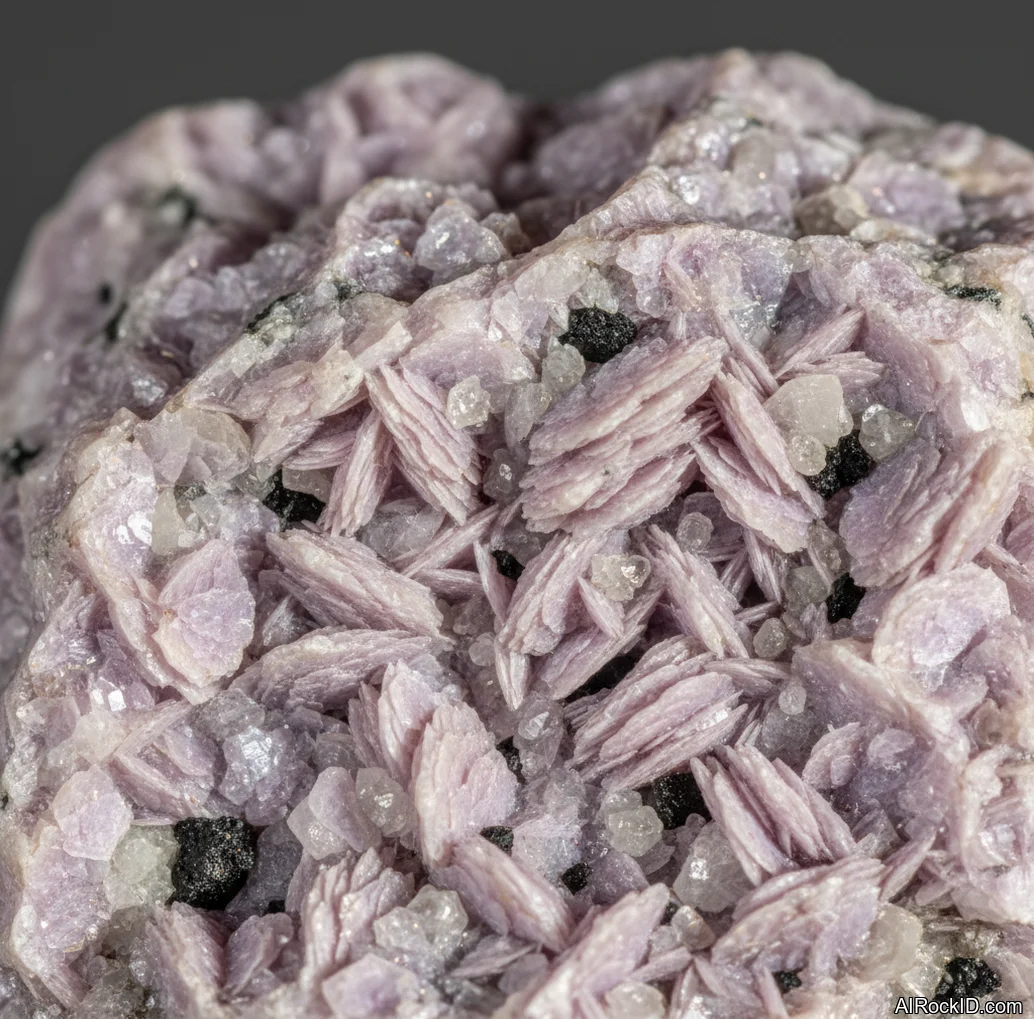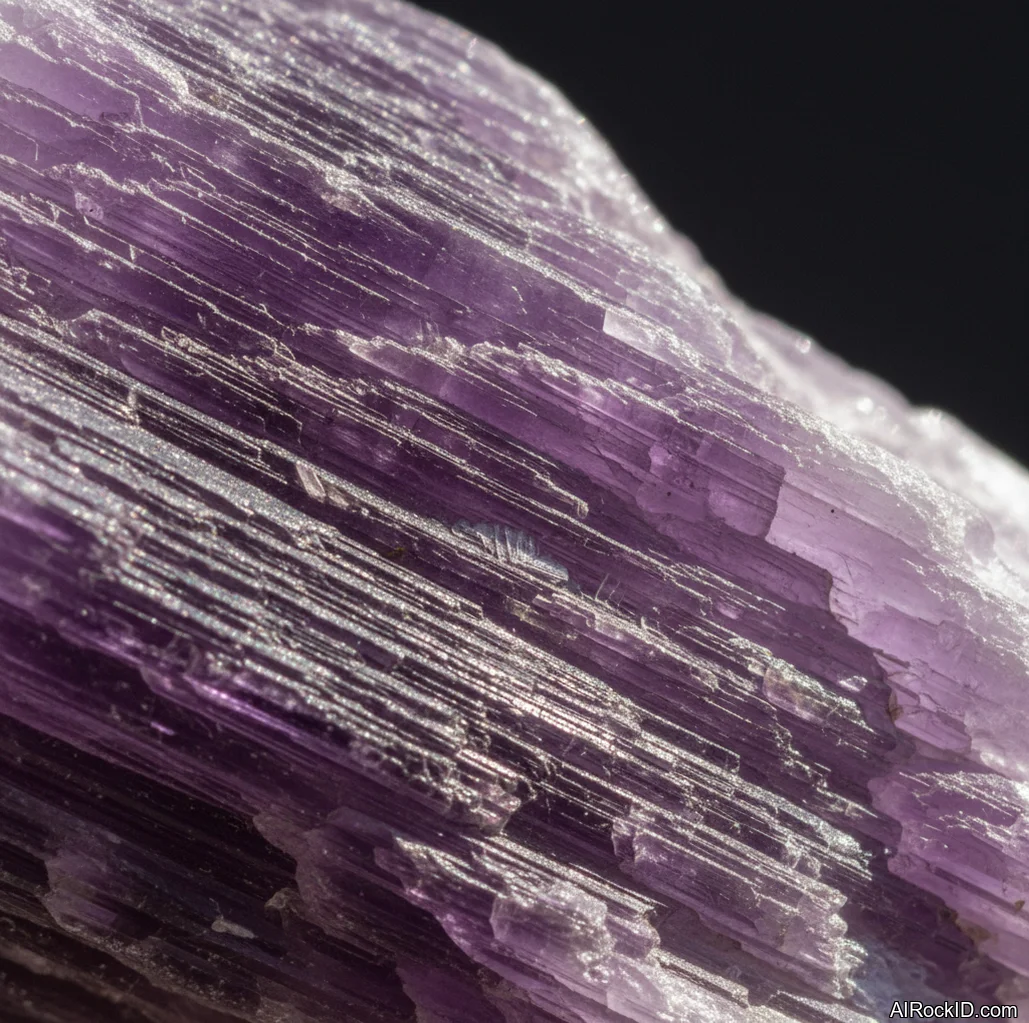
Purple Selenite
What Is Purple Selenite?
Purple selenite is just gypsum (CaSO4·2H2O) with a purple tint, and you’ll see it either as those translucent, bladed selenite pieces or as fibrous satin spar that has that pearly-to-silky shine.
Pick one up and it almost tricks you. It’s weirdly light for how chunky it looks, and it stays cool against your palm even after you’ve been holding it a minute. Turn it under a lamp and there’s that soft “glow line” that skates along the length, especially on the fibrous wands people sell. The purple usually isn’t some deep amethyst color, either. It’s more like a lavender wash, and it can look blotchy or zoned because the color comes from tiny impurities and the way the crystal grew.
But here’s what gets people at shows. A lot of what’s sold as “purple selenite” is satin spar gypsum that’s been dyed. Real-looking material exists, sure, but the dyed stuff is everywhere, and once you’ve handled a few pieces you start spotting it fast. If the color collects in little cracks, looks way too even, or smears onto a damp cloth (yep, that happens), you’ve got your answer.
Origin & History
“Selenite” traces back to the Greek selēnē, meaning “moon,” and it makes sense once you’ve held a good piece in your hand. Tilt it under a lamp and those clean cleavage faces can flash this soft, moonlit sheen, almost like a quick silver wipe across the surface.
Gypsum, though, was talked about and used long before mineralogy got all official. The species name comes from Latin gypsum, which was borrowed from the Greek γύψος.
Modern, formal mineral descriptions for gypsum really got nailed down in the 18th century, when mineralogy started getting organized across Europe. And in the collector world, “purple selenite” isn’t really a classic, formally named variety so much as a market label. Dealers will slap it on everything from naturally tinted gypsum to dyed satin spar (yeah, sometimes it’s that obvious).
Where Is Purple Selenite Found?
Gypsum is found worldwide in evaporite basins; purple-tinted or “purple” trade material commonly shows up in bulk from Mexico and Morocco, with some sold from the USA and elsewhere.
Formation
Most gypsum shows up when salty water dries out and the sulfates get left behind. So you’re looking at places like restricted basins, salt flats, drying lake margins, and marine evaporite sequences. When the chemistry and temperature line up, the crystals don’t just creep along, they can shoot up fast, which is how you end up holding those big blade-like pieces and the chunky, clustered clumps that feel a little heavier than they look.
The purple color, when it’s truly natural, usually traces back to tiny impurities or faint inclusions that stain what would otherwise be clear or white gypsum. But sometimes it isn’t “purple gypsum” in any geological sense at all. It’s just gypsum that got dunked in dye after it came out of the ground. Gypsum itself is common because the geology that makes it is common. The color? That’s the part that changes.
How to Identify Purple Selenite
Color: Lavender to pale violet, often uneven, with lighter bands or nearly colorless areas. Dyed pieces can be a stronger, more uniform purple with darker color along fractures.
Luster: Pearly on cleavage faces for selenite blades, and silky chatoyant for fibrous satin spar.
If you scratch it with a fingernail, it’ll mark easily because gypsum sits at Mohs 2. Look closely at the ends of dyed wands, the color often concentrates there and in little pits. And the real hands-on tell: drag a damp cotton swab across an inconspicuous spot; some dyed pieces leave a faint purple smear.
Properties of Purple Selenite
Physical Properties
| Crystal System | Monoclinic |
| Hardness (Mohs) | 2 (Very Soft (1-2)) |
| Density | 2.30-2.33 g/cm3 |
| Luster | Pearly |
| Diaphaneity | Transparent to translucent |
| Fracture | Uneven |
| Streak | White |
| Magnetism | Non-magnetic |
| Colors | Colorless, White, Lavender, Pale violet, Grayish purple |
Chemical Properties
| Classification | Sulfates |
| Formula | CaSO4·2H2O |
| Elements | Ca, S, O, H |
| Common Impurities | Fe, Mn, Organic matter, Clay |
Optical Properties
| Refractive Index | 1.519-1.523 |
| Birefringence | 0.004 |
| Pleochroism | None |
| Optical Character | Biaxial |
Purple Selenite Health & Safety
Purple selenite (gypsum) is usually fine to pick up and handle, and it isn’t considered toxic. But the real issue? It’s so soft you can ding it up fast. Even a light scrape from a fingernail or the gritty dust on your fingertips can leave a little mark, so the biggest risk is damaging the specimen.
Safety Tips
Don’t grind or sand it. And don’t toss it in a spot where it’s going to bump and rub against harder stones, because those will scratch it up fast.
Purple Selenite Value & Price
Price Range
Rough/Tumbled: $5 - $60 per piece
Prices climb fast as the pieces get bigger, the faces get cleaner (fewer chips and scuffs you can feel with a fingernail), and the translucency looks better when you hold it up to a light. And naturally tinted lavender material usually runs higher than the dyed satin spar wands that are everywhere right now.
Durability
Fragile — Scratch resistance: Poor, Toughness: Fair
Gypsum dents and scratches easily and can slowly dull or chip along edges with normal handling.
How to Care for Purple Selenite
Use & Storage
Keep it in a soft pouch or a box with padding, away from quartz, feldspar, and basically anything harder than a fingernail. I’ve watched satin spar wands get scuffed just from sliding around in a tote at a show.
Cleaning
1) Use a dry, soft brush or microfiber cloth to remove dust. 2) If needed, wipe quickly with a barely damp cloth and immediately dry it. 3) Skip salt soaks and long baths, and don’t use ultrasonic or steam cleaners.
Cleanse & Charge
For a non-water method, use smoke, sound, or set it on a dry windowsill for a short time. If the piece looks dyed, avoid anything that could pull color out or leave streaks.
Placement
Set it somewhere it won’t get bumped, like a shelf corner or inside a cabinet. On a nightstand it looks great, but it’s a magnet for chips if you’re clumsy before coffee.
Caution
It’s a very soft mineral (Mohs 2). You can scratch it with a fingernail, no problem. The edges bruise easily too, and that fibrous satin spar stuff, especially when it’s rough-cut, can kick off tiny splinters that feel like little glassy needles if you run your thumb along it (ask me how I know). So yeah, keep it away from kids and pets that like to chew rocks. Why take the risk?
Works Well With
Purple Selenite Meaning & Healing Properties
Most people who grab purple selenite are basically chasing the same feel as white selenite, just in that softer, sleepy-looking shade. In my own routine it reads as a quiet, calming stone. Not flashy. If you’re the kind of person who gets wound up at night, leaving a wand on the dresser can be a gentle little reminder to slow it down.
Look, if you hold a satin spar wand under warm lamplight and tilt it back and forth, you’ll catch that sliding band of sheen moving across the surface. That’s the whole point for a meditation setup: your eyes can park on it without getting snagged by glittery sparkles or a bunch of noisy patterns. And I’ll say the boring part out loud: none of this is medical care. If you’ve got real anxiety or sleep problems, treat the crystal like a comfort object (something nice to have nearby) and still do the practical stuff.
Thing is, the big issue with purple selenite in the metaphysical market is dye. People see “purple” and assume it automatically means third-eye energy, but color by itself doesn’t change the mineral. If you like how it looks, cool. But if you want something that can take daily handling and still stay looking crisp, pair it with tougher stones, and let the gypsum be the delicate piece you don’t just toss in a pocket.
Identify Any Crystal Instantly
Snap a photo and get properties, value, care instructions, and healing meanings in seconds.