Pyrite On Shungite
What Is Pyrite On Shungite?
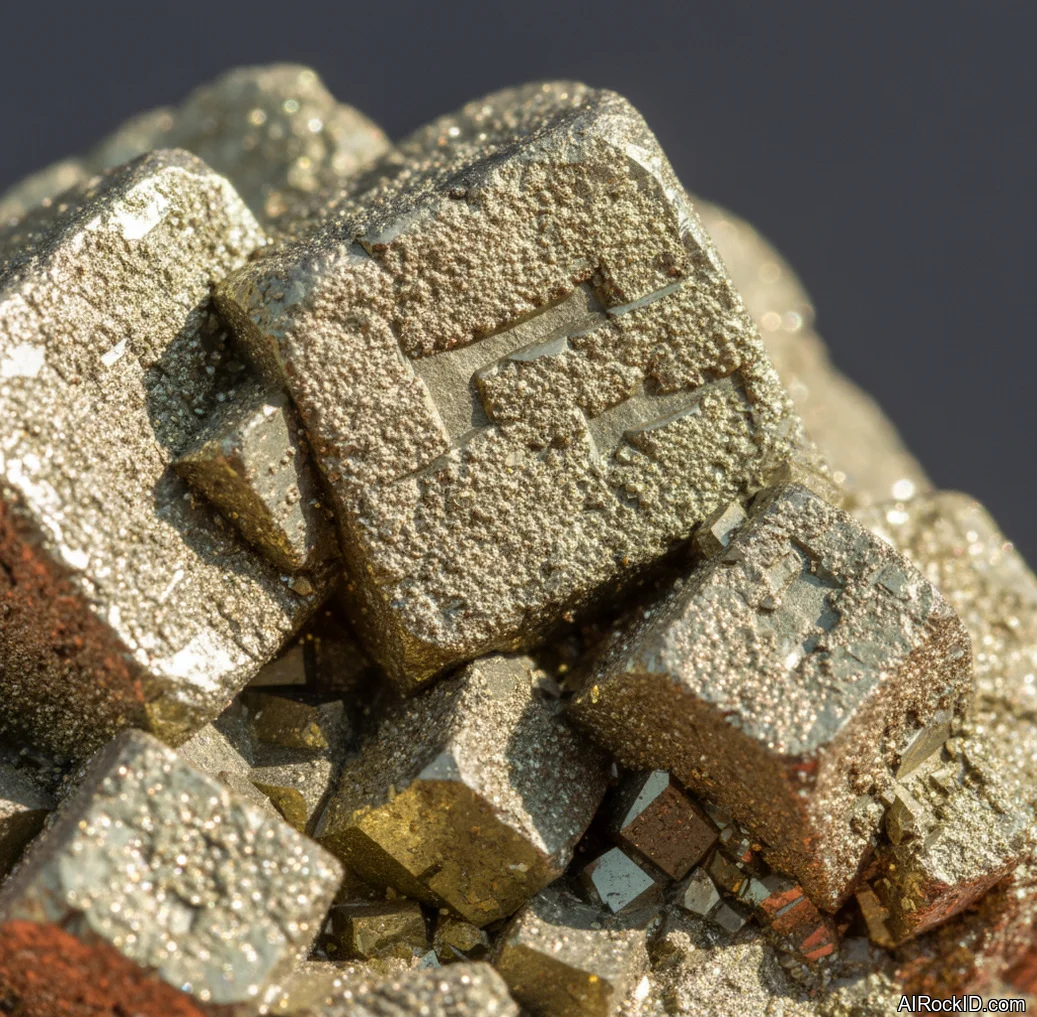
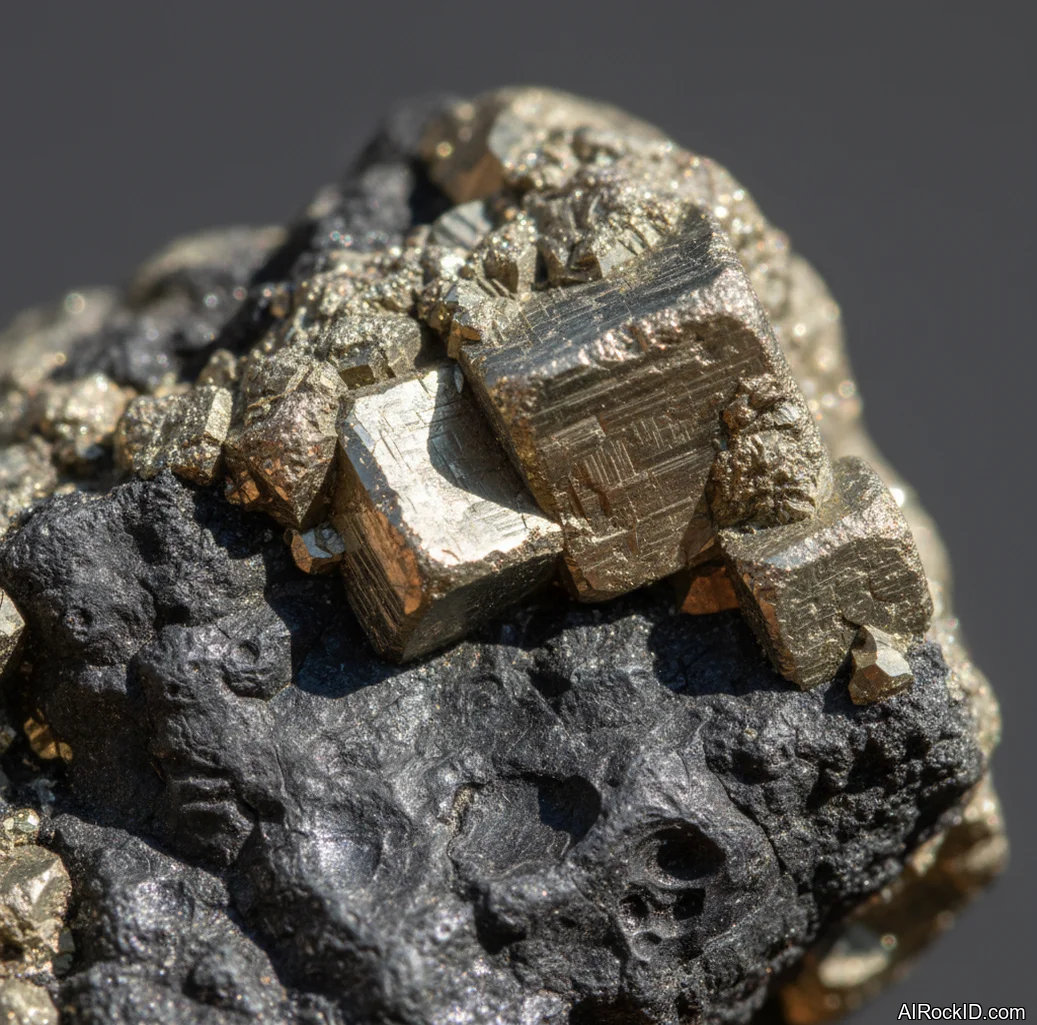
Pyrite on shungite is exactly what it sounds like: brassy, metallic pyrite crystals stuck onto a black, carbon-rich shungite matrix.
Pick up a decent piece and you notice the weight first. Pyrite’s dense, so even a thin dusting of crystals makes the whole thing feel heavier than it looks. And the contrast is really the point here. You’ve got mirror-flashy gold cubes sitting on a dull, sooty black base that honestly looks like it just eats light.
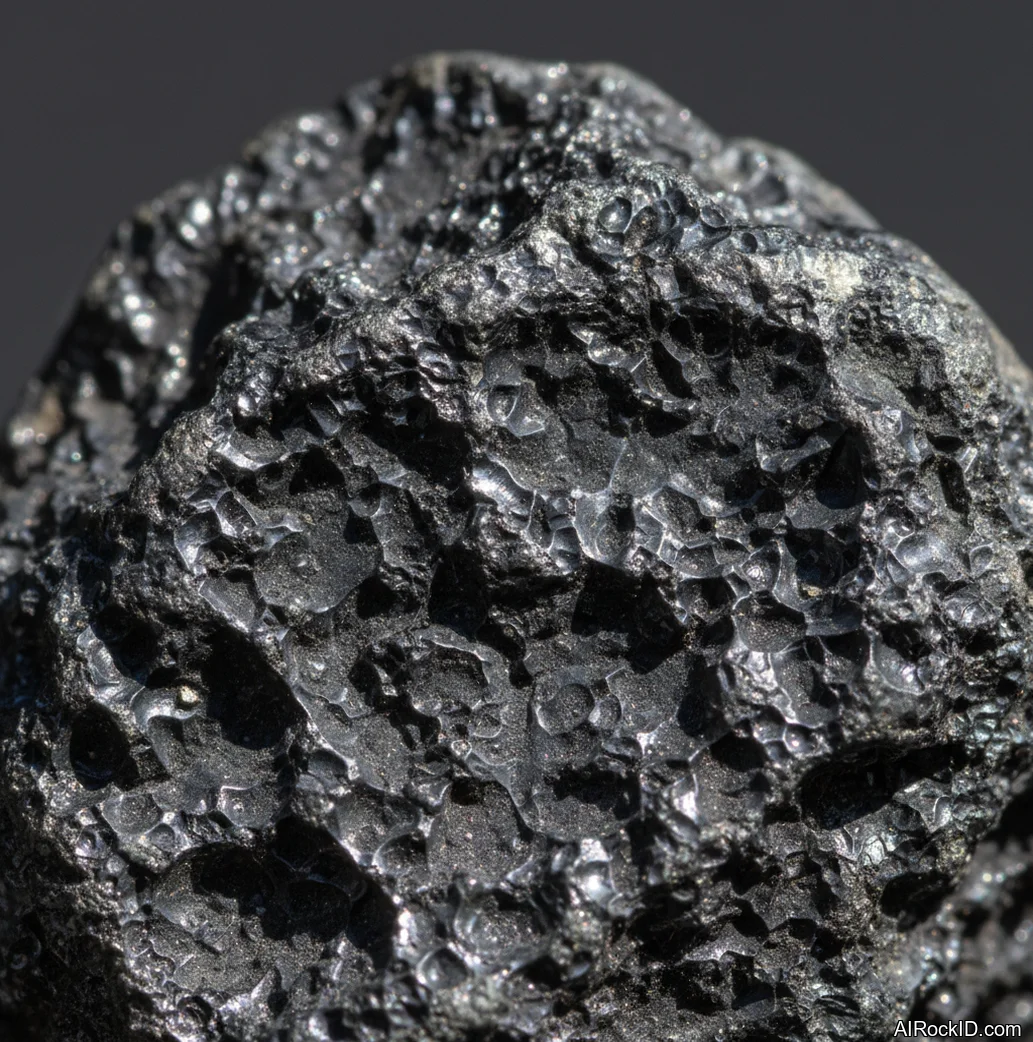
At first glance, people call it “fool’s gold on black stone.” But the shungite is what trips folks up. Run a fingertip across the matrix and you’ll often get that faint graphite-like smear, especially on the cheaper, rougher chunks (the kind with little gritty pits). If the pyrite’s fresh, it’ll toss out sharp highlights under a phone flashlight, then go dead the second you tilt it off-angle. Kind of addictive to mess with, right? It’s a fun one to handle.
Origin & History
Pyrite got its official mineral-species write-up in the 1700s, and its name comes from the Greek “pyr,” meaning fire. Thing is, the name isn’t just poetic. If you’ve ever smacked a piece of pyrite (it’s got that brassy, slightly gritty feel on the edges), it’ll throw sparks. So yeah, it turns up in old fire-starting stories, and it’s part of the background for flintlock-style ignition.
Shungite takes its name from the village of Shunga in Karelia, Russia, where this carbon-rich rock was described and studied in the modern era. But “pyrite on shungite” in the mineral trade is usually a dealer label, not a strict scientific term. It’s basically shorthand for “pyrite crystal growth on a black carbonaceous host,” and that host is most often sold as shungite when it comes out of Karelia.
Where Is Pyrite On Shungite Found?
Most true shungite matrix comes out of Karelia, Russia. Pyrite itself is widespread worldwide, so similar-looking “pyrite on black rock” pieces also show up from other mining districts.
Formation
Pyrite shows up when iron and sulfur bump into each other under the right chemistry, usually where there isn’t much oxygen around. In the field and in hand samples, you’ll catch it growing as tidy cubes, pyritohedrons, or just crusty coatings, depending on the setting: sedimentary rocks, hydrothermal veins, or replacing minerals in some metamorphic rocks. And if you’ve ever turned a piece over in your hand under a light, you know the classic look: a sugary drusy layer that sparkles when you tilt it, or those sharp, blocky crystals sitting up on the host like little metal bricks.
Shungite, on the other hand, is a carbon-rich rock that started as organic material, then got cooked and altered for a long time, before it was compacted and metamorphosed. So when you see “pyrite on shungite,” it usually points to sulfide mineralization moving through carbonaceous layers and dropping pyrite into fractures, little pockets, or along bedding surfaces. The good specimens look like the crystals actually grew right out of the rock (not just parked there). Thing is, the contact zone tells the story: natural growth tends to be interlocked and irregular, not a clean, flat “stuck on” surface that makes you wonder what happened off-camera.
How to Identify Pyrite On Shungite
Color: Pyrite is brassy yellow to pale gold, and the matrix is deep black to charcoal gray. Fresh pyrite is brighter; older surfaces can dull toward a brownish tarnish.
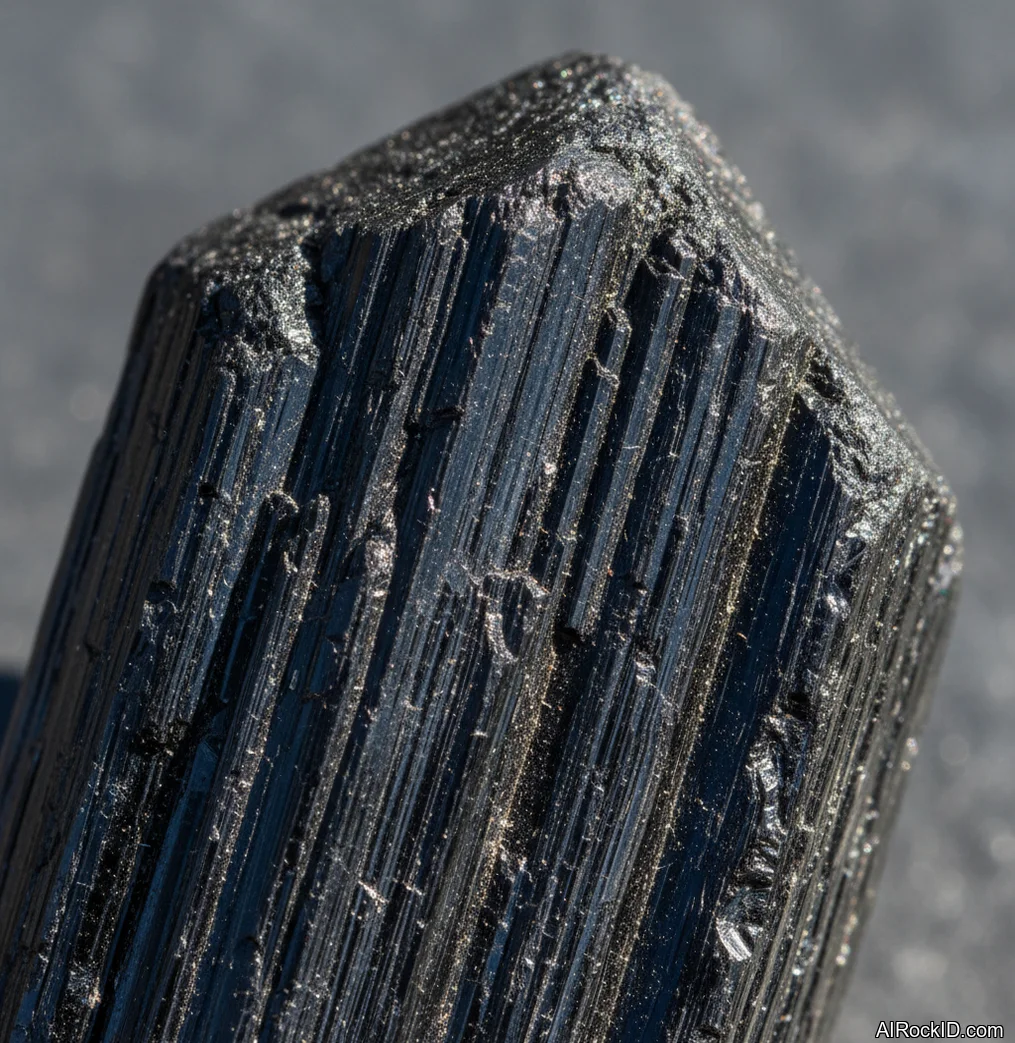
Luster: Pyrite is metallic and reflective, while shungite is usually dull to submetallic.
Look closely at the crystal shapes. Pyrite likes crisp cubes and straight edges, and the faces can show fine striations that catch light as you rotate it. If you scratch pyrite on unglazed porcelain, the streak should be greenish-black to brownish-black, not yellow. And watch out for “pyrite on shungite” that feels oddly light or warm in the hand, because some fake combos are resin or painted rock with glittery bits.
Properties of Pyrite On Shungite
Physical Properties
| Crystal System | Cubic |
| Hardness (Mohs) | 6-6.5 (Hard (6-7.5)) |
| Density | 4.9-5.2 g/cm3 |
| Luster | Metallic |
| Diaphaneity | Opaque |
| Fracture | Uneven |
| Streak | greenish-black to brownish-black |
| Magnetism | Non-magnetic |
| Colors | brassy yellow, pale gold, black, charcoal gray |
Chemical Properties
| Classification | Sulfides |
| Formula | FeS2 |
| Elements | Fe, S |
| Common Impurities | Ni, Co, As |
Optical Properties
| Refractive Index | None (opaque) |
| Birefringence | None |
| Pleochroism | None |
| Optical Character | Isotropic |
Pyrite On Shungite Health & Safety
Normal handling’s fine. Just don’t breathe the dust, and don’t leave it soaking for ages since that can kick off pyrite oxidation. If it leaves that black smudge on your fingers (you’ll know, it’s like charcoal), go wash your hands.
Safety Tips
If you’re going to mess with it using tools, do it wet. Seriously. Put on eye protection, and wear a respirator that’s actually rated for fine particulates, not just a flimsy dust mask. And when it’s on display, keep it dry. Don’t tuck it into some sealed, damp box where moisture can build up (you know that clammy, slightly musty feel when you open it later?).
Pyrite On Shungite Value & Price
Price Range
Rough/Tumbled: $20 - $180 per specimen
Price goes up when the pyrite cubes are sharp and not chipped, the contrast really pops, and the shungite host has solid provenance. Big, clean crystals sitting on a stable matrix cost more than that crumbly black host that leaves dust on your fingers (and just has a thin pyrite dusting).
Durability
Moderate — Scratch resistance: Good, Toughness: Fair
Pyrite can tarnish or weather in humid conditions, and shungite matrix can be soft and messy, so it’s better as a display specimen than a pocket stone.
How to Care for Pyrite On Shungite
Use & Storage
Store it dry, ideally in a case or on a shelf away from bathrooms and humid windowsills. Keep softer pieces from rubbing against harder specimens, because pyrite edges can chip other things and shungite can scuff easily.
Cleaning
1) Use a soft, dry brush to knock loose dust off the shungite. 2) Spot-clean pyrite faces with a barely damp cotton swab, then dry right away. 3) If the matrix is shedding black dust, a quick wipe with a dry microfiber cloth helps, but don’t scrub hard.
Cleanse & Charge
For a metaphysical-style cleanse, use smoke, sound, or a dry salt-free method rather than soaking. If you like moonlight, a short overnight is fine, but don’t leave it out for weeks in damp weather.
Placement
Looks best under angled light so the pyrite flashes and the black matrix stays matte. I like it on a dark wood shelf where you can see the cubes sparkle when you walk past.
Caution
Don’t use acid cleaners, vinegar, or those harsh chemical sprays. Pyrite reacts to that stuff, and the surface can turn ugly really fast (you’ll see it go dull and blotchy before you know it). And don’t let it sit in water for long periods either if you want the pyrite to stay bright.
Works Well With
Pyrite On Shungite Meaning & Healing Properties
People grab this pairing because it hits two moods at the same time. Pyrite comes off “bright and driven,” and that black shungite underneath reads “grounded and contained.” That’s the simplest way to say it. And yeah, that’s metaphysical talk, not geology.
On a long day, picking one up does something to your head. The pyrite throws off little flashes when it catches a lamp, like a tiny signal flare, while the shungite just sits there, dead-matte and quiet in the background. I’ve kept one on my desk and, without thinking, I end up rolling it between my fingers while I’m staring at budgets or a messy to-do list. Why? Because it’s weirdly satisfying watching those metallic faces blink on, then disappear, as you turn it.
But look, I’ll say the quiet part out loud: shungite gets sold with some pretty wild claims. I’m not buying the miracle stuff, and I’d never treat it like medical gear. If you’re into it, use it as a simple cue to stay practical (that’s what it does for me). Pyrite for “get it done,” shungite for “stay steady.” That’s enough.
Identify Any Crystal Instantly
Snap a photo and get properties, value, care instructions, and healing meanings in seconds.