Red Wine Quartz
What Is Red Wine Quartz?
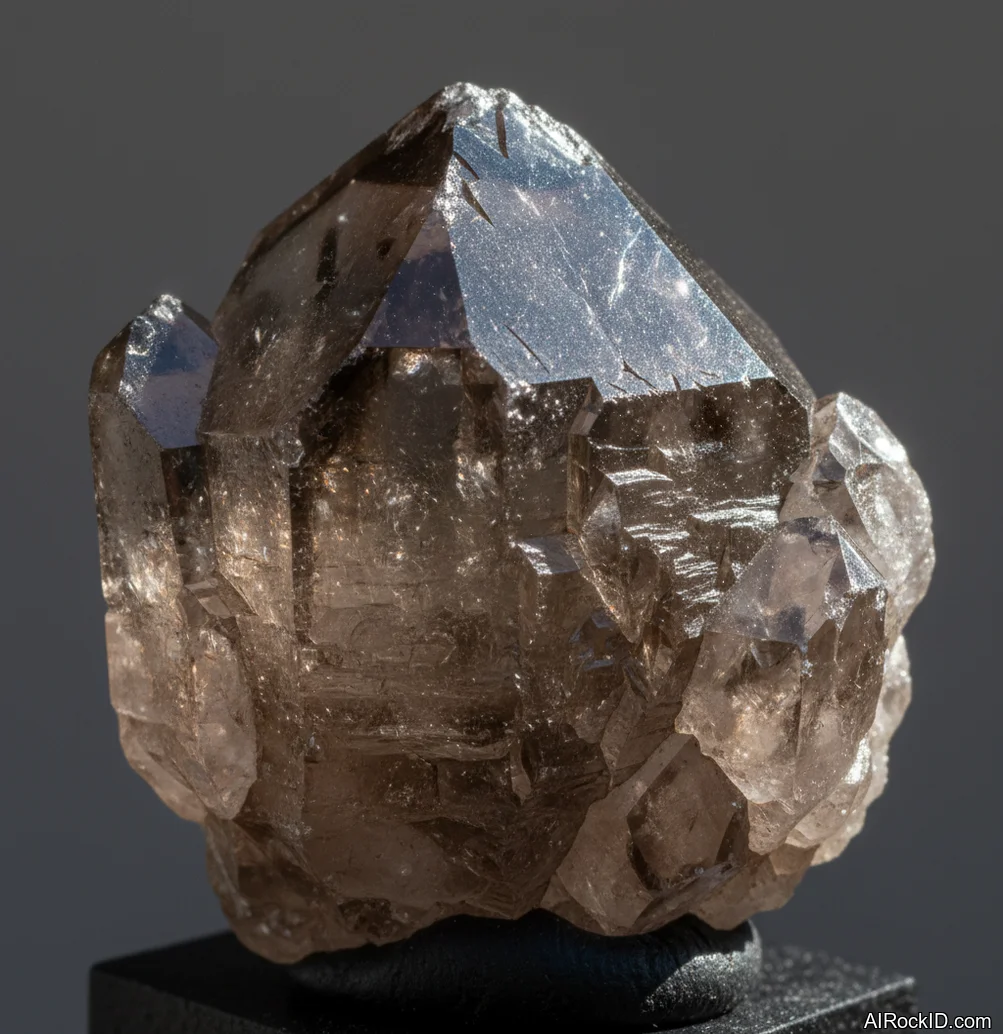
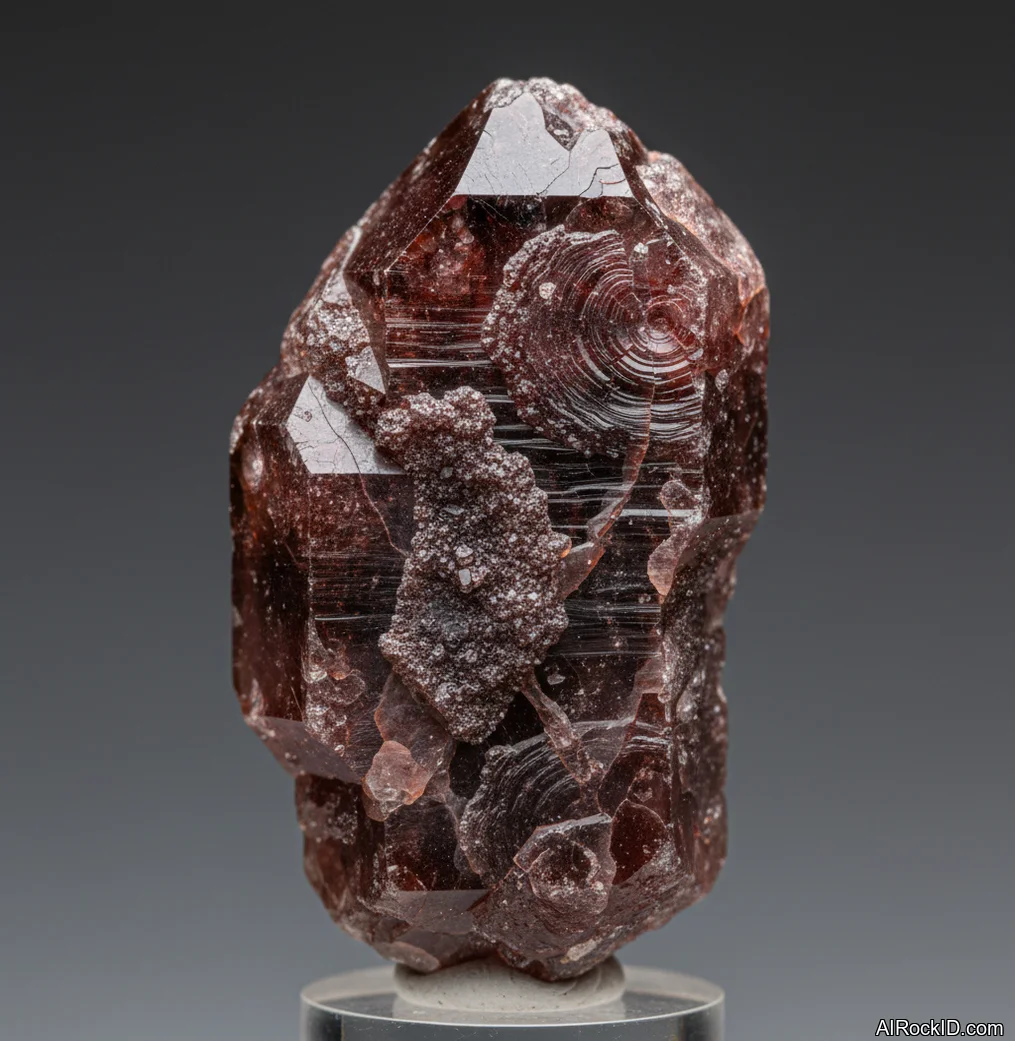
Red Wine Quartz is basically quartz (SiO2) that runs wine-red to burgundy, and it’s usually sold under that trade name for reddish quartz pieces. In your hand, it feels like plain old quartz, kind of cool when you first pick it up, then it warms as your fingers sit on it. But the color is why anyone cares. That dark grape-skin shade can look a little smoky in the shadows, then it snaps red when you tilt it under a lamp.
People hear the name and expect ruby or garnet. But no, it acts like quartz, period. It’ll scratch glass without trying. If you’ve ever nicked a cheap tumbled stone and seen that shell-like curve, that’s the break you get here too, the classic conchoidal fracture.
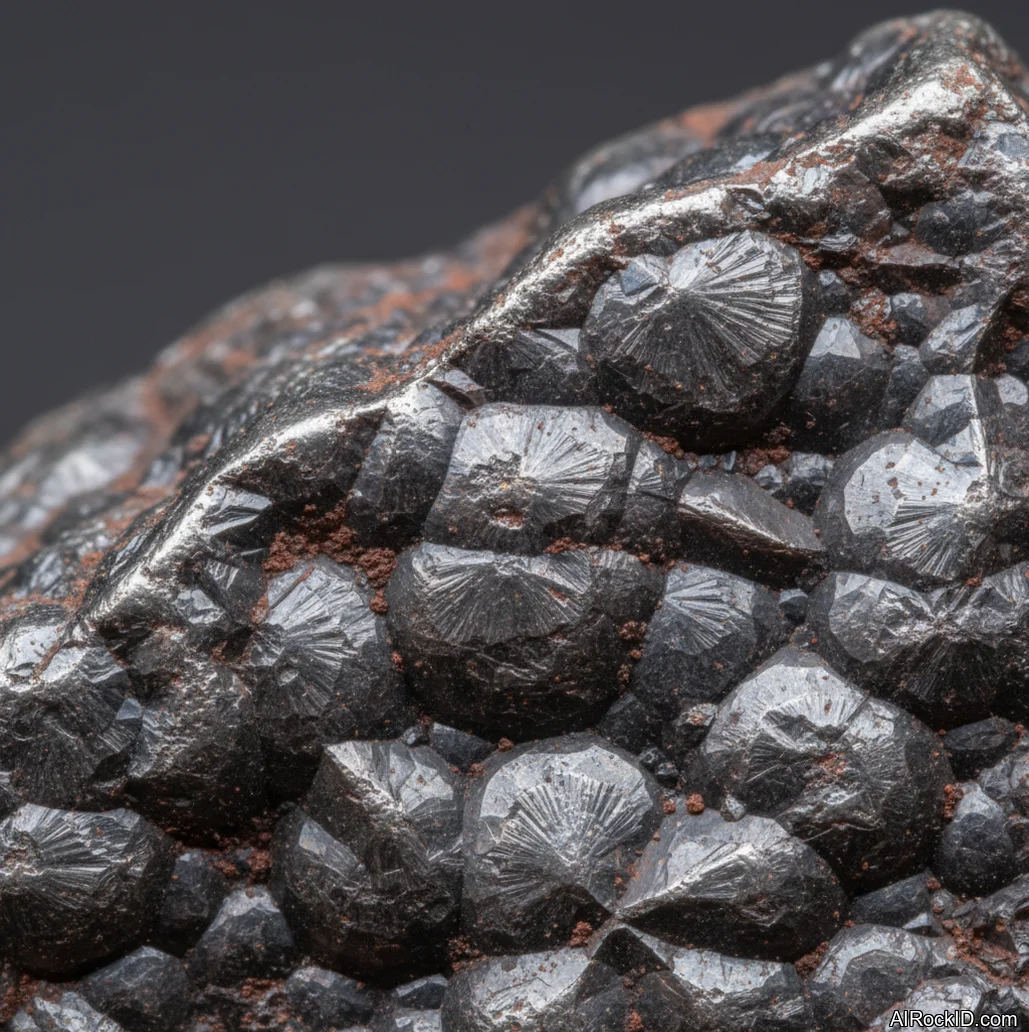
Thing is, the color usually gives itself away once you actually stare at it. You’ll often spot iron staining, wispy hematite dusting, or little red threads and cloudy patches inside the stone that are doing the coloring. I’ve handled pieces where the red sits in zones like a bruise (weirdly accurate), darker along fractures and lighter where the quartz is cleaner.
Most sellers move it as tumbles, small points, or chunky rough, the stuff you can throw in a tray and handle a lot. Clean, naturally terminated crystals in that real wine color do exist, but they don’t show up in every flat at a gem show. And watch the labels, seriously. “Red wine aura quartz” is a whole other thing, usually coated, and it has that too-perfect surface shine that looks like oil on water when you roll it under the lights.
Origin & History
“Red Wine Quartz” isn’t an official mineral name. It’s just a market label that’s shown up in the last couple of decades, mostly because sellers wanted a way to pull the reddish stuff out from the endless stacks of clear quartz, smoky quartz, and amethyst.
Quartz itself was talked about long before modern mineralogy existed. The word comes from the German “Quarz,” which miners used for that vein material they kept running into again and again (you know the hard, glassy stuff that shows up in seams and won’t quit).
As a collector, I file Red Wine Quartz in the same mental drawer as “lemon quartz” or “cherry quartz.” Sometimes the color is legit, from inclusions or staining you can actually see when you tilt the piece under a light. But sometimes it’s treated, or honestly just manufactured to look that way. There isn’t one classic “type locality” for it like you get with benitoite. So what matters is simple: what’s actually causing the red in the chunk you’re holding?
Where Is Red Wine Quartz Found?
Reddish quartz shows up anywhere quartz grows, but a lot of the Red Wine Quartz on the market is sold from Brazilian material and from mixed lots that include Russia and the western USA.
Formation
Compared to amethyst, the story here isn’t tied to one famous deposit. It’s the same basic quartz-making routine that happens in a ton of places. Quartz grows out of silica-rich fluids that seep into veins and little pockets, usually in pegmatites, hydrothermal veins, and cracks running through metamorphic and igneous rocks. Give it enough time. Give it open space. Get the chemistry right. Crystals show up.
So where does that “wine” color come from? Most of the time, it’s iron doing something. Sometimes you’re looking at hematite or iron oxide staining that follows tiny microfractures. Sometimes it’s from microscopic grains trapped inside. Other times it’s mixed with smoky color centers, which can shove the red into a browner, burgundy-ish tone (that slightly dirty red you only notice when you roll it under light). Online photos won’t tell you what’s going on, honestly. Is it internal inclusion, surface staining, or a treatment? In person, you can usually figure it out. Tilt the piece and watch what happens: does the red sit down inside the stone, with depth, or does it cling to the outside like a thin skin? That little test gives it away fast.
How to Identify Red Wine Quartz
Color: The color ranges from reddish brown to burgundy and grape-wine tones, often with zoning, veils, or iron-oxide clouds rather than perfectly even color. In bright light it can look redder; in shade it can read more smoky-brown.
Luster: Vitreous, like broken glass.
Pick up a piece and check temperature and weight first: quartz feels cool and medium-weight, not plasticky or oddly warm. Look closely at edges and chips; real quartz shows conchoidal curves and sharp glassy corners, while dyed material often pools color in pits and along drill holes. If you scratch it with a steel needle, it shouldn’t take a scratch, but it will scratch window glass at about the same pressure as clear quartz.
Properties of Red Wine Quartz
Physical Properties
| Crystal System | Trigonal |
| Hardness (Mohs) | 7 (Hard (6-7.5)) |
| Density | 2.65 g/cm3 |
| Luster | Vitreous |
| Diaphaneity | Transparent to translucent |
| Fracture | Conchoidal |
| Streak | White |
| Magnetism | Non-magnetic |
| Colors | Burgundy, Wine red, Reddish brown, Smoky red, Brownish red |
Chemical Properties
| Classification | Silicates |
| Formula | SiO2 |
| Elements | Si, O |
| Common Impurities | Fe, Al, Ti, Mn |
Optical Properties
| Refractive Index | 1.544-1.553 |
| Birefringence | 0.009 |
| Pleochroism | None |
| Optical Character | Uniaxial |
Red Wine Quartz Health & Safety
Handling it and rinsing it off are pretty low risk. But if you’re doing lapidary work, don’t breathe in the dust. And watch the broken edges, too, because they can be sharp like glass (the kind that nicks you before you even notice).
Safety Tips
If you’re cutting or polishing it, keep some water on it, run local ventilation, and wear a proper respirator that’s actually rated for silica. The grit and slurry get everywhere (that gray paste that sticks to your gloves and the edge of the tool), so wash your hands once you’re done.
Red Wine Quartz Value & Price
Price Range
Rough/Tumbled: $5 - $60 per piece
Cut/Polished: $2 - $15 per carat
Prices jump when the color looks natural and comes from inside the crystal, not just a surface stain you can rub off with a damp cloth. And if the piece has clean faces or a sharp, crisp termination that doesn’t look chipped (you can usually feel it with a fingernail), that pushes the value up fast. Bigger helps too. But if it’s that muddy brown stuff, it still tends to stay cheap no matter how chunky it is.
Durability
Very Durable — Scratch resistance: Excellent, Toughness: Good
Quartz is stable in normal home conditions, but surface staining and coatings can fade or scuff if left in sun or rubbed against harder grit.
How to Care for Red Wine Quartz
Use & Storage
Store it so it doesn’t rub against softer stones that it can scratch, and keep coated or “aura” pieces separated so the finish doesn’t get scuffed. A cloth bag or a divided box works fine.
Cleaning
1) Rinse with lukewarm water and a drop of mild soap. 2) Use a soft toothbrush to get into grooves or around terminations. 3) Rinse well and pat dry; skip harsh cleaners if you suspect any surface treatment.
Cleanse & Charge
For a simple reset, I use running water for a quick rinse and then let it sit on a shelf overnight. If you’re avoiding water, a dry smoke cleanse or a sound cleanse works without risking coatings.
Placement
Put it where side light can hit it, because that’s when the red shows best, like near a lamp or on a shelf with angled daylight. If the color looks like it’s from a surface stain, don’t park it in a sunny window.
Caution
If you’re not sure whether the color is natural or it’s been stained or coated, keep it away from heat and don’t leave it sitting in direct sun for long stretches. And skip salt soaks if the material’s been treated, because that can mess with the surface. If you’re handling sharp, rough, or broken chips (the kind with those nasty little razor edges), put on eye protection. Seriously. One tiny splinter to the eye is not a fun lesson.
Works Well With
Red Wine Quartz Meaning & Healing Properties
Look at Red Wine Quartz for a second and it makes sense why people grab it when they want something steady, but not icy. It still has that grounded quartz feel. But the red tones nudge it toward courage and that “okay, move” kind of energy, instead of the airy, in-your-head vibe people put on clear quartz.
I’ve caught myself reaching for mine when I’m stuck in those stupid decision loops. You know the ones. It’s also weirdly physical for me. The smooth, cool heft sitting in my palm, that little bit of pressure on the skin, it helps my system settle down.
But look, I’m not going to pretend it’s doing medical work. Any healing claims here are spiritual or personal practice, not healthcare. In my own routine, it acts like a focus object. Something I can hold during breath work, while I’m journaling, or when I’m trying to stay calm without checking out. The deep burgundy reads as “warm” to my brain, and yeah, that can cue a more confident headspace.
If you’re using it for meditation, the trick is to work with what’s actually in your hand, not just the concept of “red.” Grab a raw point and you’ll feel those ridges, the tiny growth lines, the uneven spots that catch on your fingertip. Your attention has somewhere real to land. And if your piece is heavily stained, that’s fine, just be honest about what you’re responding to: color and ritual, not some rare mineral species doing secret chemistry in your hand.
Identify Any Crystal Instantly
Snap a photo and get properties, value, care instructions, and healing meanings in seconds.