Silver Sheen Obsidian
What Is Silver Sheen Obsidian?
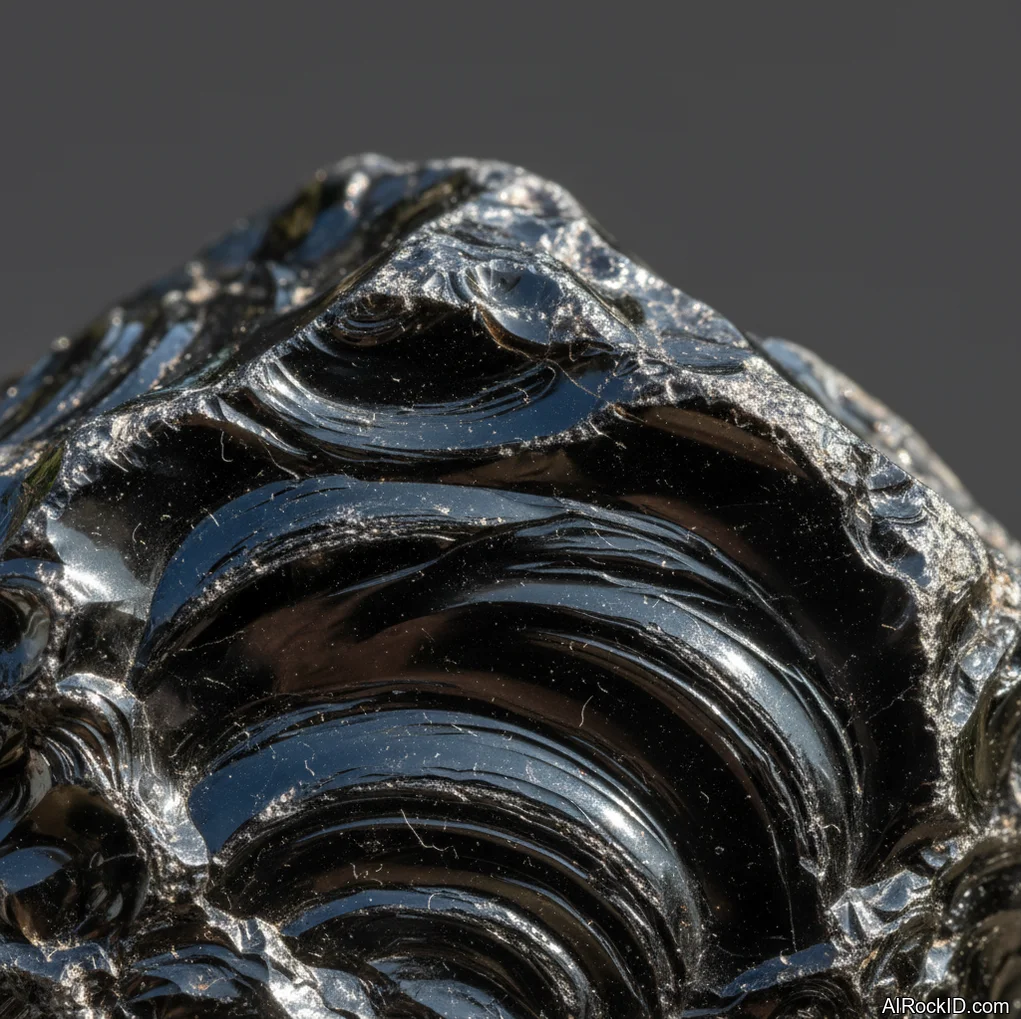
Silver Sheen Obsidian is black volcanic glass, but it’ll throw a silvery reflective sheen if the light hits it at the right angle.
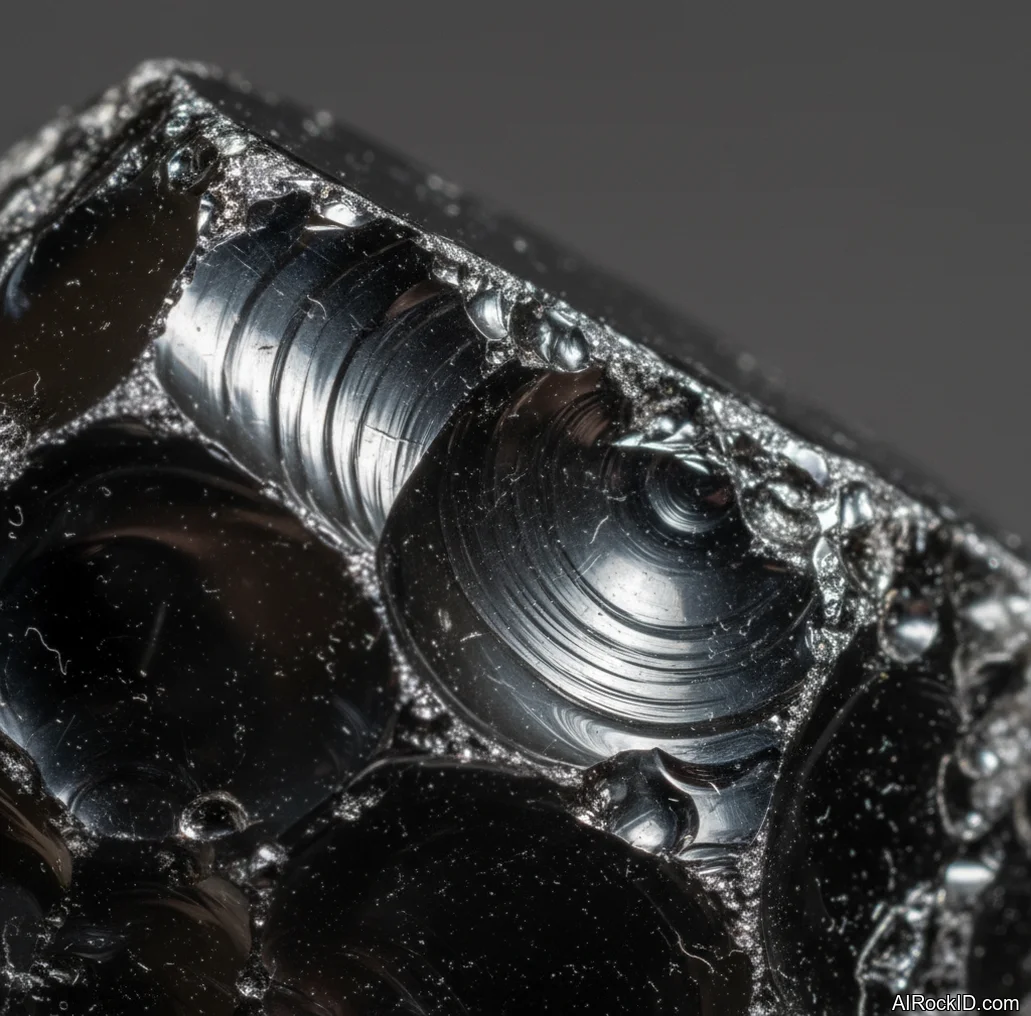
Grab a piece and you feel it immediately. It’s slick, like it’s been hit with a quick wax, and if you’re holding a rough chunk the edges can be wicked sharp, the kind that’ll bite if you get careless. The sheen isn’t glittery or sparkly. It’s more like a soft metallic flash that sort of slides across the surface when you tip it under a lamp (or even by a window, if the sun’s cooperating).
At first, a lot of pieces just read as plain black obsidian. But then you turn it in your hand and that silver band shows up, usually as a patch or an arc, not some perfectly even coating. Most of what’s sold is polished because the sheen shows best on a smooth face. And raw material can still show it too, especially if you catch a fresh fracture surface at just the right angle.
Origin & History
Obsidian’s been on people’s radar since antiquity. The name usually gets traced back to a Roman guy named Obsius, who supposedly brought a similar glassy stone to Rome from Ethiopia (the kind that feels slick-cool at first touch, then warms up in your palm).
Silver sheen obsidian isn’t some separate “discovery” like a brand-new mineral species. It’s really just a trade name for a look, that silver-y flash you see in certain obsidian flows when the surface is right.
In the modern market, dealers started sorting obsidian by sheen color once polished Mexican material got common at rock shops and gem shows. And the naming? It gets messy fast. “Silver obsidian” can mean true silver sheen, or it can just be glossy black obsidian catching bright lights, so you’ve got to watch for that moving flash as you tilt it.
Where Is Silver Sheen Obsidian Found?
Most silver sheen material in the gem trade is sold as Mexican obsidian, with smaller amounts coming from other volcanic regions where glassy rhyolitic lavas occur.
Formation
Obsidian happens when silica rich lava cools so fast the atoms don’t get a chance to line up into crystals. So what you’re holding is natural glass, not a crystal. That’s why it snaps with those smooth, shell-like curves (the kind you can feel with your fingertip) and why it’ll take a crazy good polish.
That silver sheen? It’s coming from the structure inside the glass, usually thin layers of tiny gas bubbles or microscopic flow banding. Hold it under a strong light and tilt it around and you can sometimes catch faint banding, or this “smoke” look sitting under the polish. But the flash only pops when the surface is at just the right angle, which is exactly why two pieces from the same batch can look totally different once they’re sitting on a table.
How to Identify Silver Sheen Obsidian
Color: Body color is typically jet black to very dark brown-black, with a silver to steel-gray sheen that moves across the surface as you tilt it.
Luster: Vitreous, with a metallic-looking flash where the sheen shows.
Pick up the piece and rotate it under a single overhead light. Real silver sheen looks like a sliding patch of silver that fades in and out, not a static paint-like coating. If you scratch it with a steel nail, it’ll usually take a mark because it’s glass, but it’ll still scratch glass easily, which is a quick reality check. The real test is the feel and the edges. Fresh chips are razor sharp and stay cool to the touch longer than a lot of resin or coated knockoffs.
Properties of Silver Sheen Obsidian
Physical Properties
| Crystal System | Amorphous |
| Hardness (Mohs) | 5.0-5.5 (Medium (4-6)) |
| Density | 2.35-2.60 |
| Luster | Vitreous |
| Diaphaneity | Opaque |
| Fracture | Conchoidal |
| Streak | white |
| Magnetism | Non-magnetic |
| Colors | black, silver, gray, brown-black |
Chemical Properties
| Classification | Silicates |
| Formula | SiO2 (with variable impurities) |
| Elements | Si, O |
| Common Impurities | Fe, Mg, Ca, Na, K, Al, Ti, Mn |
Optical Properties
| Refractive Index | 1.48-1.51 |
| Birefringence | None |
| Pleochroism | None |
| Optical Character | Isotropic |
Silver Sheen Obsidian Health & Safety
In normal use, silver sheen obsidian is safe and non-toxic. Thing is, the one real risk is the edges: rough chunks or a freshly chipped bit can be razor-sharp, like broken glass, and they’ll catch your skin if you’re not paying attention.
Safety Tips
If you’re going to drill or shape it, put on safety glasses and a real respirator, not just a flimsy dust mask. And keep the surface wet while you work so the glass dust doesn’t go flying everywhere (you’ll see it turn into that cloudy slurry instead).
Silver Sheen Obsidian Value & Price
Price Range
Rough/Tumbled: $5 - $60 per piece
Cut/Polished: $1 - $6 per carat
Price mostly comes down to how strong the sheen is, how much of the surface it actually covers, and how clean the polish looks when you tilt it under a light. Big freeform slabs with that wide, bright flash cost more, sure, but a tiny palm stone can pop just as hard and still be cheap.
Durability
Moderate — Scratch resistance: Fair, Toughness: Fair
It’s stable day to day, but it chips easily on edges and can scratch if it rubs against harder stones in a pouch.
How to Care for Silver Sheen Obsidian
Use & Storage
Keep it in a soft pouch or separate compartment so it doesn’t get scuffed up. And don’t toss it in a bowl with quartz points unless you like surprise scratches.
Cleaning
1) Rinse with lukewarm water and a drop of mild soap. 2) Wipe with a microfiber cloth, especially if fingerprints dull the sheen. 3) Dry fully before storing to avoid water spots on high polish.
Cleanse & Charge
If you do energetic cleansing, smoke, sound, or a quick rinse and dry are common options. Avoid salt scrubs because they can haze a high polish over time.
Placement
Look closely at the lighting in the room and angle it until the sheen actually shows. On a shelf, a single directional lamp makes it look ten times better than flat overhead lighting.
Caution
Rough edges will cut you if you’re not paying attention, and even a polished piece can still chip if it hits tile (ask me how I know). So skip the ultrasonic cleaner, and don’t go at it with harsh abrasives either. That stuff just dulls the surface.
Works Well With
Silver Sheen Obsidian Meaning & Healing Properties
Plain black obsidian feels pretty straightforward. Silver sheen, though? It comes off a bit more “reflective” in the way people describe it. It’s still obsidian, so the vibe most folks are chasing is grounding and protective, but that silvery flash nudges the symbolism toward mirrors, self-checks, and noticing what you’re actually doing day to day.
Pick up a palm stone in the middle of a stressful week and you’ll see why it landed in that lane. It’s cool in your hand, like it’s been sitting on a windowsill in the shade. It’s got that satisfying heft too, not brick-heavy, just enough to feel real. I’ve watched people kind of spin it without thinking, thumb rubbing the same spot, and then their eyes lock onto the sheen as it slides around with the angle of the light. And yeah, it works like a visual anchor. That’s not medicine. It’s just a small, steady object doing what small, steady objects do when your brain wants something solid to hang onto.
But look, there’s some market friction here. A lot of sellers talk like sheen obsidian is some totally different “energy tier” from regular obsidian, and most of that is sales talk. Physically, it’s still volcanic glass. So if you’re using it for meditation or intention work, go for the piece where you can actually see the sheen without wrestling with the lighting, because you’ll end up reaching for that one more.
Identify Any Crystal Instantly
Snap a photo and get properties, value, care instructions, and healing meanings in seconds.