Tugtupite
What Is Tugtupite?
Tugtupite is a rare pink-to-red feldspathoid mineral in the sodalite group, with the formula Na4AlBeSi4O12Cl.
Hold a piece in your hand and it’s obvious right away it doesn’t feel like quartz. It’s lighter. Slightly softer. And the surface seems to warm up quicker against your palm than the harder gems do (you notice it fast if you’ve been sorting stones on a cold table).
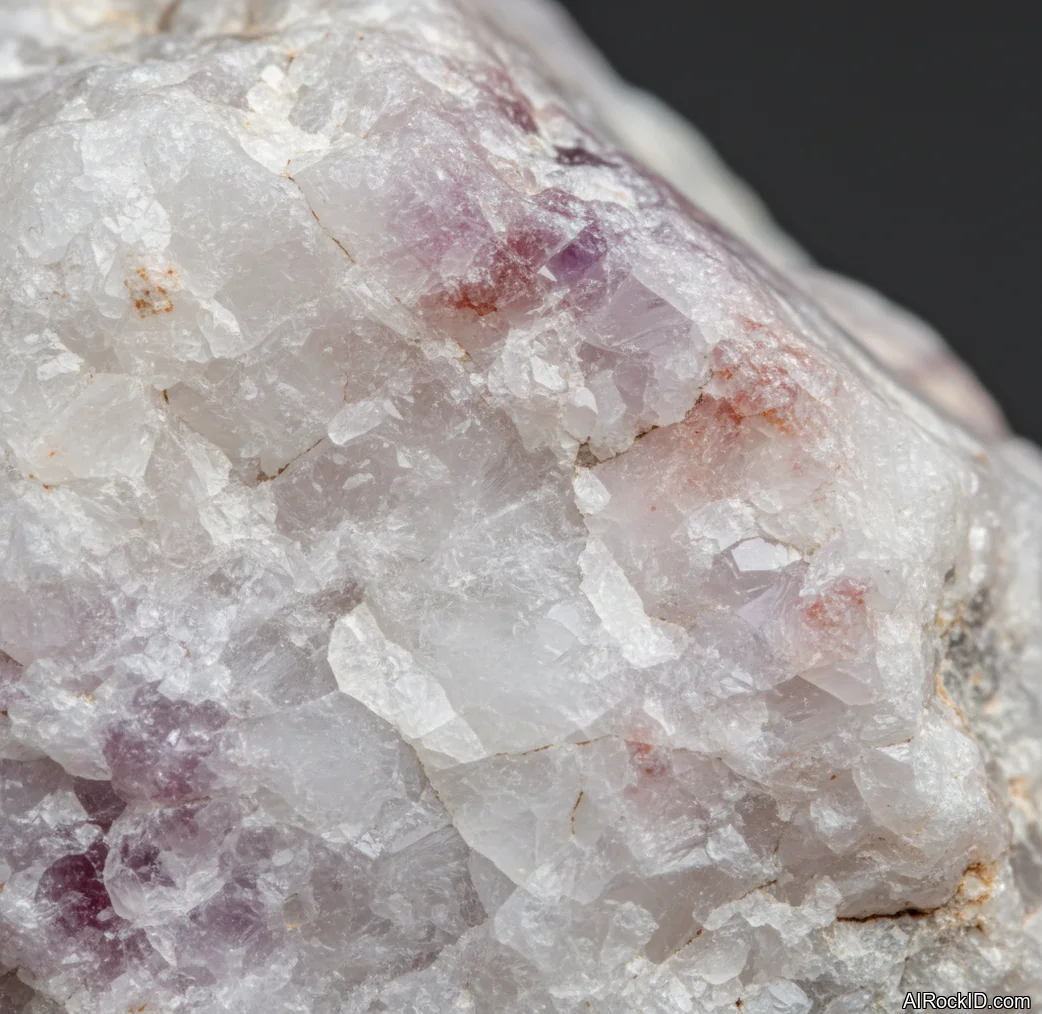
Most of what’s on the market is polished, and that makes sense. The rough can look a little blah at first glance until you roll it under a decent light, then suddenly you catch the color zoning and those whitish, albite-looking patches that start to stand out.
UV is where tugtupite really shows off. A lot of pieces flare orange to red under longwave UV, and some will glow under shortwave too. But the weird part, the one that catches people off guard? Some tugtupite actually changes color after light exposure, which is tenebrescence. I’ve had a small cab go from a gentle pink to a much hotter raspberry after sitting under a UV lamp, then it slowly wandered back over time.
Origin & History
Greenland is basically why tugtupite even exists as a “thing” for collectors. It was first described in 1960 by the Danish mineralogist Henning Sørensen, who was working through the weird alkaline rocks in the Ilímaussaq complex.
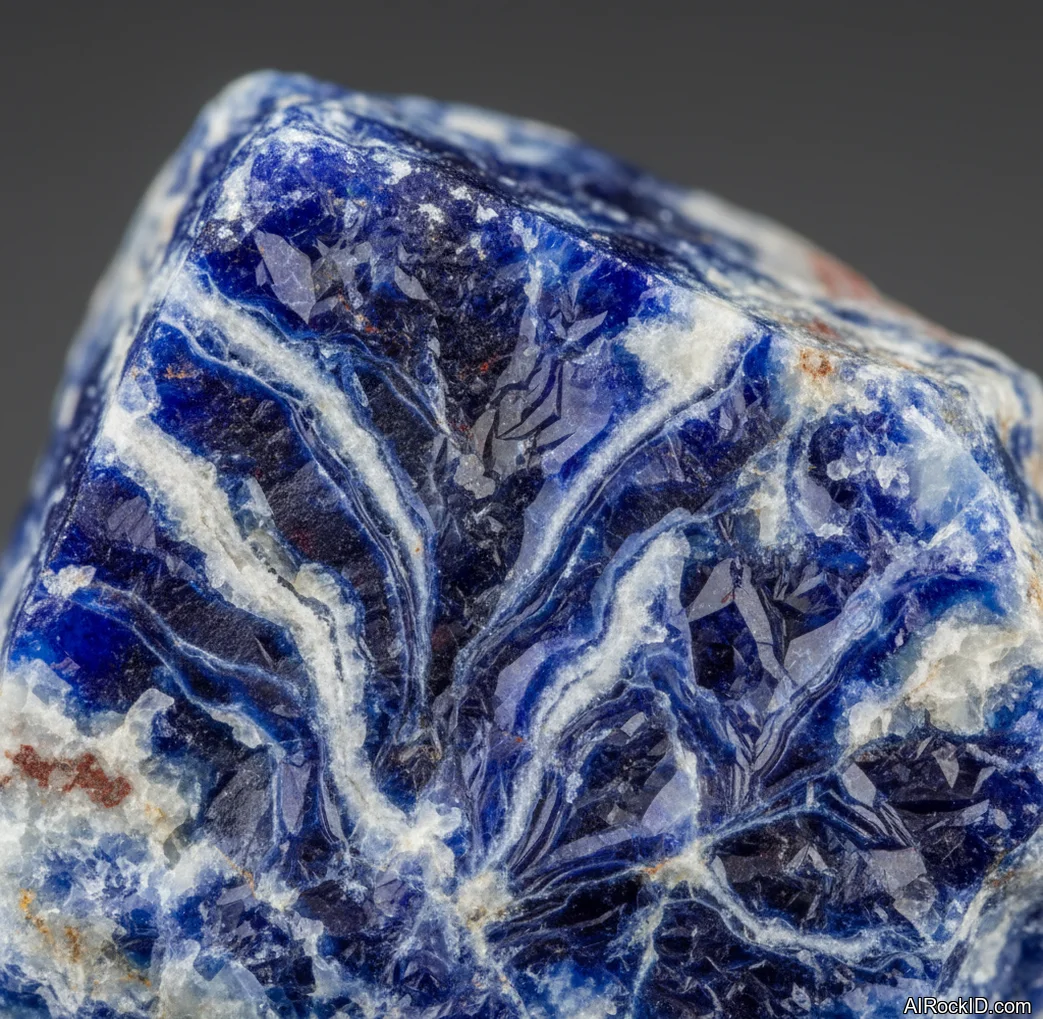
The name’s pulled from Tugtup Agtakôrfiat (people usually just shorten it to “Tugtup”), a spot in the Narsaq area of South Greenland. And if you’ve ever wandered a mineral show and heard someone casually say “Greenlandic stuff,” tugtupite is one of the go-to examples, right alongside hackmanite and the better pieces of ussingite.
Where Is Tugtupite Found?
Collector-grade tugtupite is most strongly associated with the Ilímaussaq complex near Narsaq in South Greenland, with small occurrences known from a few other alkaline complexes like Mont Saint-Hilaire.
Formation
Ilímaussaq is one of those odd alkaline intrusions where the chemistry just doesn’t behave the way you expect. Tugtupite shows up late, tucked into pockets and little veins, when sodium-rich fluids finally have enough open space to react with the earlier minerals. You’ll typically find it alongside sodalite, analcime, natrolite, plus a whole cast of rare beryllium and zirconium minerals.
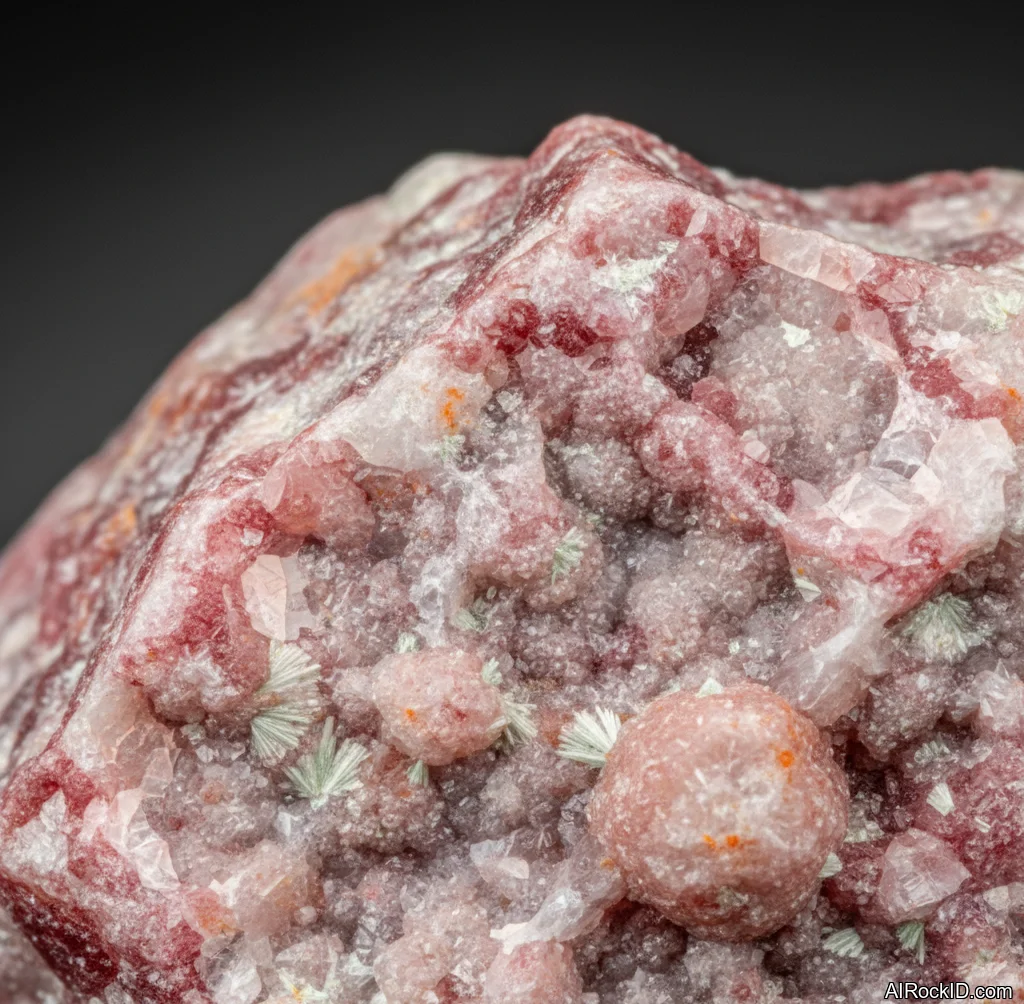
Look, the rough pieces tell on themselves if you actually stare at the host rock for a minute. The tugtupite usually sits in those lighter, sugary-looking patches or thin veinlets (the kind that feel a bit chalky under a fingernail), and it can be mixed up with feldspar and zeolites, which makes it annoying to pin down if you’re judging by color alone. And since it’s relatively soft, the strongest color tends to hang on in sheltered spots, not on the exposed faces that have been knocked around and scuffed up.
How to Identify Tugtupite
Color: Usually pale to medium pink, salmon, or reddish pink, often with white mottling or veining and occasional darker red patches.
Luster: Vitreous to slightly greasy on fresh surfaces.
Under longwave UV, many pieces fluoresce bright orange to red, which is one of the quickest field checks. If you scratch it with a steel nail, it’ll mark more easily than quartz, and that softness is a big clue. The real test is watching for tenebrescence: after UV exposure, some stones temporarily deepen in color, then fade back over minutes to days depending on the piece.
Properties of Tugtupite
Physical Properties
| Crystal System | Tetragonal |
| Hardness (Mohs) | 4 (Soft (2-4)) |
| Density | 2.34-2.36 g/cm3 |
| Luster | Vitreous |
| Diaphaneity | Translucent to opaque |
| Fracture | Uneven |
| Streak | White |
| Magnetism | Non-magnetic |
| Colors | pink, salmon, red, white |
Chemical Properties
| Classification | Silicates (tectosilicate, feldspathoid group) |
| Formula | Na4AlBeSi4O12Cl |
| Elements | Na, Al, Be, Si, O, Cl |
| Common Impurities | S, K, Ca |
Optical Properties
| Refractive Index | 1.490-1.496 |
| Birefringence | 0.006 |
| Pleochroism | Weak |
| Optical Character | Uniaxial |
Tugtupite Health & Safety
Handling it and putting it on display is pretty low-risk. But if you’re cutting, grinding, or doing any lapidary work, that’s where it can get sketchy, because you can kick up dust with beryllium in it. Treat it the same way you would any Be-bearing mineral: don’t breathe the powder.
Safety Tips
If you need to cut or sand it, do it wet, crank up the ventilation, and wear a proper respirator that’s actually rated for fine particulates. You’ll end up with that muddy slurry that sticks to everything (especially the floor), so scoop or wipe it up carefully and don’t dry-sweep it.
Tugtupite Value & Price
Price Range
Rough/Tumbled: $80 - $800 per specimen
Cut/Polished: $40 - $250 per carat
Price can jump all over the place depending on how saturated the color is, how strong the fluorescence is, and whether the piece has that obvious tenebrescence you can actually see when you move it between light sources. Clean cab material with even color (the kind that looks smooth across the whole dome) costs a lot more than mottled, mixed rough that’s blotchy right out of the bag.
Durability
Nondurable — Scratch resistance: Fair, Toughness: Fair
It’s stable on the shelf, but the surface scratches easily and repeated UV or strong light exposure can change the apparent color on tenebrescent pieces.
How to Care for Tugtupite
Use & Storage
Store it in a padded box or a separate compartment so harder stones don’t scuff it. I keep my tugtupite away from loose quartz points for that reason.
Cleaning
1) Rinse quickly in lukewarm water with a drop of mild soap. 2) Wipe with a soft microfiber cloth, no scrubbing grit. 3) Pat dry and let it fully air dry before putting it back in a case.
Cleanse & Charge
If you do energy cleansing, stick to gentle options like smoke, sound, or a quick rinse, and avoid long sunbaths. UV charging can trigger tenebrescence, so do that on purpose, not by accident.
Placement
A drawer or a shaded shelf keeps the color more consistent if your piece is light-reactive. Under a UV display light it looks incredible, but don’t leave it blasting for weeks if you care about the resting color.
Caution
Skip ultrasonic cleaners, harsh chemicals, and anything that’ll bang around in a ring, because at Mohs 4 it picks up scratches really fast. And don’t grind or drill it dry either, since that kicks up beryllium-bearing dust (the fine, floaty kind you can actually see hanging in the light).
Works Well With
Tugtupite Meaning & Healing Properties
Under the usual shop lights, tugtupite just looks like a soft pink stone. But hit it with UV and it turns into something way louder. That switch is why a lot of people treat it like a “heart plus truth” stone in their own practice, like it nudges buried feelings up where you can actually deal with them. And yeah, that’s personal. It’s not medicine.
Pick up a polished piece and you’ll notice it warms up fast, like it grabs your body heat the way a smooth river pebble does after a minute in your hand. Tiny detail, sure, but it changes how people use it during meditation or breath work. I’ve literally watched customers instinctively cup it in their palm, thumb rubbing the surface, instead of doing that little tap-tap on the glass counter they do with harder stones.
But look, keep your expectations realistic. The market’s packed with pink stones, and tugtupite doesn’t always look dramatic in normal room light unless it’s high grade. So if you’re picking one for personal work, choose the piece you actually like holding (weight, warmth, the way the polish feels), and test the fluorescence if that’s part of the draw. The feel matters more than whatever story you got from a caption online.
Identify Any Crystal Instantly
Snap a photo and get properties, value, care instructions, and healing meanings in seconds.