Hackmanite
What Is Hackmanite?
Hackmanite is a tenebrescent (photochromic) variety of sodalite, which is just a nerdy way of saying it can shift color under UV light and then slowly drift back to its original look.
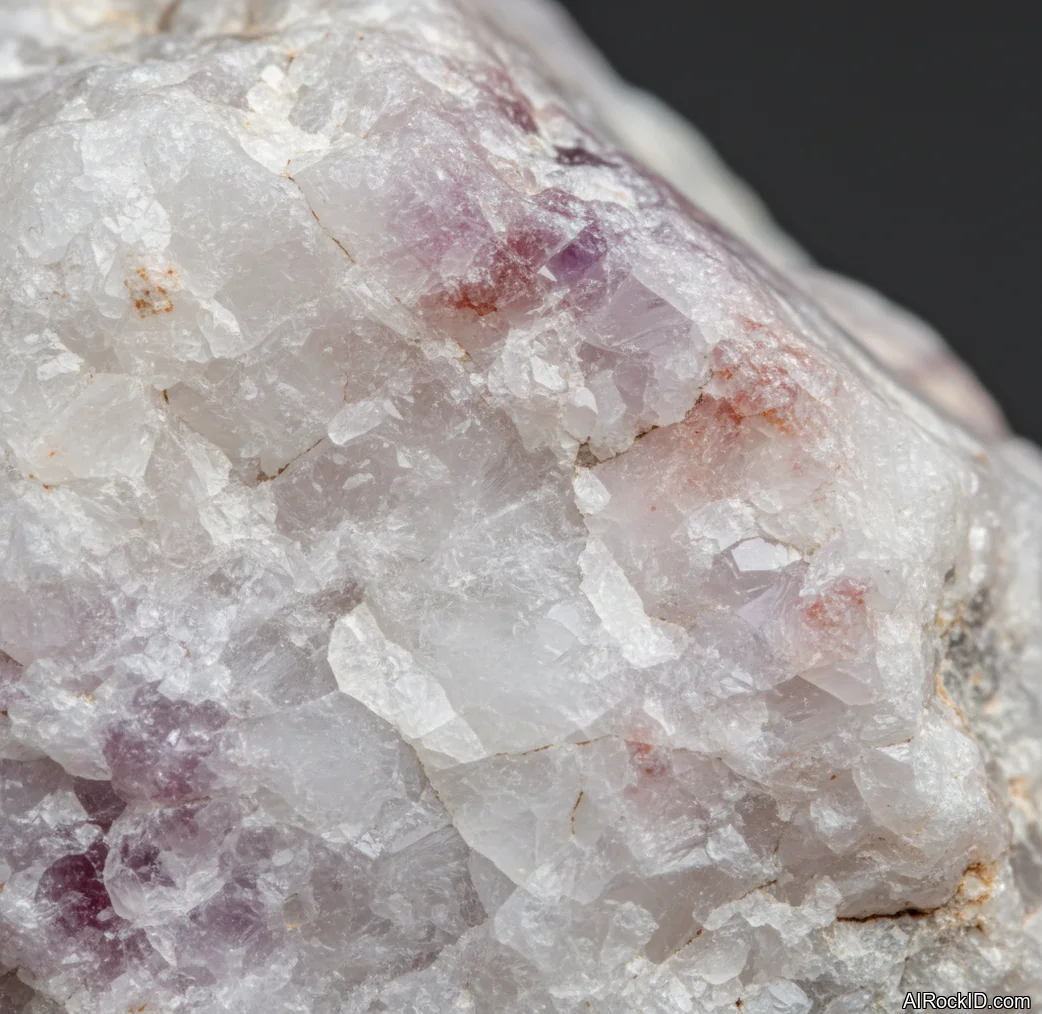
Pick up a piece and you’ll know right away it’s the real deal. It has that dry, stony heft, with tiny gritty edges that catch on your fingertips, not that slick, glassy fake-smooth feel. Most hackmanite you see for sale is chunky and granular, almost like clumps of sugar pressed together, and in plain room light it can look… kind of bland. Then you hit it with a UV flashlight. And suddenly it’s a whole different rock. I’ve watched pale, milky pieces bloom into pinks and purples in a few seconds, and honestly? That little collector trick doesn’t get old.
But here’s the part people gloss over. The color change isn’t always permanent, and it isn’t always dramatic. Some pieces snap back fast. Some hang onto the color for hours. Some barely shift at all, which is a bit of a letdown if you were expecting fireworks, right? So if you’re buying it for the “wow,” ask for a UV video or test it yourself at a show. I keep a small 365 nm light in my bag for exactly that reason (it’s saved me from a couple of disappointing buys).
Origin & History
Hackmanite gets its name from Victor Axel Hackman, a Finnish geologist and mineralogist, and it was described as a variety of sodalite back in the late 1800s. The early stuff that really put it on the map came from the Ilímaussaq complex in Greenland, which (if you’ve ever read the mineral lists from there) is basically a playground for weird alkaline minerals.
But collectors didn’t really obsess over it until later, mostly because of the tenebrescence, since plain old sodalite is pretty familiar. In older collections you’ll sometimes find it filed under sodalite with a little note like “tenebrescent” scribbled on the label (sometimes in fading ink, sometimes in that neat, cramped handwriting). For a long time it was treated more like a behavior than a separate “thing” to chase.
Where Is Hackmanite Found?
Good collector material turns up in alkaline igneous settings, with Greenland and Quebec being the classic references. Afghanistan and Myanmar can produce attractive gemmy pieces, and Madagascar shows up a lot in the bead and tumbled market.
Formation
Hackmanite shows up in sodium-heavy, silica-poor magmas and fluids, the kind that grow feldspathoid minerals instead of quartz. So think nepheline syenites and other alkaline rocks, along with those pegmatite-ish pockets and late-stage veins that slice right through the host.
Look, if you’ve got a rough chunk in your hand and you tilt it under a light, you can usually spot the company it keeps. You’ll see it hanging out with sodalite-group stuff, nepheline, aegirine, plus a few other alkaline weirdos that tend to show up in the same zones. And that whole tenebrescence thing? It comes from defects and impurities inside the crystal structure, and those can swing a lot from one pocket to the next (even in the same outcrop). That’s why two stones that look identical on a table can behave totally differently under UV. Why’s that happen? Same rock body, different micro-chemistry.
How to Identify Hackmanite
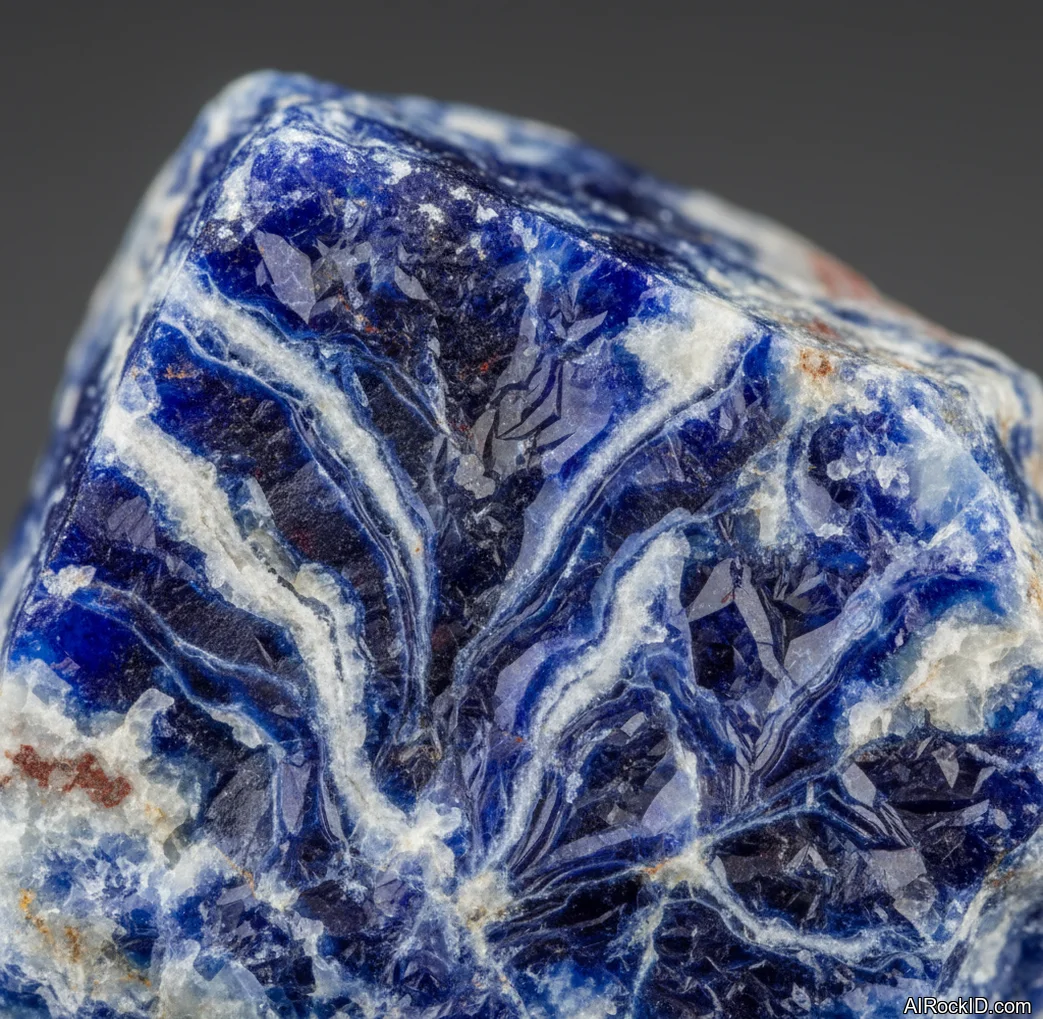
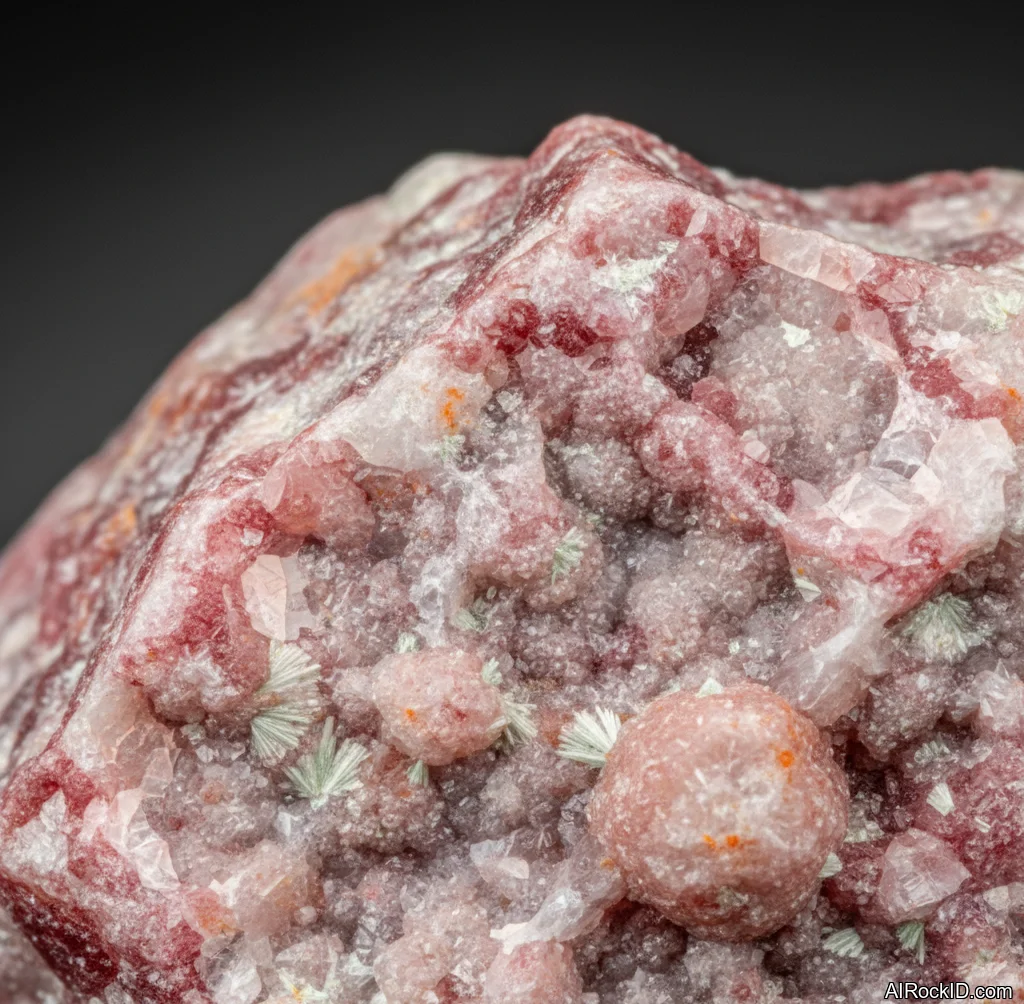
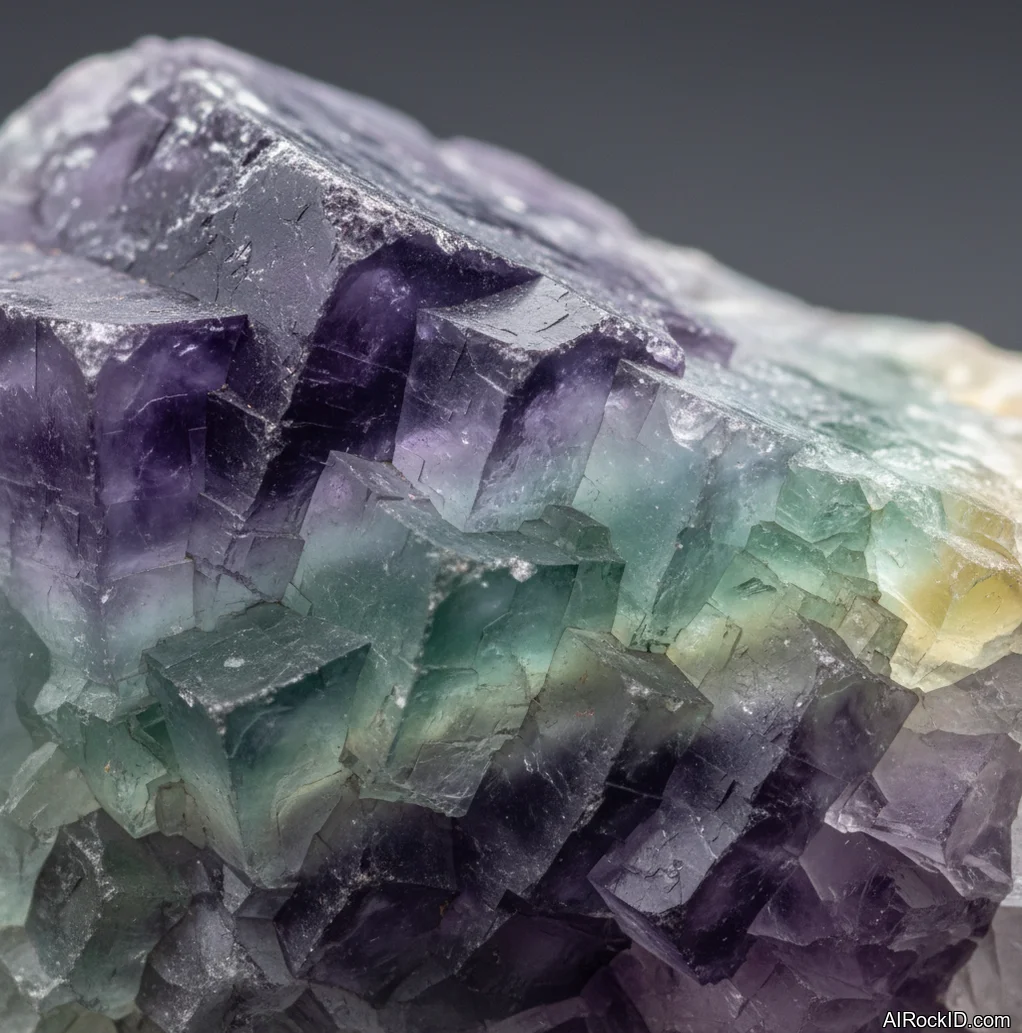
Color: In normal light it’s often white to gray, pale lavender, or faint pink, and under UV it can deepen into stronger pink, purple, or reddish tones depending on the source. Some pieces show uneven patches or bands where the color change is stronger.
Luster: Luster is usually vitreous on clean faces but more dull to waxy on granular or massive material.
Under UV light (365 nm is my go-to), watch for a quick color shift that later fades in the dark, that’s the whole hackmanite party trick. The real test is to charge it with UV, cover it with your hand, and see if the color slowly backs off over a few minutes. Compared to dyed material, the color change looks like it’s coming from inside the stone, not sitting on the surface, and the piece should stay cool in your palm like any other natural mineral.
Properties of Hackmanite
Physical Properties
| Crystal System | Cubic |
| Hardness (Mohs) | 5.5-6 (Medium (4-6)) |
| Density | 2.20-2.30 g/cm3 |
| Luster | Vitreous |
| Diaphaneity | Transparent to translucent |
| Fracture | Uneven |
| Streak | White |
| Magnetism | Non-magnetic |
| Colors | White, Gray, Lavender, Pink, Violet, Blue |
Chemical Properties
| Classification | Silicates (tectosilicate, feldspathoid) |
| Formula | Na8(Al6Si6O24)Cl2 |
| Elements | Na, Al, Si, O, Cl |
| Common Impurities | S, K, Ca, Fe, Mn |
Optical Properties
| Refractive Index | 1.483-1.487 |
| Birefringence | None |
| Pleochroism | None |
| Optical Character | Isotropic |
Hackmanite Health & Safety
Hackmanite is usually safe to handle and keep on display. If you’re cutting or grinding it, treat it like any other rock and watch out for the fine dust, because that stuff gets everywhere (in your nose, on your workbench, all of it). Basic rock dust precautions apply.
Safety Tips
If you’re going to polish or saw, put on a respirator and keep things wet with water so the dust doesn’t get everywhere.
Hackmanite Value & Price
Price Range
Rough/Tumbled: $5 - $80 per piece
Cut/Polished: $10 - $60 per carat
Prices swing based on how strong the tenebrescence is, plus clarity and whether the rough is clean enough to facet without it turning into a chipped mess at the wheel. Most dealers ask more for pieces that snap into color fast under UV, look obvious right away, and then actually hold that color for a while after you pull the light away.
Durability
Moderate — Scratch resistance: Fair, Toughness: Fair
Color change performance can drift with strong sunlight and repeated UV exposure, so don’t store your best reactive pieces on a bright windowsill.
How to Care for Hackmanite
Use & Storage
Store it in a padded box or a drawer if you want the UV-charged color to last longer and to keep the surface from getting scuffed. I keep my best tenebrescent pieces wrapped so they don’t rub against harder stuff like quartz.
Cleaning
1) Rinse briefly with lukewarm water. 2) Use a soft toothbrush with a drop of mild soap to lift grime from pits. 3) Pat dry and let it air-dry fully before putting it away.
Cleanse & Charge
If you do the metaphysical routine, smoke cleansing or sound works without stressing the stone. For the fun visual “charge,” use a 365 nm UV light for a few seconds and then keep it in the dark to watch it fade.
Placement
A shelf is fine, but avoid direct sun if you care about the color-change behavior staying consistent. Under UV display lights it can look great, just remember it may fade back once the UV is off.
Caution
Skip harsh acids and abrasive cleaners, and don’t throw it in a tumbler unless you’re fine with it coming out banged up, with little bruises and a surface that looks noticeably dulled.
Works Well With
Hackmanite Meaning & Healing Properties
Under UV light, hackmanite feels like a tiny crash course in change. That’s the vibe people usually grab onto: it shifts, it shows you a different side of the same stone, and it’s fine if it doesn’t stay “charged” all day. And yeah, that’s a metaphor, not medicine. If you’re dealing with anxiety or sleep stuff, let it be a reminder, not a cure.
In my own use, I reach for it during focus sessions when my brain wants to ping-pong everywhere. I’ll park a piece next to my notebook, give it a quick blast of UV to get that little color pop, then I watch the fade-out like a built-in timer. Simple. The feel matters too. A lot of rough hackmanite has this slightly gritty, granular texture, the kind that catches just a bit on your thumb, and rubbing it is grounding in a very literal, practical way (no mystique required).
But look, there’s a downside. If you’re expecting a constant “high energy” stone, hackmanite can let you down. Some days the reaction is subtle. Some specimens barely do it at all. That’s honestly part of what I like. It makes you pay attention, test, re-test, and not just trust whatever label’s sitting on the tray.
Identify Any Crystal Instantly
Snap a photo and get properties, value, care instructions, and healing meanings in seconds.