Sodalite
What Is Sodalite?
Sodalite’s a blue, sodium-rich feldspathoid mineral, and its formula is Na8Al6Si6O24Cl2.
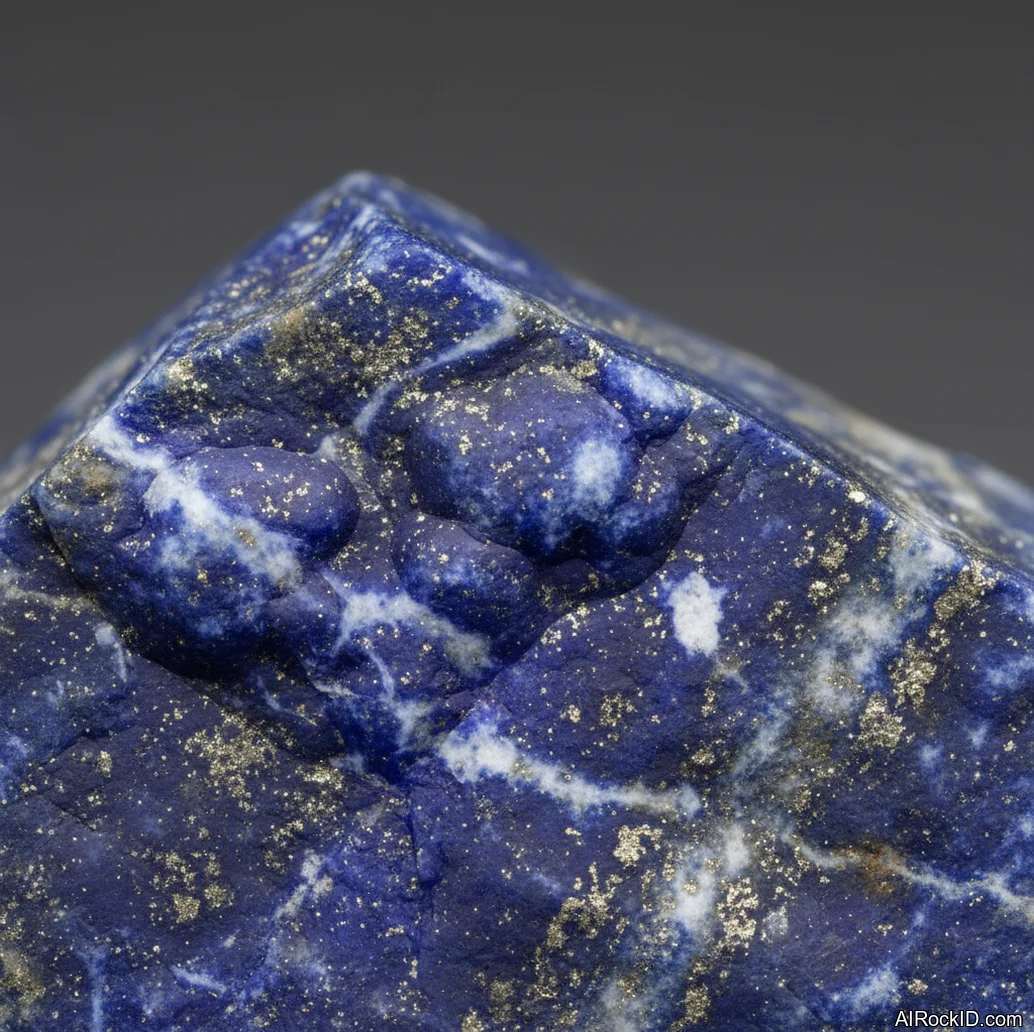
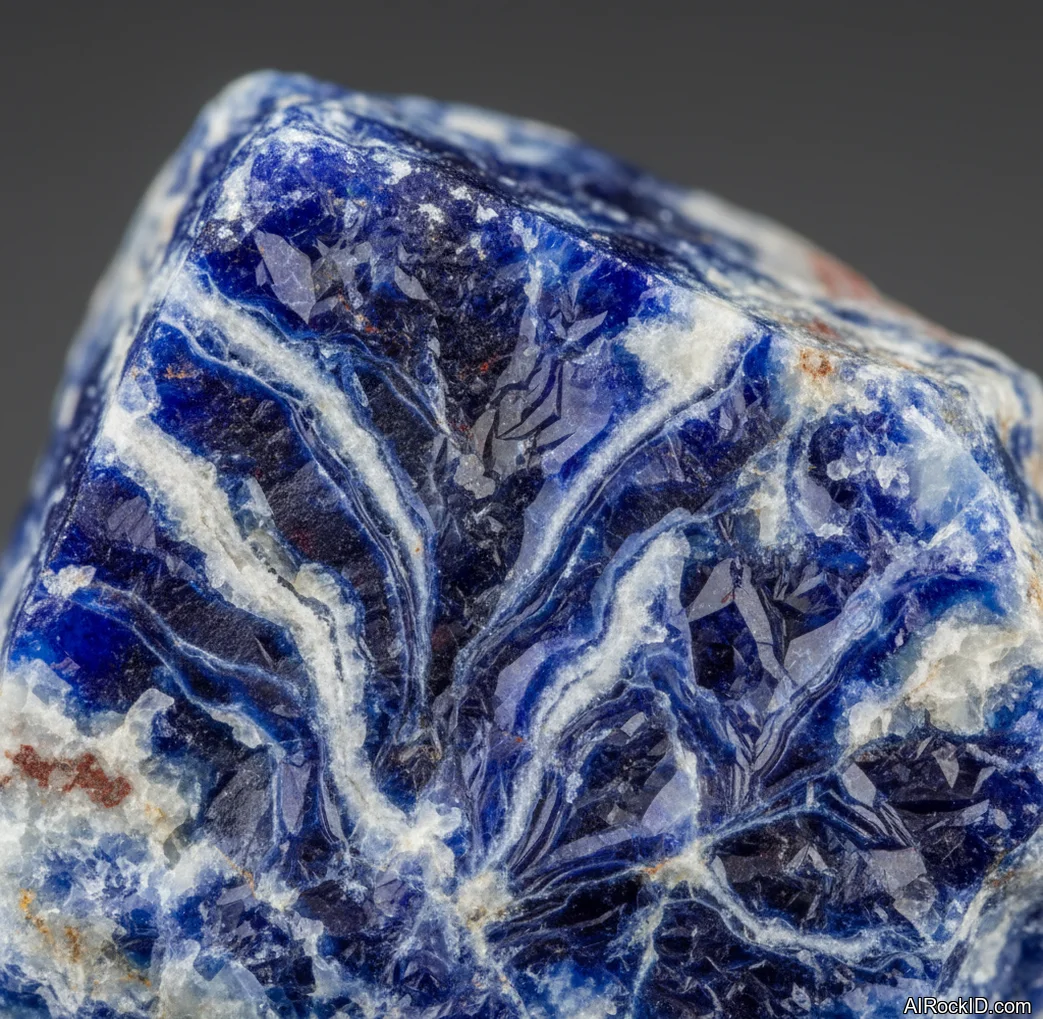
Grab a chunk at a gem show and you notice it instantly. Cold. Like it’s been sitting under the A/C vent all morning. Most pieces don’t stay a perfect navy from one end to the other, either. You get those cloudy white calcite seams cutting through, and now and then there are tiny brassy pyrite specks that pop when the booth LEDs hit them just right.
People confuse it with lapis at a glance. I’ve seen it happen more times than I can count. But sodalite usually reads darker, kind of inky, and it’s patchier overall, and you don’t get that steady gold glitter you’ll see in good lapis. And if you’ve held a bunch of both, you can feel the difference too. Sodalite tends to break in a slightly blocky way (almost like it wants to split along planes), instead of snapping like glass.
Origin & History
Thomas Thomson first described sodalite in 1811 after someone got their hands on material from Greenland. He named it because it’s loaded with sodium. That’s it. The name is basically a chemistry hint, not some poetic flourish.
And a lot of collectors end up meeting it through the Canadian stuff from Bancroft, Ontario, where you get these big blue masses sitting in nepheline syenite. Some of that rock has been sold under local names, but when you’re holding it, the look doesn’t really lie: blue sodalite streaked with white calcite (that chalky, sugary-looking white in the cracks), and sometimes there’s a little peppering of other feldspathoids mixed in.
Where Is Sodalite Found?
Sodalite turns up in silica-poor igneous rocks, especially nepheline syenites and related alkaline complexes. Canada and Brazil supply a lot of the commercial rough and tumbled material.
Formation
You find sodalite in melts where the chemistry’s a little off in a very particular direction: tons of sodium and aluminum, and not enough silica to build the usual feldspar plus quartz combo. So in those alkaline, silica-undersaturated melts, feldspathoids take over, and sodalite can crystallize right alongside nepheline, alkali feldspar, aegirine, and the other minerals people lump into the “alkaline suite.”
Most of what ends up for sale isn’t some neat little crystal with crisp faces you can admire under a hand lens. It’s the chunky, massive, intergrown material that grew in pockets and veins inside nepheline syenite (the kind where you’ll sometimes see later calcite slicing through it like a pale stripe). Look, the real tell is the broken face. A fresh snap can show a deep blue center, but if it’s been sitting around and weathering, the outside fades to a dull denim and, honestly, it can trick you into thinking it’s lower grade than it actually is.
How to Identify Sodalite
Color: Typical color is medium to deep royal blue to gray-blue, often with white calcite streaks or patches. Some pieces show small brassy pyrite specks, but not as consistently as lapis lazuli.
Luster: Luster is usually vitreous to slightly greasy on fresh surfaces and polished pieces.
Look closely at the white areas. If they’re calcite, a drop of weak acid will fizz, while the blue sodalite won’t. If you scratch it with a steel nail, a lot of sodalite will take a faint mark because it sits around Mohs 5.5 to 6. Compared to lapis, sodalite tends to have more white veining and less “even” blue. And in your hand, many sodalite pieces feel a touch lighter than a similarly sized lapis chunk because lapis often carries denser components like pyrite and more calcite.
Properties of Sodalite
Physical Properties
| Crystal System | Cubic |
| Hardness (Mohs) | 5.5-6 (Medium (4-6)) |
| Density | 2.27-2.33 |
| Luster | Vitreous |
| Diaphaneity | Translucent to opaque |
| Fracture | Uneven |
| Streak | White |
| Magnetism | Non-magnetic |
| Colors | Blue, Gray-blue, White (calcite), Colorless, Yellowish, Greenish |
Chemical Properties
| Classification | Silicates (tectosilicate, feldspathoid) |
| Formula | Na8Al6Si6O24Cl2 |
| Elements | Na, Al, Si, O, Cl |
| Common Impurities | Ca, K, S, Fe |
Optical Properties
| Refractive Index | 1.483-1.487 |
| Birefringence | None |
| Pleochroism | None |
| Optical Character | Isotropic |
Sodalite Health & Safety
Handling sodalite is usually fine, and a quick splash of water isn’t a big deal either. But if you’re cutting or grinding it, don’t breathe in the dust. Same basic rule you’d use with any silicate rock.
Safety Tips
Use water and wear a respirator if you’re shaping or sanding sodalite. Trust me, that fine blue dust gets everywhere, and it hangs in the air longer than you’d think. And when you’re done, wipe up the wet slurry (it’s kind of like gritty blue-gray mud) instead of sweeping up dry dust.
Sodalite Value & Price
Price Range
Rough/Tumbled: $3 - $25 per piece
Cut/Polished: $1 - $8 per carat
Price mostly comes down to color and how much white calcite is mixed through it. Deep, clean dark-blue rough and nicely cut cabochons (the kind with a smooth dome and crisp edges) run higher, but pale stuff or pieces with a lot of white veining usually stay cheap.
Durability
Moderate — Scratch resistance: Fair, Toughness: Fair
Sodalite is generally stable, but it can scratch and chip in jewelry, and polished surfaces can dull if they rub around with harder stones.
How to Care for Sodalite
Use & Storage
Store it in a pouch or a compartment so harder stones don’t scuff the polish. I’ve seen sodalite towers come back from a market with a whole new set of scratches just from riding in a box with quartz points.
Cleaning
1) Rinse with lukewarm water and a drop of mild soap. 2) Use a soft toothbrush to get grime out of calcite seams. 3) Rinse well and pat dry; don’t tumble it with harder stones.
Cleanse & Charge
For metaphysical-style cleansing, wipe it down, use smoke, or set it on a dry bed of salt nearby (not buried). Avoid long soaks if the piece has lots of calcite veining.
Placement
It looks best under neutral light where the blue reads true, not under super warm bulbs that make it look gray. Keep it out of constant window sun if you want the polish to stay crisp and the color to look its best.
Caution
Skip ultrasonic cleaners and steer clear of harsh acids, especially if your piece has calcite in it. Think of it more like a medium-hard decorative stone you take care with, not something you’d want in a daily-wear ring getting knocked around all the time.
Works Well With
Sodalite Meaning & Healing Properties
A lot of folks grab sodalite when they want their brain to turn the volume down a bit. Not in some woo-woo, magical sense. More like it gives your hands something solid to come back to. It’s this cool, heavy blue stone, and just feeling that weight in your palm can nudge you into breathing slower without you even noticing.
Take a palm stone, the kind that sits flat against your skin, and run your thumb over the white calcite streaks. You’ll catch a tiny shift in texture where the polish crosses a softer seam, almost like it dips for a split second. And that little change yanks your attention right back to right now. That’s why I like it for meditation or when I’m trying to study. It’s not flashy. It’s steady. Quiet, even.
But look, there’s a catch. A lot of the “sodalite meaning” stuff online sounds way too confident (like it’s a guarantee or something). If you’re dealing with anxiety, sleep problems, or anything medical, sodalite isn’t a treatment. What it can be is a pocket object you start to link with focus, honest communication, and taking a beat before you speak. And if you’re into ritual, pairing it with journaling or a short breathing timer can make the habit actually stick. Why not lean on that part?
Identify Any Crystal Instantly
Snap a photo and get properties, value, care instructions, and healing meanings in seconds.