Uvite
What Is Uvite?
Uvite is a calcium-rich tourmaline species in the tourmaline group, and it usually turns up as striated prismatic crystals in metamorphic rocks and skarns.
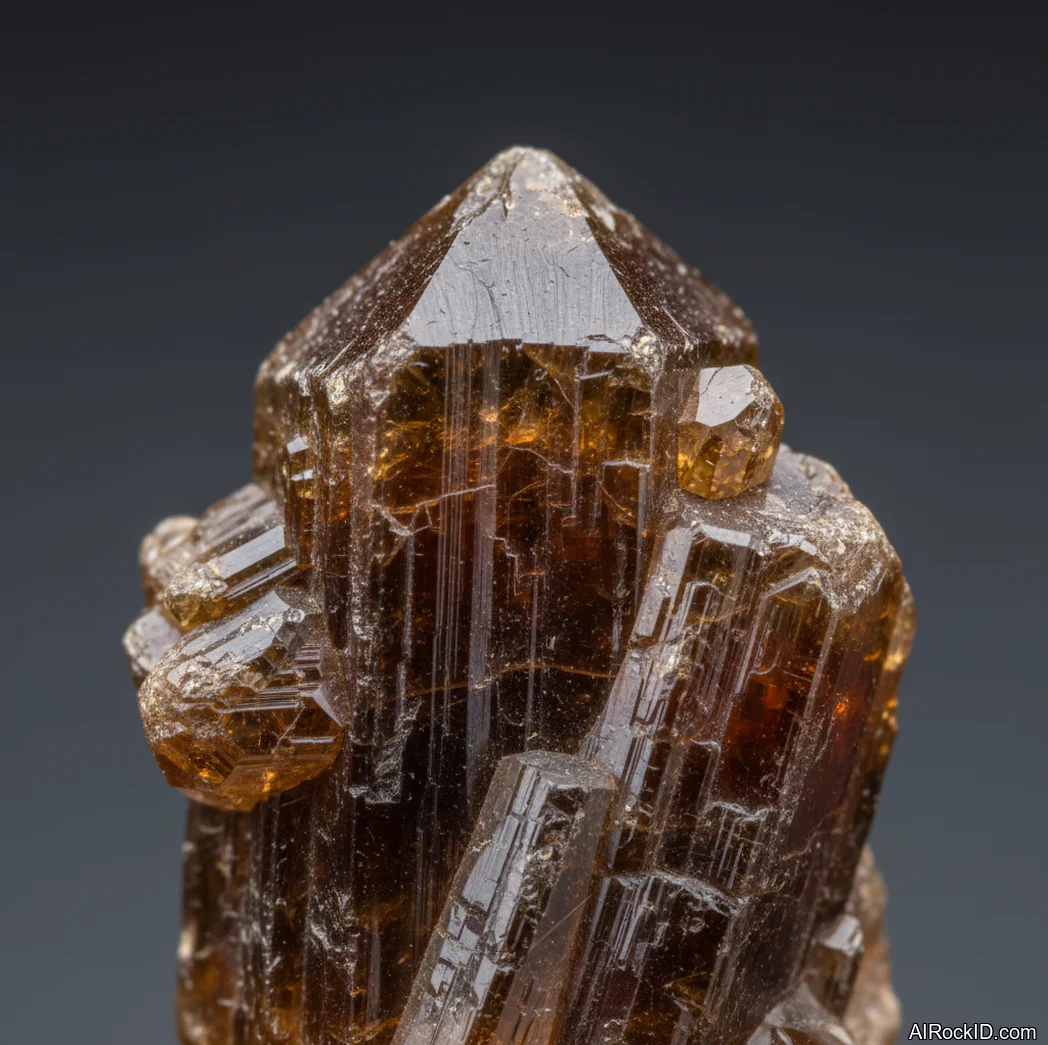
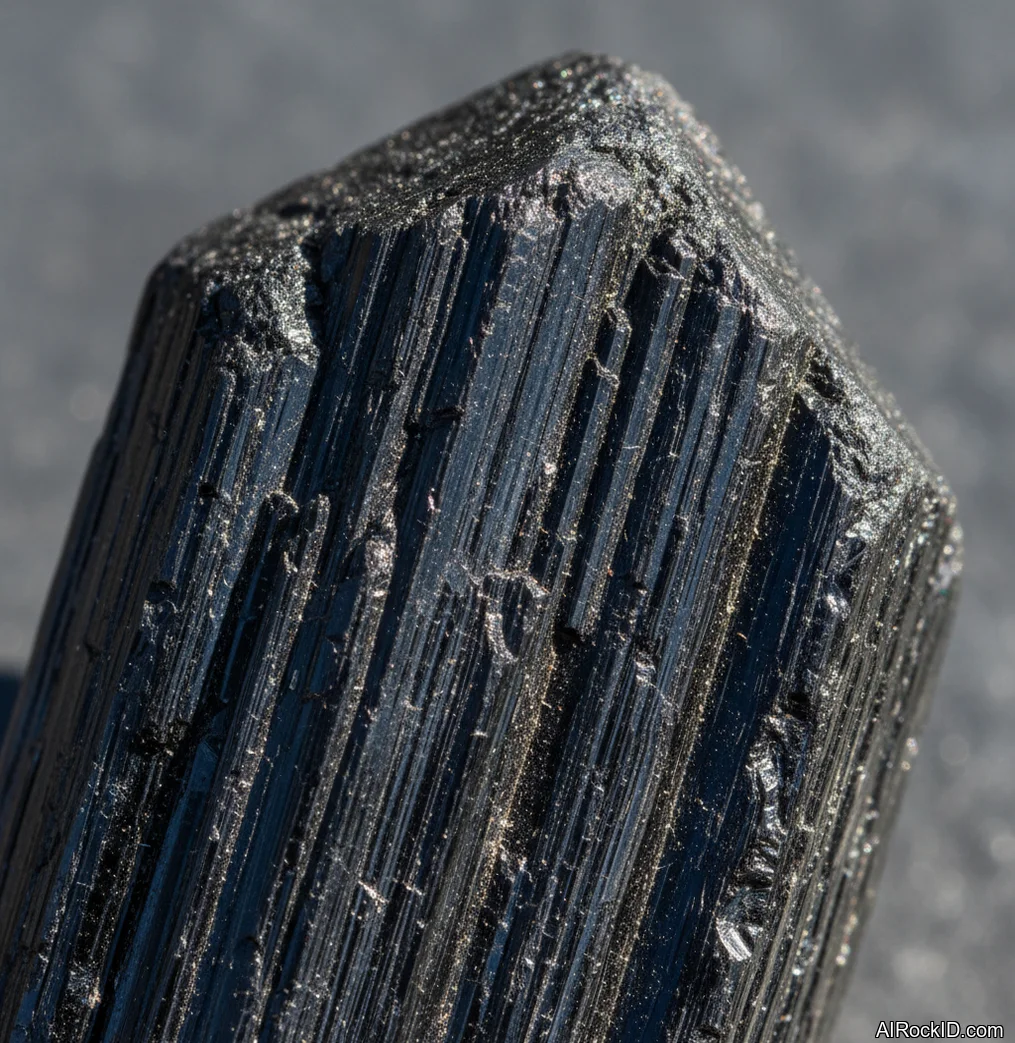
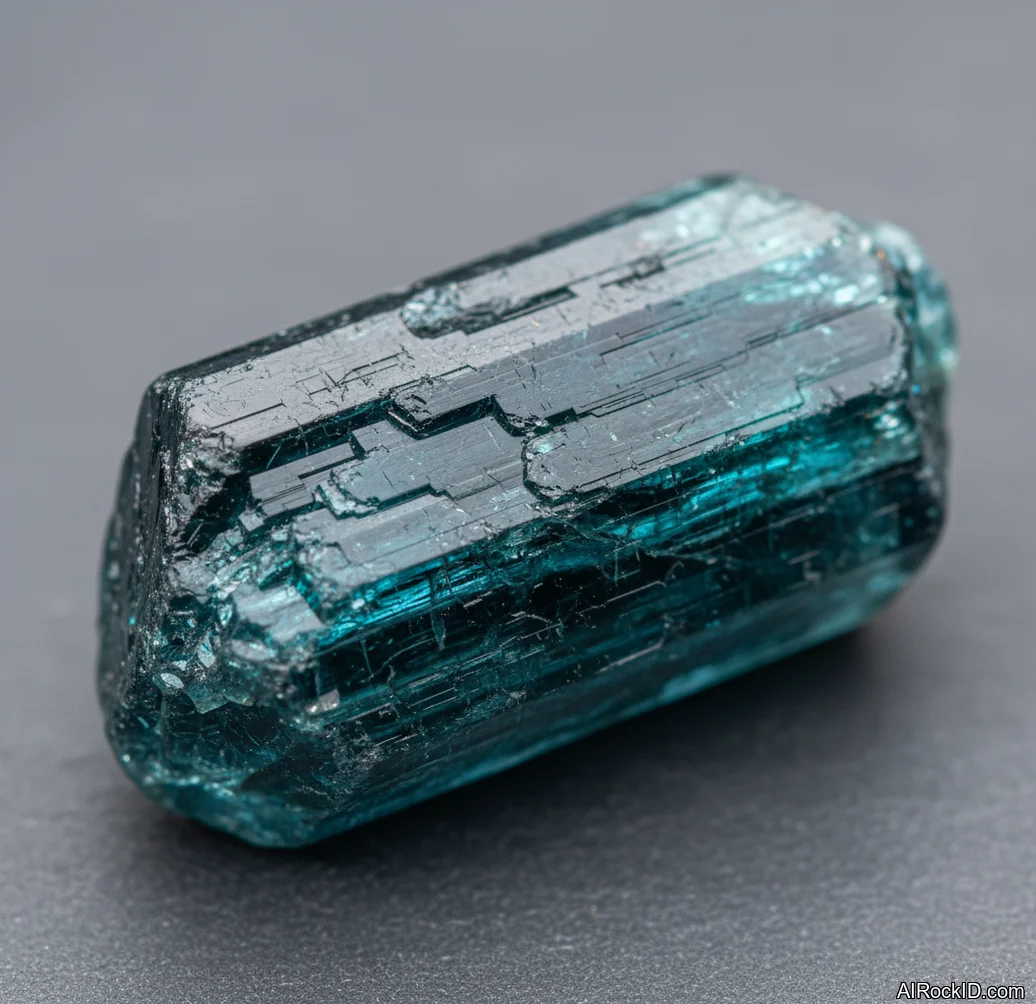
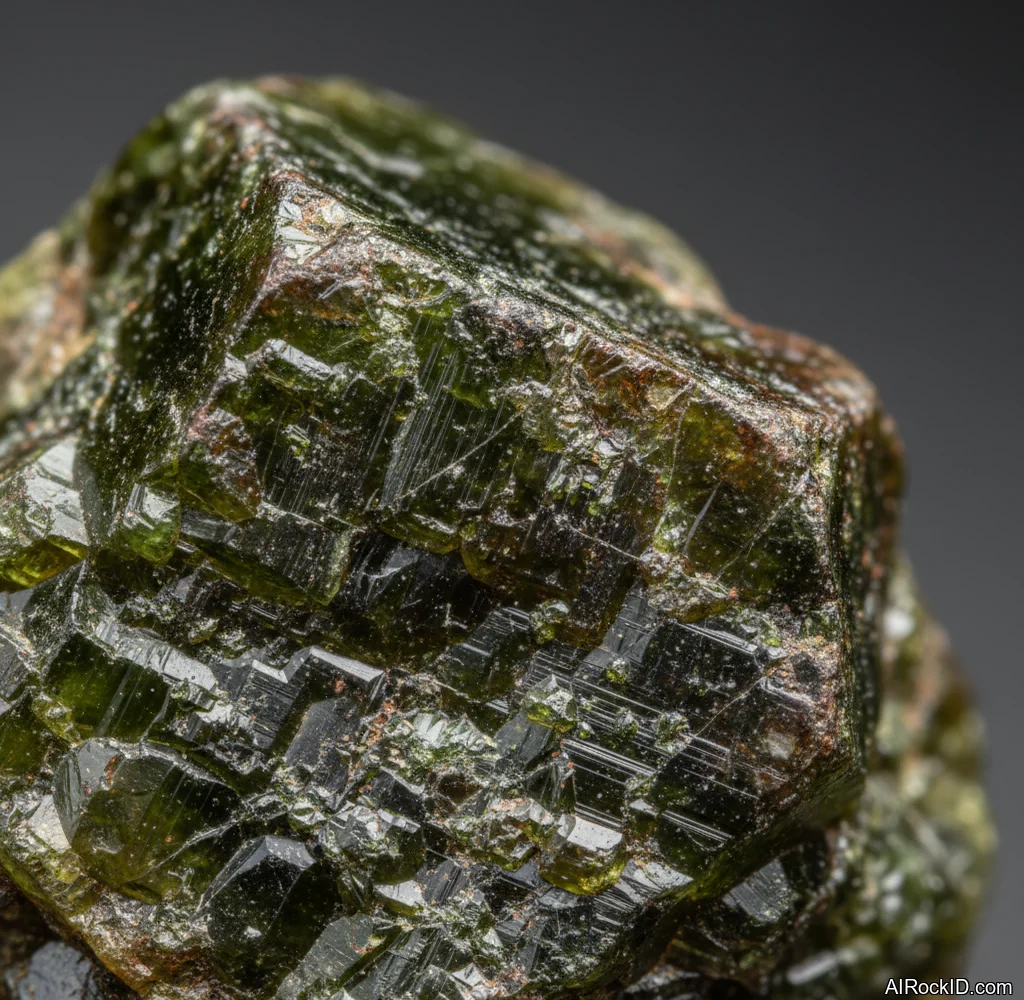
Grab a chunk of uvite and you’ll notice the weight right away. Not galena-heavy. But it’s got more heft than quartz, no question. Most of the pieces I’ve had in hand run dark green to nearly black, and the crystal faces show those long, lengthwise grooves tourmaline folks are always hunting for. Under a decent lamp, the sharper edges can kick back a bottle-green flash, but a lot of uvite just looks plain “dark” until you tilt it and catch the right angle (kind of annoying, honestly).
People mix it up with dravite or schorl all the time at first glance, since the color ranges overlap. Thing is, uvite tends to hang out with calcium-rich neighbors. And if you get a clean crystal, the prismatic shape plus the striations basically shout “tourmaline” even when the color refuses to cooperate.
Origin & History
Uvite got its first formal write-up in 1929, thanks to Waldemar T. Schaller. The name’s pulled from Sri Lanka’s Uva Province, since that’s where early material tied to the species was reported.
And in the tourmaline world, uvite actually matters because it helped people admit, out loud, how messy the whole group is. Tourmaline isn’t one neat formula you can scribble once and be done with. It’s a chemical parking lot. So uvite sits way over on the calcium end of that spread, and you tend to run into it in rocks where calcium was already in the mix.
Where Is Uvite Found?
Uvite turns up in calcium-rich metamorphic settings, especially skarns and dolomitic marbles. You’ll see it from Sri Lanka and Brazil to classic New York localities and parts of Italy and Russia.
Formation
Look at where uvite shows up and a theme pops out fast: calcium-heavy rocks that got baked and chemically messed with. Skarns are the classic setting. That’s what you get when hot fluids from an intrusion eat into limestone or dolostone and basically rebuild the rock into a new mineral mix. If there’s boron in those fluids, tourmaline can crystallize right in the middle of that chaos.
I’ve seen uvite parked next to chunky calcite, diopside, garnet, and even a bit of epidote, and that lineup is a dead giveaway you’re not just staring at some random black tourmaline out of a pegmatite. But it isn’t always that dramatic. Sometimes it’s just short, dark prisms peppered through marble, easy to miss until you tilt the hand sample and those crystal faces flash thin, silvery stripes. You know the kind.
How to Identify Uvite
Color: Most uvite is dark green, greenish brown, or brown to nearly black. Thin edges can show olive or bottle-green when backlit.
Luster: Vitreous luster on fresh crystal faces, sometimes a bit resinous on worn surfaces.
Pick up a crystal and run your fingernail along the length. Those parallel striations feel like tiny washboard ridges on a decent specimen. The real test is a strong light from behind: uvite often gives you a green glow at the edges even when the body looks black. But don’t try to ID it by color alone, because dravite and schorl can look almost identical until you get chemistry or a trusted locality label.
Properties of Uvite
Physical Properties
| Crystal System | Trigonal |
| Hardness (Mohs) | 7-7.5 (Hard (6-7.5)) |
| Density | 3.02-3.26 g/cm3 |
| Luster | Vitreous |
| Diaphaneity | Transparent to translucent |
| Fracture | Uneven |
| Streak | White |
| Magnetism | Non-magnetic |
| Colors | Dark green, Olive green, Greenish brown, Brown, Black |
Chemical Properties
| Classification | Silicates |
| Formula | CaMg3(Al5Mg)(Si6O18)(BO3)3(OH)3(OH) |
| Elements | Ca, Mg, Al, Si, B, O, H |
| Common Impurities | Fe, Mn, Ti, Na |
Optical Properties
| Refractive Index | 1.62-1.65 |
| Birefringence | 0.018-0.020 |
| Pleochroism | Moderate |
| Optical Character | Uniaxial |
Uvite Health & Safety
Uvite’s usually fine to pick up and keep on a shelf. Basic rock-handling hygiene is all you need. Wash your hands after you’ve had it in your palm for a bit (especially if it left that faint dusty grit on your fingertips), and don’t go eating a sandwich right after.
Safety Tips
If you’re cutting or grinding it, handle it like any other silicate. Keep the dust out of your lungs by running water on the cut and using decent ventilation. Dust hangs in the air longer than you think, so don’t skip it.
Uvite Value & Price
Price Range
Rough/Tumbled: $10 - $120 per specimen
Cut/Polished: $30 - $300 per carat
Prices shoot up fast when the crystal’s actually well-formed, with clean faces and sharp edges, instead of being just a dark, knobby lump sitting in calcite. And yeah, transparent green material that you can genuinely facet does exist, but it’s only a tiny slice of what’s out there.
Durability
Durable — Scratch resistance: Good, Toughness: Fair
It handles everyday handling fine, but like most tourmaline it can chip on edges if you bang sharp crystal terminations against harder minerals.
How to Care for Uvite
Use & Storage
Store uvite so crystal points and edges don’t rub against quartz or corundum in the same box. I like individual wrap or a divided flat with foam.
Cleaning
1) Rinse with lukewarm water to remove grit. 2) Use a soft toothbrush with a drop of mild soap to get into striations and matrix pockets. 3) Rinse again and air-dry; don’t bake it in sun on a windowsill.
Cleanse & Charge
If you do the metaphysical side, a quick rinse and a night on a shelf works fine. I avoid salt bowls because they can crust up in the grooves and look gross.
Placement
A small stand helps because tourmaline prisms like to roll, especially on slick shelves. Put it where side light can rake across the striations and you’ll see way more detail.
Caution
Don’t use an ultrasonic cleaner or any harsh acids, especially if your uvite is sitting on calcite (or any other matrix that reacts to acid). And when you’re moving it around, keep an eye on the terminations, since those tips can chip fast if they bump a hard surface.
Works Well With
Uvite Meaning & Healing Properties
Next to the brighter elbaites people tote around, uvite sits at the quiet end of the tourmaline family. It’s what I grab when I want “steady,” not “sparkly.” And yeah, that’s just my own experience, not medicine.
When you pick up a dark green uvite, it’s got this grounded, weighty feel in your hand. Not flashy. Solid. I’ve carried one as a pocket stone on days when my head’s spinning and I need something real to fidget with. The striations help more than you’d think. Your thumb drops right into those little grooves, and you end up rubbing the same ridges over and over (kind of without noticing), which is half the point for me.
But here’s the catch: a lot of uvite is so dark that people expect it to hit like black tourmaline. Sometimes it does. Sometimes it’s just… neutral. So, if you’re shopping by “feel,” try to handle a few pieces in person. One chunky brown-green crystal can feel totally different from a slimmer, cleaner green one. And look, if you’re dealing with stress, sleep, or anything medical, crystals are a side hobby. Not a treatment plan.
Identify Any Crystal Instantly
Snap a photo and get properties, value, care instructions, and healing meanings in seconds.