Vesuvianite
What Is Vesuvianite?
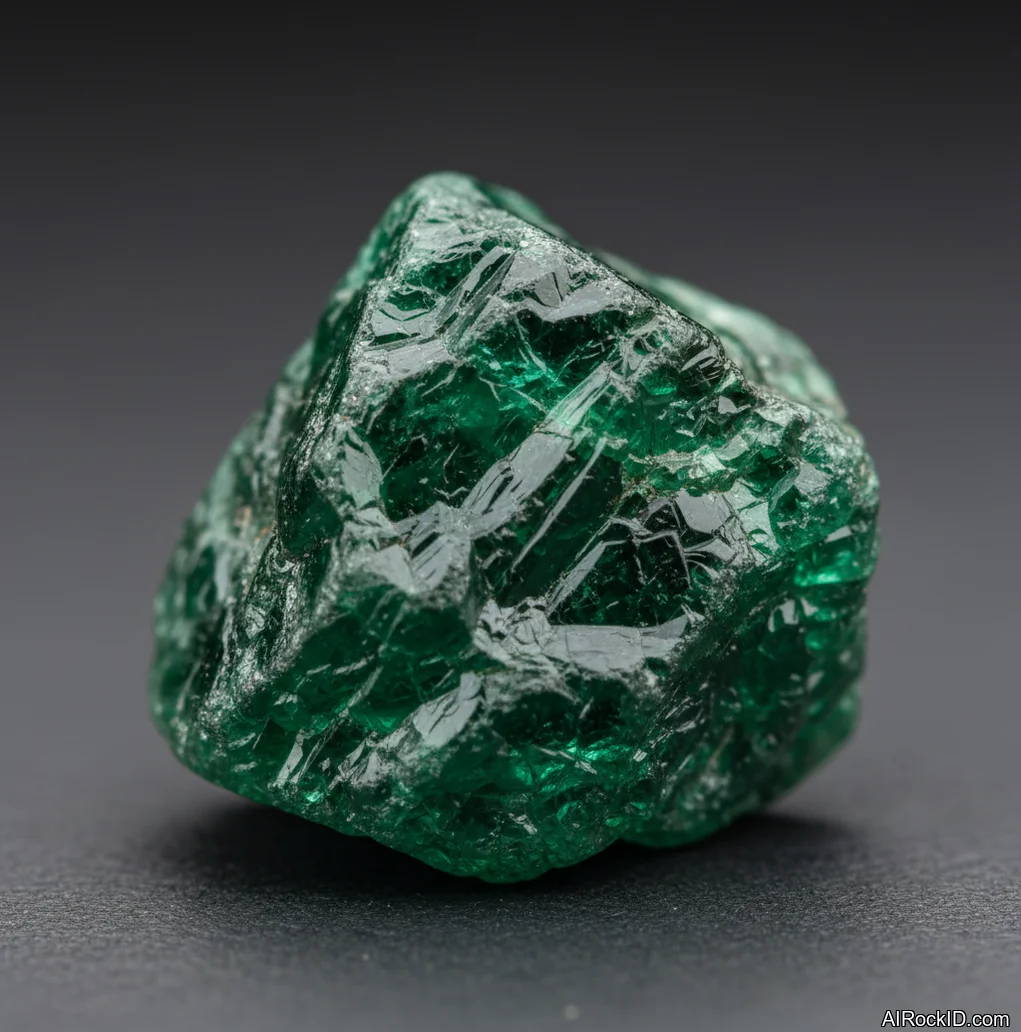
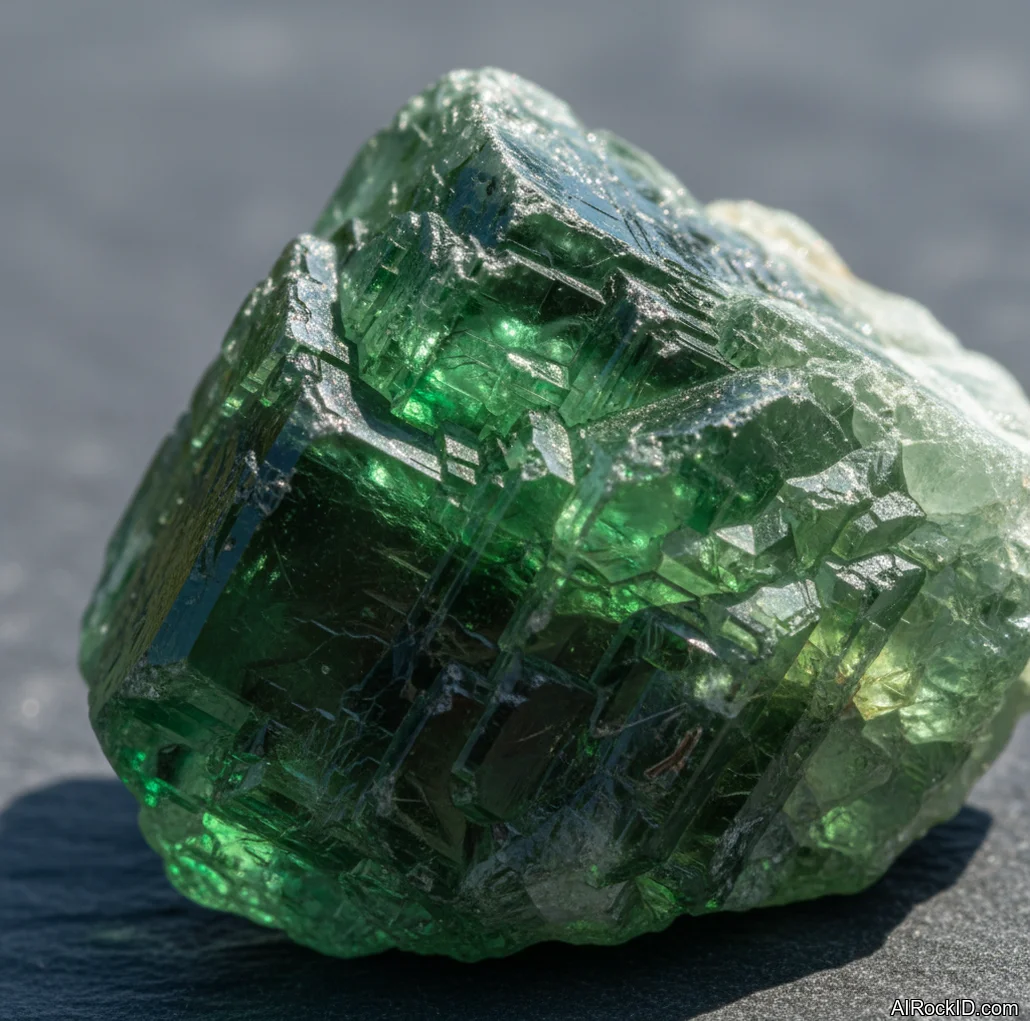
Vesuvianite is a calcium aluminum sorosilicate mineral that forms in contact-metamorphic rocks. It usually shows up as green to brown crystals, or as granular, chunky masses.
Grab a decent hand specimen and the first thing you’ll notice is the heft. It’s a bit denser than you’d guess for a green stone. Not “whoa” heavy like garnet, but it has that solid, cool-in-your-palm feel that glassy fakes don’t really nail (even when they try). The color is the hook, honestly. I’ve handled olive green pieces that look like old bottle glass that’s been beaten up and left outside, and I’ve seen honey-brown crystals that catch the light like somebody rubbed a thin coat of wax on them, even though they’re totally natural.
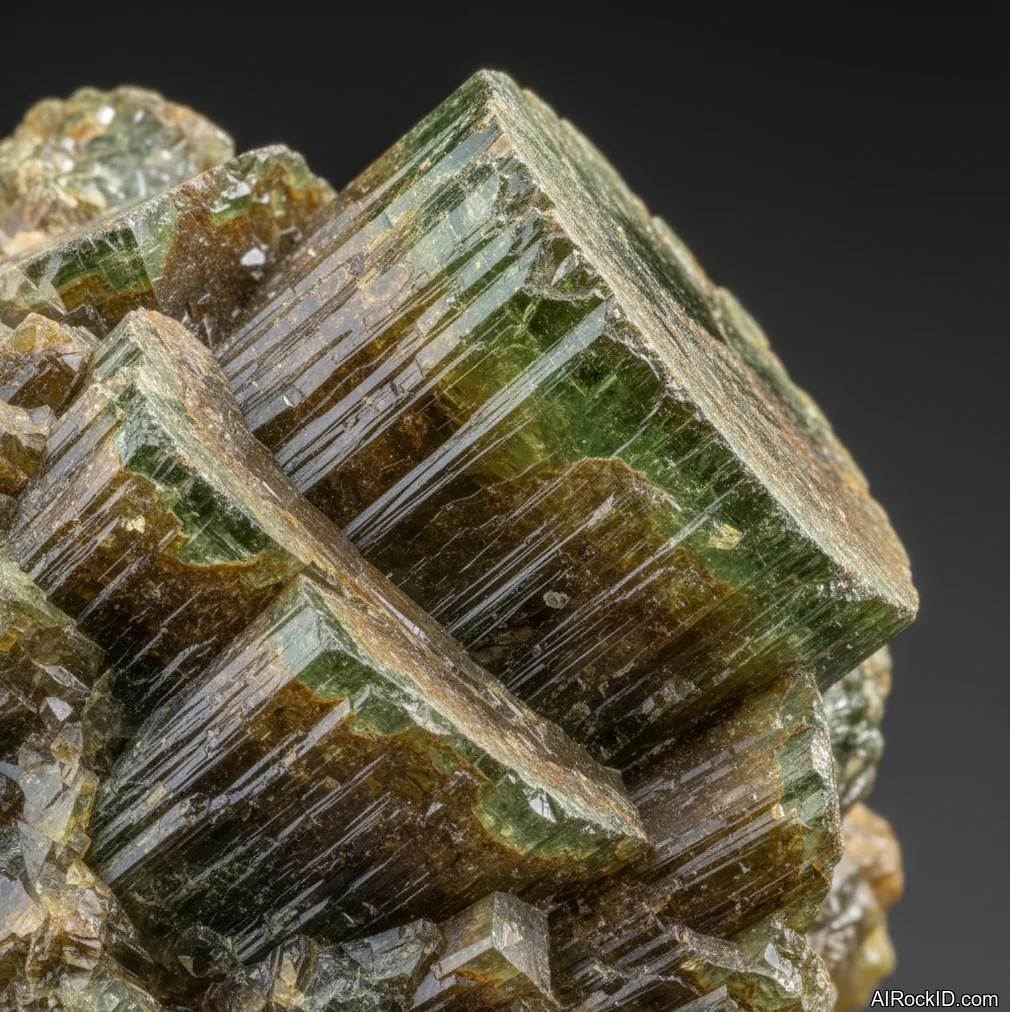
People mix it up with grossular garnet or epidote at first glance, which makes sense. But vesuvianite has its own thing once you start moving it under a strong light. The crystal faces can flip from bright to dead in a second. And on some samples you get that greasy, resin-like sheen instead of a clean “glassy” shine. The crystal habit? All over the map. Stubby prisms. Blocky crystals. Tight drusy crusts that feel a little rough if you run a fingertip over them. Or just massive material that takes a nice polish but doesn’t really scream “crystal” until you know what you’re looking at.
Origin & History
1795 is the big date. Abraham Gottlob Werner described vesuvianite from material collected at Monte Somma and around Vesuvius in Italy, and that’s why the name stuck.
But you’ll still see the older name, “idocrase,” all over the gem trade and in older books. It comes from Greek roots that basically mean “mixed form,” since people early on kept mixing it up with other species just from the crystal shape. If you’ve ever stood at a show squinting at a tray under those harsh booth lights, fingers dusty from flipping specimen tags, you get how that happened. And sellers still bounce between the two names, so I always check the label twice when I’m trying to track down a specific locality.
Where Is Vesuvianite Found?
It turns up wherever you get limestone meeting hot, reactive fluids, so skarn districts and contact zones are the usual story. Classic pieces come from the Italian Alps and Quebec, with good crystal material also coming out of Pakistan and Russia.
Formation
Look, if you really stare at the geology, vesuvianite is basically a contact-zone mineral. You’ve got limestone or dolostone parked right up against an intrusive body, hot fluids start threading through the rock, the chemistry goes sideways, and then boom, you’re growing minerals you just don’t see in normal metamorphic rock.
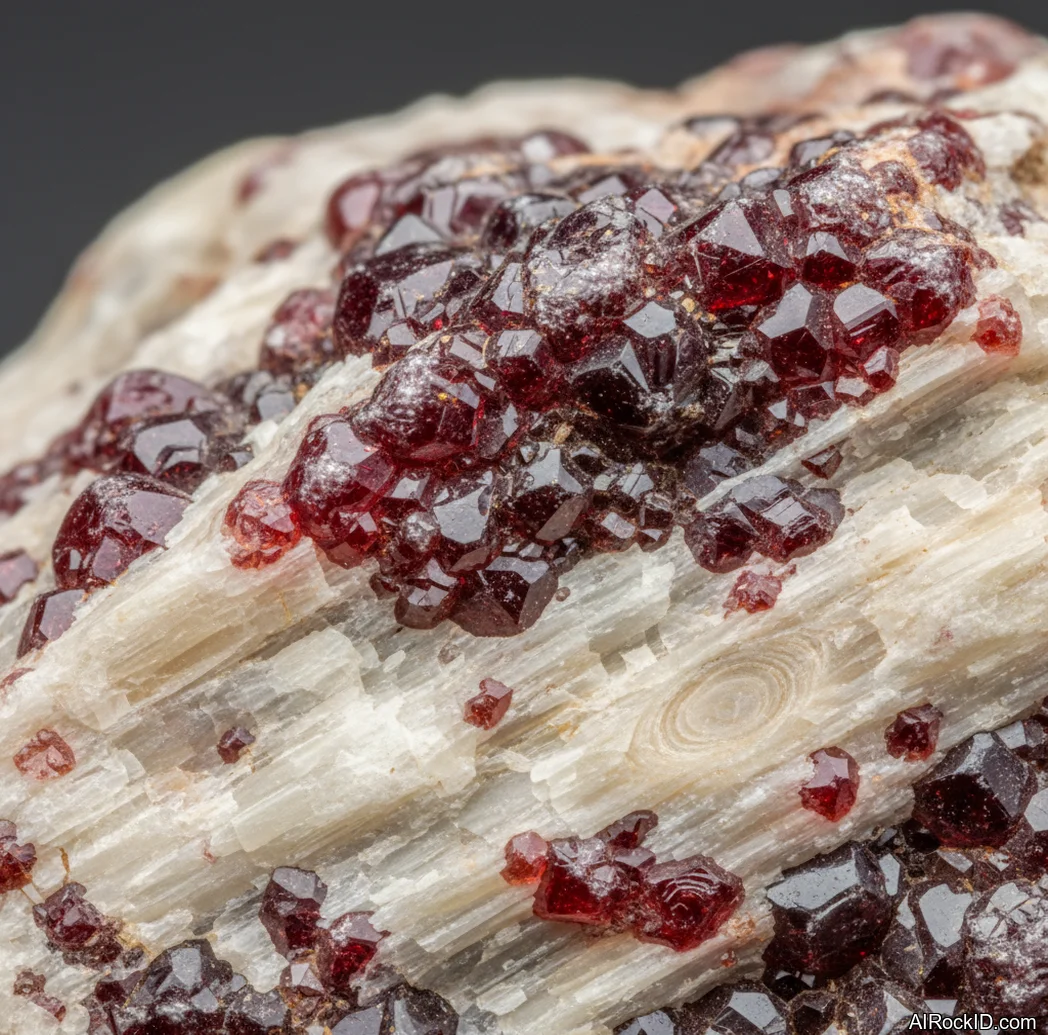
Most of the vesuvianite I’ve run into, both out in the field and on dealer tables, is skarn-related. Specifically, it shows up in calc-silicate assemblages with garnet, diopside, wollastonite, and sometimes clinozoisite or epidote. The crystals can pop up right in little vugs along the reaction front. And that’s why the matrix so often looks like a chaotic salad of green, white, and rusty-brown minerals crammed together (pretty, sure). Not always fun to prep, though.
But it isn’t only a skarn poster child. You can also find vesuvianite in some metamorphosed limestones, and in certain ejecta around volcanic systems, which honestly makes the Vesuvius name feel dead-on.
How to Identify Vesuvianite
Color: Most vesuvianite is olive green, yellow-green, brownish green, or brown, with rarer material showing brighter green or even bluish-green tones. Color zoning can happen, especially in crystals with darker cores.
Luster: Luster is usually vitreous, sometimes edging into resinous on broken surfaces.
If you scratch it with a steel nail, it usually won’t gouge easily, but a quartz point will bite it without much effort. That puts you right around the 6 to 7 range where vesuvianite lives. The real test is comparing it to garnet: garnet feels “harder” under the pick and tends to have a more even glassy look, while vesuvianite often shows mixed luster and less consistent faces. And in-hand, vesuvianite pieces from skarn can have little slick cleavage-like flashes that come and go when you rotate them under a lamp.
Properties of Vesuvianite
Physical Properties
| Crystal System | Tetragonal |
| Hardness (Mohs) | 6.5 (Hard (6-7.5)) |
| Density | 3.32-3.45 g/cm3 |
| Luster | Vitreous |
| Diaphaneity | Transparent to translucent |
| Fracture | Uneven |
| Streak | White |
| Magnetism | Non-magnetic |
| Colors | olive green, yellow-green, brown, greenish brown, yellow, bluish-green, gray-green |
Chemical Properties
| Classification | Silicates (sorosilicate) |
| Formula | Ca10(Al,Mg,Fe)2(SiO4)5(Si2O7)2(OH,F)4 |
| Elements | Ca, Al, Mg, Fe, Si, O, H, F |
| Common Impurities | Fe, Mg, Mn, Ti, Cr |
Optical Properties
| Refractive Index | 1.700-1.723 |
| Birefringence | 0.006-0.009 |
| Pleochroism | Weak |
| Optical Character | Uniaxial |
Vesuvianite Health & Safety
Vesuvianite’s usually fine to handle and keep on a shelf. But if you’re cutting or sanding it, treat it like any other rock: watch the dust, wear a mask, and don’t let that gritty powder get in your lungs (or all over your workbench).
Safety Tips
If you’re grinding or polishing, put on a respirator and keep the work wet so the dust doesn’t go everywhere. And after a long sorting session, wash your hands, especially before you eat (dust sticks under your nails more than you think).
Vesuvianite Value & Price
Price Range
Rough/Tumbled: $10 - $250 per specimen
Cut/Polished: $5 - $60 per carat
Clean, well-formed crystals sitting on a contrasting matrix can jack the price up in a hurry, especially if they’re bright green or properly transparent. Most dealers will let the big, chunky tumbled stuff go for cheap, but crisp tetragonal crystals with intact faces and that sharp, glassy look (the kind you can catch with a fingernail on an edge) don’t sit in the bargain bin for long.
Durability
Moderate — Scratch resistance: Good, Toughness: Fair
It’s stable in normal room conditions, but edges can chip and some crystal faces bruise if it rides loose in a pocket with harder stones.
How to Care for Vesuvianite
Use & Storage
Store it in a padded box or a perky box if it’s a crystal-on-matrix piece, because the corners chip easier than people expect. I keep mine separated from quartz points and corundum in the same drawer.
Cleaning
1) Rinse with lukewarm water to remove dust. 2) Use a soft toothbrush with a drop of mild soap for crevices, then rinse well. 3) Pat dry and let it fully air-dry before putting it back in a closed box.
Cleanse & Charge
For a metaphysical routine, a quick rinse and a night on a windowsill away from harsh midday sun is plenty. If you use smoke or sound, keep it simple and don’t bake it under hot lamps.
Placement
On a shelf, it looks best under a single directional light so the faces flash when you move past it. If it’s gemmy, a dark base makes the green read deeper.
Caution
Skip ultrasonic cleaners and harsh acids, especially if it’s a matrix specimen with calcite or any other reactive mineral in it. And don’t just chuck it in your pocket with harder stones unless you’re okay with those tiny crescent-shaped chips that show up along the edges (you’ll feel them catch on fabric).
Works Well With
Vesuvianite Meaning & Healing Properties
Compared to the flashier stones, vesuvianite feels like a “okay, get it together” mineral. Grounded. Heavy in a calm way. People who go for it usually want a little push into action without that zingy, buzzy feel you can get from super clear quartz.
When I’m handling a tray of it, especially that olive-green skarn material, it just sits in the hand with this steady, practical vibe. It’s not showy. It’s got that slightly waxy, almost gritty-to-the-fingers texture you notice when you’re turning pieces under the lights, and the color reads earthy instead of neon. And honestly, that tracks with how it formed. It grew in a pressure-cooked contact zone, and it kind of feels like it.
A lot of folks link vesuvianite to sorting out mixed signals. Not in a spooky mind-reading way. More like, “What am I dodging?” and then actually doing something about it. That’s the lane it sits in for me. If you use crystals as a focus tool while you’re journaling or meditating, vesuvianite works well with that name-the-problem, pick-one-next-step kind of mindset. Simple. Direct. No drama.
But just so it’s said out loud, none of this is medical advice. I’ve watched people treat stones like pills, and that’s a bad habit. Vesuvianite is better as a reminder object, something you can hold while you do the real-world stuff: therapy, sleep, hydration, boundaries, and all the boring, unglamorous basics that actually work.
Identify Any Crystal Instantly
Snap a photo and get properties, value, care instructions, and healing meanings in seconds.