Zebra Calcite


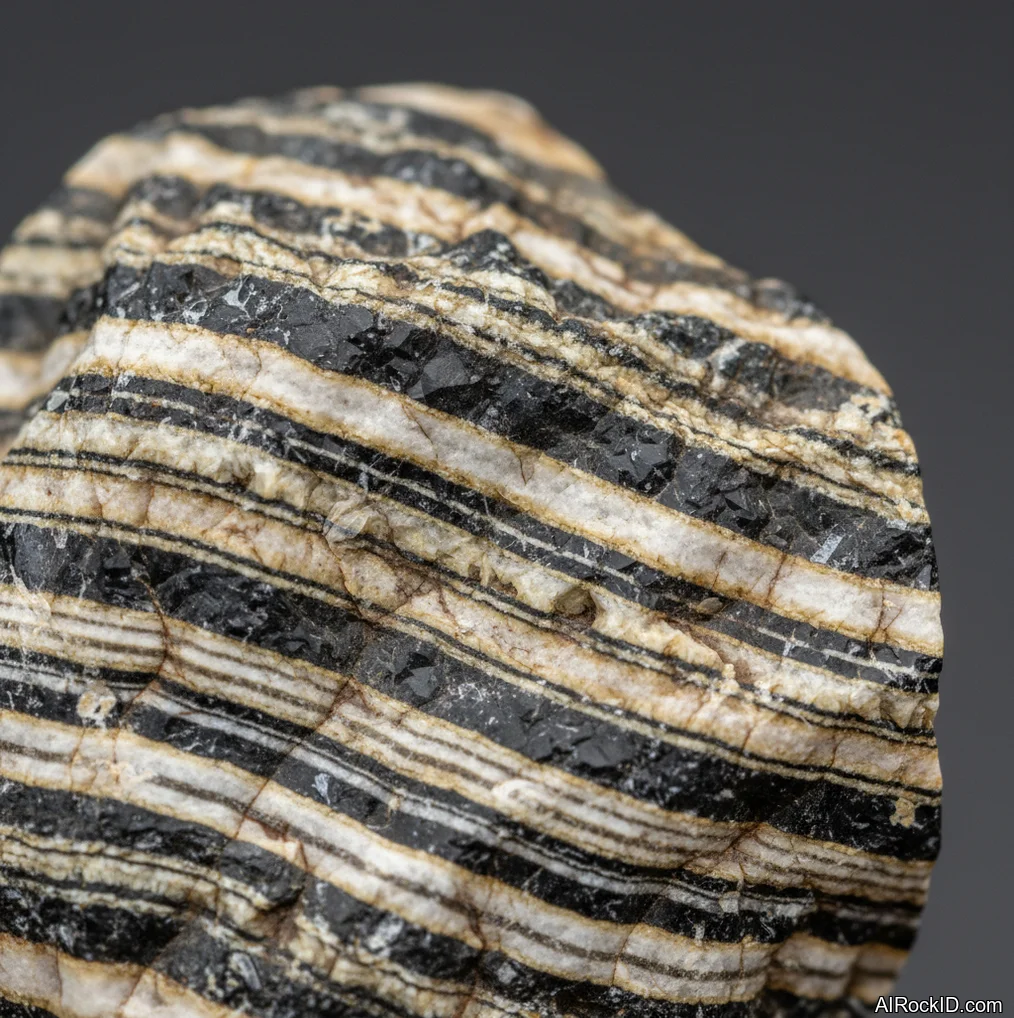
Quick answer: Zebra Calcite is a banded variety of calcite recognized by contrasting light and dark stripes, often in white, cream, gray, brown, or black. Because it is soft at Mohs 3 and reacts to acid, it is best suited to display pieces, carvings, and low-wear handling rather than jewelry exposed to impact or abrasion.
AI Rock ID can help screen a Zebra Calcite specimen by evaluating banding, color contrast, surface texture, and visible crystal or carving features from a photo. RockIdentifier.io provides crystal identification support, but results should be checked against physical traits such as hardness, acid reaction, heft, and any dye or coating indicators.
Good fit
- Collectors who like bold banded patterns in neutral colors
- Display pieces, bookends, spheres, towers, and carved decor
- Beginners who want a recognizable carbonate mineral to compare with other calcites
- People who prefer opaque to translucent stones with graphic striping
Not a good fit
- Rings, bracelets, or other jewelry that receives frequent knocks
- Outdoor decor exposed to rain, acids, or freeze-thaw conditions
- Collectors seeking rare or high-hardness mineral specimens
Most commonly confused with
- Onyx: Onyx is a harder chalcedony, typically Mohs 6.5–7, while Zebra Calcite is much softer and may fizz in acid.
- Aragonite: Aragonite is also calcium carbonate but has different crystal structure and commonly forms fibrous, radiating, or banded habits.
- Zebra Jasper: Zebra Jasper is a silicate rock and is usually harder than calcite, with no acid fizz under normal testing.
- Marble: Marble is metamorphosed limestone made mostly of calcite or dolomite and may look similar when banded or polished.
Zebra Calcite vs Similar Banded Stones
| Material | Typical hardness | Key ID clue | Acid reaction |
|---|---|---|---|
| Zebra Calcite | Mohs 3 | Soft, banded calcium carbonate with strong stripe contrast | Fizzes with dilute acid |
| Onyx | Mohs 6.5–7 | Hard chalcedony with waxy to vitreous polish | No typical fizz |
| Zebra Jasper | Mohs 6.5–7 | Opaque silicate rock with jasper-like toughness | No typical fizz |
| Aragonite | Mohs 3.5–4 | Calcium carbonate with different structure and common fibrous habits | Fizzes with dilute acid |
| Marble | Mohs 3–4 | Rock texture may show sugary calcite grains or veining | Often fizzes if calcite-rich |
AI identification confidence
Photo-based identification of Zebra Calcite is often moderate when the specimen shows strong black-and-white banding, a polished surface, and no obvious glassy or chalcedony-like texture. Confidence drops when the piece is dyed, heavily polished, photographed under strong filters, or lacks scale and close-up texture.
When AI gets it wrong
- A polished onyx or agate piece can mimic zebra-like banding in photos.
- Dyed calcite or resin-coated carvings may hide natural surface clues.
- Close-up images without scale can make marble, calcite, and jasper look similar.
- Lighting glare on polished carvings can obscure the softness, cleavage, and grain texture needed for identification.
Final recommendation
Choose Zebra Calcite when you want a decorative, strongly banded calcite and are comfortable with a soft mineral that needs gentle handling. For daily-wear jewelry or a more scratch-resistant banded stone, consider harder materials such as onyx, agate, or jasper.
How to Check Zebra Calcite Before Buying
Look for natural-looking band transitions, visible carbonate texture, and a polish that does not hide cracks, filler, or dyed areas. Ask whether the piece has been stabilized, coated, or color-enhanced, especially for towers, spheres, and large carvings. A genuine calcite-based specimen should be easy to scratch with a steel point, so any destructive test should only be done on an inconspicuous area with seller permission.
Natural, Dyed, and Coated Zebra Calcite
Zebra Calcite may be sold natural, polished, waxed, resin-coated, or occasionally dyed to strengthen contrast. Uneven color concentrated in cracks, unusually vivid black areas, or a plastic-like surface sheen can suggest treatment. Treatments are not automatically a problem for decor, but they should be disclosed when they affect price, durability, or identification.
Best Uses for Zebra Calcite Specimens
Zebra Calcite is most practical as a display mineral, carved object, meditation stone, or interior accent kept away from moisture and acidic cleaners. Its softness makes it less suitable for pocket carry with harder stones, keychains, or jewelry settings that face abrasion. Traditions that use Zebra Calcite metaphysically often associate its banding with balance and grounding, but these meanings are cultural or spiritual rather than medical.
What Is Zebra Calcite?
Zebra Calcite is just calcite (calcium carbonate) that grew in bands, so you get those light and dark layers that read like zebra stripes the second you look at it.
Grab a chunk and a couple things hit you fast. It’s cooler than your palm. And if it’s been polished, it’s got that classic calcite slickness, sort of like soapstone, only not as greasy. Some pieces are stark, with crisp black bands on bright white. Others go more smoky gray and cream, depending on what got mixed into the layers. And if you’re lucky enough to find one with a clean cleavage face, you can tilt it under a lamp and it’ll kick back tiny flashes of light.
In most shops, the “Zebra Calcite” label usually means banded calcite blocks that’ve been cut into hearts, towers, palm stones, bowls, stuff like that. Calcite in general can show up in raw, sharp crystal shapes, sure, but the zebra-banded material tends to come as chunky, massive layers instead. It looks great. But it’s soft. Toss it loose in your pocket with keys and it’ll come out scuffed up like it took a ride in a rock tumbler.
Origin & History
Calcite got its formal write-up in the 18th century, and the name traces back to the Latin “calx,” meaning lime, because it’s the main mineral in limestone and marble. Back then, mineralogists didn’t need fancy gear. A drop of acid and you’d see it fizz. Snap a piece and you’d catch that perfect cleavage. And if you had a nice clear chunk in your hand, you could spot the classic double refraction just by looking through it and seeing the image split.
“Zebra Calcite” isn’t some old scientific term. It’s a trade label sellers use for calcite that’s sharply banded in black and white. I started running into it all the time at shows in the 2000s, usually sitting right next to other banded calcites like onyx marble (which, yeah, is calcite or aragonite, not true onyx). Dealers stick with the zebra name because after you’ve walked ten aisles of towers and spheres, you’ll actually remember it. Who wouldn’t?
Where Is Zebra Calcite Found?
Banded calcite sold as Zebra Calcite is commonly sourced from carbonate deposits worked for decorative stone, with a lot of market material coming from Mexico and Pakistan.
Formation
Most zebra banding shows up when calcite drops out of mineral-rich water in bursts. So instead of one solid, even chunk, you end up with layer on top of layer. Like mineral growth rings, basically. A tiny shift in chemistry, a temperature swing, or just more iron or manganese in the mix can turn one band darker, and then the next pass lays down lighter again.
You’ll usually spot this calcite in veins that slice through limestone, in little cavities, and in cave-type spots where water can sit around long enough to leave carbonate behind. Some pieces have small vugs (little open pockets you can catch with a fingernail) or healed fractures that got filled later, and that can make the stripes look interrupted. But cut it into a tower and the banding can stack straight, like a barcode running top to bottom. That’s the one people reach for first when they’re leaning over a dealer table.
How to Identify Zebra Calcite
Color: Alternating bands of white to cream with dark gray to black layers; the dark bands are usually impurity-stained calcite rather than a separate mineral seam.
Luster: Vitreous to pearly when polished, and pearly on fresh cleavage faces.
If you scratch it with a copper coin, it’ll mark pretty easily, and a steel nail will bite in without much effort. The real test is a tiny drop of dilute acid on an inconspicuous spot: calcite fizzes, and zebra-banded calcite does too. Look closely at the polish: calcite often shows tiny drag lines and little pits, and you can feel them with a fingernail on cheaper carvings.
Common Look-Alikes
Zebra Calcite is sometimes confused with these materials:
- Onyx (banded calcite, often dyed)
- Banded Agate
- Tumbled Howlite (especially the white/gray kind)
- Dyed Marble (black and white)
- Glass with layered pigment
- Pakistan Black Zebra Marble
Market Cautions & Treatments
When AI Can Get This Wrong
AI photo ID tends to mix up Zebra Calcite with banded agate and dyed marble, since the banding looks similar in flat images. In person, calcite's softness (hardness 3) means you can scratch it easily with a copper coin or knife. Real Zebra Calcite will fizz if you drip vinegar on a broken edge—banded agate and marble won’t react the same way.
Properties of Zebra Calcite
Physical Properties
| Crystal System | Trigonal |
| Hardness (Mohs) | 3 (Soft (2-4)) |
| Density | 2.71 g/cm3 |
| Luster | Vitreous |
| Diaphaneity | Translucent to opaque |
| Fracture | Uneven |
| Streak | White |
| Magnetism | Non-magnetic |
| Colors | white, cream, gray, black |
Chemical Properties
| Classification | Carbonates |
| Formula | CaCO3 |
| Elements | Ca, C, O |
| Common Impurities | Fe, Mn, Mg, organic carbon |
Optical Properties
| Refractive Index | 1.486-1.658 |
| Birefringence | 0.172 |
| Pleochroism | None |
| Optical Character | Uniaxial |
Zebra Calcite Health & Safety
Zebra Calcite is safe to handle and it’s non-toxic. But if you’re cutting or sanding it, don’t breathe in the dust. Same deal as any other stone.
Safety Tips
Use water and keep a fan pulling air away from your face when you’re grinding. And for lapidary work, don’t skip a properly fitted dust mask or respirator, snug on the bridge of your nose with no gaps at the sides.
Zebra Calcite Value & Price
Price Range
Rough/Tumbled: $5 - $80 per piece
Price mostly comes down to contrast, size, and how crisp the polish looks in your hand. Big towers with straight, high-contrast striping usually run higher. But the chalky ones, the kind where the surface looks a little thirsty and you can feel tiny pits if you drag a fingernail across it, end up in the bargain bin.
Durability
Nondurable — Scratch resistance: Poor, Toughness: Fair
Calcite is stable indoors but it scratches easily and can etch or dull if it’s exposed to acids or acidic cleaners.
How to Care for Zebra Calcite
Use & Storage
Keep it away from harder stones in a bowl or drawer, because quartz and feldspar will scratch it up fast. I wrap calcite pieces in a soft cloth if they’re going in a tote to a show.
Cleaning
1) Rinse quickly with lukewarm water and a drop of mild soap. 2) Wipe with a soft microfiber cloth, using light pressure along the banding. 3) Dry right away and skip anything acidic or abrasive.
Cleanse & Charge
For non-water methods, use smoke, sound, or a quick rest on a dry selenite plate. If you do use water, keep it brief and don’t add vinegar, salt, or cleaners.
Placement
Set it somewhere it won’t get bumped, like a shelf or a desk corner. Direct sun won’t usually fade calcite like some dyed stones, but sunlight plus heat can dry out surface moisture and make a cheap polish look tired.
Caution
Don’t use acid-based cleaners on it. Calcite will etch, and you’ll watch that shine go dull. And skip ultrasonic or steam cleaners too. When you put it away, don’t let it sit there rubbing against quartz, topaz, or any other hard minerals (those will scuff it up fast).
Works Well With
Zebra Calcite Meaning & Healing Properties
Most people who buy Zebra Calcite are really chasing that black-and-white contrast. You see it and your brain goes, “Yep. Balance.” Instantly. I’ve got a little pile of calcite on my own table, and this is one of the only ones I’ll actually leave on my desk, because those stripes keep my eyes from going blurry when I’m sorting labels or slogging through inventory.
Thing is, if you’re into the metaphysical angle, people usually tie banded calcite to grounding and getting your head straight. I’ve watched customers reach for it on rough days, like they want something steady to hold onto for a minute. It has that real-hand feel. A bit of heft. Cool at first touch, then it warms up slowly, and the repeating pattern is weirdly soothing (like staring at lined paper when your thoughts won’t sit still). But it’s still a soft carbonate. It won’t “fix” anything medical. And if you want a stone you can toss in your pocket every day without thinking about it, calcite is the wrong family.
One practical reason I like it: it’s a great teaching stone. You can hand someone one piece and show cleavage, hardness, and acid reaction without hunting around for samples, and the striping makes it super obvious how it built up layer by layer. And when a seller calls it “zebra onyx,” you can gently correct that too. True onyx is banded chalcedony, and it won’t fizz in acid.
Common mistakes
- Assuming every black-and-white banded stone is Zebra Calcite without checking hardness or acid reaction.
- Cleaning Zebra Calcite with vinegar, lemon juice, or acidic household products.
- Putting Zebra Calcite in water for long periods, especially if it is polished, cracked, or coated.
- Using Zebra Calcite in high-wear jewelry and expecting it to perform like quartz or jasper.
- Paying a premium for strong color contrast without asking whether the piece is dyed or coated.
Identify Zebra Calcite from a photo
Compare Zebra Calcite traits, care tips, value clues, and common lookalikes with a clear photo.