Zebra Jasper
What Is Zebra Jasper?
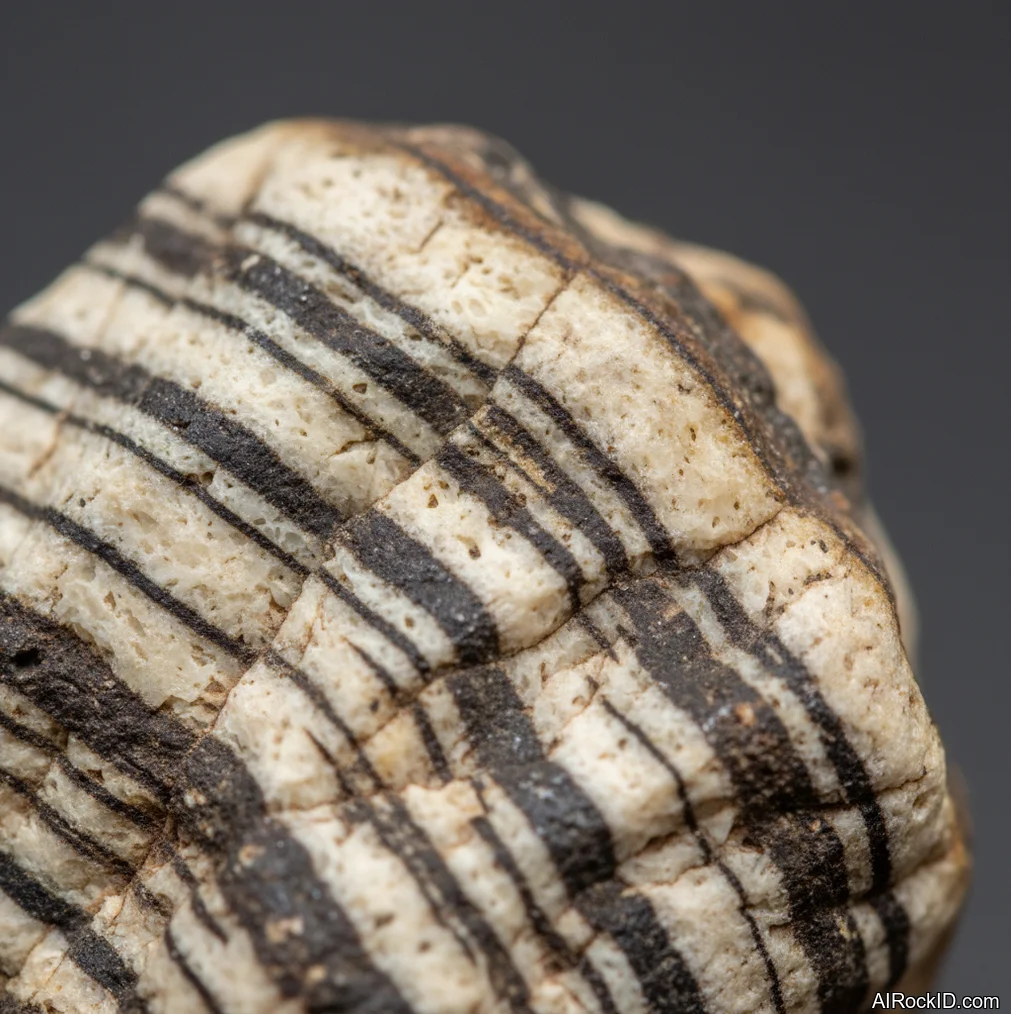
Zebra Jasper is a banded, opaque type of microcrystalline quartz (jasper/chalcedony) with those black-and-white stripes everyone recognizes. First time you see it, it honestly looks like someone swiped a loaded ink brush across a pale stone. But tip a polished piece under bright shop lights and there’s this soft, waxy glow that screams chalcedony.
Grab a palm stone and you feel it immediately. Smooth, but kind of “grabby” against your skin in a way glass just isn’t, and it stays cool in your hand longer than dyed howlite does. Most of what gets sold as Zebra Jasper is cut from banded siliceous rock, so the pattern isn’t always neat little zebra lines. You’ll get tight stripes, smoky gray swirls, and (depending on the cut) a sneaky brown or tan band popping up near an edge. And no, it doesn’t show up as pretty quartz points. It’s lapidary workhorse stuff.
But look, the market’s messy. Tons of sellers slap “Zebra Jasper” on basically any black-and-white striped stone they can. Actual Zebra Jasper has that jasper heft and a dead-opaque look, not the slightly chalky feel howlite tends to have, and not that plastic-looking shine you see on resin fakes. What are you actually holding? That’s usually the giveaway.
Origin & History
The name Jasper has been around forever, coming from the Greek “iaspis.” Back then it was kind of a catch-all for stones that looked spotted or patterned, not one strict mineral formula you could pin down in a lab.
“Zebra Jasper” is a newer trade label that borrows that old umbrella term. It’s talking about the stripy look, not some officially defined mineral species.
Most dealers treat it like a lapidary pattern name, the same way “picture jasper” or “leopard skin jasper” gets tossed around. You’ll run into it in catalogs and bead listings way more than in older academic texts, because the material itself is basically microcrystalline quartz rock, with banding from iron oxides plus darker inclusions.
Where Is Zebra Jasper Found?
Commercial Zebra Jasper on the retail market is most often sourced from Madagascar and South Africa, with other banded jasper material sold under the same name from India, Australia, and the USA.
Formation
Look at those stripes for a second. You’re basically seeing a little timeline of shifting chemistry while the silica was being laid down.
Jasper and chalcedony happen when silica-rich fluids seep into gaps in rock (or straight-up replace what was already there), then set up into microcrystalline quartz as they harden. If those fluids keep swinging between iron-rich and iron-poor, or they carry different tiny inclusions from one moment to the next, you end up with banding. Simple as that.
But Zebra Jasper doesn’t read like agate. The bands are usually more opaque and kind of blocky, not that crisp, translucent candy-striping you get in a lot of agates. I’ve cut a few pieces where the black bands felt just a touch softer under the wheel and the polish came up slightly different (you can see it when the light hits at a low angle), which fits the idea that the dark color comes from iron oxides or other fine-grained material mixed into the silica, not pure quartz.
How to Identify Zebra Jasper
Color: Most pieces are cream, white, or light gray with black to dark gray bands; some show tan, brown, or rusty accents from iron staining.
Luster: Waxy to vitreous when polished, duller when left rough.
If you scratch it with a steel nail, it shouldn’t take a mark, but it will scratch glass easily like other quartz-rich jaspers. The real test is feel and opacity: Zebra Jasper feels dense and stays cool, while dyed howlite often feels a little chalky and can show dye concentrated in tiny cracks. Look closely at drilled beads too, because dyed material sometimes shows a darker ring around the hole.
Properties of Zebra Jasper
Physical Properties
| Crystal System | Trigonal |
| Hardness (Mohs) | 6.5-7 (Hard (6-7.5)) |
| Density | 2.58-2.65 |
| Luster | Waxy |
| Diaphaneity | Opaque |
| Fracture | Conchoidal |
| Streak | White |
| Magnetism | Non-magnetic |
| Colors | White, Cream, Light Gray, Dark Gray, Black, Tan, Brown |
Chemical Properties
| Classification | Silicates |
| Formula | SiO2 |
| Elements | Si, O |
| Common Impurities | Fe, Mn, Al, Ca |
Optical Properties
| Refractive Index | 1.530-1.540 |
| Birefringence | 0.009 |
| Pleochroism | None |
| Optical Character | Uniaxial |
Zebra Jasper Health & Safety
Zebra Jasper is usually fine to handle, and it’s fine around water too since it’s a quartz-rich rock. But if you’re cutting it, grinding it, or sanding it, that’s when you need to be careful. The real issue is the fine silica dust, especially if it gets airborne and you breathe it in.
Safety Tips
If you’re doing lapidary work, stick with wet cutting and put on a real respirator that’s rated for fine particulate. And please, don’t dry-sand it on the kitchen table.
Zebra Jasper Value & Price
Price Range
Rough/Tumbled: $3 - $25 per piece
Cut/Polished: $0.50 - $5 per carat
Price mostly comes down to how crisp the striping looks, how clean the polish is (you can feel it when it’s really done right, slick like glass), and whether you’re holding a big, clean slab or a handful of little tumbled pieces with rounded edges. And yeah, bead strands and palm stones are pretty cheap when you buy them in bulk. But when the material has those sharp, high-contrast bands that stay clean after it’s cut into cab shapes, it can run a bit higher. Why? Because that kind of crisp cab material just isn’t as common.
Durability
Durable — Scratch resistance: Good, Toughness: Good
It’s stable in normal household conditions and doesn’t fade or react easily, but it can chip on sharp edges like any jasper if you drop it on tile.
How to Care for Zebra Jasper
Use & Storage
Keep it in a pouch or a divided box if it’s polished, because quartz-based stones can scratch softer neighbors. If it’s a sharp-edged chunk, store it so it won’t knock chips off other pieces.
Cleaning
1) Rinse with lukewarm water and a drop of mild soap. 2) Use a soft toothbrush to get gunk out of seams and pits. 3) Rinse again and pat dry; avoid heat drying on radiators.
Cleanse & Charge
For people who do energy-style care, a quick rinse and a night on a windowsill works fine, but skip harsh salt soaks if the piece has tiny surface cracks.
Placement
On a desk it’s tough enough to handle daily fidgeting. If you’re displaying slabs, set them on a stand where they won’t slide and clack against harder stones.
Caution
Don’t use an ultrasonic cleaner if the piece is fractured or has been stabilized. Those vibrations can creep in and pry open hairline cracks you might not even see. And when you’re cutting or drilling, keep your face out of the dust. Don’t breathe it in.
Works Well With
Zebra Jasper Meaning & Healing Properties
Most people who pick up Zebra Jasper are chasing a plain, steady feeling. It’s the black-and-white striping, really. You look at it when your brain’s buzzing and, weirdly, your eyes slow down on their own as they track the bands back and forth. I keep a small palm stone in my pocket on long show days, and it’s not mystical so much as practical: it’s smooth, cool at first, then it warms up in your hand like any good worry stone (and it doesn’t snag on fabric the way sharper tumbles do).
In crystal-shop language, it usually gets linked with grounding, balance, and keeping your energy from feeling scattered. So, I tell customers the same thing I tell friends: if you want a stone that reads “steady” and not sugary-sweet, Zebra Jasper tends to land right. But it’s not medicine. And it’s not replacing sleep, food, or real support. Not even close.
Look, the contrast is the whole point. That’s the little story people hang on it: light and dark, on and off, work and rest. And honestly? It’s a practical ritual stone because it’s inexpensive, it’s durable, and you don’t have to baby it. If one chips or snaps, you’re out a few bucks, not a rent payment.
Identify Any Crystal Instantly
Snap a photo and get properties, value, care instructions, and healing meanings in seconds.