Allophane


Quick answer: Allophane is a non-crystalline hydrous aluminosilicate commonly found in volcanic soils, weathered ash, and altered rock cavities. It is usually soft, earthy to waxy, and often identified by context and lab testing rather than by crystal shape.
AI Rock ID can help screen a suspected allophane specimen by comparing color, texture, luster, and visible habit against similar minerals. RockIdentifier.io is most useful when photos are paired with location, host rock, and any simple observations such as hardness or whether the material is powdery, waxy, or botryoidal.
Good fit
- Collectors interested in unusual secondary minerals from volcanic or altered environments
- Study sets focused on amorphous minerals, clays, and weathering products
- Specimens with documented locality and geologic context
- Educational displays about soil formation and volcanic ash alteration
Not a good fit
- Jewelry use, because allophane is soft and easily damaged
- Buyers seeking bright, durable blue-green cabochons
- Collections that require well-formed crystals or high visual durability
- Specimens without locality data when accurate identification is important
Most commonly confused with
- Chrysocolla: Chrysocolla is a copper silicate that is often brighter blue-green and may occur with other copper minerals.
- Turquoise: Turquoise is a phosphate mineral, usually harder and more valued as a gem material than allophane.
- Opal: Opal is hydrated silica and may show glassier or resinous luster instead of allophane’s claylike appearance.
- Kaolinite: Kaolinite is a crystalline clay mineral and is commonly white to cream rather than blue or green.
Allophane vs. Similar Materials
| Material | Typical clue | Key difference |
|---|---|---|
| Allophane | Soft, amorphous, earthy to waxy masses | Hydrous aluminosilicate with no regular crystal form |
| Chrysocolla | Blue-green coatings or masses in copper deposits | Copper-bearing mineral, commonly associated with malachite or azurite |
| Turquoise | Blue to green nodules or vein material | Phosphate mineral, generally harder and more suitable for cutting |
| Opal | Waxy to glassy silica masses | Hydrated silica, not an aluminosilicate |
| Kaolinite | White to cream claylike material | Crystalline clay mineral with different composition and structure |
AI identification confidence
AI identification confidence for allophane is often moderate to low from photos alone because it lacks diagnostic crystal faces and can resemble several claylike or blue-green secondary minerals. Confidence improves when the image includes scale, fresh and weathered surfaces, locality, host rock, and visible associations such as volcanic ash or altered feldspar-rich material.
When AI gets it wrong
- Bright blue-green specimens may be labeled chrysocolla or turquoise if copper-mineral context is assumed from color alone.
- White, cream, or tan allophane may be mistaken for kaolinite, halloysite, or other clay minerals.
- Waxy or translucent material may be confused with common opal without hardness, streak, or locality details.
- Soil coatings and crumbly aggregates are difficult to identify reliably without X-ray diffraction, infrared spectroscopy, or chemical analysis.
Final recommendation
For buying or cataloging allophane, prioritize specimens with verified locality, matrix context, and seller notes explaining how the identification was made. If a piece is sold as a vivid blue-green collectible without supporting data, treat the name as tentative unless analytical testing or strong geologic context is provided.
How to Verify Allophane
Allophane is difficult to confirm by appearance alone because it is amorphous and commonly mixed with other clay minerals or weathering products. Reliable identification may require X-ray diffraction, infrared spectroscopy, electron microscopy, or chemical analysis. Locality information is especially important, since allophane is strongly associated with volcanic ash soils and altered volcanic materials.
Buying Allophane Specimens
Allophane is usually collected as a mineral specimen rather than as a gem. A useful listing should include locality, matrix description, size, and whether the material was visually identified or analytically confirmed. Be cautious with polished blue-green pieces sold under rare-mineral names without documentation, because similar-looking copper minerals and opal are more common in the trade.
Field Clues for Allophane
In the field, allophane may appear as soft, earthy, waxy, or gel-like coatings and masses in weathered volcanic environments. It may occur with altered feldspar, volcanic glass, iron oxides, or other clay minerals. Field observations can suggest allophane, but laboratory confirmation is often needed for a confident name.
What Is Allophane?
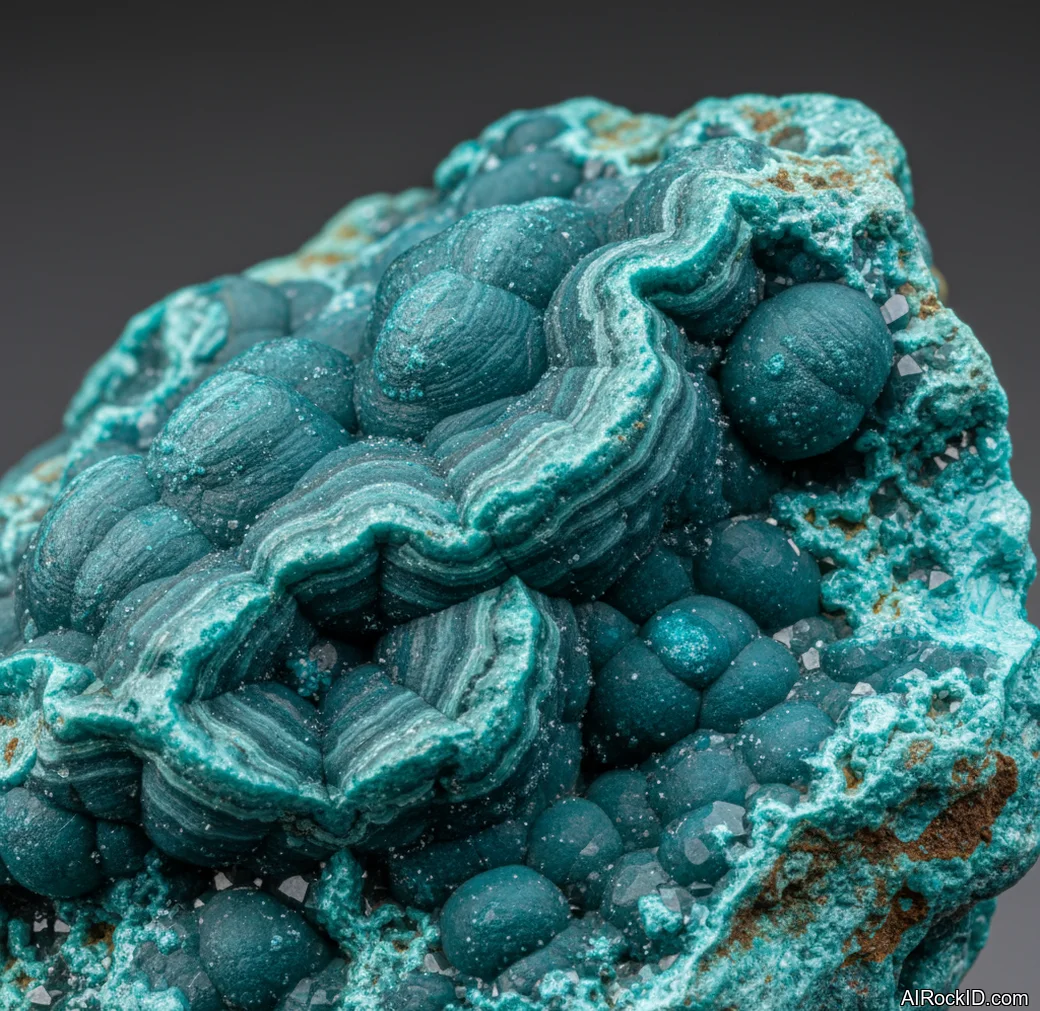
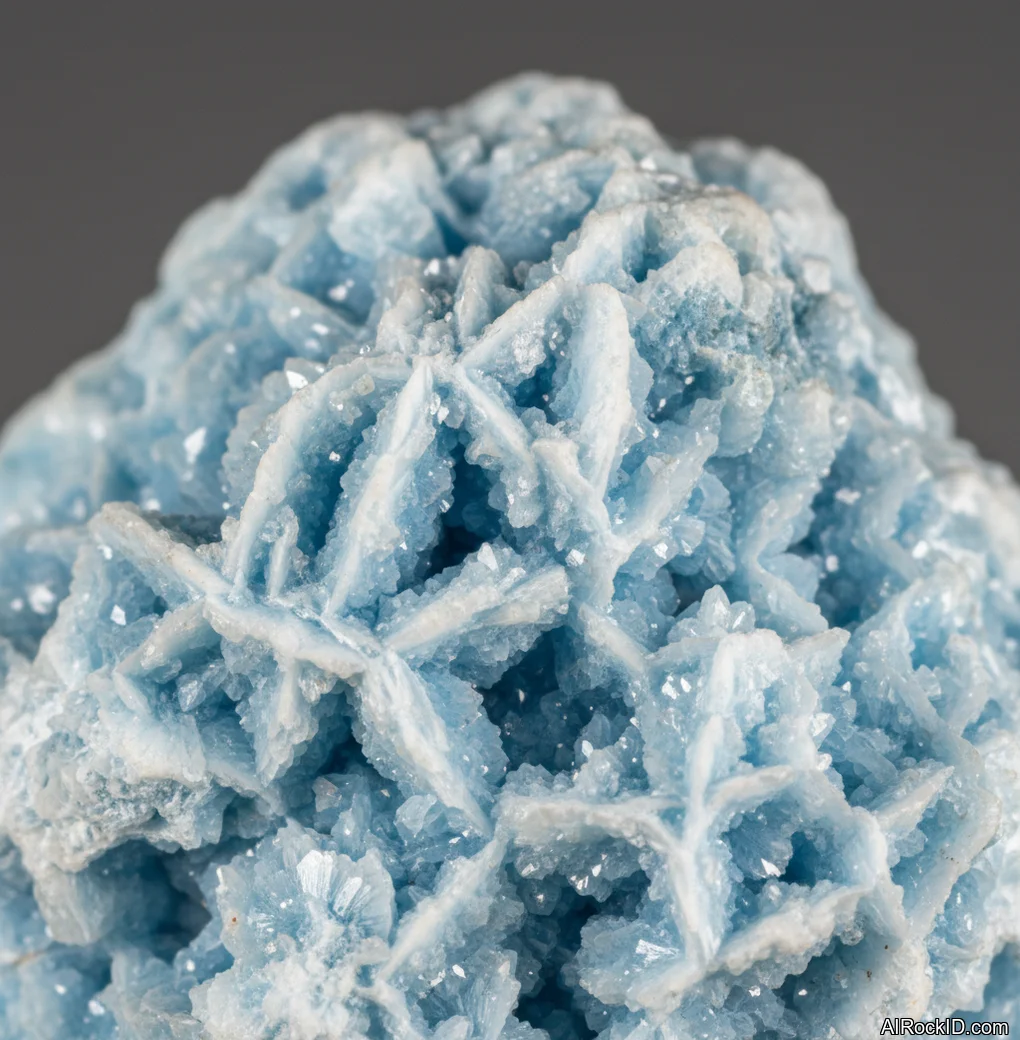
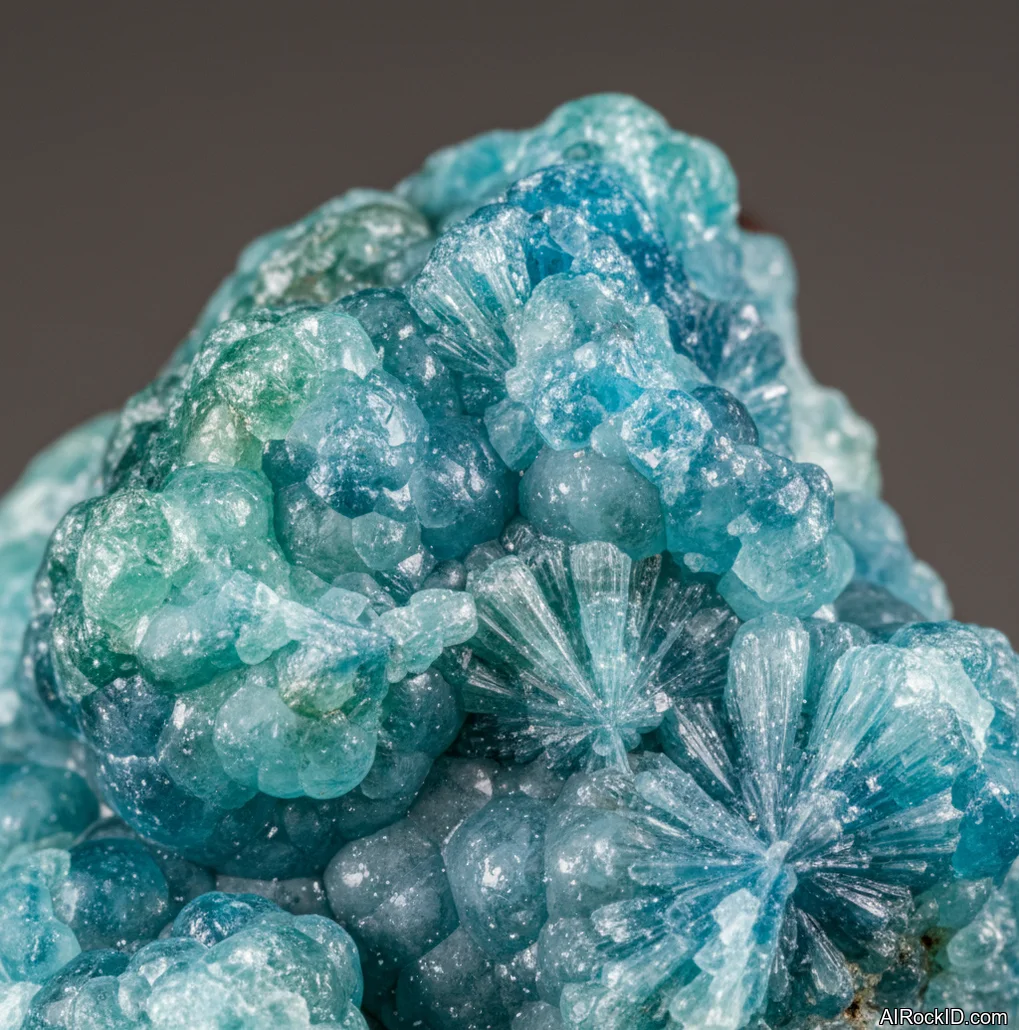
Allophane is an amorphous, hydrous aluminosilicate that most often shows up as soft, botryoidal crusts or earthy-looking masses in altered volcanic rocks and soils.
Pick up a chunk and, honestly, the first weird thing is the weight. It feels way too light for its size, more like a dried clay bubble than a solid stone. The really nice pieces hit that robin’s-egg to sky-blue color that looks almost fake under shop lights, but your fingers give it away fast: the surface is a little chalky, a little waxy, and you can scuff it just by dragging a fingernail across it. And it doesn’t act like a normal crystal because it isn’t one. No clean faces. No sharp edges. Just rounded botryoids, thin coatings, or those lumpy seams that look like they got smeared on.
People mix it up with chrysocolla, smithsonite, hemimorphite, even blue opal at first glance. But allophane has this “dry” feel the others don’t. I’ve handled pieces where the color is insane, but the surface starts to powder if you keep rubbing the same spot (ask me how I know). So yeah, it’s more of a display mineral than a pocket stone, unless it’s sealed or stabilized.
Origin & History
Allophane shows up in the mineral books in 1809, when Martin Heinrich Klaproth described it. He was a German chemist, the same guy who also did work on uranium and zirconium. The name’s built from Greek roots for “other” and “to appear,” basically “it looks like something else,” and honestly, that’s spot-on if you’ve ever been hunched over a case at a show trying to figure out some blue botryoidal stuff under harsh fluorescent lights (and the dealer’s thumbprints all over the glass).
Collectors didn’t really get excited about it until the late 20th century, when bright blue pieces from a few localities started making the rounds. Before that, it mostly lived as a soil and alteration-mineral footnote for geologists. And even now, a lot of dealers still stick it in the “oddities” case, which, yeah, is probably exactly where it belongs.
Where Is Allophane Found?
Allophane turns up in volcanic terrains and weathered ash-rich soils, especially where basalt or andesite is breaking down and groundwater has been moving through the rock.
Formation
Raw chunks from volcanic ground make the point fast. Allophane shows up as a secondary mineral when volcanic glass and feldspar get altered and weathered, usually where acidic water is around and can shuttle aluminum and silica from one spot to another. You’ll often find it sitting right next to other low-temperature alteration minerals like halloysite, imogolite, opal, plus, now and then, iron oxides that leave that rusty staining on the host rock.
Thing is, allophane’s kind of a “young” mineral. It’s more like a gel or a smear of micro-sized particles than something that’s had time to lock into a neat crystal lattice. So instead of sharp crystal faces, it likes to coat open spaces, creep into hairline fractures, and pile up into those little grape-like botryoids (you know the bumpy, rounded blobs). And if the chemistry shifts, or it simply gets more time under the right conditions, it can wander off into other clay minerals or silica phases.
How to Identify Allophane
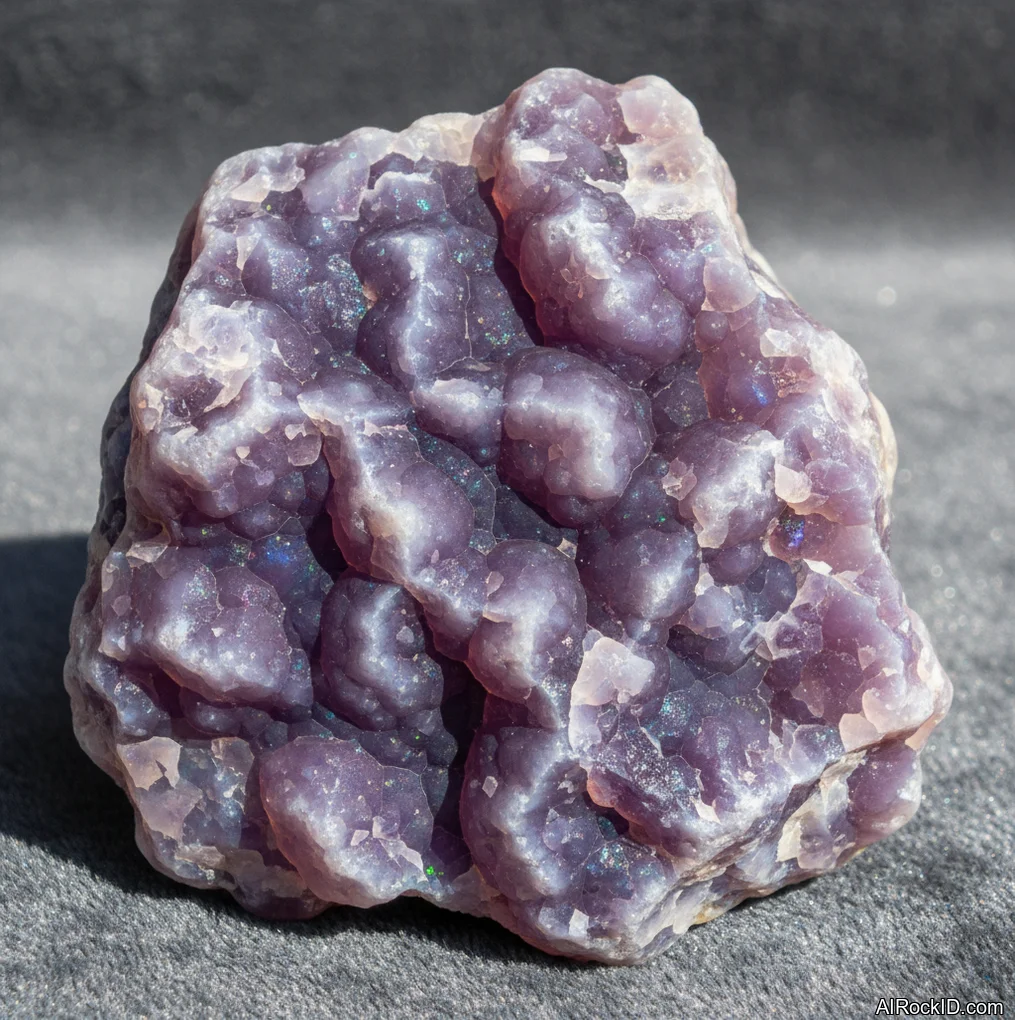
Color: Most collector pieces are pale to medium blue, blue-green, or turquoise-blue; other material can be white, gray, or greenish. The blue is often patchy, with lighter rims on botryoids and darker spots where the coating is thicker.
Luster: Waxy to dull, sometimes with a soft silky look on rounded surfaces.
If you scratch it with a copper coin, it usually marks easily, and a fingernail can leave a line on softer pieces. Look closely for that botryoidal “grape skin” texture and a kind of matte, dry surface instead of the glassy look you’d expect from chalcedony or opal. The real test is heft and feel: allophane tends to feel light and a bit chalky, while things like smithsonite and hemimorphite feel colder and heavier in the hand.
Common Look-Alikes
Allophane is sometimes confused with these materials:
- Chrysocolla (especially the botryoidal, earthy kind)
- Smithsonite (blue and turquoise botryoidal forms)
- Variscite
- Opal (common and blue opal, especially Peruvian material)
- Dyed chalcedony
- Dyed glass nuggets
Market Cautions & Treatments
When AI Can Get This Wrong
AI photo tools mix up allophane with chrysocolla and smithsonite a lot, especially if they're both in that blue-green range and botryoidal. Photos can't show the weirdly light weight or the soft, earthy texture that gives away real allophane. Scratching with a copper coin or even a fingernail will leave a mark on allophane, but not on smithsonite, opal, or glass.
Properties of Allophane
Physical Properties
| Crystal System | Amorphous |
| Hardness (Mohs) | 3 (Soft (2-4)) |
| Density | 1.9-2.1 g/cm3 |
| Luster | Waxy |
| Diaphaneity | Translucent to opaque |
| Fracture | Earthy |
| Streak | white |
| Magnetism | Non-magnetic |
| Colors | blue, blue-green, turquoise, white, gray, greenish |
Chemical Properties
| Classification | Silicates |
| Formula | Al2O3·SiO2·2.5H2O |
| Elements | Al, Si, O, H |
| Common Impurities | Fe, Cu |
Optical Properties
| Refractive Index | 1.47-1.49 |
| Birefringence | None |
| Pleochroism | None |
| Optical Character | Isotropic |
Allophane Health & Safety
It’s usually safe to handle. But the surface can be pretty fragile, and if you scrape it with a fingernail or grind it (even a little), it can shed a fine, dusty powder. For normal display handling, you’re looking at low risk.
Safety Tips
Don’t sand it, cut it, or hit it with a rotary tool unless you’ve got real dust control in place. And if you absolutely have to mess with it, keep it wet and wear a proper respirator (not just a cheap paper mask).
Allophane Value & Price
Price Range
Rough/Tumbled: $15 - $250 per specimen
Price usually comes down to color first (that clean sky-blue wins every time over gray-blue), then the botryoidal texture, and how much of the crust is still intact on the matrix. If the crust’s chipped up around the edges or you can see fresh breaks where it popped off, it tends to drop the price fast. And yeah, stabilized or sealed pieces can run higher, mostly because they hold up better when you’re handling them and when they get bounced around in shipping (ever opened a box to find crumbs?).
Durability
Fragile — Scratch resistance: Poor, Toughness: Poor
Allophane is soft and can powder or bruise on edges, so it’s best treated like a delicate clay mineral specimen.
How to Care for Allophane
Use & Storage
Store it in a box or a cabinet spot where it won’t rattle against harder minerals. I keep mine in a thumbnail case with a bit of foam because a single quartz point can scratch it up fast.
Cleaning
1) Use a soft makeup brush to lift dust off the botryoids. 2) If it needs more, rinse briefly with cool water and let it air-dry completely. 3) Skip ultrasonic and steam cleaners.
Cleanse & Charge
If you do the metaphysical side, stick to gentle methods like smoke, sound, or a quick pass over selenite. Long sunbaths aren’t a great idea for display anyway since heat and dryness can stress delicate surfaces.
Placement
Put it where you can see the texture without touching it all the time, like a shelf at eye level. A dark matrix and a single spotlight make the blue pop, but keep the lamp cool and not too close.
Caution
Allophane marks up fast and it can crumble into a fine powder, so skip tumbling it. And don’t cinch it down in a tight wire wrap either. Tossing it loose in your pocket with coins or keys? Yeah, don’t.
Works Well With
Allophane Meaning & Healing Properties
Next to the show-off stones, allophane is pretty quiet. I’ve parked a piece on my desk on those long, paperwork-heavy days, and it doesn’t feel dramatic so much as… a visual reset. The soft blue color and those rounded botryoids keep catching my eye, especially when the overhead light hits and you get that gentle, almost waxy-looking glow. And yeah, sometimes that’s enough to nudge your mood.
But it’s fragile, which changes the whole relationship. You don’t fidget with it. You don’t roll it around in your palm like worry stone jasper. You mostly just look, and if you pick it up, you do it carefully, like you’re aware of the edges and the fact it’s not here for rough handling (I usually end up supporting it with my fingertips without thinking). That tiny act of paying attention can turn into a decent habit if you’re trying to slow down. I’ve had friends grab it and instantly drop their voice. Why? No clue. But it fits.
On the metaphysical side, pale blues tend to get linked with calming, communication, and easing mental noise, so that’s the box allophane usually ends up in. I’m not treating it like medicine, and I wouldn’t tell anyone to skip real help. But as a simple cue to breathe, journal, or keep your hands off your phone for five minutes, it does what it needs to do.
Common mistakes
- Identifying all blue-green earthy material as allophane without checking for copper minerals.
- Assuming a soft claylike texture is diagnostic, even though many clay minerals share that trait.
- Buying unlabeled or locality-free specimens when accurate identification is the main goal.
- Using crystal shape as a key feature, even though allophane is amorphous and lacks normal crystal faces.
- Treating photo-based identification as final when the specimen may require analytical testing.
Identify Allophane from a photo
Compare Allophane traits, care tips, value clues, and common lookalikes with a clear photo.