Amegreen
What Is Amegreen?
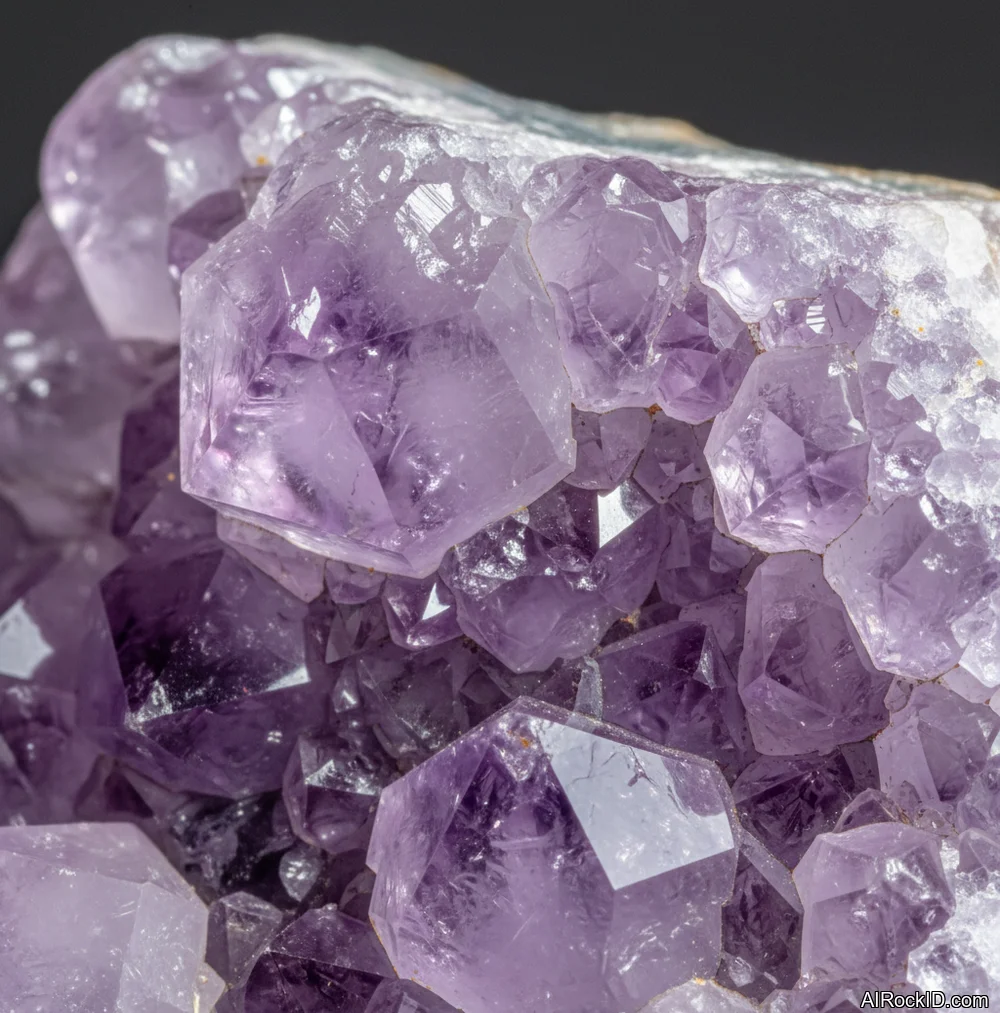
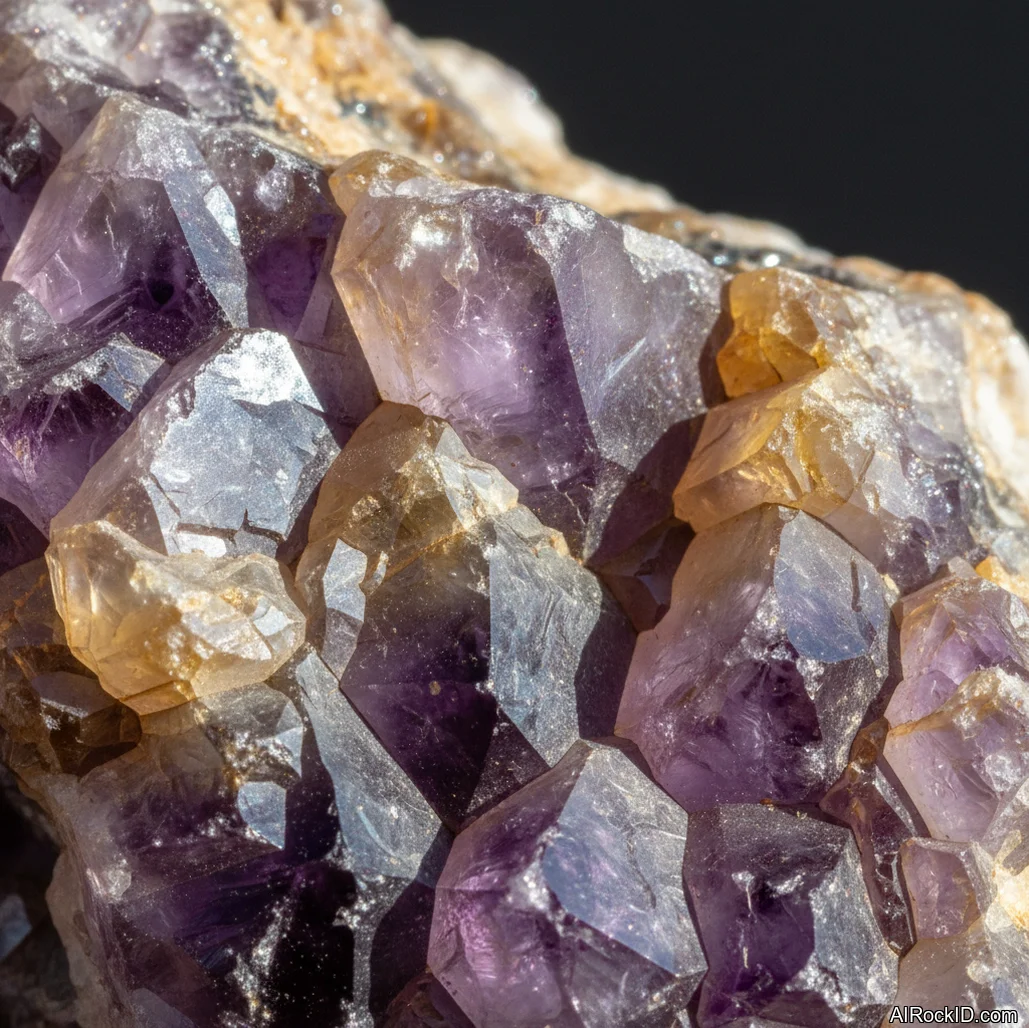
Amegreen is a bicolored variety of quartz that shows purple amethyst and yellow citrine in the same crystal.
Grab a solid piece and you notice that classic quartz weight right away. It’s cool when it first hits your palm, then after a minute it starts to warm up like any stone that’s been sitting out. The really good ones? They’ve got a crisp, straight line where the purple snaps into honey or champagne, not that washed-out, muddy in-between. And if the cut’s been done by somebody who knew what they were doing, the cutter sets the table so that split runs right across the face instead of drifting off to the side.
Tilt it a bit and the colors kind of trade places depending on the light. Warm indoor bulbs make it jump out more, in my experience.
Most of what you’ll run into at shows are faceted stones, plus those tumbled chunks where the colors smear together into a soft blur. But natural, sharp zoning in a rough crystal feels totally different. It looks more geologic (like you’re seeing the “event” that happened in the ground), almost like a temperature change got locked inside the quartz and never let go. Thing is, there’s a catch: plenty of sellers toss around the name “amegreen” for any purple-and-yellow quartz, including treated material, so it’s worth knowing what real zoning actually looks like.
Origin & History
Amegreen is basically a trade label people use in the gem business for ametrine. The proper gem name is still “ametrine” (literally amethyst + citrine). And on the mineral side, nothing magical happened, it’s quartz, just one crystal carrying two different color centers at the same time.
Thing is, it didn’t really get on most people’s radar until the late 20th century, when Bolivia’s Anahí Mine became the one steady, reliable source of gem-quality stones. Sure, you’ll see older references to bicolored quartz from other locations, but the Bolivian material is what made faceted ametrine show up regularly in jewelry cases instead of sitting off to the side as a collector curiosity.
Where Is Amegreen Found?
Most gem-grade Amegreen on the market comes from Bolivia’s Anahí Mine. Smaller amounts of mixed-color quartz are reported from a few other quartz localities, but they’re not a steady commercial source.
Formation
Picture it as one quartz crystal that just kept growing while the conditions around it kept changing. Quartz grows out of silica-rich fluids. The purple amethyst color comes from iron sitting in the quartz plus natural radiation, and the yellow citrine color is tied to different iron states and the crystal’s heat history. So if, while it’s still forming, the crystal runs into a temperature gradient or the oxidation conditions shift, you can end up with zones that basically freeze in different color centers.
Look, if you stare at rough pieces under a strong light and turn them in your hand, you’ll sometimes see the color zoning line up with the growth faces. That’s the part that sells it for me every time. The split isn’t painted on and it isn’t random. It follows the crystal’s internal structure, and the boundary can be weirdly sharp, like someone dragged a ruler across it.
How to Identify Amegreen
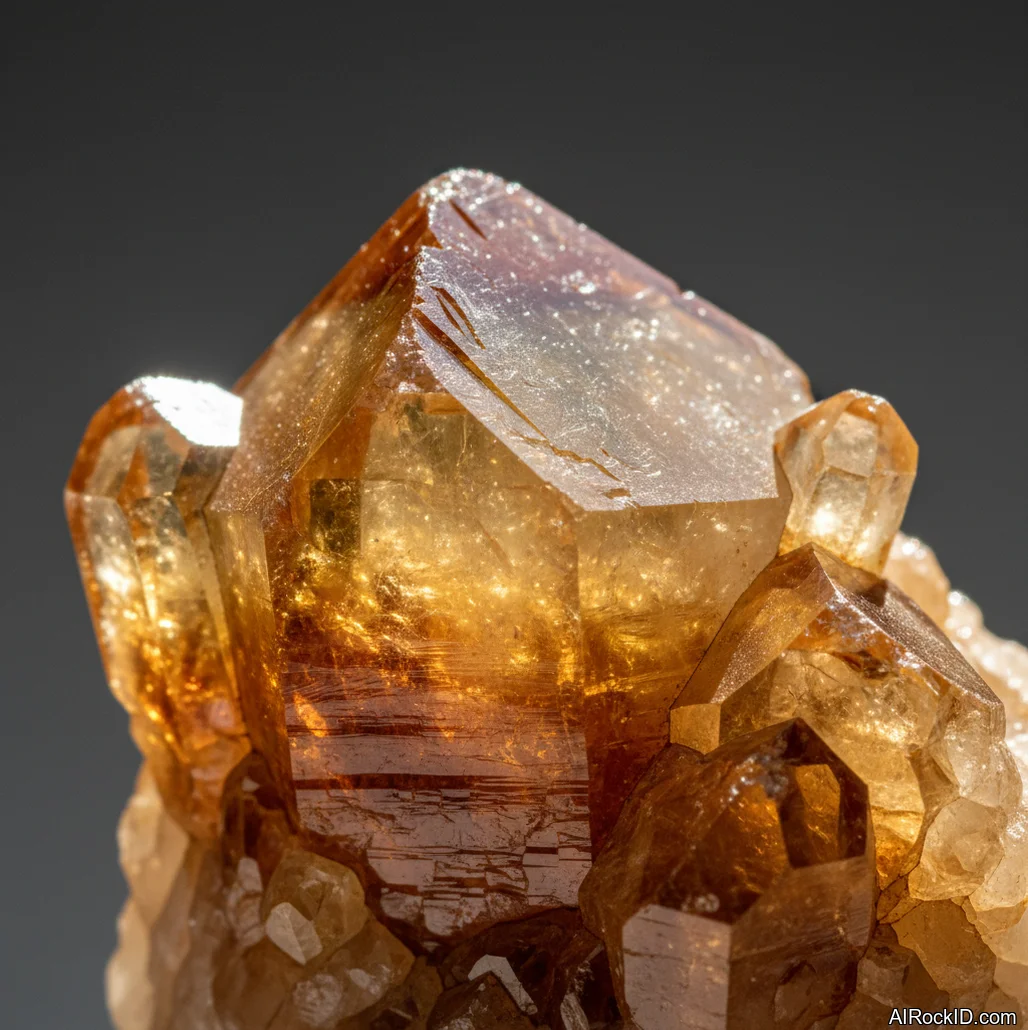
Color: Amegreen shows two main zones: purple (amethyst) and yellow to golden (citrine-like), sometimes with a pale or smoky transition band. The purple can run from lilac to medium violet, and the yellow often looks champagne rather than neon.
Luster: Vitreous, like clear quartz, with bright glassy reflections on clean faces.
Pick up a stone and rotate it under a single light source. Real color zoning stays tied to the crystal, while surface-coated fakes can flash oddly or look too uniform from every angle. If you scratch it with a steel nail, it won’t mark easily, but it will scratch glass without drama. And watch for color that looks “too perfect,” like a purple half and a canary-yellow half with zero nuance, because that’s often treated quartz being sold as natural ametrine.
Properties of Amegreen
Physical Properties
| Crystal System | Trigonal |
| Hardness (Mohs) | 7 (Hard (6-7.5)) |
| Density | 2.65 g/cm3 |
| Luster | Vitreous |
| Diaphaneity | Transparent to translucent |
| Fracture | Conchoidal |
| Streak | White |
| Magnetism | Non-magnetic |
| Colors | Purple, Violet, Yellow, Golden, Champagne, Pale brown (occasional smoky tones) |
Chemical Properties
| Classification | Silicates (tectosilicate) |
| Formula | SiO2 |
| Elements | Si, O |
| Common Impurities | Fe, Al, Ti, Mn |
Optical Properties
| Refractive Index | 1.544–1.553 |
| Birefringence | 0.009 |
| Pleochroism | Weak |
| Optical Character | Uniaxial |
Amegreen Health & Safety
Amegreen is quartz (SiO2), so it’s generally safe to handle and put on a shelf. But like any quartz, you don’t want to breathe in the super-fine powdery dust that comes off if you’re cutting or grinding it (it hangs in the air longer than you’d think).
Safety Tips
If you’re going to lap or carve it, do it wet and keep the water running so you’re not kicking up that nasty dust. And don’t rely on a paper mask, get real ventilation and wear a proper respirator that’s actually rated for silica dust.
Amegreen Value & Price
Price Range
Rough/Tumbled: $10 - $120 per piece
Cut/Polished: $15 - $120 per carat
Price mostly follows clarity, how sharp that purple to yellow split looks, and whether the cutter lined the zoning up so it actually shows in the face up view. Big stones are out there, sure. But once you’re talking big and clean, with that boundary looking like it was sliced with a razor (not fuzzy or bleeding into each other), the price climbs in a hurry.
Durability
Durable — Scratch resistance: Good, Toughness: Good
It’s stable in normal wear, but hard knocks can chip edges and quartz can develop small bruises along facet junctions.
How to Care for Amegreen
Use & Storage
Store it in a pouch or a compartmented box so it doesn’t rub against softer stones or get facet-edge nicks from harder stuff like topaz or sapphire. If it’s a rough crystal, keep it where points won’t bang together.
Cleaning
1) Rinse with lukewarm water and a drop of mild soap. 2) Use a soft toothbrush to get into crevices or around prongs. 3) Rinse well and pat dry with a microfiber cloth.
Cleanse & Charge
For a simple reset, I use running water for a few seconds or set it on a piece of clean quartz overnight. If you use sunlight, keep it brief because prolonged window time can fade some quartz colors over the long haul.
Placement
On a desk, it looks best where one directional light can hit the split and you can actually see the zoning. In a bowl with other tumbled stones, it tends to disappear.
Caution
Skip harsh cleaners and don’t hit jewelry settings with a steam cleaner either. I’ve seen prongs get loosened after a hot blast, and you usually notice it when the stone starts to feel just a little “clicky” under your fingernail. And don’t just assume every “amegreen” you see is natural ametrine. Treated quartz is pretty common, and the color doesn’t always hold or age the same way over time.
Works Well With
Amegreen Meaning & Healing Properties
People grab Amegreen right away because it looks like two moods stuck in one stone. And yeah, that’s exactly how it feels in your hand, too. The purple side reads like classic amethyst energy, the way people describe it: calm, steady, kind of quiet. But the yellow side? That’s the brighter, more get-up-and-go part people talk about.
Most dealers will sell it as a “balance” stone, and I get it. When I’m sorting trays at home, I catch myself sliding ametrine right between my amethyst and citrine, partly because it literally bridges them visually, and partly because the vibe lines up. But I’m not going to pretend it’s medicine. If you’re dealing with anxiety, sleep stuff, or anything medical, that’s a doctor conversation. Full stop.
Thing is, the real test is whether it helps you stick to your own habits. I’ve carried a small faceted ametrine in my pocket at a show when I’m trying not to impulse-buy, and it’s weirdly effective as a reminder. You feel that smooth table through the fabric, then that crisp line where the color shifts, and it kind of snaps you back. Still, it’s quartz. The rest is you.
Identify Any Crystal Instantly
Snap a photo and get properties, value, care instructions, and healing meanings in seconds.