Celestite
What Is Celestite?
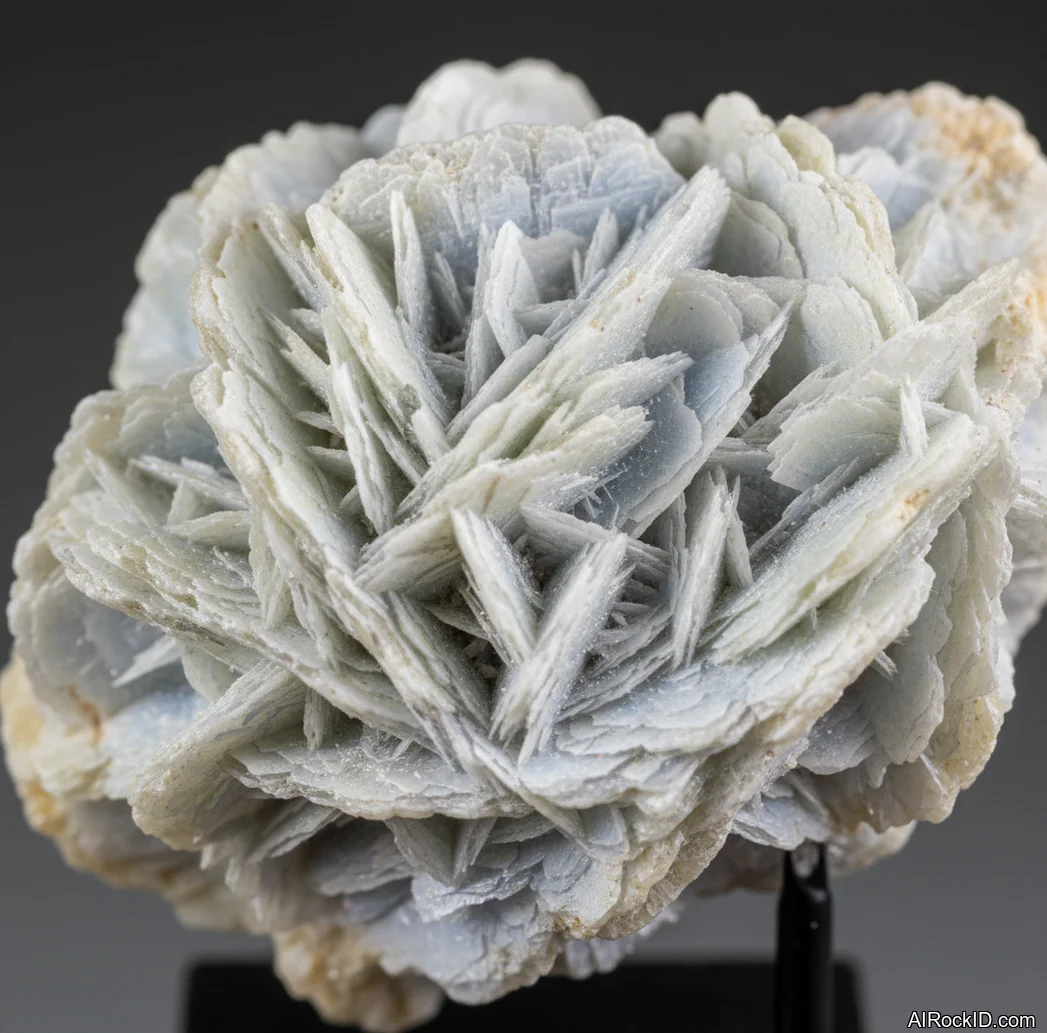
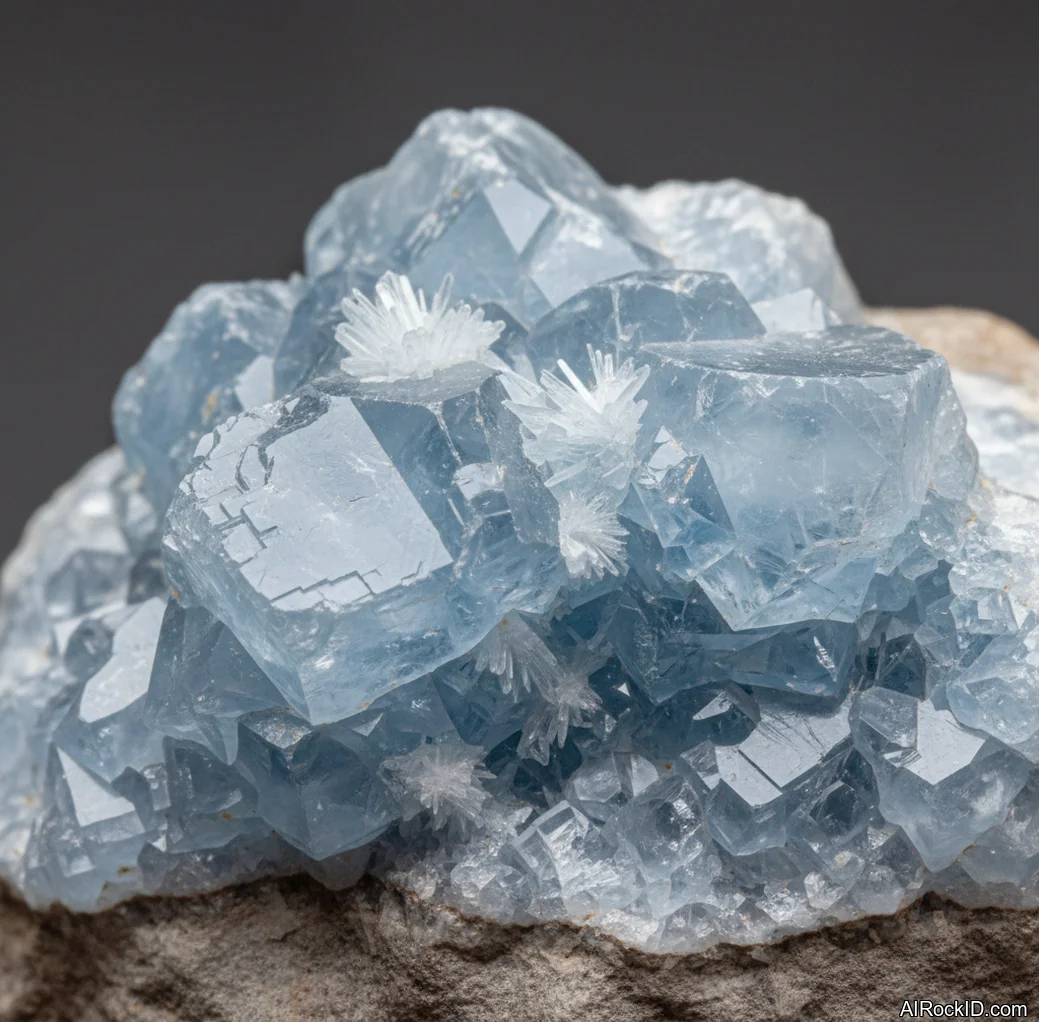
Celestite is a strontium sulfate mineral (SrSO4), and it usually shows up as pale blue crystals that are transparent to translucent, often lining the inside of a geode.
Pick up a celestite geode and you notice it right away. The crystals feel weirdly light, but the base they’re stuck to is heavier and kind of chalky (almost dusty if you rub it). From across the room the points look like they’d be tough. They aren’t. I’ve watched people find that out when a ring edge or a quartz point puts a scratch on a freshly exposed face.
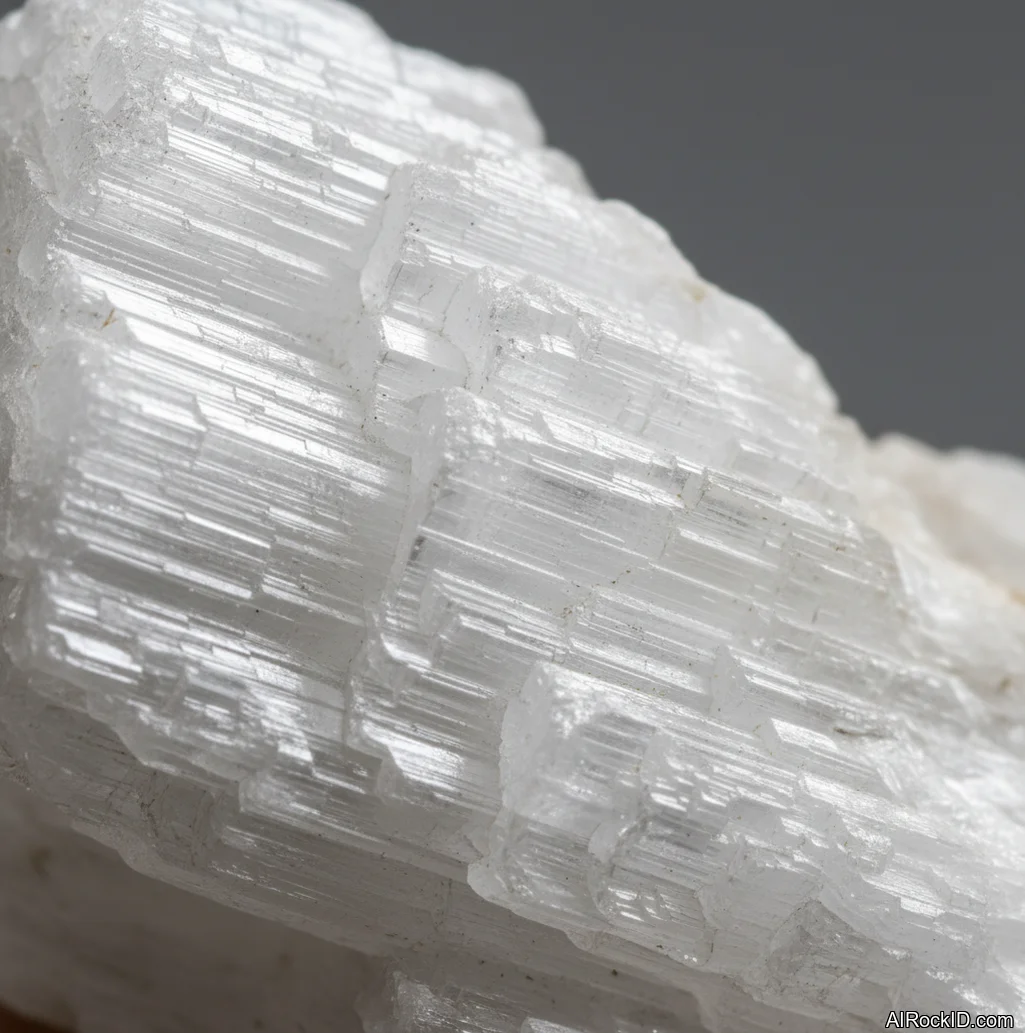
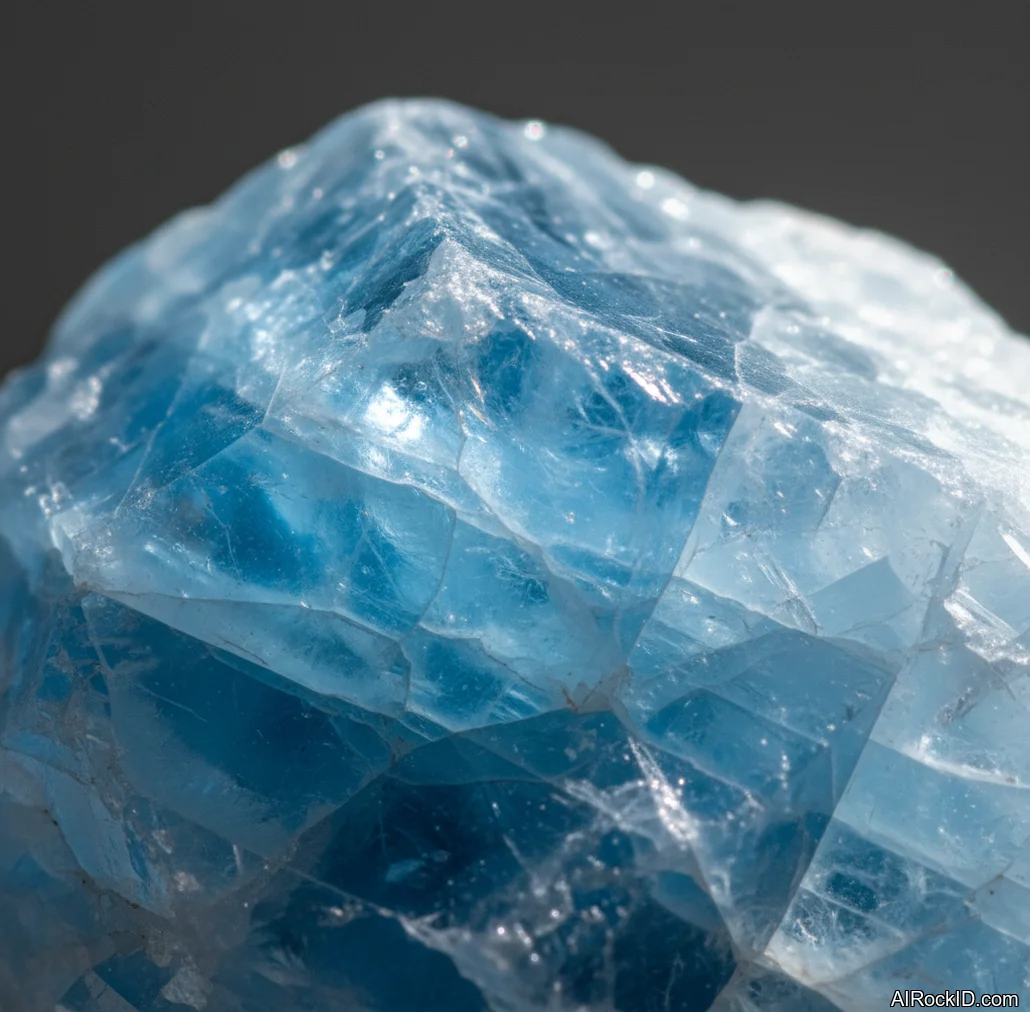
Look close at the tips and you’ll usually catch those clean, flat crystal faces with a glassy sparkle. And when you tilt it under shop lights, you’ll see quick little cleavage flashes that wink on and off. The color is often that cool sky-blue, but it can swing colorless, white, or gray too. Some pieces have a faint smoky blue that just looks better in person than in photos. Why does that always happen?
Origin & History
Most labels peg celestite’s “official” start to the late 1700s. Abraham Gottlob Werner described it as a mineral species in 1791, and the name traces back to the Latin *caelestis*, meaning “heavenly,” basically a wink at that common soft blue color.
Collectors have been into it forever for a pretty simple reason: it grows gorgeous crystals in little cavities where you’d swear nothing interesting should be happening. And yeah, it’s mattered on the industrial side too as a strontium source, but for hobby folks it’s the geodes and those neat, tidy clusters that end up getting carried from case to case at shows.
Where Is Celestite Found?
You’ll see a lot of celestite on the market from Madagascar and Morocco, with classic North American material coming from Ohio around Lake Erie. It also turns up in evaporite and limestone settings across Europe, North Africa, and parts of Asia.
Formation
Most celestite shows up when sulfate-rich water works its way through sedimentary rock and, at just the right moment, the chemistry clicks and strontium sulfate drops out as a solid. Evaporite settings can trigger that. So can groundwater moving through limestones and dolostones, especially where there are little pockets and cavities that give the crystals space to form.
Raw Madagascar material often turns up as geodes: crack one open and the inside is lined with sharp crystals, while the outside is this dull, crumbly shell. It’s one of those collector lessons you learn fast. The pretty part is inside. The outside can be fragile, dusty, and honestly kind of ugly (and it’ll shed grit on your fingers if you handle it too much). And in some deposits, celestite sits right next to gypsum, calcite, barite, plus sulfur, so a single piece can feel like you grabbed a whole evaporite neighborhood in one go.
How to Identify Celestite
Color: Celestite is usually pale blue to sky-blue, but it can be colorless, white, gray, or slightly yellowish depending on impurities and lighting. The blue can look stronger in shade and wash out under warm indoor bulbs.
Luster: Luster is vitreous to pearly, especially on cleavage faces.
If you scratch it with a copper penny or a steel nail, it’ll mark pretty easily, which surprises people who assume blue equals “hard.” The real test is cleavage: it tends to break with smooth, flat faces that throw quick flashes when you rotate it. And if you’ve handled barite, celestite feels similar in the hand, but celestite is usually a bit lighter and often shows that gentler sky-blue tone.
Properties of Celestite
Physical Properties
| Crystal System | Orthorhombic |
| Hardness (Mohs) | 3-3.5 (Soft (2-4)) |
| Density | 3.95-3.97 g/cm3 |
| Luster | Vitreous |
| Diaphaneity | Transparent to translucent |
| Fracture | Uneven |
| Streak | white |
| Magnetism | Non-magnetic |
| Colors | pale blue, sky blue, colorless, white, gray, yellowish |
Chemical Properties
| Classification | Sulfates |
| Formula | SrSO4 |
| Elements | Sr, S, O |
| Common Impurities | Ba, Ca, Fe |
Optical Properties
| Refractive Index | 1.619-1.630 |
| Birefringence | 0.009 |
| Pleochroism | Weak |
| Optical Character | Biaxial |
Celestite Health & Safety
Normal handling’s pretty low risk. But if you’re trimming matrix or scrubbing it hard, don’t kick up dust (you can feel that gritty stuff in the air). Crystal tips can be needle-sharp, and if one snaps, it can splinter into tiny, sharp bits.
Safety Tips
If you need to chip away any matrix, put on eye protection and a dust mask first. And when you’re done, wipe everything down with a damp cloth (it grabs the grit), instead of sweeping up dry dust.
Celestite Value & Price
Price Range
Rough/Tumbled: $10 - $300 per specimen
Cut/Polished: $5 - $30 per carat
Price goes up fast when the blue is really saturated, the points look crisp, and the crystal tips are still sharp, especially on the big geodes where you can see the whole face at once. But here’s the thing: chipped tips and a crumbly matrix show up all the time (you’ll spot those little broken edges and gritty bits as soon as you pick one up), so a truly pristine display piece usually costs more than people expect.
Durability
Fragile — Scratch resistance: Poor, Toughness: Poor
Celestite is stable in normal room conditions but chips and scratches easily due to its softness and good cleavage.
How to Care for Celestite
Use & Storage
Store celestite where it won’t get bumped, because the points chip fast. I keep mine in a flat, padded box or on a stable shelf away from pets and door-slams.
Cleaning
1) Use a soft makeup brush to flick off loose dust from between points. 2) If needed, rinse briefly with cool water and a drop of mild soap, then don’t scrub the crystal faces. 3) Pat dry and let it air-dry fully before putting it back on display.
Cleanse & Charge
For a gentle routine, use smoke-free methods like sound or a quick pass of cool running water, then let it sit in indirect light. Skip harsh salt bowls and anything abrasive.
Placement
Put it somewhere calm and low-traffic, like a bedside shelf or a desk corner, where you can look into the geode without knocking it over. Indirect light shows the blue better than a hot, sunny windowsill.
Caution
Skip ultrasonic cleaners, steam cleaners, or any harsh chemical stuff. Don’t throw celestite into a tumble bag with harder stones either, because it’ll come out scuffed up (you can feel the grit afterward, like fine sand on your fingertips). And don’t stack specimens where the points can rub or grind against anything. Why risk snapping a tip?
Works Well With
Celestite Meaning & Healing Properties
Celestite looks like a “quiet” stone the moment you see it. And that’s exactly why people grab for it when a room feels loud, in your head or in your chest. I’ve watched customers pick up a geode with both hands, stand there for a minute, and you can literally see their shoulders sink a little, mostly because that soft blue color and the tiny glassy sparkle make your eyes slow down and land.
But thing is, celestite is fragile, and that changes everything about how you live with it. The points chip easy, and if you rub it like a worry stone you’ll end up with busted tips and little crunchy bits in your lap (ask me how I know). So it’s better as a visual anchor: something you glance at during a quick breath break, or a piece you keep near the bed for those nights when your brain won’t stop doing laps.
In metaphysical circles, it’s usually linked to calm communication and clearer “headspace.” I treat that as a focus cue, not medicine. If you’ve got real anxiety or sleep issues, a crystal isn’t a replacement for professional help. But it can still fit into a routine that tells your body, okay, we’re downshifting now.
Identify Any Crystal Instantly
Snap a photo and get properties, value, care instructions, and healing meanings in seconds.