Aura Quartz


Quick answer: Aura Quartz is usually natural quartz that has been treated with a thin metallic coating, often titanium, gold, platinum, or other metals, to create a rainbow or metallic surface sheen. Its base mineral is quartz, but the vivid iridescent colors are the result of human treatment rather than natural crystal color.
AI Rock ID can help identify Aura Quartz by recognizing its quartz crystal shape, glassy base, and metallic iridescent coating. RockIdentifier.io lists Aura Quartz as a treated quartz variety, so identification should consider both the underlying mineral and the applied surface finish.
Good fit
- Collectors who like bright iridescent crystal finishes
- Beginners who want an easy-to-recognize treated quartz specimen
- Decorative displays where color and shine are the main appeal
- People comparing natural quartz varieties with coated or enhanced stones
Not a good fit
- Buyers looking for naturally colored quartz with no surface treatment
- Jewelry that will be exposed to heavy abrasion or frequent chemicals
- Collectors who prioritize untreated mineral specimens
- Anyone expecting the coating to have the same durability as solid mineral color
Most commonly confused with
- Opal Aura Quartz: A pale or milky quartz with a soft pearly iridescent coating; it is a subtype or trade name within aura-treated quartz.
- Rainbow Quartz: May refer to quartz with natural internal rainbow fractures or to coated quartz, so the term is less specific than Aura Quartz.
- Titanium Quartz: Usually has a stronger metallic rainbow coating from titanium or mixed metal vapor deposition.
- Angel Aura Quartz: A trade name commonly used for clear quartz coated with precious metals to create a pale blue-to-rainbow sheen.
Aura Quartz vs. Similar Quartz Materials
| Material | Color Source | Key Difference | Typical ID Clue |
|---|---|---|---|
| Aura Quartz | Vapor-deposited metal coating | Treated quartz with surface iridescence | Metallic rainbow sheen concentrated on the surface |
| Natural Clear Quartz | Natural crystal structure | No artificial coating | Transparent to cloudy without a metallic film |
| Rainbow Quartz | Internal fractures or coating, depending on trade use | Term can be ambiguous | Rainbows may appear inside cracks rather than across the surface |
| Titanium Quartz | Titanium or mixed metal coating | Often bolder and more metallic than pale aura varieties | Strong blue, purple, gold, or green reflective colors |
| Druzy Quartz | Tiny quartz crystal surface, sometimes coated | Texture is the main feature | Sparkling granular surface of many small crystals |
AI identification confidence
AI identification confidence is usually moderate to high when Aura Quartz has a visible crystal form and obvious metallic iridescent coating. Confidence may drop when photos are overexposed, the specimen is very pale, or the coating resembles lighting glare.
When AI gets it wrong
- Bright studio lighting can make ordinary quartz look artificially iridescent.
- Coated glass or resin decorations may be mistaken for Aura Quartz in photos.
- Natural rainbow inclusions in clear quartz can be confused with surface treatment.
- Very close-up images may hide the quartz crystal shape needed for reliable identification.
Final recommendation
Choose Aura Quartz when the main goal is a colorful, treated quartz specimen with visible iridescence. Choose untreated quartz varieties instead if natural formation, locality, and mineral purity matter more than surface color.
How to Check Aura Quartz Before Buying
Ask whether the specimen is coated, treated, or vapor-deposited rather than assuming the color is natural. A reputable seller should describe the base material as quartz and the iridescent finish as a treatment. Check for chips, rubbed tips, or dull patches, because damage to the coating can affect the appearance.
Natural vs. Treated Labeling
Aura Quartz is commonly made from natural quartz crystals, but the rainbow color is not naturally grown in the crystal. Accurate labeling should distinguish the natural quartz base from the artificial metallic surface. Terms such as angel aura, aqua aura, and titanium aura are trade names for different coating styles.
Photo Identification Tips
Photograph Aura Quartz in indirect light to reduce glare and show whether the color is a true surface coating. Include the crystal termination, side faces, and any chipped or worn areas if identification is uncertain. A plain background helps separate metallic iridescence from reflections caused by nearby objects.
What Is Aura Quartz?
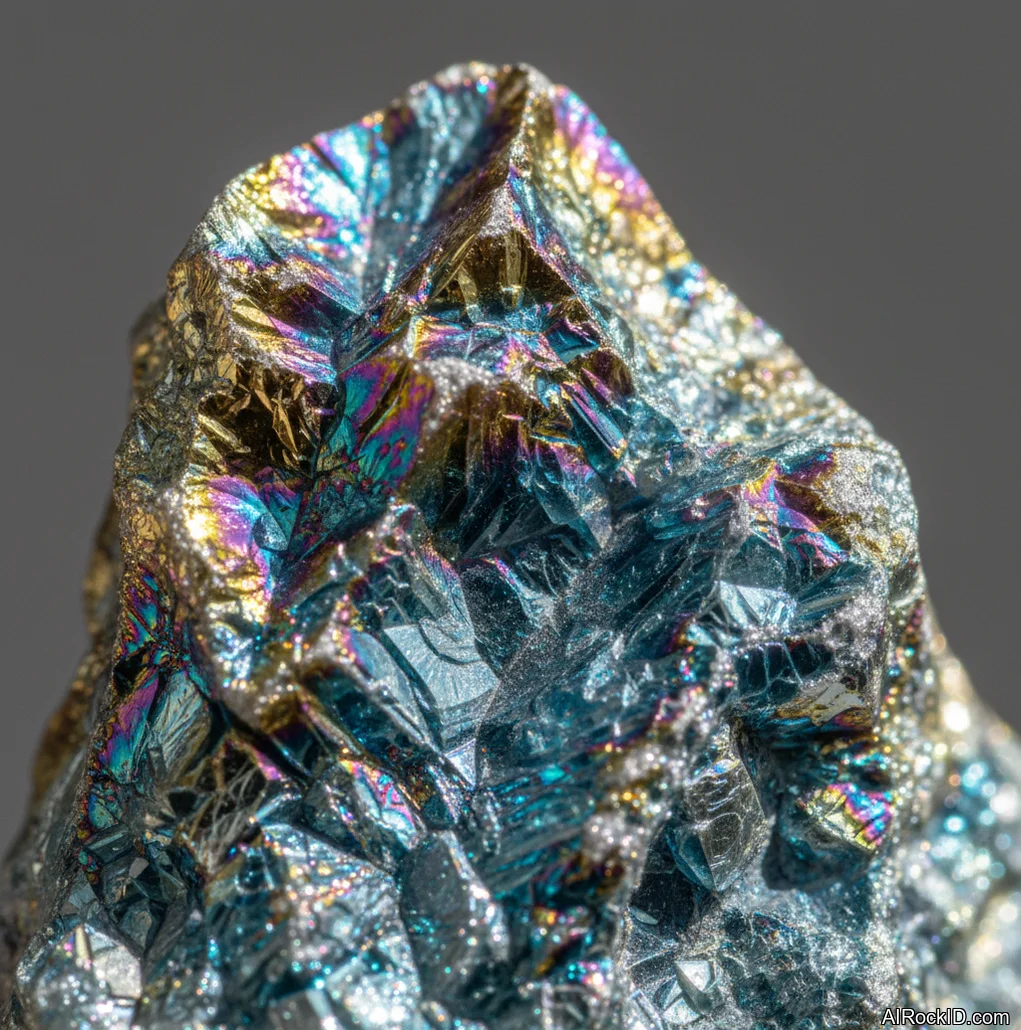
Aura Quartz is natural quartz that’s been given this slick, iridescent metal coating through vapor deposition, usually titanium, niobium, gold, silver, or platinum. First time you see it, it honestly looks like someone got gasoline all over a quartz point (in a good way), with that rainbow skin sitting right on the flat crystal faces.
Pick one up and it’s the same old quartz: that solid heft in your palm, that cool, almost chilly feel against your fingertips. Then your eyes keep snapping back to the flashes on the surface. The coating’s thin, so you can still make out the growth lines, the tiny edge nicks, and those little step-like terraces on the prism faces you’d expect on a normal point. But the color isn’t inside the crystal like amethyst or smoky quartz. It’s on the outside. And under a bright shop light, you can literally watch the sheen shift as you roll it between your fingers (like the color’s chasing the angle).
Most of what you’ll run into are coated clear quartz points, clusters, or tumbled pieces. And yeah, it’s treated. That’s the whole point. But it’s still real quartz underneath, and the better ones start with clean, decent quartz so the rainbow effect doesn’t end up looking muddy or all scratched up.
Origin & History
Aura Quartz isn’t one of those minerals with a dusty “first described in 18-something” origin story. Quartz itself has been poked at forever, sure, but the aura finish is a modern lapidary and materials-science trick that really took off in the late 20th century, once vacuum chambers and thin-film coatings were actually within reach for commercial decorative work.
The names, honestly, are mostly trade labels. “Angel Aura” usually means a titanium coating. “Aqua Aura” is commonly a gold coating that kicks out that bright, electric blue. But sellers blur the terms sometimes, and you can get the same color from different recipes depending on who did the coating, how thick the film is, and what the quartz surface looked like going in.
Where Is Aura Quartz Found?
The quartz base material comes from classic quartz-producing regions, especially Brazil and the USA, and then it’s coated in workshops rather than forming that way in nature.
Formation
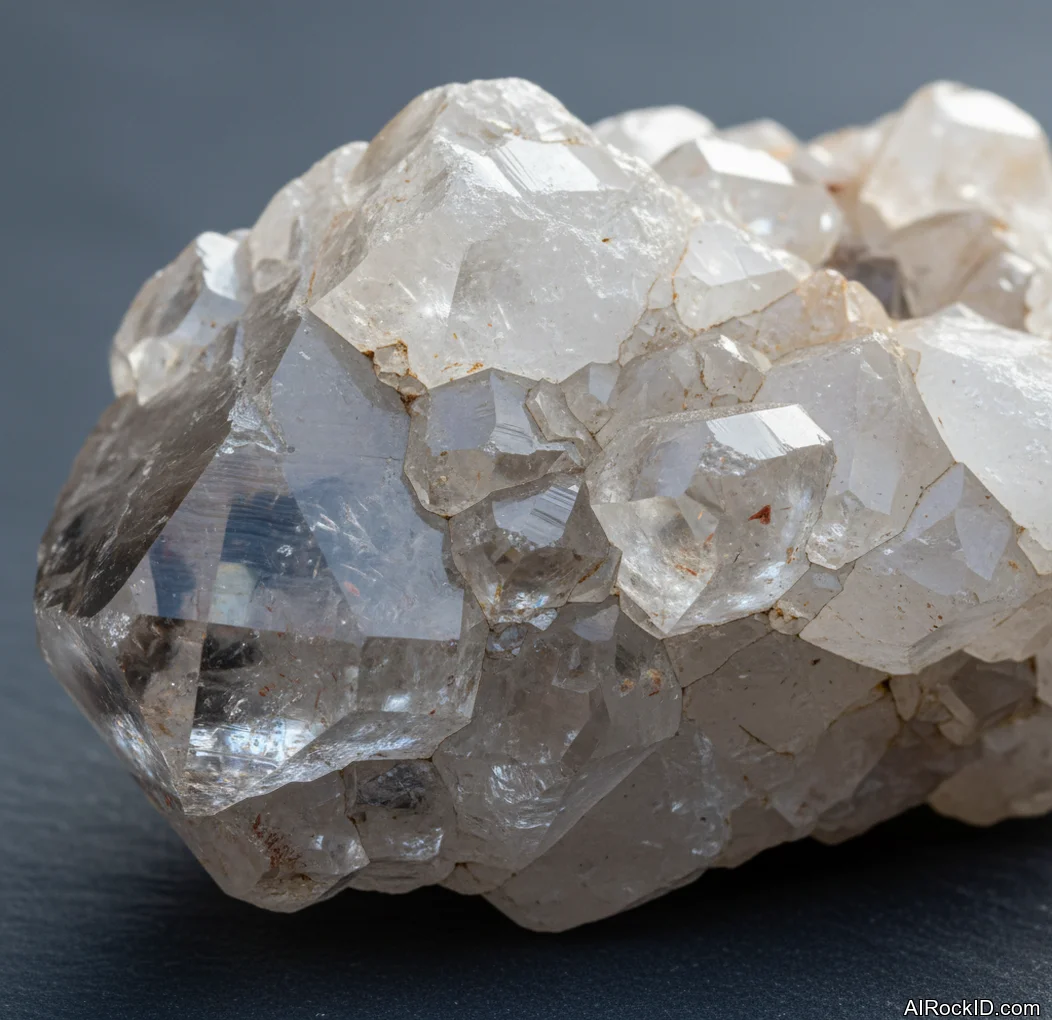
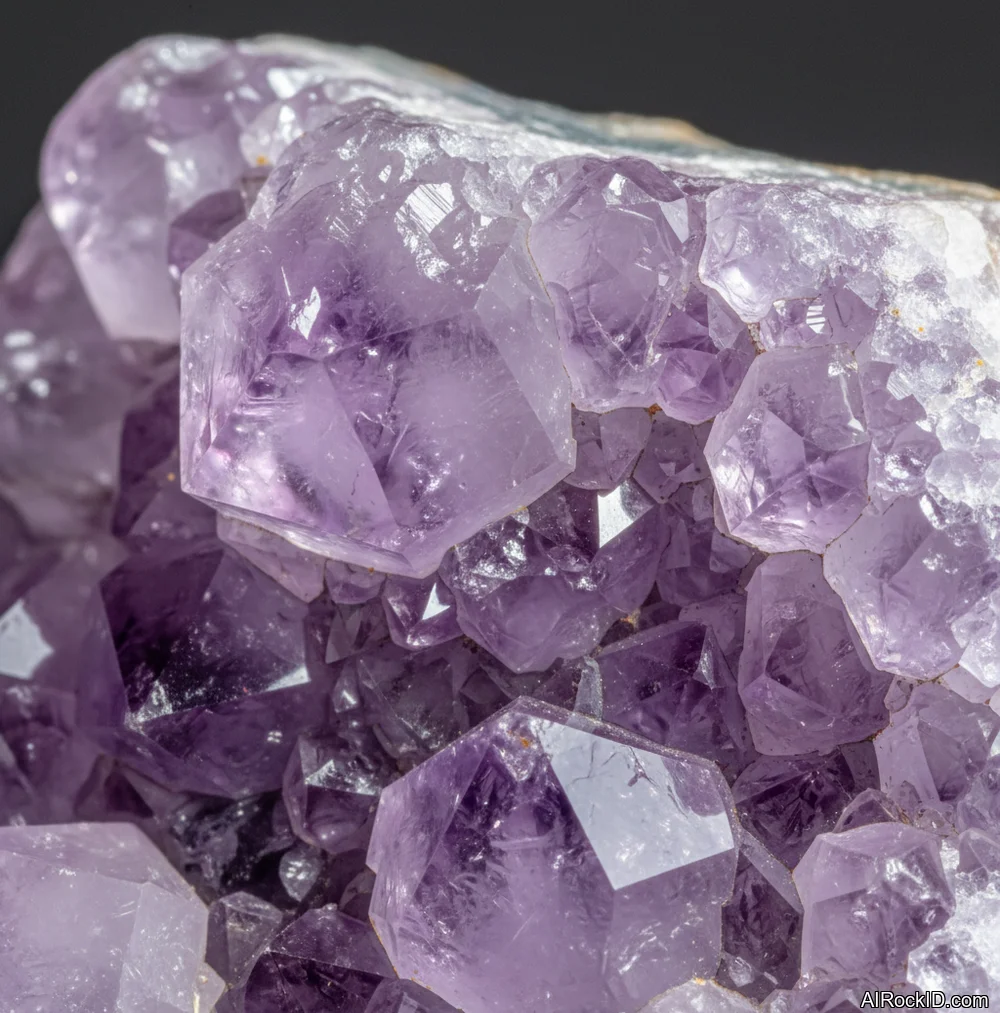
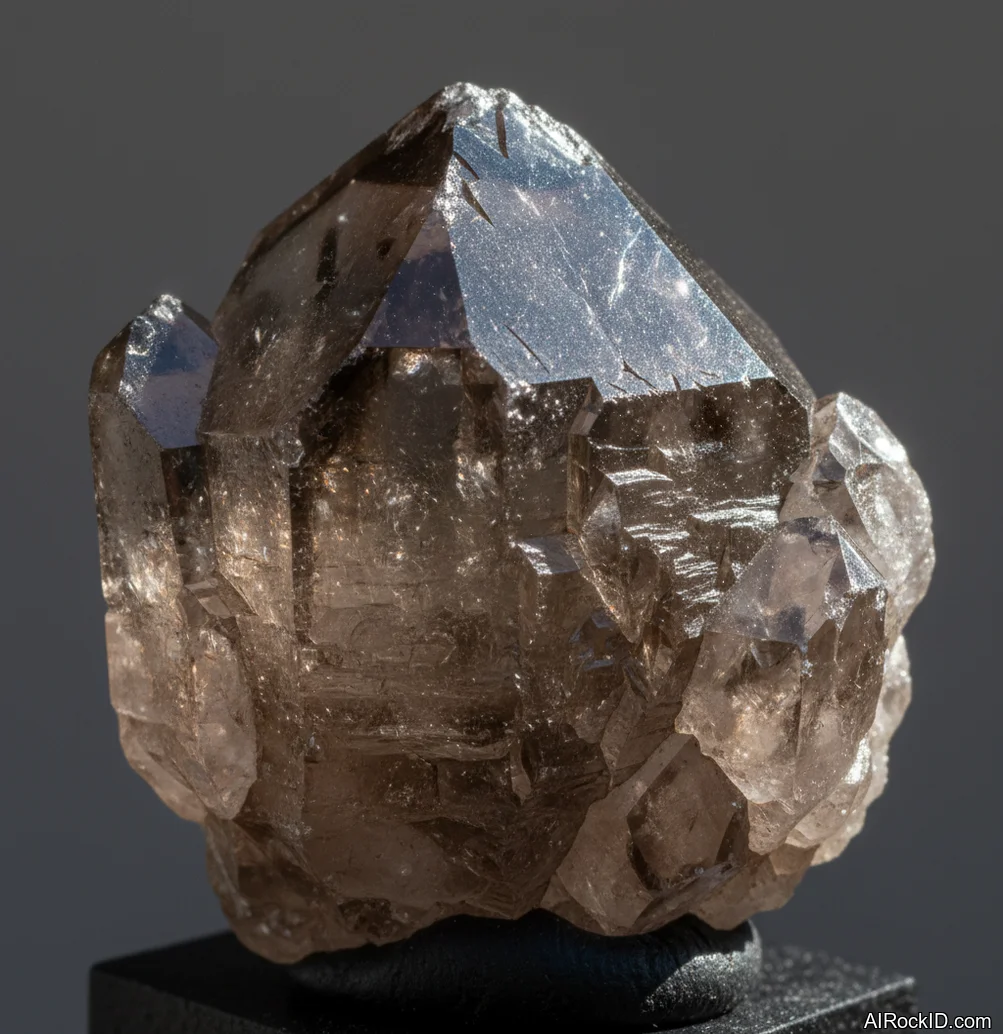
Quartz starts out pretty plain: silica rich fluids squeeze through cracks, seams, and little pockets in the rock, and as the temperature or chemistry shifts, they drop SiO2 out of solution. That’s what builds those clean points and tight clusters you see in pegmatites, hydrothermal veins, and vugs in volcanic rocks. Slow growth is where you get the sharp, glassy faces you can feel with a fingernail. But if it grows faster and dirtier, the surfaces come out frosty, kind of chalky to the eye, and the clusters look clumpier. Not as crisp. More “busy.”
The aura part is a totally separate thing, and it happens after mining. The quartz gets cleaned up, then it’s put in a vacuum chamber while a metal is vaporized and laid onto the crystal as an ultra thin film that bonds to the surface. It’s basically the same thin film coating idea you’d see on some optics, just applied to a crystal instead of a lens. Thing is, people look at the rainbow sheen and assume it’s natural iridescence, like bornite or labradorite. It isn’t. It’s engineered on purpose, and the final look depends a lot on how smooth the quartz faces were before that coating went on (because the film shows every little flaw).
How to Identify Aura Quartz
Color: Iridescent rainbow, or specific hues like electric blue (Aqua Aura) or warm pink-orange (often sold as Sunset Aura), sitting on the surface rather than within the quartz.
Luster: Vitreous quartz luster under a metallic, mirror-like iridescent film.
Look closely at chipped edges. On a real aura piece you’ll often see plain quartz under the coating where a corner got knocked, like a little clear “window” through the rainbow. The real test is a hand lens: the color hugs the outside faces and can look slightly patchy in pits or along growth striations. And if you rub a coated tumbled stone with your thumb, it still feels like quartz, hard and glassy, not like paint or plastic.
Common Look-Alikes
Aura Quartz is sometimes confused with these materials:
- Angel Aura Quartz (same process, different trade name)
- Opalite glass
- Aura-treated clear glass points
- Titanium-coated quartz from China
- Dyed quartz with metallic luster
- Mystic Topaz (coated natural topaz, not quartz)
Market Cautions & Treatments
When AI Can Get This Wrong
AI photo ID gets tripped up by opalite and coated glass, which both flash rainbow colors but lack the dense, cold heft of real quartz. Angel Aura, Aqua Aura, and other aura names can look identical in photos since only the metal used changes the color. The real test is scratching it with steel: real aura quartz will scratch glass, while opalite or glass fakes won't.
Properties of Aura Quartz
Physical Properties
| Crystal System | Trigonal |
| Hardness (Mohs) | 7 (Hard (6-7.5)) |
| Density | 2.65 g/cm3 |
| Luster | Vitreous |
| Diaphaneity | Transparent to translucent |
| Fracture | Conchoidal |
| Streak | White |
| Magnetism | Non-magnetic |
| Colors | Rainbow iridescent, Electric blue, Gold, Pink, Purple, Green, Silver |
Chemical Properties
| Classification | Silicates |
| Formula | SiO2 (quartz) with a thin metallic surface coating |
| Elements | Si, O |
| Common Impurities | Fe, Al, Ti |
Optical Properties
| Refractive Index | 1.544–1.553 |
| Birefringence | 0.009 |
| Pleochroism | None |
| Optical Character | Uniaxial |
Aura Quartz Health & Safety
Handling it and even a quick splash of water is usually fine. But don’t grind or sand it, because that kicks up quartz dust, and that stuff’s a respiratory hazard.
Safety Tips
If you’re cutting or polishing quartz, don’t do it dry. Use water to keep the dust down, make sure you’ve got decent ventilation (a fan pulling air away from your face helps), and wear a proper respirator that’s actually rated for silica dust. Quartz dust gets everywhere, too, like that fine grit that ends up on your hands and around the edge of your goggles, so take it seriously.
Aura Quartz Value & Price
Price Range
Rough/Tumbled: $10 - $120 per piece
Cut/Polished: $2 - $20 per carat
Price basically follows how good the quartz is underneath, like how clear it is, how sharp the terminations are, and what the cluster shape looks like in your hand. And then there’s the coating itself: it should look clean and even when you tilt it under a light, with no scratches or cloudy patches.
Durability
Durable — Scratch resistance: Excellent, Toughness: Good
Quartz itself is tough for daily handling, but the thin aura coating can scuff or wear on high-contact edges over time.
How to Care for Aura Quartz
Use & Storage
Store it where it won’t rub against harder stuff. I keep aura points in their own little box or wrapped in soft cloth because the coating can pick up fine scratches.
Cleaning
1) Rinse quickly with lukewarm water. 2) Use a drop of mild soap and your fingers to lift skin oils. 3) Pat dry with a soft microfiber cloth instead of rubbing hard on the coated faces.
Cleanse & Charge
If you do energy-style cleansing, smoke, sound, or a quick rinse works fine. I skip salt bowls because grit and rubbing are what mess up the shine.
Placement
Put it where light hits from the side, like near a lamp or on a shelf at eye level. The rainbow effect looks flat under overhead-only lighting.
Caution
Don’t use ultrasonic or steam cleaners, and don’t go at it with anything abrasive. The quartz itself won’t care, but the coating can start to look dull around the edges if you treat it like a kitchen countertop.
Works Well With
Aura Quartz Meaning & Healing Properties
Most dealers bring up aura quartz right alongside the whole “high vibe” conversation, and honestly, I see the point. In your palm it has that same cool, familiar weight as regular quartz. But look at it for two seconds and it’s basically shouting. The finish throws color so hard that your brain can’t help snapping to it, which is why people reach for it when they want their attention yanked out of the daily grind. It’s not exactly subtle on a desk.
In my own stash, I use it like a mood tool, not medicine. When I’m back from a show and I’m sorting flats, or I’m scraping old sticker gunk off labels with my thumbnail (you know that tacky little drag?), having an aura cluster nearby keeps me from drifting. I’ll turn my head without thinking and catch a new flash off one of the points, and I’m back on task. But if what you want is grounding, aura can feel too busy. That’s real. Some folks get kind of zapped by the sheen, especially in bright rooms where it keeps throwing light at you. Too much, right?
If you like pairing stones, aura quartz tends to work like a “spotlight” for whatever sits next to it. Put it beside plain clear quartz and you’ll notice how much that coating changes how you read the exact same basic shape. And keep your expectations realistic. It won’t fix your sleep apnea or replace therapy. It can, though, be a pretty solid nudge to breathe and reset when that rainbow catches your eye from the corner of the room.
Common mistakes
- Assuming every rainbow effect in quartz means the specimen is Aura Quartz.
- Describing Aura Quartz as naturally colored without noting the metallic coating.
- Using harsh abrasives that can scratch or wear away the treated surface.
- Confusing trade names such as angel aura, aqua aura, and titanium aura with separate mineral species.
- Judging authenticity only by color, since glass, resin, and coated decorative items can also appear iridescent.
Identify Aura Quartz from a photo
Compare Aura Quartz traits, care tips, value clues, and common lookalikes with a clear photo.