Brochantite
What Is Brochantite?
Brochantite is a basic copper sulfate mineral with the formula Cu4SO4(OH)6, and it shows up as a secondary mineral in the oxidation zones of copper deposits.
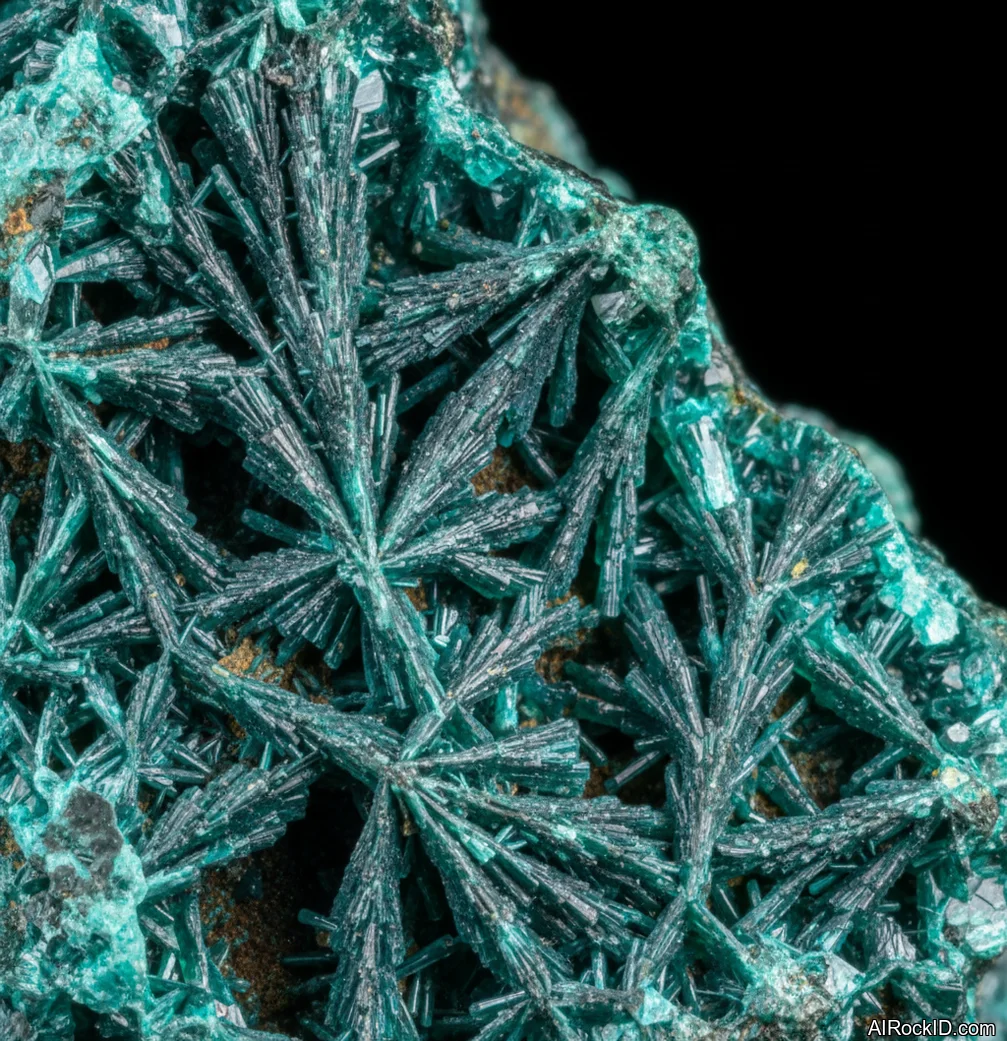
At first glance it looks like “just green.” But it’s a very particular copper green, usually a little darker and more foresty than malachite, and not as blue as a lot of chrysocolla. Most pieces I’ve had in my hands aren’t big, blocky crystals at all. They’re more like needle sprays, velvety crusts, or tight little bundles perched on limonite, quartz, or old copper-stained rock. And if you tilt a good spray under a desk lamp? For a split second the needles can catch the light and flash like satin (it’s quick, but you’ll see it).
Pick up a brochantite cabinet piece and you figure out fast why collectors keep them behind glass. It’s light for its size, and the crystal crust can feel almost fuzzy if you graze it with a fingertip. Don’t. A lot of specimens will shed tiny needles if you’re rough with them, and the best ones are the pieces that still look “fresh” and crisp around the edges instead of worn down.
Origin & History
Most dealers say the name goes back to André-Jean-François-Marie Brochant de Villiers, the French geologist and mineralogist, and that’s where “brochantite” comes from. It got described in the 1800s, right around the time European mineralogy was finally getting its act together and people started pinning names to actual chemistry, not just “green one” versus “blue one.”
And you’ll still run into old labels and dealer tags that just call it a “basic copper sulfate” and skip the proper name, especially in older collections. Same stuff. Just less official paperwork (and usually some yellowed card stock and faded ink, too).
Where Is Brochantite Found?
It shows up wherever copper deposits weather and oxidize, especially in arid to semi-arid mining districts and old mine workings with lots of oxygenated groundwater.
Formation
Grab a chunk from an oxidized copper zone and you’re basically holding the classic setup: copper sulfides fall apart, sulfate-heavy water works its way through the little fractures, and brochantite drops out where it can, lining cavities and seams or forming crusts on gossan.
You’ll usually spot it hanging around with malachite, azurite, atacamite, or chrysocolla. But thing is, brochantite really wants that sulfate-rich situation.
Most of the brochantite people see formed late, and it’s fragile stuff. That’s why the crystals so often come out needle-like or fibrous, like tiny green bristles that catch on your fingertip if you lightly drag a nail across them (not that you should). So pristine sprays are tougher to find than you’d expect. A lot of pieces get bruised during mining, and those fine needles don’t handle rough treatment, or a ride bouncing around in a flat-rate box.
How to Identify Brochantite
Color: Green to deep emerald-green is the usual look, sometimes with a slightly yellow-green cast on crusts. Some pieces show darker, almost black-green centers where sprays are densest.
Luster: Vitreous to silky on crystals and needle sprays.
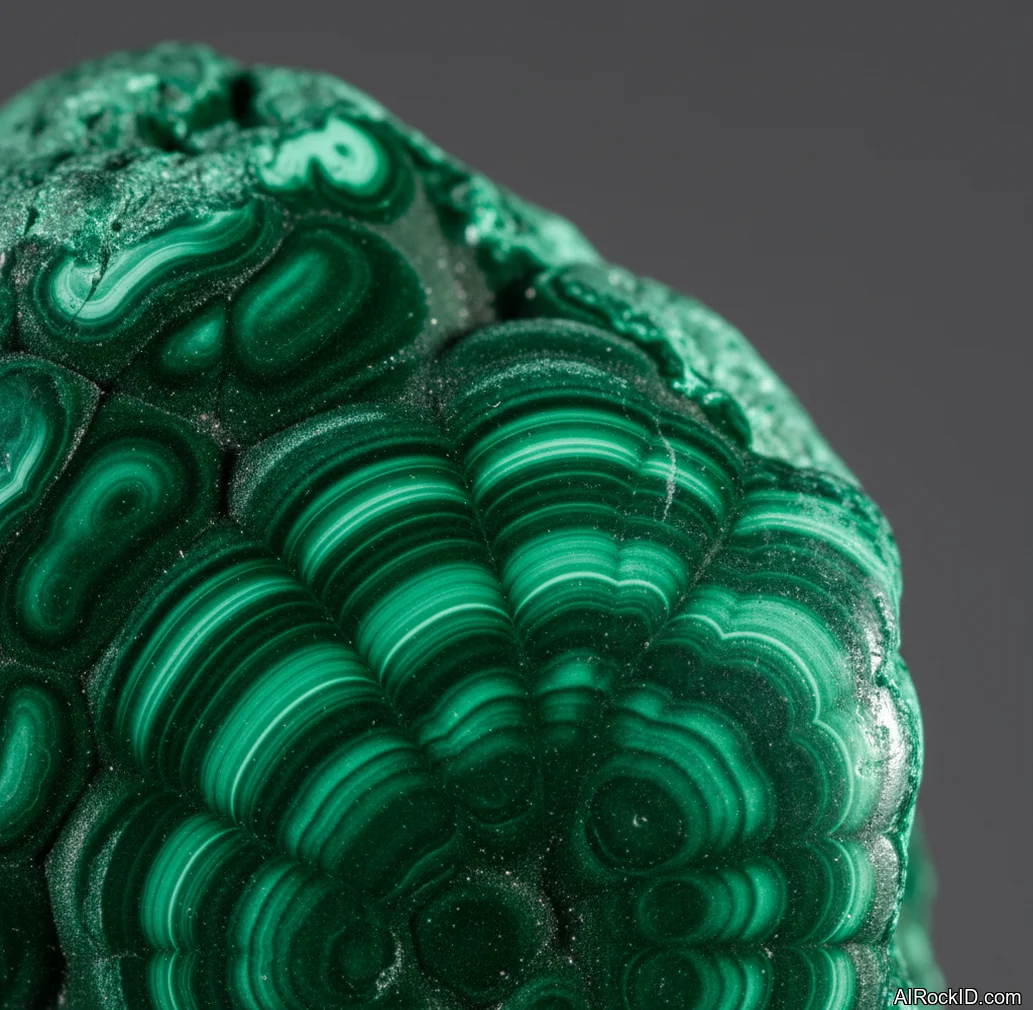
Look closely at the habit first: brochantite loves needles and tight fibrous sprays, while malachite is more botryoidal or banded and feels heavier and more “solid.” The real test is a hand lens under strong light. Brochantite needles look like little glassy blades packed together, not the velvety micro-fibers you get on some malachite crusts. And if a seller’s calling a dull, waxy green mass “brochantite,” treat that as a yellow flag and ask for locality and close photos.
Properties of Brochantite
Physical Properties
| Crystal System | Monoclinic |
| Hardness (Mohs) | 3.5-4 (Soft (2-4)) |
| Density | 3.87-3.97 g/cm3 |
| Luster | Vitreous |
| Diaphaneity | Transparent to translucent |
| Fracture | Uneven |
| Streak | Pale green |
| Magnetism | Non-magnetic |
| Colors | green, emerald green, dark green, yellow-green |
Chemical Properties
| Classification | Sulfates |
| Formula | Cu4SO4(OH)6 |
| Elements | Cu, S, O, H |
| Common Impurities | Fe, Zn |
Optical Properties
| Refractive Index | 1.728-1.808 |
| Birefringence | 0.080 |
| Pleochroism | Moderate |
| Optical Character | Biaxial |
Brochantite Health & Safety
Treat it the same way you’d treat most copper minerals: totally fine sitting on a shelf, but don’t use it anywhere it might touch food, and definitely don’t grind it up. Thing is, the real problem isn’t just having it around. It’s what happens when the crust gets chipped or someone starts scrubbing at it. That’s when you can kick up dust, and that dust is the main risk.
Safety Tips
Wash your hands after you’ve handled it, and keep it where kids and pets can’t get to it. And don’t brush or scrape it, and don’t hit it with compressed air either, because that’ll just send needles and dust flying.
Brochantite Value & Price
Price Range
Rough/Tumbled: $20 - $400 per specimen
Prices jump around depending on the crystal habit and the overall condition. Those sharp needle sprays that still have that hard, glassy luster, pop cleanly against the matrix, and come with a solid locality label will run way higher than rubbed, beat-up crusts.
Durability
Fragile — Scratch resistance: Fair, Toughness: Poor
It’s stable in a cabinet, but the fine crystals chip and shed easily if handled or knocked.
How to Care for Brochantite
Use & Storage
Keep brochantite in a perky box or a closed display case so the needles don’t get bumped. If it rides to a show, wrap the whole base so nothing rubs the crystal surface.
Cleaning
1) Skip water and skip soap. 2) Use a soft bulb blower to move loose dust off from a distance. 3) If you must, use a very soft artist brush with almost no pressure, and stop if you see any shedding.
Cleanse & Charge
For a non-contact cleanse, use smoke, sound, or place it near a dry quartz cluster. Avoid salt and water methods because copper sulfates can react or degrade.
Placement
A shaded shelf is best, away from steamy bathrooms and sunny windowsills. I like it at eye level so you can catch that silky flash without picking it up.
Caution
Don’t soak brochantite, and skip ultrasonic or steam cleaners too. Try not to breathe in any dust (that fine, chalky stuff you sometimes see when a crystal edge gets bumped). And don’t keep it loose in a pocket or rattling around in a box, because the crystals can rub together and get abraded.
Works Well With
Brochantite Meaning & Healing Properties
Compared to softer greens like prehnite or aventurine, brochantite hits “sharper” for a lot of folks who actually handle it. I think it’s the intensity of that green, plus the way the crystals look like they’re still in the middle of growing, like they got caught mid-motion. I don’t reach for it when I want comfort. I reach for it when I need focus and to sort my feelings out without babying myself.
It lives on my desk when I’m journaling. Right next to the notebook, usually. And I leave it there because it has this way of pushing me to be blunt. No fluff. Just: what’s the real thing going on here?
Look at it up close and you’ll see what I mean. Those tight, needle-like bits pull your attention in a single direction, like your eyes want to follow the grain of it. That’s basically how I use it in meditation too. One question. Stay with it. Don’t ricochet to five other topics because you got uncomfortable.
But I’ll also say the obvious part out loud, because people get weird about this. Brochantite is a collector mineral first. Any “healing” use is personal practice, not medical care.
The tricky part with brochantite is people assume all green copper minerals are the same thing in different outfits. They aren’t. Malachite feels grounding in a heavy, earthy way. Brochantite, at least for me, feels lighter in the hand and more mentally pointy, but it’s also fussier, and you can’t just rinse it off after a session and call it good.
So if you’re using it for intention work, set it down. Don’t keep it palmed for an hour. And wash your hands after. Simple. Why risk it?
Identify Any Crystal Instantly
Snap a photo and get properties, value, care instructions, and healing meanings in seconds.