Cotton Candy Agate
What Is Cotton Candy Agate?
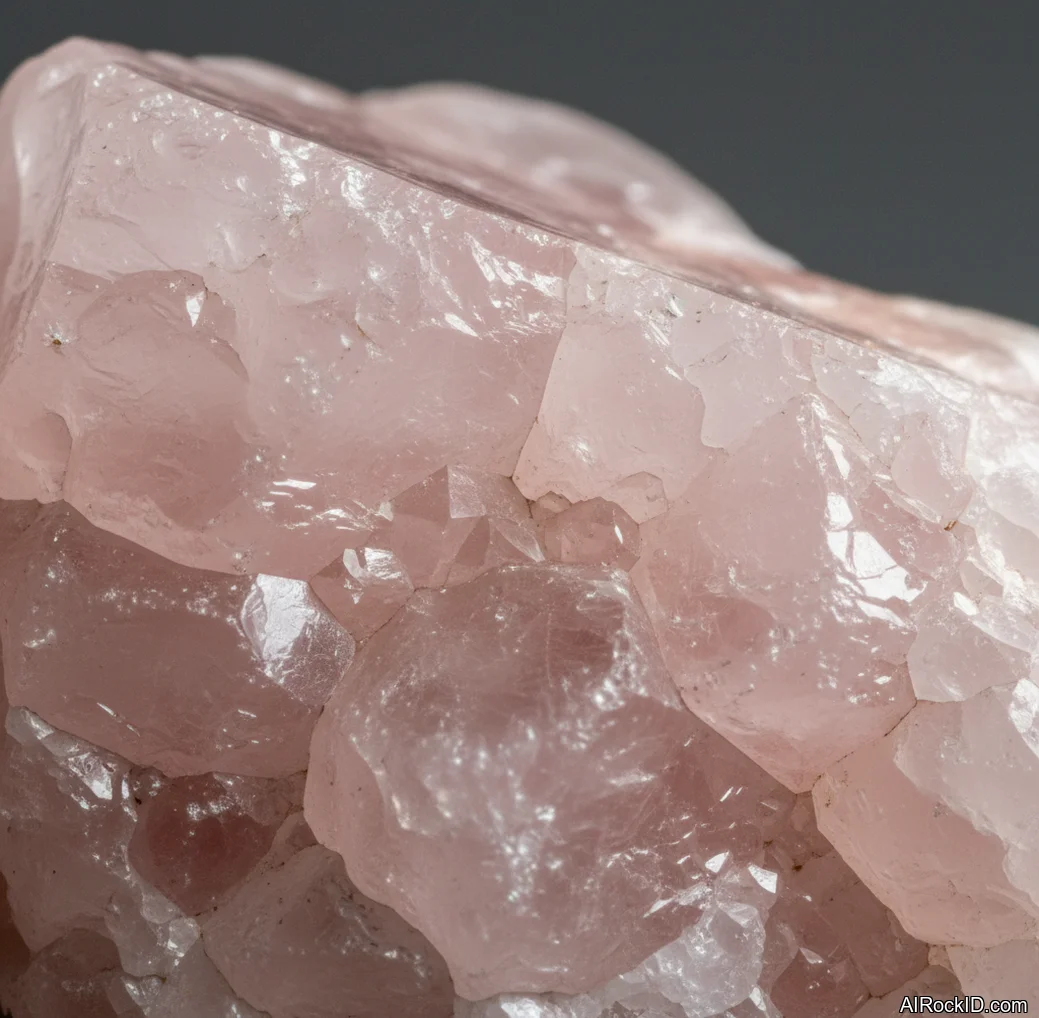
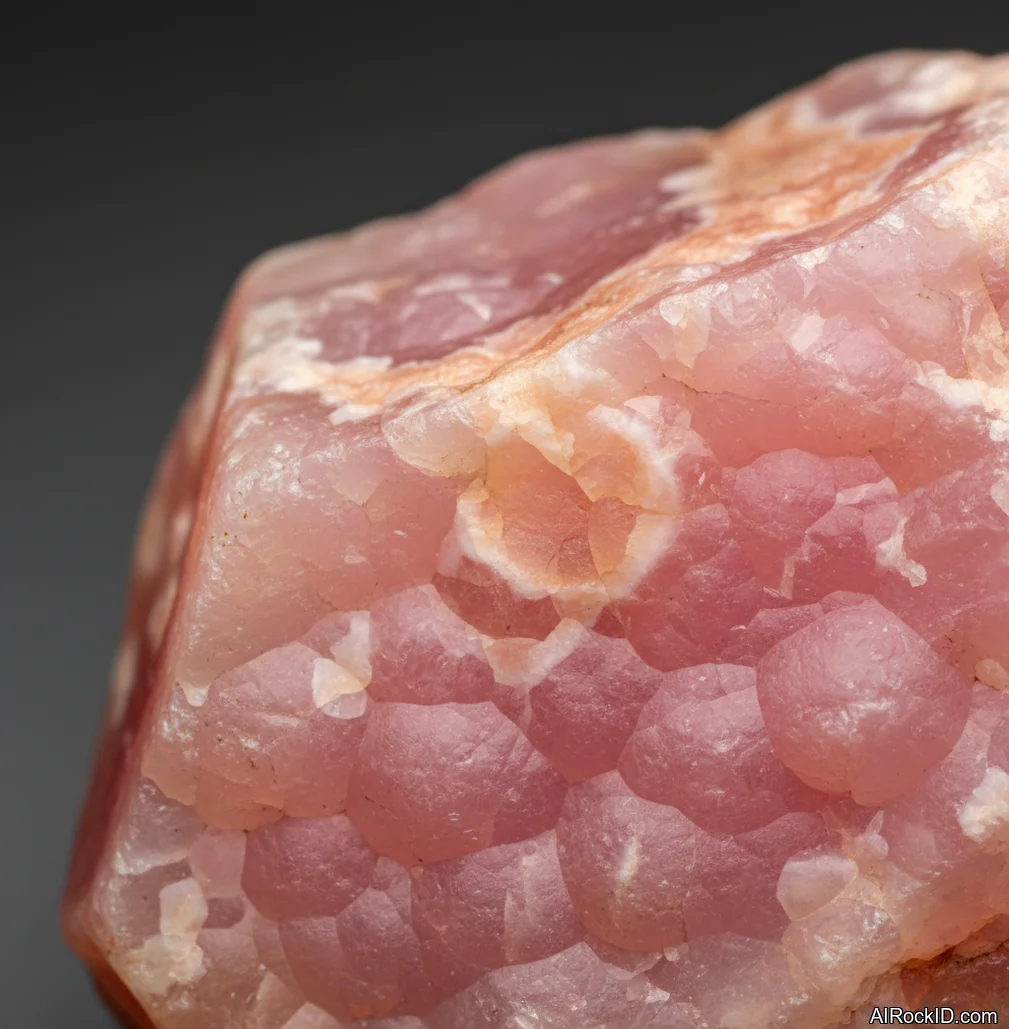
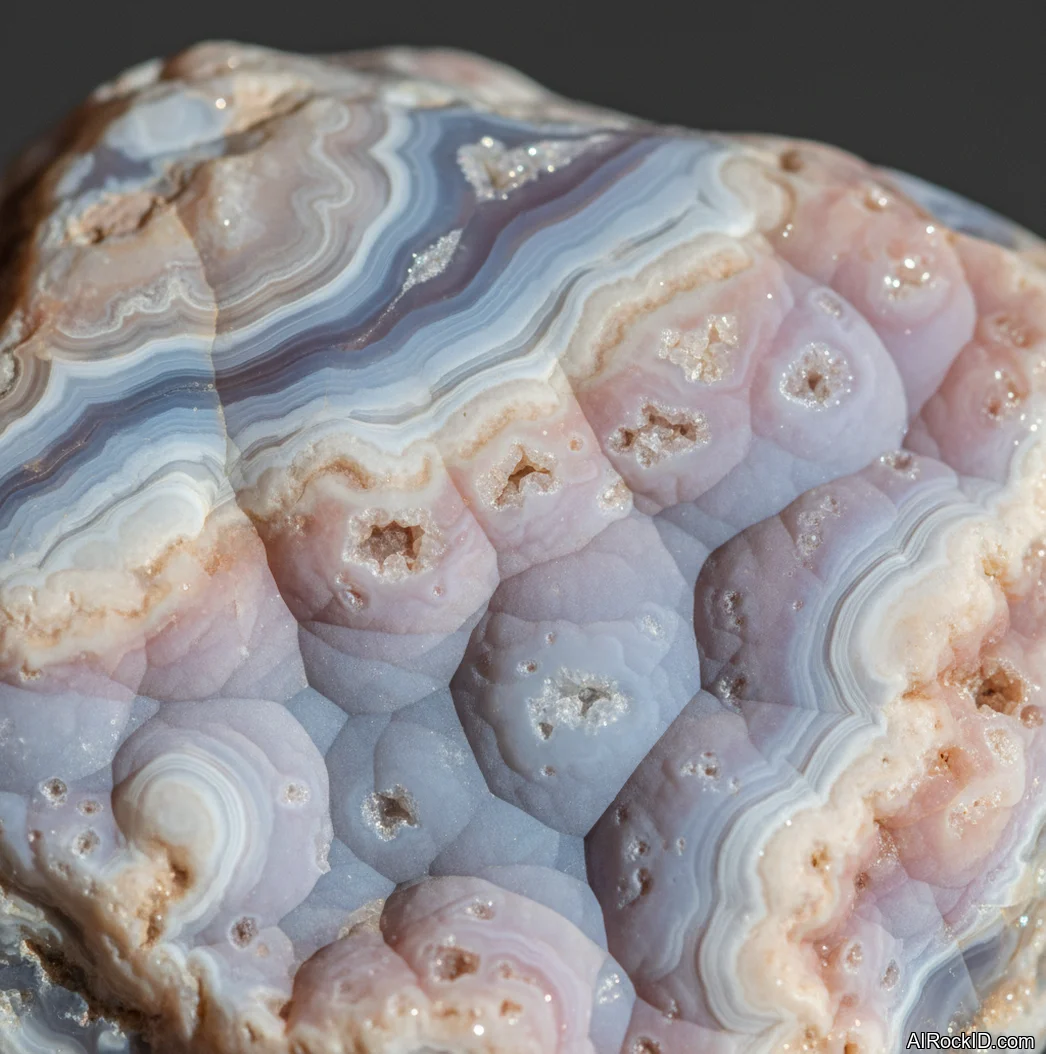
Cotton Candy Agate is just a trade name people use for that pink-and-white banded agate. It’s microcrystalline quartz (chalcedony), and the color comes from trace impurities plus iron staining.
Grab a tumbled piece in your hand and you’ll notice the usual quartz heft right away. Not heavy like hematite. But not light, either. The nicer pieces have this soft, cloudy glow if you hold them up near a lamp, and the bands look like watered-down strawberry milk curling through white.
Thing is, at first glance it can totally read as dyed agate. And yeah, some of what’s out there is. Real, undyed material usually shows uneven color, little misty patches, and tiny natural breaks where the banding doesn’t stay perfectly smooth. If it’s shouting hot pink and looks perfectly uniform from edge to edge, I start asking questions (because come on).
Origin & History
Cotton Candy Agate isn’t an official mineral name, and you’re not going to see it listed as an approved variety in a mineralogy textbook. It’s basically a seller label that showed up in the bead world and the metaphysical market for agate that has those soft pastel pink and white bands (the kind that look almost airbrushed when you turn the stone in your hand).
“Agate” as a word goes way back to the Achates River in Sicily, where people in the ancient world collected banded chalcedony. But the “cotton candy” part? That’s just modern marketing for a certain look. Dealers use it the same way they use names like “ocean jasper” or “flower agate.” It tells you the vibe, not the geology. What else is it really doing?
Where Is Cotton Candy Agate Found?
Most Cotton Candy Agate on the market is sourced from large agate-producing regions like Brazil, India, Madagascar, and Mexico, then cut and polished in commercial lapidary hubs.
Formation
Agate starts out when silica-rich fluids creep into little cavities in volcanic rock, or sometimes into pockets in sedimentary rock, and then lay down microcrystalline quartz one thin layer at a time. The stripes show up because the environment won’t sit still. One week it’s a fresh pulse of silica, later the chemistry shifts, then there’s a touch more iron or manganese in the mix, and even a slight temperature change can nudge the color and clarity.
If you’ve ever held a cut slice up to a window, you can practically read it like a timeline. You’ll see a sharp, milky band, then one that’s more see-through, then a blush-pink section that peters out like the color just got used up. And that little druzy pocket you sometimes spot? That’s the final bit, when there’s still an open space left and quartz crystals finally get room to grow (so they sparkle instead of forming those tight, waxy layers).
How to Identify Cotton Candy Agate
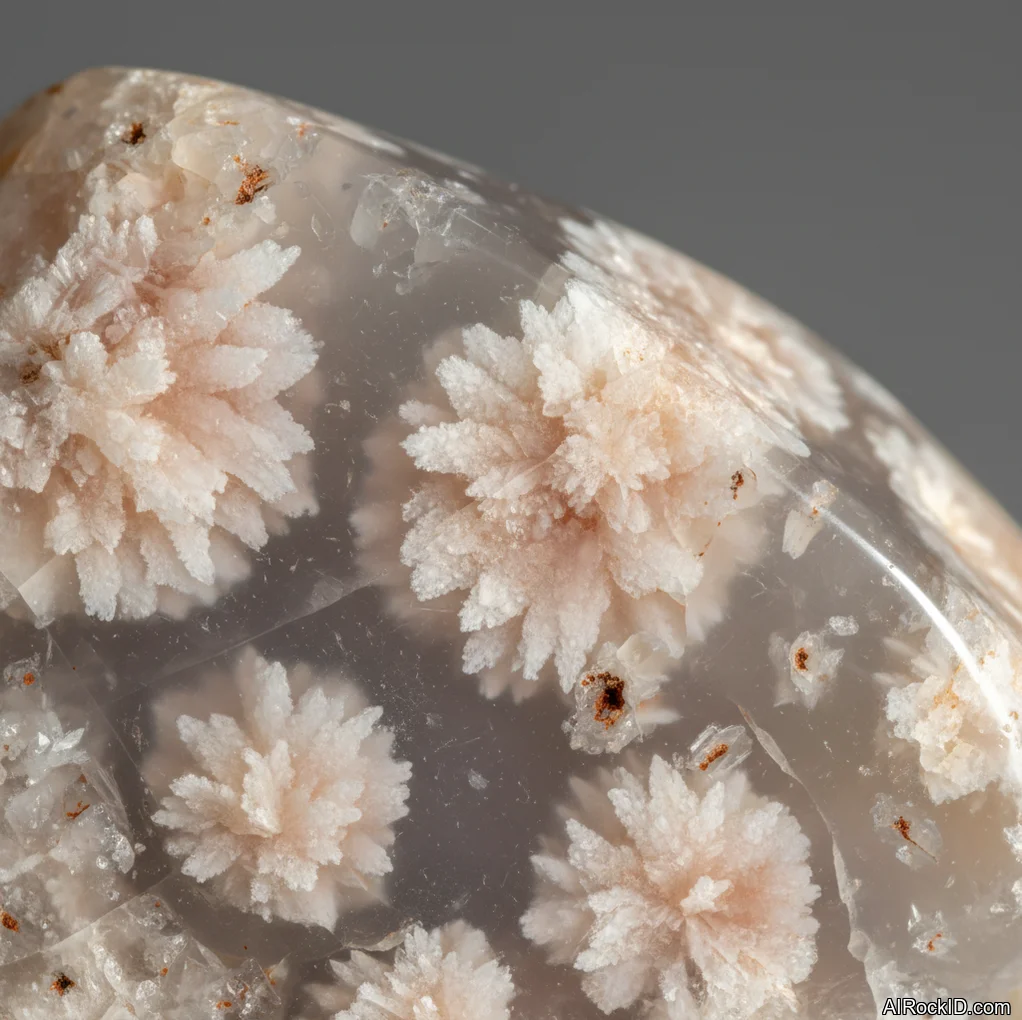
Color: Soft pink to rosy blush with white, cream, or light gray banding; color is usually patchy or zoned rather than perfectly uniform. Some pieces show translucent edges and opaque centers.
Luster: Waxy to vitreous luster when polished, like most chalcedony.
If you scratch it with a steel nail, it shouldn’t budge much, but it will scratch glass at around Mohs 6.5 to 7. The real test is the feel and the look under strong light: natural agate often has depth, with bands that seem to sit “inside” the stone, not painted on the surface. Cheap versions that are dyed can bleed color into cracks and drill holes, and the pink can look too loud and flat.
Properties of Cotton Candy Agate
Physical Properties
| Crystal System | Trigonal |
| Hardness (Mohs) | 6.5-7 (Hard (6-7.5)) |
| Density | 2.58-2.64 |
| Luster | Waxy |
| Diaphaneity | Translucent to opaque |
| Fracture | Conchoidal |
| Streak | White |
| Magnetism | Non-magnetic |
| Colors | Pink, White, Cream, Light gray, Reddish-pink |
Chemical Properties
| Classification | Silicates |
| Formula | SiO2 |
| Elements | Si, O |
| Common Impurities | Fe, Mn, Al, Ti |
Optical Properties
| Refractive Index | 1.530-1.539 |
| Birefringence | 0.004 |
| Pleochroism | None |
| Optical Character | Uniaxial |
Cotton Candy Agate Health & Safety
Cotton Candy Agate (chalcedony) is non-toxic, so it’s safe to handle. But if you’re cutting or grinding it, treat it like any other silica-based stone and don’t breathe in the dust. That fine, chalky powder that ends up on your fingertips and clings to the edge of a wet saw tray? Yeah, keep it out of your lungs.
Safety Tips
Use water when you’re sanding or cutting (it keeps the dust down). And don’t skip the PPE: wear a proper respirator that’s actually rated for silica dust.
Cotton Candy Agate Value & Price
Price Range
Rough/Tumbled: $5 - $35 per tumbled stone (25-50 mm) or $20 - $120 per polished palm stone
Cut/Polished: $1 - $8 per carat (cabochon-grade), higher for standout banding
Prices bounce around depending on how natural the color looks, how clean and tight the banding is, and how translucent the stone gets out at the edges when you hold it up to the light. And yeah, the big palm stones usually run higher, mostly because finding rough that size without fractures is just harder (you can feel it when you’re sorting through chunks and keep hitting those tiny internal cracks).
Durability
Durable — Scratch resistance: Good, Toughness: Good
It’s stable quartz, but dyed pieces can fade if they sit in direct sun for long stretches.
How to Care for Cotton Candy Agate
Use & Storage
Store it in a pouch or separate compartment if it’s polished, since quartz will scuff softer stones. And keep dyed material out of long, sunny windowsills.
Cleaning
1) Rinse with lukewarm water. 2) Wash with mild soap and a soft brush if it’s grimy. 3) Dry with a microfiber cloth to avoid water spots in tiny pits.
Cleanse & Charge
If you do energetic cleansing, running water or a quick smoke cleanse is plenty. I skip salt so it doesn’t crust up in any micro fractures or little druzy pockets.
Placement
On a desk it holds up fine, and it won’t mind normal room light. If you’ve got a slice, backlighting it near a lamp makes the banding look deeper.
Caution
Skip harsh chemicals and ultrasonic cleaners, especially if the piece already has little fractures, tiny pits, or any dye treatment. And don’t let it sit there soaking in bleach or acidic cleaners (that’s a fast way to end up with a nasty surprise).
Works Well With
Cotton Candy Agate Meaning & Healing Properties
Most dealers pitch Cotton Candy Agate as this soft, pink comfort stone, kind of like rose quartz’s calmer, banded cousin. Me, I keep a few pieces in my own stash, and I grab it when I want something soothing but I don’t want to feel knocked out. It has that classic agate steadiness. Grounding first, sweet second.
Grab a palm stone and run your thumb over the polish for a minute. At first it feels slick, almost glassy, but then you notice it: the bands show up as tiny little shifts in texture under your skin. Subtle, but it’s there. That hands-on feel is exactly why people like agates as fidget stones or just a pocket worry-stone you keep reaching for without thinking.
If you’re using it for mood support, I’d treat it more like a trigger for a routine than some magic fix. So when you touch it, you do the thing: slow breathing, journaling, a quick walk, maybe even just a glass of water (sounds basic, but it works). And no, it’s not a replacement for real help.
Thing is, the market gets messy. Some “cotton candy” pieces are just dyed white agate. If the color is part of why it matters to you, buy from someone who’ll tell you straight if it’s been treated. Either way it’s still quartz, still sturdy, still an easy daily carry. Just don’t let the crystal talk slide into medical claims, you know?
Identify Any Crystal Instantly
Snap a photo and get properties, value, care instructions, and healing meanings in seconds.