Flower Agate
What Is Flower Agate?
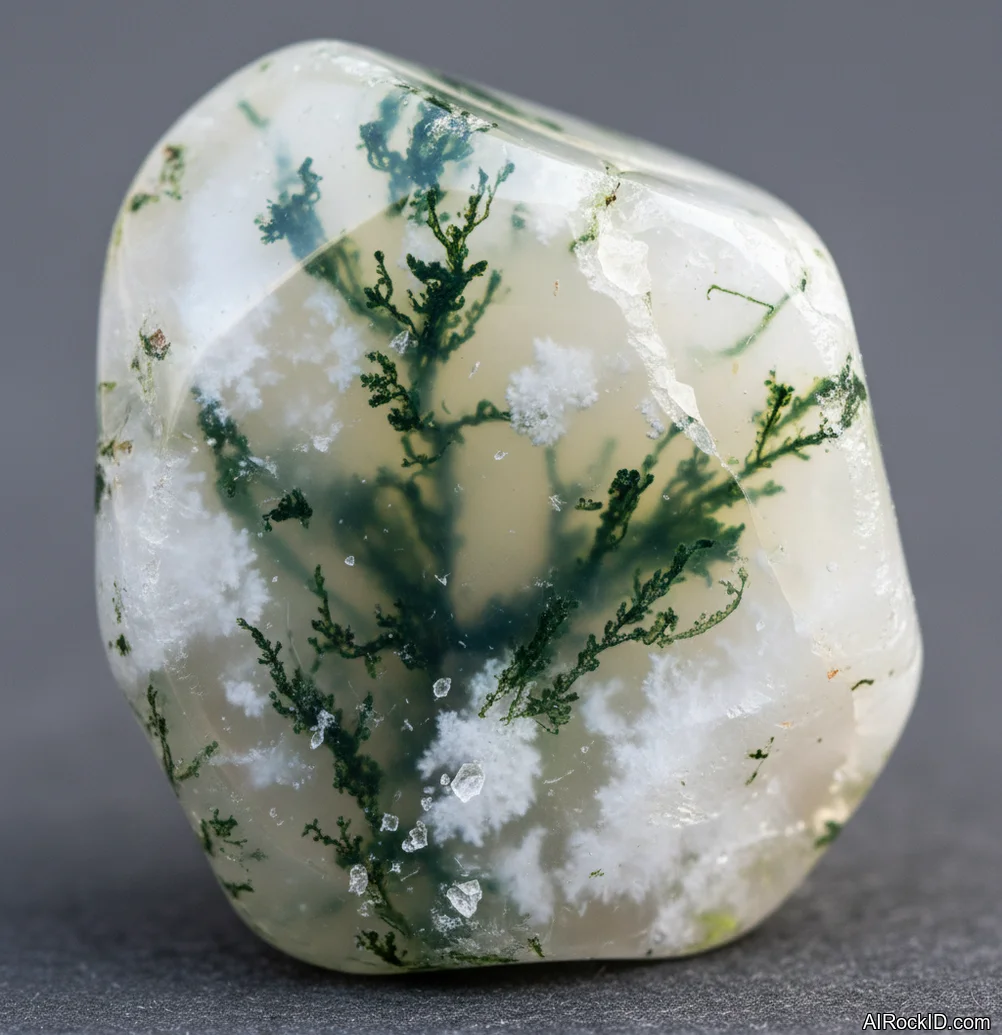
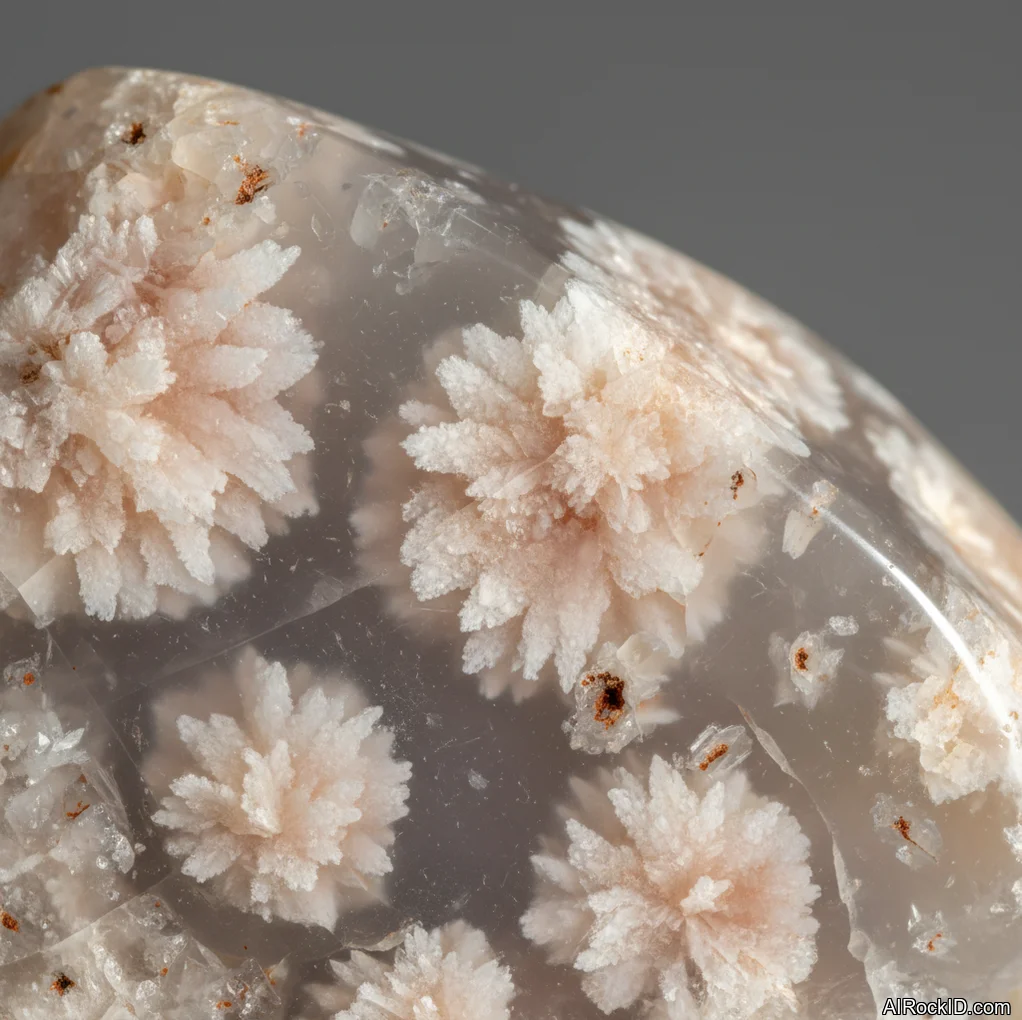
Flower Agate is just the trade name people use for a pink to peach chalcedony (microcrystalline quartz) with white, cream, or pale pink plume inclusions that look like tiny blossoms trapped inside the stone.
Hold a palm stone and you notice that familiar quartz weight right away. It’s cool when you first pick it up, then it takes its time warming against your skin. And the “flowers” aren’t printed on the outside or anything. They’re inside the chalcedony, so if you tilt it under a lamp the plumes shift and seem to hover at different depths, kind of like peering into a shallow pond.
A lot of folks take one look and assume it’s painted or dyed. But most of what’s out there is natural chalcedony with plume growth. Thing is, you won’t see it as sharp crystal points. It usually comes as nodules, slabs, or polished pieces, and the really good ones are the stones where the plumes stay crisp and separated instead of getting squished into a cloudy blur.
Origin & History
“Flower Agate” isn’t an official mineral species name. It’s a newer trade label that really caught on in the late 2010s, when pink chalcedony from Madagascar, packed with plume-like inclusions, started hitting shows and online shops in big quantities (the kind where you’d see table after table of the same stuff).
The “agate” part is a bit squishy, like it so often is in the gem world. Some pieces do have faint banding, so calling them agate isn’t much of a stretch. But a lot of material is closer to plume chalcedony, with barely any banding at all. “Cherry Blossom Agate” and “Sakura Agate” are basically just marketing names for the same visual, pulled from the way those plumes look like little clusters of petals.
Where Is Flower Agate Found?
Most Flower Agate in the market comes from Madagascar, typically as nodules that get cut into slabs, towers, and palm stones.
Formation
Look closely at a good slab and you can practically read the whole growth story in it. Chalcedony forms when silica-rich fluids push through little cavities or fractures in volcanic rock, then they gel up and slowly harden over time.
Those “flower” plumes? They’re basically inclusion structures that grew while the stone was filling in, usually when the chemistry shifted mid-deposit. You’ll spot plumes radiating outward, those cottony little bursts, and sometimes tiny orb-like starts that never quite finished (so they just sit there looking half-born). And since it’s chalcedony, the texture is microcrystalline. So it’ll take a high polish, but it still has that slightly waxy feel compared to clear macrocrystalline quartz, the kind that feels more glassy under your fingertip.
But here’s the rub: neat, high-contrast plumes don’t show up in every nodule. A lot of rough is just pale pink with faint ghost flowers, and that’s why the best display-grade pieces get cherry-picked fast.
How to Identify Flower Agate
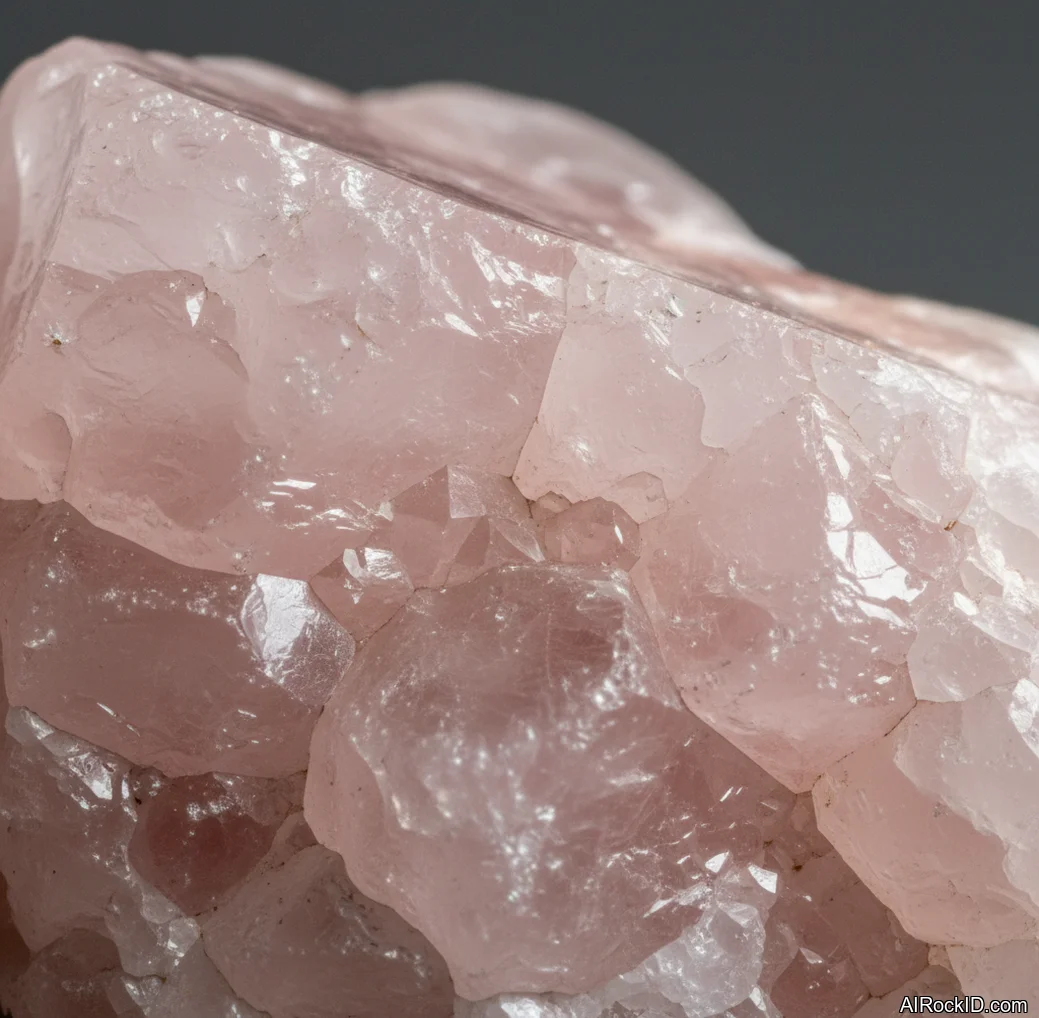
Color: Usually soft pink, peach, or milky rose with white to cream plumes; some pieces lean beige or have a gray cast. The plumes often look like clustered petals or cauliflower-like blooms inside the chalcedony.
Luster: Polished surfaces show a vitreous to slightly waxy luster, typical of chalcedony.
Pick up a real piece and it stays cool to the touch longer than resin or glass, and it has that solid quartz weight for its size. The real test is depth: rotate it under a single light and the “flowers” should shift in parallax, not sit flat like a printed pattern. If you scratch it with a steel nail, it usually won’t take a mark, but it will scratch softer glass if you push it.
Properties of Flower Agate
Physical Properties
| Crystal System | Trigonal |
| Hardness (Mohs) | 6.5-7 (Hard (6-7.5)) |
| Density | 2.58-2.64 g/cm3 |
| Luster | Vitreous |
| Diaphaneity | Translucent |
| Fracture | Conchoidal |
| Streak | White |
| Magnetism | Non-magnetic |
| Colors | Pink, Peach, White, Cream, Beige, Gray |
Chemical Properties
| Classification | Silicates |
| Formula | SiO2 |
| Elements | Si, O |
| Common Impurities | Fe, Mn |
Optical Properties
| Refractive Index | 1.530-1.540 |
| Birefringence | None |
| Pleochroism | None |
| Optical Character | Uniaxial |
Flower Agate Health & Safety
Flower Agate is non-toxic, so it’s safe to handle. But it’s still a silica-based stone, and if you cut it or grind it, that fine dust you see hanging in the air (and settling as a gritty film on the table) shouldn’t be inhaled.
Safety Tips
If you need to shape it, keep it wet while you work (a little spray bottle helps) and wear a proper respirator that’s actually rated for fine silica dust.
Flower Agate Value & Price
Price Range
Rough/Tumbled: $10 - $120 per piece
Cut/Polished: $1 - $8 per carat
Prices jump when the plumes look crisp and evenly spaced, and the translucency is actually good, especially on bigger towers and those thick slabs you can feel the weight of in your hand. But the muddy, low-contrast stuff? It’s everywhere, and it usually ends up tossed in the bargain bins.
Durability
Durable — Scratch resistance: Good, Toughness: Good
It’s stable quartz, but polished pieces can chip on sharp edges if you knock them off a shelf.
How to Care for Flower Agate
Use & Storage
Store it so polished edges don’t bang into harder stones like quartz points or topaz. I keep mine in a tray with a soft liner, especially towers that like to tip over.
Cleaning
1) Rinse with lukewarm water and a drop of mild soap. 2) Use a soft toothbrush to get into carving grooves or around drilled holes. 3) Rinse well and pat dry, then let it air-dry before putting it back on fabric or wood.
Cleanse & Charge
If you do energy-style care, gentle options like smoke, sound, or a quick rinse work fine. Avoid long salt soaks mainly because it’s hard on finishes and metal stands, not because the stone can’t handle it.
Placement
Look closely at the plumes under a single warm lamp and you’ll see why shelves at eye level work best. Near a window is fine, but I wouldn’t bake it in direct sun all day if you want the color to stay soft and even.
Caution
Skip harsh cleaners and ultrasonic machines, especially if the piece is carved and you can see those tiny hairline fractures or little pits you can feel with a fingernail. And don’t drop it on tile. Chalcedony’s tough, sure, but it’ll still chip.
Works Well With
Flower Agate Meaning & Healing Properties
Next to the loud, flashy stones, Flower Agate feels… quiet. It’s the one people grab for steady, everyday goals, like when you’re trying to stick with a habit, not chase one huge breakthrough and call it done.
I’ve watched customers hover over a whole tray, sliding pieces around with their fingertips, and then land on the one where the plumes look like they’re “opening.” That’s always the word they use. And it tells you the appeal is mostly visual, almost like you’re picking a tiny scene.
On a stressful day, it’s the feel that wins people over. Smooth. Cool. Heavy enough in the palm that it kind of anchors you (literally). If you’re a fidgeter, a palm stone gets rubbed constantly, and after a week you start spotting little plume details you swear weren’t there at first. Funny how that works, right?
But keep your feet on the ground. Any “healing” talk is metaphysical, not medical. What Flower Agate is actually good at is being a focus object, something gentle to stare at while you journal or plan, or when you’re trying to come down after too much caffeine and not enough sleep.
Identify Any Crystal Instantly
Snap a photo and get properties, value, care instructions, and healing meanings in seconds.