Dallasite
What Is Dallasite?
Dallasite is a lapidary rock from Vancouver Island, British Columbia. It’s altered basalt mixed with quartz, epidote, chlorite, feldspar, and often a bit of sulfide.
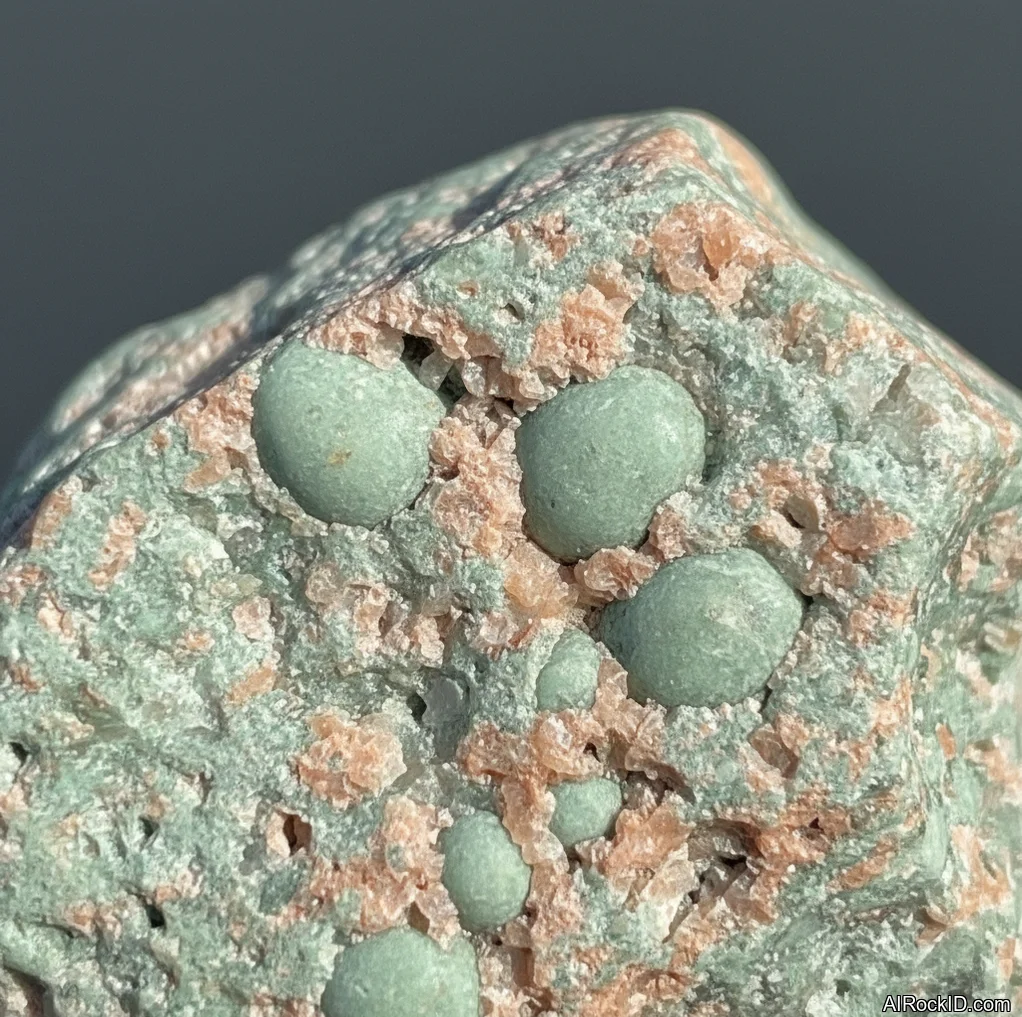
Pick up a palm stone and you can tell right away it isn’t “crystal light.” It’s got that basalt weight in your hand, and the polish comes up slick but not glassy the way pure agate does. At first it just looks like a busy green-and-salmon patchwork. Then your eyes adjust and start picking out what’s actually there: pale quartz seams, pistachio epidote, the darker host rock, plus the occasional brassy speck that winks when you tilt it under a lamp.
Most of what you see in shops got cut from beach cobbles or collected boulders, so the patterns tend to be rounded, with healed fractures that zig like little lightning bolts. And unlike a lot of jasper trade names, this one has a real place tied to it. Thing is, if you’ve handled enough pieces, you can usually guess when a slab came from a fresh interior cut versus a weathered cobble, because the beach-worn stuff sometimes shows tiny pits where the softer minerals pull out during polishing (you can feel them with a fingertip if you’re looking for it).
Origin & History
The name’s pulled straight from the Dallas Road shoreline in Victoria, down on southern Vancouver Island, where local rockhounds have been picking up similar stuff and trading it around for ages. And yeah, you’ll hear some folks connect it to the bigger “Dallas” naming you see in the area, but in lapidary talk it’s basically just shorthand for that Vancouver Island coastal material.
Thing is, it’s not a formally recognized single mineral species, so you’re not going to find a neat “first described” paper the way you would for something like epidote or prehnite. Most dealers handle it the same way they do other Canadian lapidary rocks: it’s a regional name, it has a consistent look, and once you get it under a scope, the mineral mix is pretty predictable.
Where Is Dallasite Found?
Dallasite is primarily associated with southern Vancouver Island in British Columbia, especially coastal exposures and cobble beaches near Victoria.
Formation
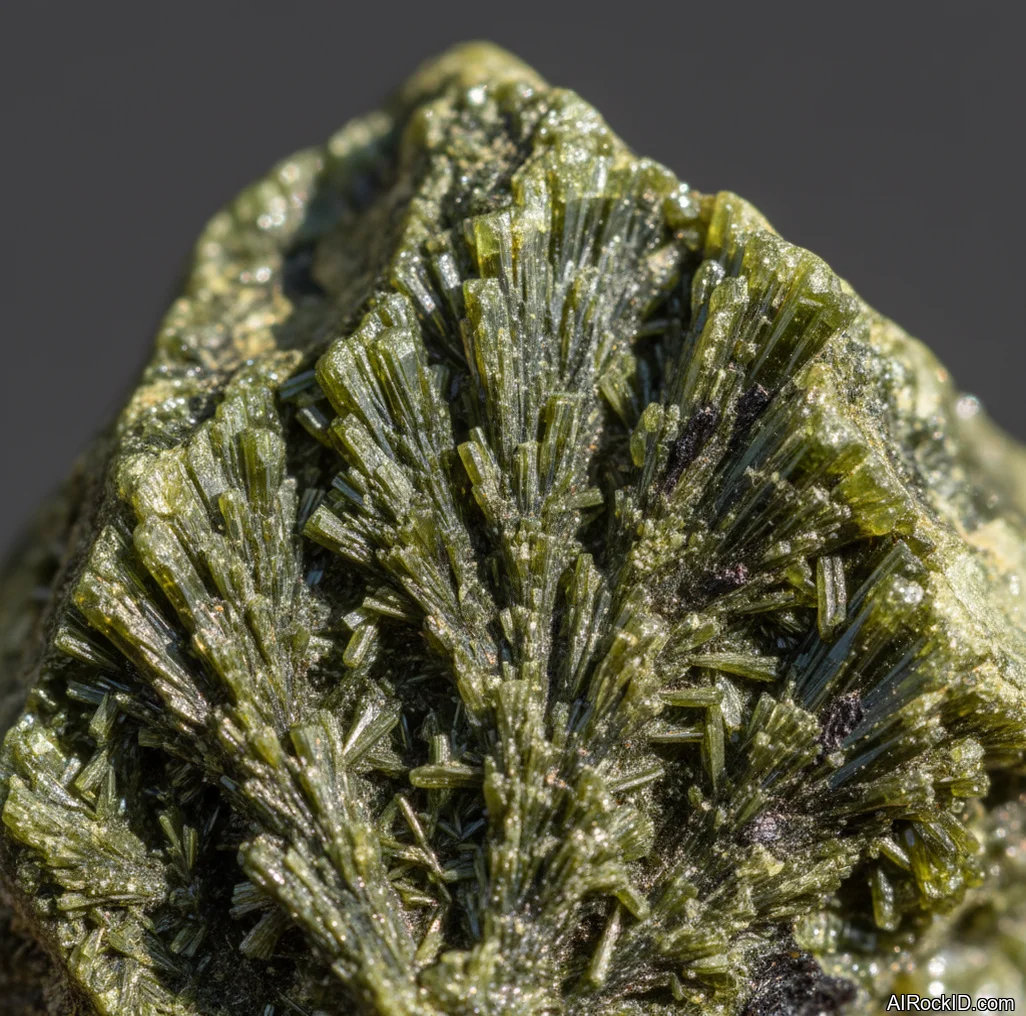
Look close and it’s obvious this is “worked over” volcanic rock. It started life as basalt, then got cracked up and messed with by hot fluids, and that’s when the green epidote and chlorite show up. Quartz runs through the breaks as little cracks and veins. Feldspar pops in as pink to salmon blotches. And the dark matrix sticks around as the backbone holding the whole thing together.
Thing is, trying to pin it down like it’s one mineral doesn’t really work, because the recipe shifts from slab to slab. One cut can go heavy on epidote and read green right away. Another leans pink because there’s more feldspar. And some pieces have enough sulfide grains that you’ll catch tiny metallic pinpoints once it’s polished. I’ve even had a cab where a small sulfide spot took a slightly different shine than the rest of the stone, so if you go looking (seriously, like you’re hunting for it), you can feel that little texture change with a fingernail.
How to Identify Dallasite
Color: Most dallasite shows dark gray to black basalt with mottled green (epidote or chlorite), pink to salmon (feldspar), and white to translucent quartz veining. Some pieces have small brassy flecks from sulfides.
Luster: Polished surfaces range from waxy to vitreous depending on how much quartz is present.
Pick up a polished piece and tilt it under a strong light. Quartz veins will flash brighter and look “deeper” than the green areas, which tend to look more matte even when polished. If you scratch it with a steel nail, the basalt and epidote-rich zones usually resist better than the softer chlorite-rich spots, which can take a faint line. And if a seller calls it “dallasite jasper,” remember it’s a mixed rock, so expect patchy hardness and a little undercutting around softer minerals on cheaper polishes.
Properties of Dallasite
Physical Properties
| Crystal System | Amorphous |
| Hardness (Mohs) | 6-7 (Hard (6-7.5)) |
| Density | 2.7-3.1 g/cm3 |
| Luster | Waxy |
| Diaphaneity | Opaque |
| Fracture | Uneven |
| Streak | varies by component (white to greenish-gray) |
| Magnetism | Non-magnetic |
| Colors | black, dark gray, green, pink, salmon, white, brassy gold |
Chemical Properties
| Classification | Silicates (rock composed of multiple silicate minerals with minor sulfides) |
| Formula | Mixture; no single formula (commonly includes SiO2 with Ca-Al-Fe silicates such as epidote-group minerals) |
| Elements | Si, O, Ca, Al, Fe, Mg, Na, K, H |
| Common Impurities | S, Cu, Zn |
Optical Properties
| Refractive Index | None |
| Birefringence | None |
| Pleochroism | None |
| Optical Character | Isotropic |
Dallasite Health & Safety
Handling it is pretty low risk. But once you start cutting it or sanding it, you can kick up dust that carries silica. So treat it the same way you’d treat jasper or basalt at the bench, especially when the blade starts throwing that fine, gritty powder.
Safety Tips
Use water when you’re grinding. Don’t do it dry. Put on a properly fitted respirator for dust (the kind that actually seals around your nose and cheeks, not one that fogs your glasses and leaks). And if you’ve been handling rough with visible sulfide specks, wash your hands afterward. Why risk it?
Dallasite Value & Price
Price Range
Rough/Tumbled: $10 - $80 per palm stone or cabochon
Prices bounce around depending on the color contrast and how clean the polish actually looks up close. That bright green epidote with sharp, crisp quartz veins and hardly any pits will pull more money than a muddy slab with undercut spots you can catch with a fingernail.
Durability
Moderate — Scratch resistance: Good, Toughness: Good
It holds up fine in normal handling, but mixed hardness can cause undercutting and dull spots if it’s banged around or poorly polished.
How to Care for Dallasite
Use & Storage
Store polished pieces in a pouch or a divided box so harder stones don’t scuff the shine. If you’ve got a slab with little pits, keep it away from grit that can lodge in them.
Cleaning
1) Rinse with lukewarm water. 2) Use a drop of mild soap and a soft brush to get into tiny pits or quartz seams. 3) Rinse well and dry with a soft cloth.
Cleanse & Charge
For a simple reset, rinse and dry it, then leave it somewhere calm like a shelf away from direct sun. If you do smoke cleansing, keep it quick so soot doesn’t settle into pits.
Placement
On a desk it’s great as a tactile worry stone because it stays cool to the touch. In a display, aim a small light across the surface so the quartz veins catch and pop.
Caution
Skip ultrasonic cleaners and stay away from harsh acids, especially if your piece has sulfide grains or those softer chlorite zones. They’ll haze up fast, and you can actually see the dull spots start to creep in if you’ve ever watched one dry under a bright desk lamp. Why risk it?
Works Well With
Dallasite Meaning & Healing Properties
A lot of people who pick up dallasite in the metaphysical aisle are really just responding to the mix. It feels earthy and kind of “busy” at the same time, like you’re holding a little slice of coastline that got frozen into stone. When I use it, it’s the one I reach for when my brain’s all over the place, not because I think it’s magic, but because my eyes can track the pattern and my hand gets something heavy and cool to hang onto.
Next to something single-mineral like clear quartz, dallasite comes off more grounding for a lot of folks. The green epidote-chlorite look tends to get linked with growth and repair, and the pink feldspar can read as comforting. But thing is, two pieces can feel totally different in your hand. I’ve had one slab that was slick like glass, and another that felt a little “grabby” because of tiny undercut spots you can catch with a fingernail if you run it along the surface (annoying, but also kind of interesting). That alone changes the whole vibe.
So if you’re using crystals as a support tool, keep it practical. Pair it with breathing, journaling, a short walk, or even just sitting still for a minute and noticing what you’re actually doing. And look, if you’ve got real health stuff going on, this is still a rock and a routine. Not medical care.
Identify Any Crystal Instantly
Snap a photo and get properties, value, care instructions, and healing meanings in seconds.