Desert Jasper
What Is Desert Jasper?
Desert Jasper is an opaque kind of jasper, which is a microcrystalline quartz rock, and it usually shows up in those desert-ish tans, browns, and reds.
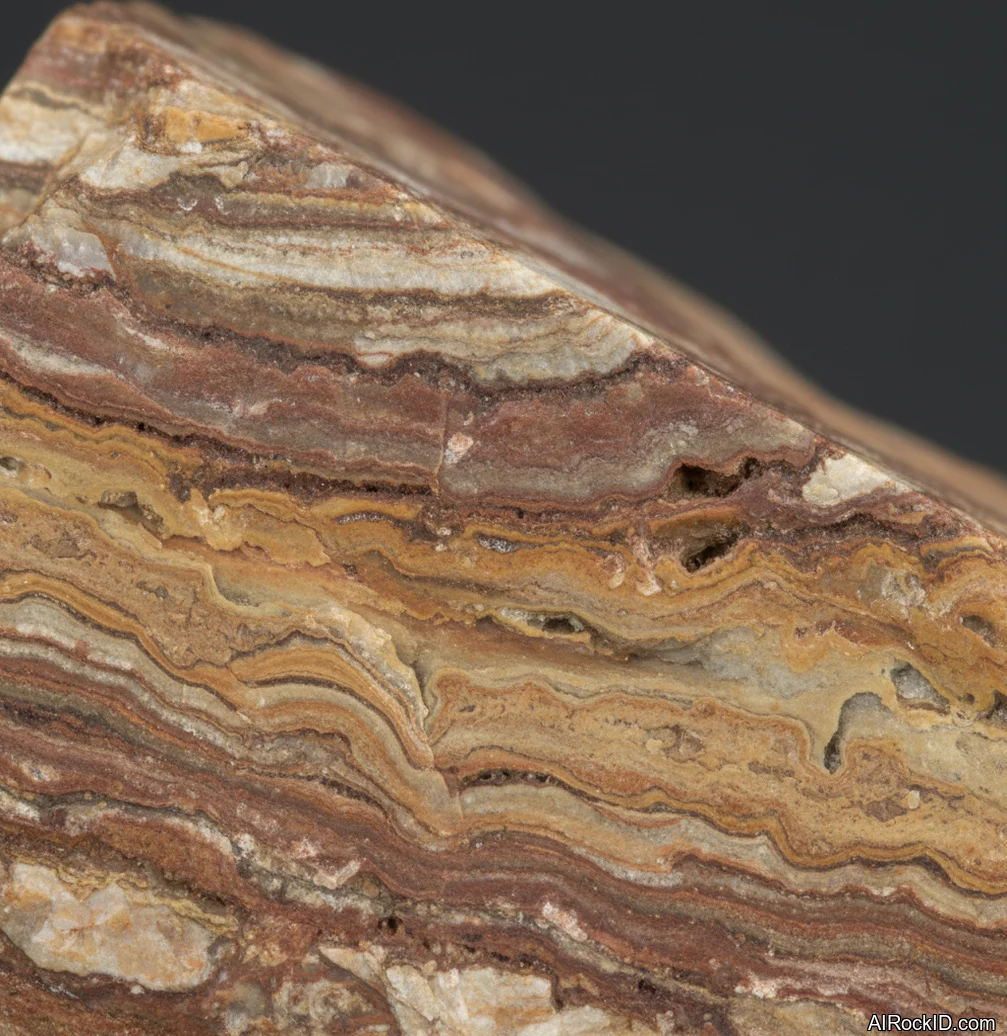
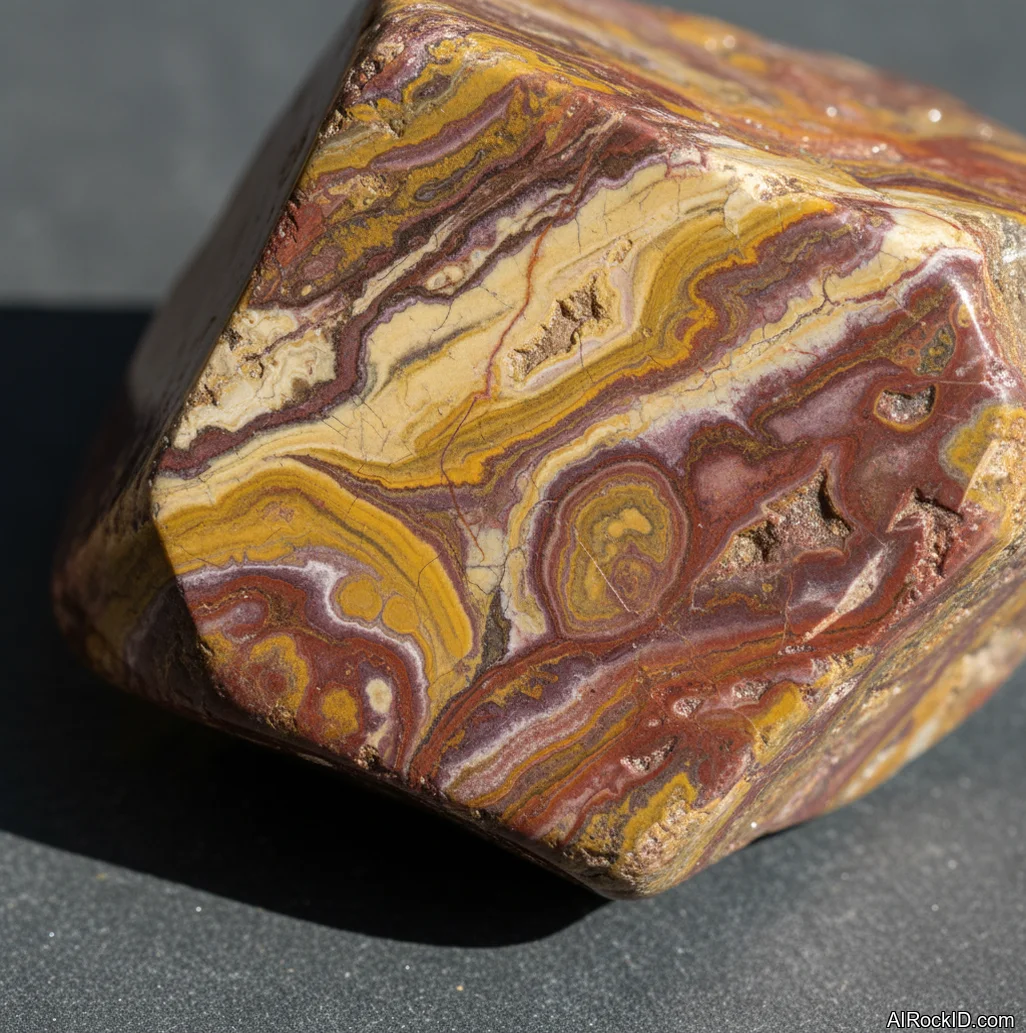
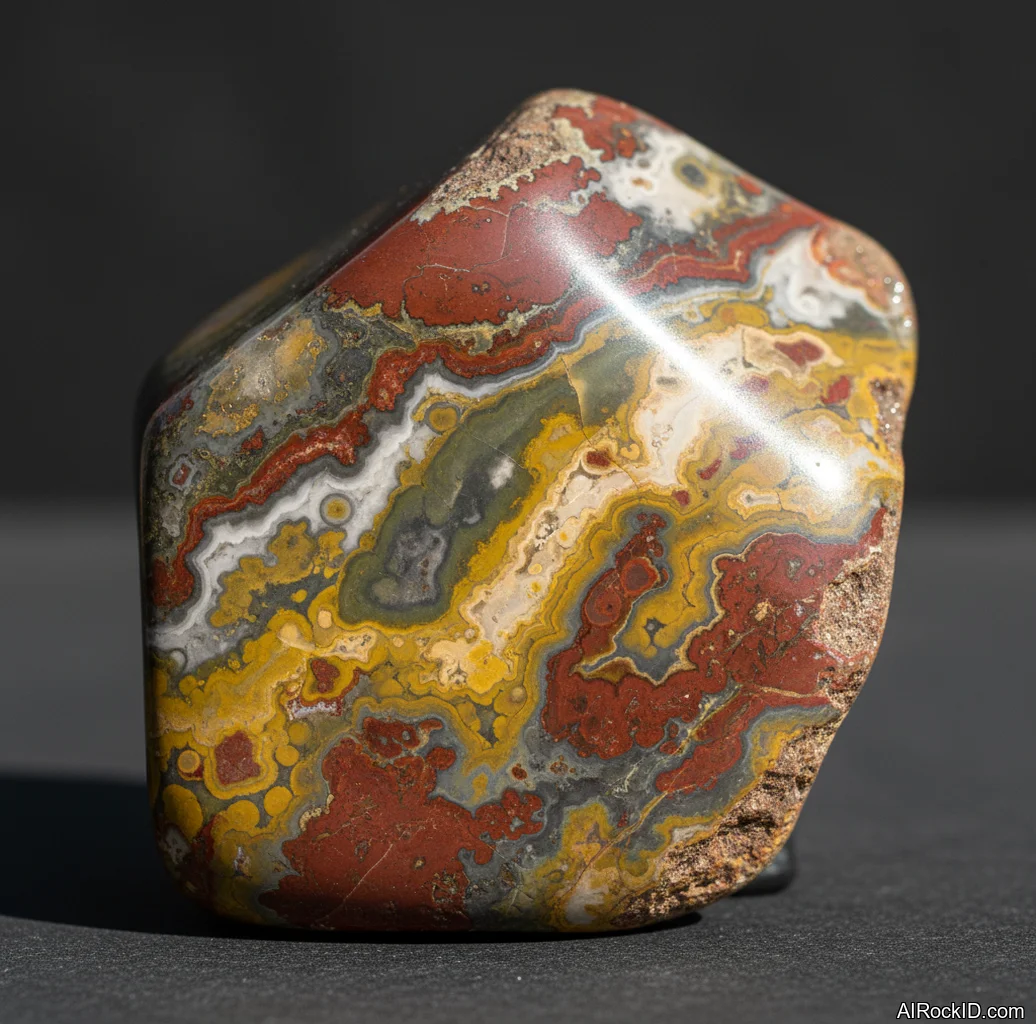
Pick up a palm stone and you feel it immediately. It’s got that surprising weight for something that fits in your hand. And the polish on a good piece is slick, sure, but it doesn’t have that cold, glassy feel you get from clear quartz. The real hook is the surface: sandy bands, rusty swirls, little “horizon lines,” plus patches that genuinely look like dried riverbeds on a map (the kind you trace with your thumb without thinking).
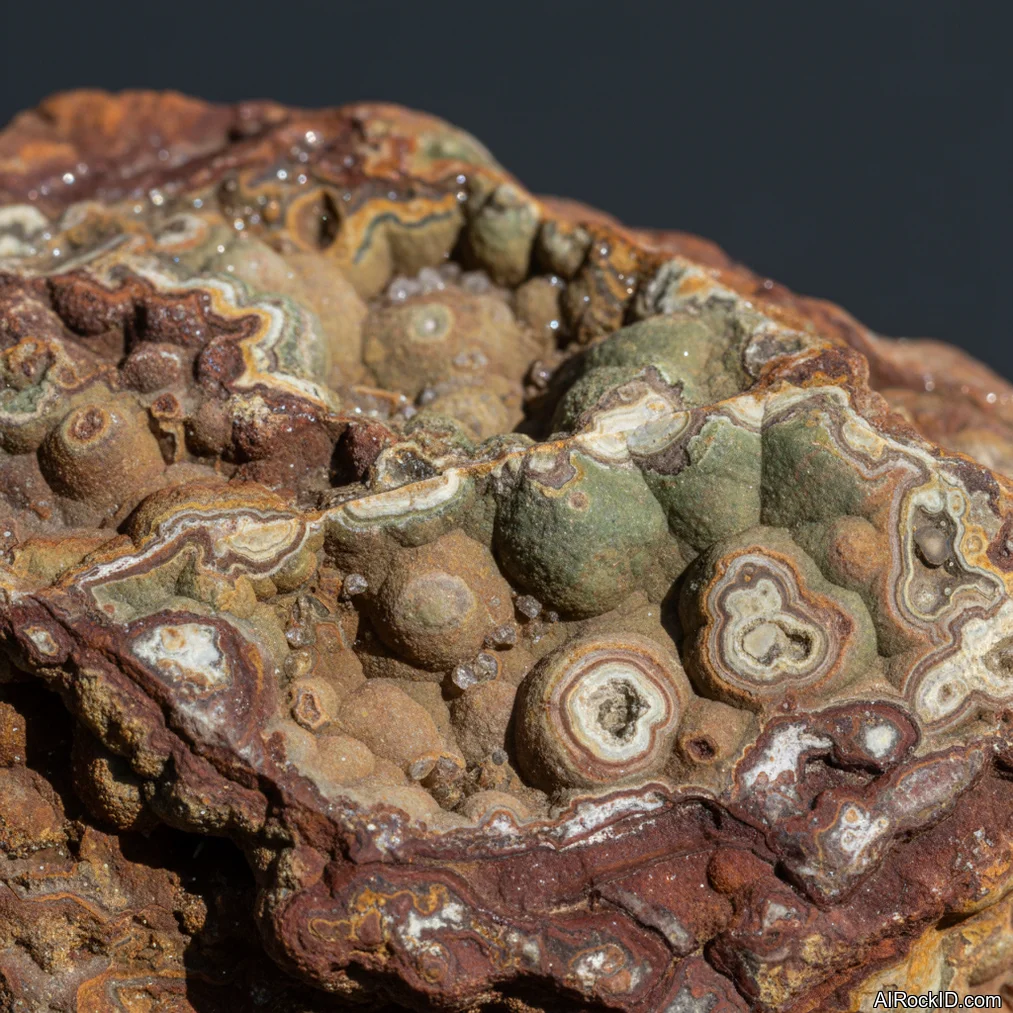
A lot of it gets tossed into the same bucket as picture jasper at first glance, and yeah, that makes sense. But Desert Jasper usually reads warmer and dustier. Some pieces show tiny orb spots or cloudy circles, while others are more banded with cleaner layers. Either way, it’s a pattern stone. And the best ones already look like a landscape before you even try to spot one.
Origin & History
Jasper’s been known since antiquity. But “Desert Jasper” is really just a trade name sellers slap on jasper that shows those dry, landscape-y colors and banding. You’ll notice the label moves around, too, getting used for different deposits depending on what’s hitting the market that year.
The word “jasper” comes down through Latin and Greek (iaspis), and people have used it to mean patterned, opaque silica for ages. In modern lapidary and shop talk, Desert Jasper isn’t about some formal first description so much as the vibe. A desert palette, scenic patterning, and a solid jasper body that’ll take a strong polish (the kind that looks glassy when you tilt it under a light).
Where Is Desert Jasper Found?
Most Desert Jasper on the market is sold under a look-based trade label, so sources vary, but the classic material comes from arid-region jasper deposits in the USA and Mexico, with similar patterned jasper also exported from Madagascar.
Formation
Look close at the patterns and you can almost read the rock’s backstory. Jasper starts when silica-rich fluids push through the host rock, then they gel up, harden, and get reworked over time, with iron and manganese usually responsible for those tans, reds, and browns. It’s microcrystalline quartz, so you’re not going to see big crystals glittering at you. What you get instead is a dense, tough lump that snaps with that familiar shell-like curve (you can feel it when you run a thumb over a fresh break, too).
But Desert Jasper isn’t one single geologic recipe. Some pieces are basically silicified sediment, with banding that tracks the old layers. Others are more brecciated, where broken fragments got cemented back together by silica, and the “desert scene” look comes from the mix of colors and textures, not from clean stripes. Kind of like the rock couldn’t decide on one story, so it kept them all.
How to Identify Desert Jasper
Color: Usually tan, sandy beige, caramel, rust red, and chocolate brown, often with cream bands or cloudy patches. Patterns can be banded, scenic, or spotty with orb-like circles.
Luster: Waxy to vitreous when polished, dull to waxy when rough.
If you scratch it with a steel nail, it shouldn’t bite easily, and it’ll scratch a glass bottle with steady pressure. Pick up a chunk and feel the density: real jasper feels “solid” and cool in the hand, not light and plasticky. The problem with dyed material is the color pools in tiny pits and along fractures, so check the edges and any little vugs with a loupe.
Properties of Desert Jasper
Physical Properties
| Crystal System | Amorphous |
| Hardness (Mohs) | 6.5-7 (Hard (6-7.5)) |
| Density | 2.58-2.64 |
| Luster | Waxy |
| Diaphaneity | Opaque |
| Fracture | Conchoidal |
| Streak | White |
| Magnetism | Non-magnetic |
| Colors | Tan, Beige, Brown, Red, Cream, Gray |
Chemical Properties
| Classification | Silicates |
| Formula | SiO2 |
| Elements | Si, O |
| Common Impurities | Fe, Mn, Al |
Optical Properties
| Refractive Index | 1.53-1.54 |
| Birefringence | None |
| Pleochroism | None |
| Optical Character | Isotropic |
Desert Jasper Health & Safety
Desert Jasper is generally safe to handle, and it’s fine in water for normal use. But it’s still a silica rock, so if you’re cutting or sanding it, don’t breathe in the dust. That stuff gets everywhere (you can feel it grit on your fingers), and you really don’t want it in your lungs, right?
Safety Tips
If you’re going to lapidary it, do it wet, keep the air moving, and wear a real respirator that’s actually rated for fine silica dust (not just a paper mask).
Desert Jasper Value & Price
Price Range
Rough/Tumbled: $3 - $25 per piece
Cut/Polished: $0.30 - $2.50 per carat
Price usually follows the pattern first, then the polish and the size. Pieces with clean, scenic banding and that deep, saturated rust-red tone (the kind that still looks red when you tilt it under a bright light) pull more money than flat tan material with muddy, low-contrast patches.
Durability
Very Durable — Scratch resistance: Good, Toughness: Good
It’s stable in normal household conditions, but the polish can haze if it rubs against harder grit or gets sand in a pocket.
How to Care for Desert Jasper
Use & Storage
Keep it in a pouch or a divided box if you don’t want the polish getting micro-scratched by harder grit or other stones. And don’t store it loose with corundum or diamond jewelry.
Cleaning
1) Rinse with lukewarm water to remove grit. 2) Wash with mild soap and your fingers or a soft brush, especially around pits. 3) Rinse again and dry with a soft cloth.
Cleanse & Charge
If you do energy-style cleansing, running water, smoke, or a quick set on selenite are all gentle options. Skip salt soaks if your piece has tiny pits that trap crystals and crud.
Placement
It looks great where light rakes across the surface, like on a shelf edge or desk corner. I like it near a plant or a bowl of other earth-tone stones because the patterns read better in a group.
Caution
Skip harsh cleaners and ultrasonic machines, especially if the piece has fractures or any soft filler in it. And don’t just toss it in a bag with sand or beach grit (you know, the stuff that gets stuck in the corners) unless you honestly don’t care about keeping that shine.
Works Well With
Desert Jasper Meaning & Healing Properties
Compared to the flashier stones, Desert Jasper is quiet. When I’m sorting a tray at a show, it’s the piece I keep grabbing without even noticing. Why? It grounds you in a very literal way. It’s got that small, satisfying heft in your palm, like a smooth worry stone, and the colors sit warm and steady instead of yelling for attention. It’s what you reach for when your brain’s running hot and you don’t want something that sparkles back at you.
In crystal tradition, jasper gets tied to grounding, steadiness, and day-to-day stamina. Desert Jasper matches that feel because the palette leans hard into earth tones, and the patterns honestly look like terrain. Little bands, blotches, swirls. If you use stones as a focus object for meditation, this one’s handy just because there’s so much to stare at. Your eyes can track a line like it’s a trail.
But keep some perspective. Any calming or “supportive” effect is personal and subjective, and it’s not medical care. What I can say, from handling a lot of it, is the practical stuff: it’s tough, it holds up to being carried around in a pocket or bag, and it doesn’t feel fussy (no babying required). And that reliability is a big reason people stick with jasper.
Identify Any Crystal Instantly
Snap a photo and get properties, value, care instructions, and healing meanings in seconds.