Polychrome Jasper
What Is Polychrome Jasper?
Polychrome Jasper is an opaque, multicolored kind of jasper (microcrystalline quartz), and people mostly know it for those wide, painterly bands and swirls.
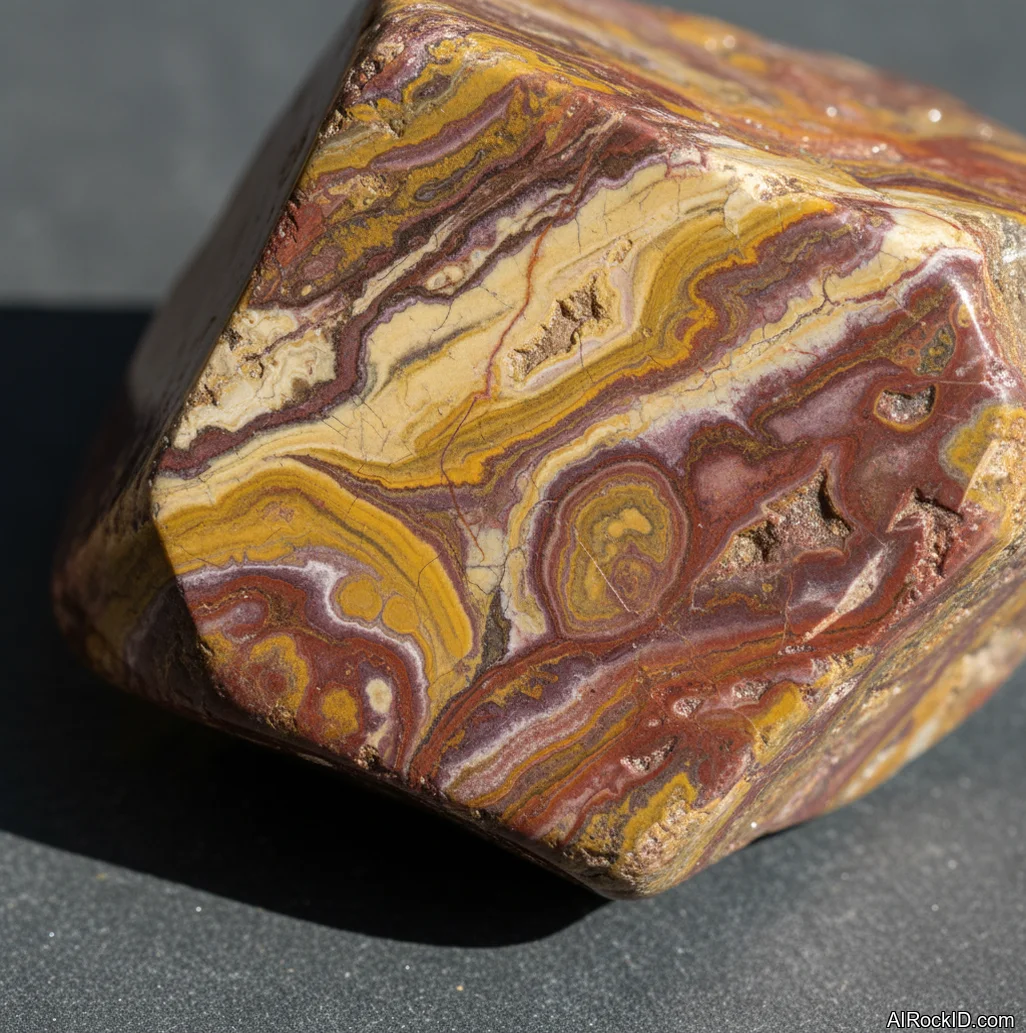
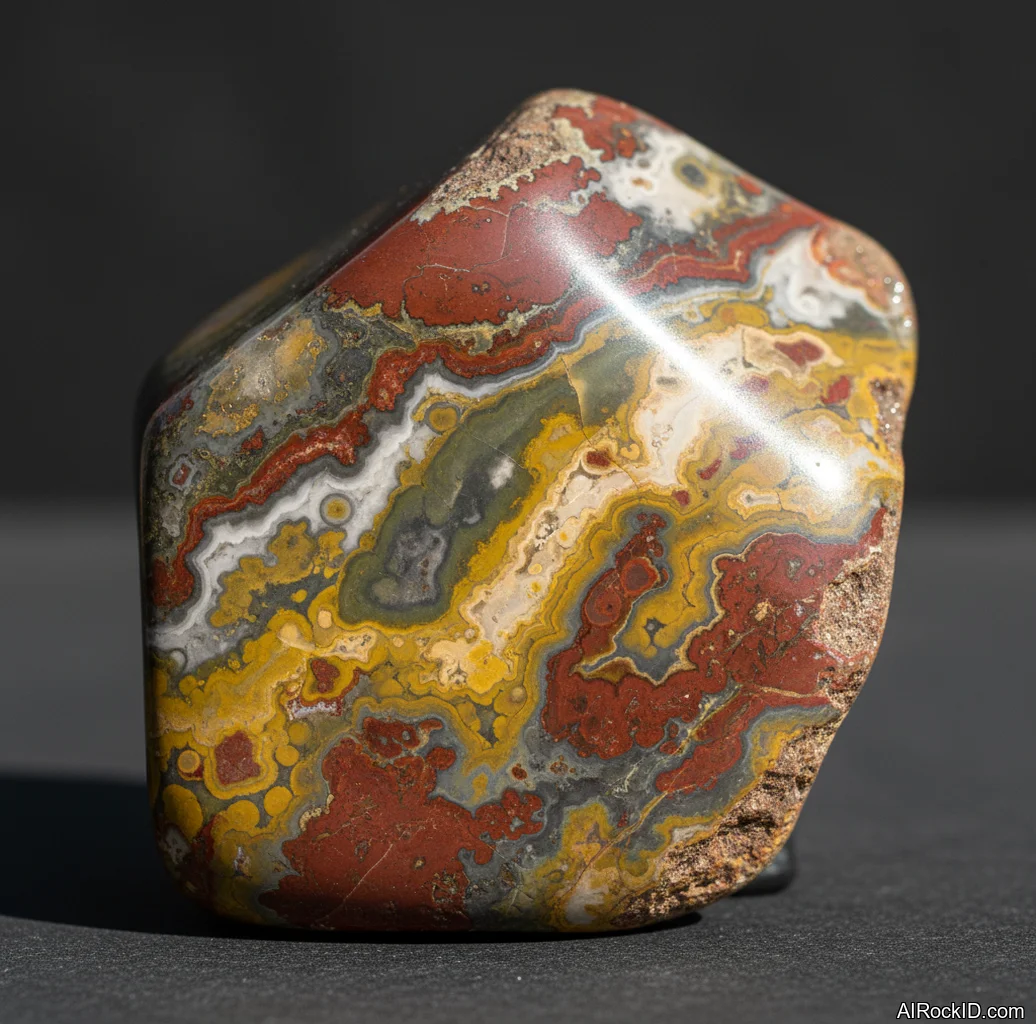
Pick up a palm stone and the first thing you clock is the heft. It feels heavy for its size, and the polish is usually almost buttery, like a worry stone that’s been in somebody’s pocket for years. The colors can read like desert hills from across the room: brick red, mustard, taupe, gray, plus that soft blue-gray you get in some pieces that honestly looks like storm clouds rolling in.
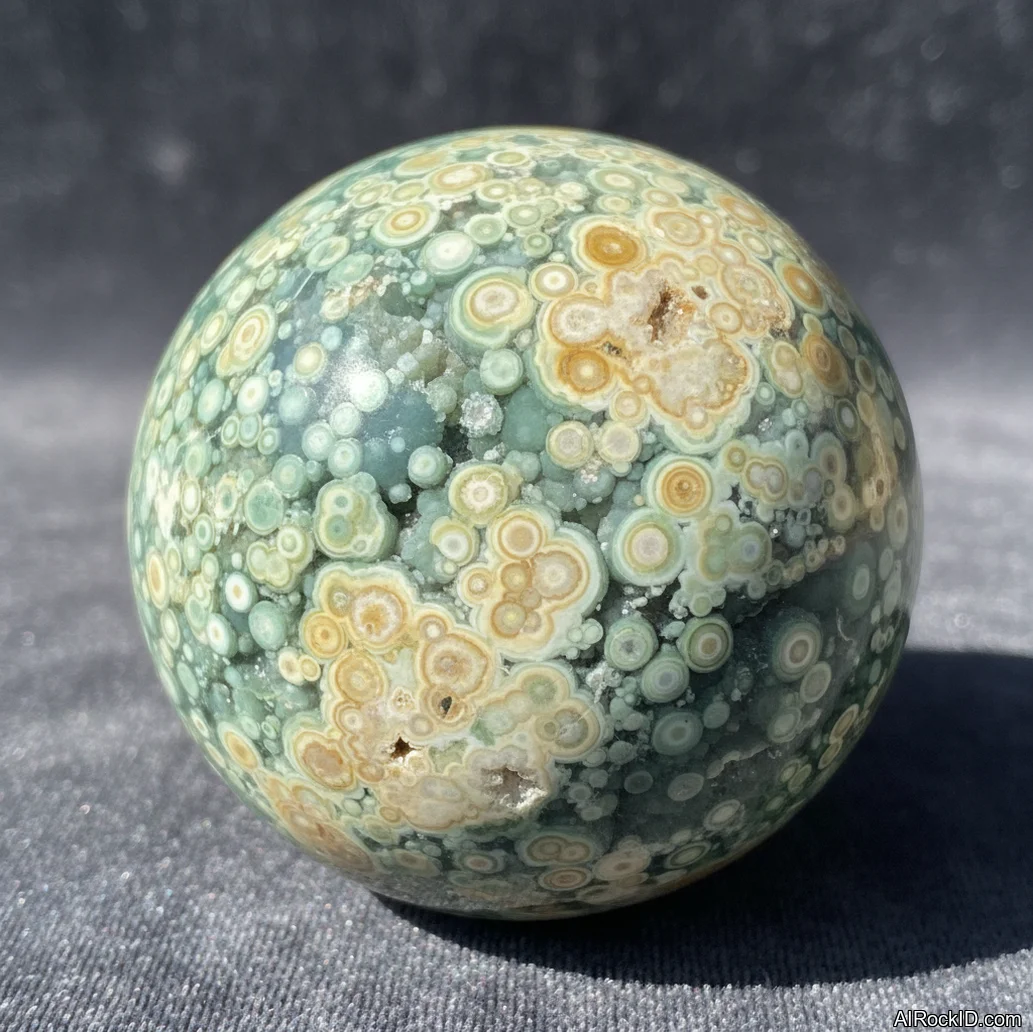
People see “polychrome” and expect it to scream. But a lot of the good stuff is more earthy, kind of calm. The patterning is the whole deal, really. Tilt a slab under a shop light and it clicks why cutters go nuts for it: big sweeping curves, little “islands” of color, and sometimes these orb-like spots that look like they were painted on (but they weren’t).
Origin & History
Most dealers I’ve talked to trace the modern trade name “Polychrome Jasper” back to material out of Madagascar that started popping up in the late 2000s and early 2010s, right when new jasper deposits were getting worked and shipped out in volume. It’s not some old museum label. It’s a market name that stuck because it’s basically describing what’s right there in your hand when you turn a piece under the light.
“Jasper” comes down through a long chain of older words with Greek and Latin roots, originally used for spotted stones, and “polychrome” just means many-colored. No mystery. Thing is, the real historical significance here is more lapidary than archaeology: it hit the scene at exactly the right moment for the big freeform and palm-stone craze, so it spread fast through gem shows and online shops.
Where Is Polychrome Jasper Found?
Commercial Polychrome Jasper is primarily from Madagascar, especially the northwestern coastal regions where jasper-bearing volcanic and sedimentary units are exposed.
Formation
Look at it up close and it basically spells out, “silica-rich fluids went to town here.” Jasper’s microcrystalline quartz, so you’re talking about silica that worked its way through the rock and then locked up as a dense, fine-grained mass you can feel when you run a fingertip over a fresh-cut face (it’s got that tight, almost waxy drag).
In Madagascar, the host rocks are commonly linked to volcanic sequences plus the sediments that go with them, and that lines up with the broad color zoning and that occasional brecciated look, like the stone got cracked and then glued back together by later silica.
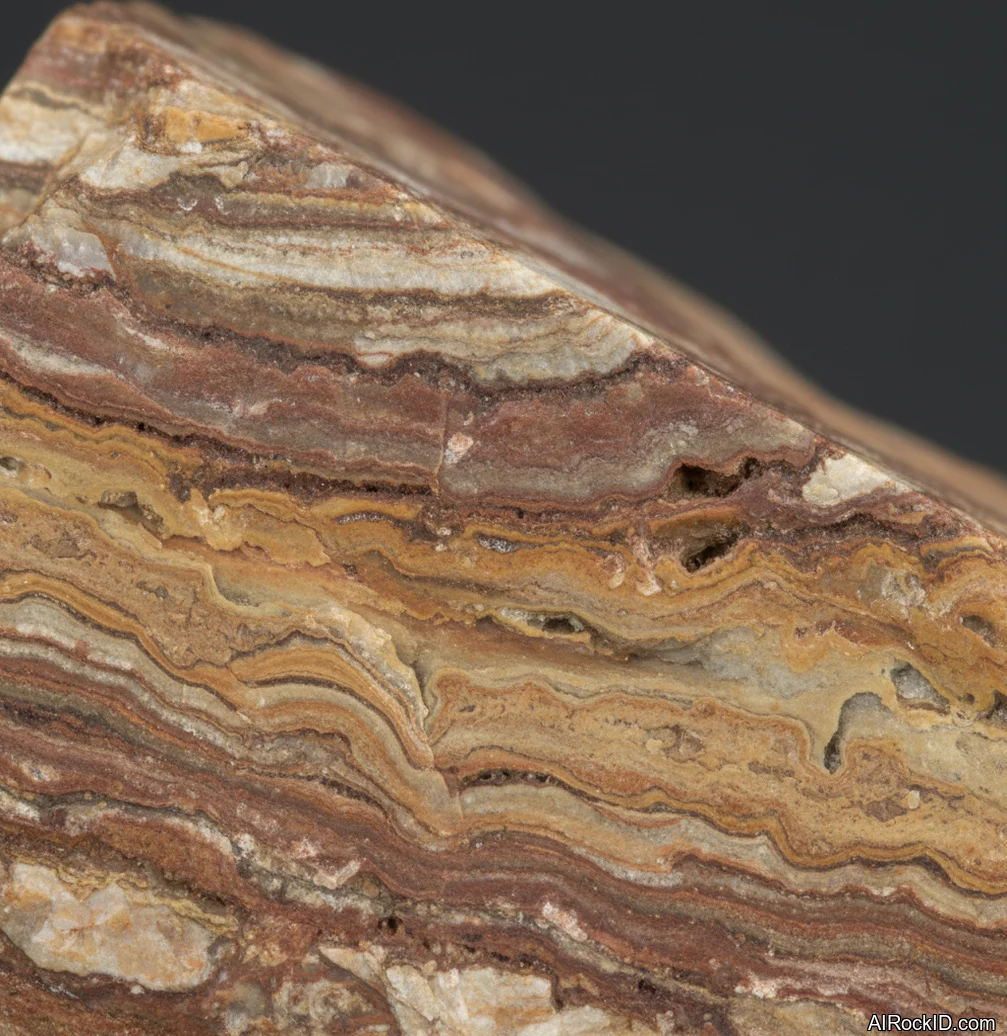
The reds and yellows? That’s usually iron doing what iron does. Hematite and goethite staining can color entire layers, while manganese and other trace stuff can push areas toward grays and browns. And the slow, repeat pulses of fluid, along with chemistry shifts, are what give you that “landscape” banding that turns into brushstroke-looking lines once it’s polished.
How to Identify Polychrome Jasper
Color: Usually opaque with broad bands and swirls of red, tan, yellow, brown, gray, and sometimes blue-gray or cream. Patterns range from sweeping arcs to orb-like patches.
Luster: Waxy to vitreous when polished, with a smooth, glassy edge on fresh breaks.
If you scratch it with a steel nail, it shouldn’t bite easily, and it will scratch glass like any quartz-rich jasper. The real test is the feel and the pattern depth: good Polychrome has color that looks “in” the stone, not sitting on top like dye. And if a piece feels weirdly light or the color pools in cracks and drill holes, I start suspecting composite or dyed material.
Properties of Polychrome Jasper
Physical Properties
| Crystal System | Trigonal |
| Hardness (Mohs) | 6.5-7 (Hard (6-7.5)) |
| Density | 2.58-2.91 g/cm3 |
| Luster | Waxy |
| Diaphaneity | Opaque |
| Fracture | Conchoidal |
| Streak | White |
| Magnetism | Non-magnetic |
| Colors | Red, Brown, Tan, Yellow, Cream, Gray, Blue-gray, Orange |
Chemical Properties
| Classification | Silicates |
| Formula | SiO2 |
| Elements | Si, O |
| Common Impurities | Fe, Mn, Al |
Optical Properties
| Refractive Index | 1.53-1.54 |
| Birefringence | None |
| Pleochroism | None |
| Optical Character | Uniaxial |
Polychrome Jasper Health & Safety
Polychrome Jasper is usually fine to handle and keep out on a shelf. Thing is, like any silica-heavy stone, the real worry isn’t touching it, it’s the dust you can’t see. If you’re cutting or grinding it dry, you can kick up respirable dust, and that’s the part you don’t want in your lungs.
Safety Tips
So, if you’re doing any lapidary work, don’t dry-cut it. Use wet cutting, or at the very least make sure you’ve got proper ventilation and you’re wearing a respirator (the kind that actually seals to your face, not a flimsy dust mask). And when you’re done and you’ve been messing with that gray, gritty sludge that cakes up on the saw tray and your fingers, go wash your hands.
Polychrome Jasper Value & Price
Price Range
Rough/Tumbled: $5 - $60 per piece
Cut/Polished: $0.50 - $5 per carat
Price jumps when a stone has a clean polish, those big, sweeping patterns, and a larger size that isn’t peppered with pits or little undercut spots you can catch with a fingernail. But the thing is, most of the market value is visual. So you can set two stones of the same weight side by side and, honestly, they can feel like they’re from different planets.
Durability
Durable — Scratch resistance: Good, Toughness: Good
It’s stable for everyday handling, but the polish can dull if it rattles around with harder stones or gets sand in a pocket.
How to Care for Polychrome Jasper
Use & Storage
Store it in a pouch or a tray slot if you care about the polish, because jasper will still pick up scuffs from quartz points and gritty dust. I’ve seen beautiful freeforms come back from a booth with a haze just from being handled all weekend.
Cleaning
1) Rinse with lukewarm water. 2) Wash with mild soap and a soft cloth or toothbrush for creases. 3) Rinse again and dry fully to keep water spots off the polish.
Cleanse & Charge
If you do the metaphysical cleansing thing, smoke, sound, or a quick rinse works fine since it’s quartz-based and not fragile. I avoid saltwater baths mainly because it can leave a crust in tiny pits and it’s annoying to clean out.
Placement
Looks best where light skims across it from the side, not straight overhead, because the bands show more depth. Keep it out of gritty windowsills if you don’t want micro-scratches from blown dust.
Caution
Skip harsh acids, bleach, or gritty abrasive cleaners since they can etch the surface or leave the polish looking hazy and dull (you’ll notice it right away under a bright light). And don’t dry grind or sand without dust control, because silica dust is a real hazard.
Works Well With
Polychrome Jasper Meaning & Healing Properties
Compared to the flashier stones, Polychrome Jasper feels like that steady friend who doesn’t talk much but still shows up. I keep one on my desk when I’m trying to stay on task and not spiral. Not because it’s magic. It just is. It’s got that solid, slightly cool-in-your-hand feel, and the surface has those bands you can literally trace with your thumb (mine’s smooth but not glassy, like it’s been handled a lot). Your brain grabs onto something simple, and that helps.
People who buy it for “energy” usually talk about grounding, calm, and stamina, and yeah, that lines up with how jasper gets used in general. But look, here’s the limit: if you want a stone that smacks you in the face with a loud, buzzy vibe, Polychrome usually won’t do that. It’s quieter. More body than head.
And I’m going to say it straight: this isn’t medical care. If you’ve got anxiety or sleep stuff going on, treat the rock like a comforting object and a little cue to breathe (seriously, who couldn’t use that), not a stand-in for a professional. The upside is you can carry it every day without babying it, and that consistency is what people end up liking.
Identify Any Crystal Instantly
Snap a photo and get properties, value, care instructions, and healing meanings in seconds.