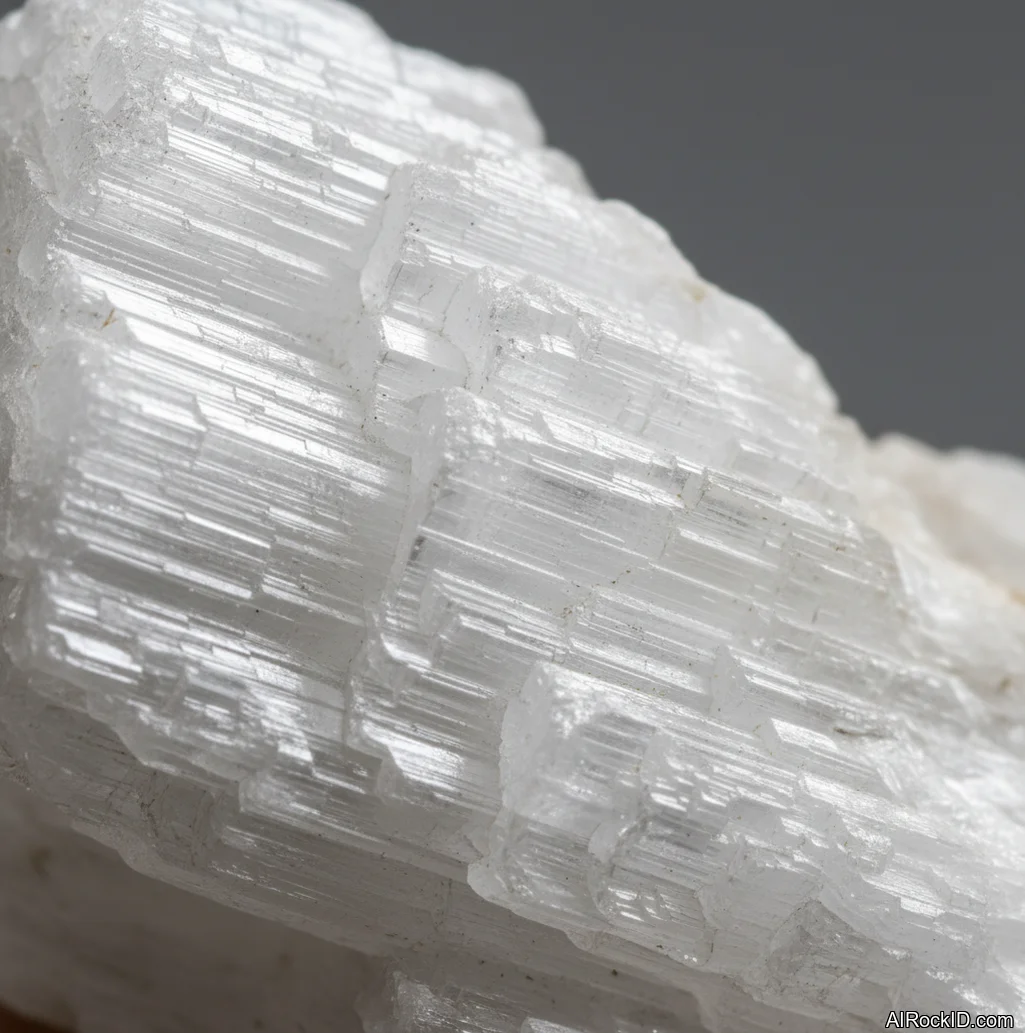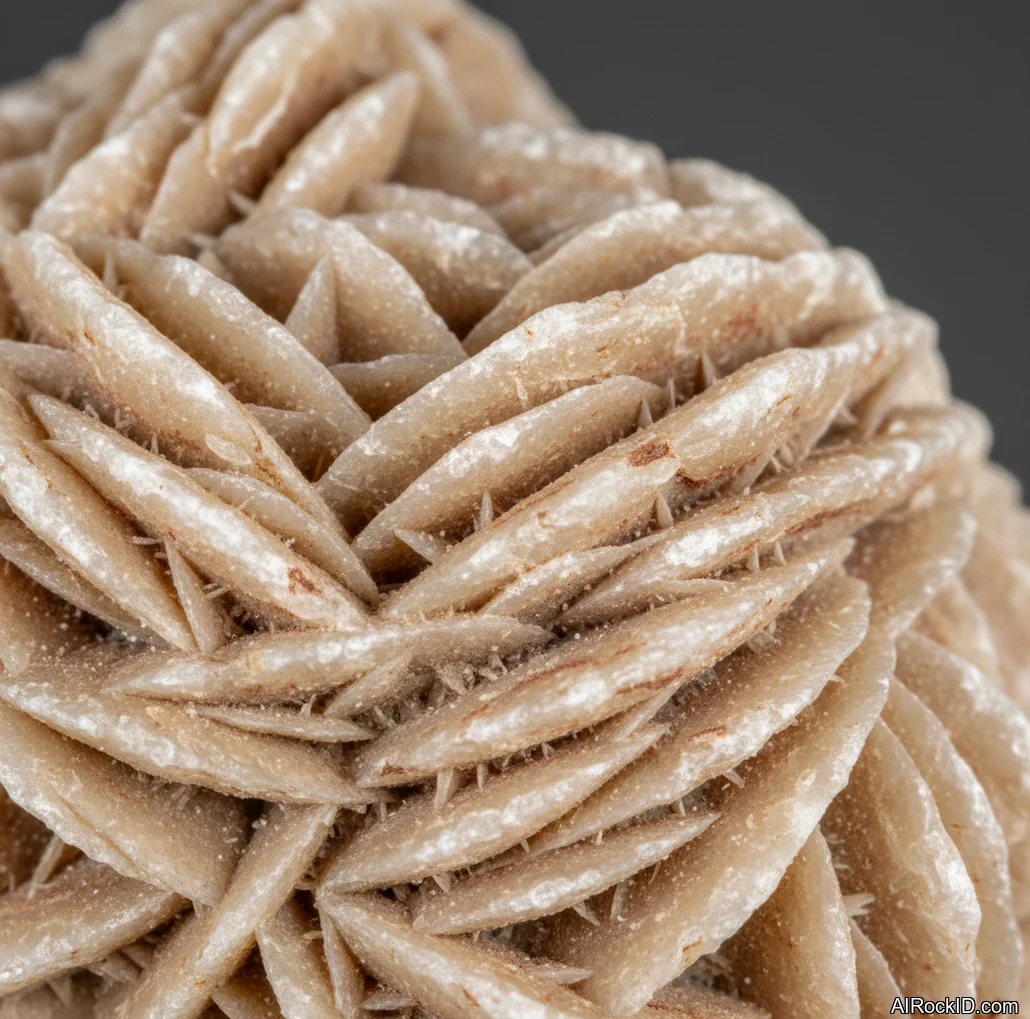
Desert Rose Selenite
What Is Desert Rose Selenite?
Desert Rose Selenite is gypsum (usually the selenite variety) that grows into a rosette shape, with petal-like blades that trap sand or clay between the crystals.
Grab a decent piece and you notice the chalky grit immediately. It’s weirdly light for its size. And the “petals” can bite a little at the edges, but the surface still feels kind of buttery, like it’d scuff if you handled it too hard (or even set it down wrong). Tip it under a lamp and the luster flashes on the cleaner cleavage faces, while the sandy parts stay flat and matte.
People look at it and go, “flower fossil,” but it isn’t organic at all. It’s just gypsum pulling off a neat desert trick, stacking flat crystals into a rose while wind and sediment keep feeding it texture and color.
Origin & History
Gypsum’s been known since ancient times, and its name traces back to the Greek word for “plaster.” And the term “selenite” shows up a lot in older mineral books for that clear, kind of moonlit-looking gypsum, linked to Selene, the Greek moon goddess.
“Desert rose” isn’t an official species name. It’s a habit name collectors toss around for those rosette clusters that form in dry places. Dealers have leaned on it for ages because it sells the look fast. But you’ll also run into “sand rose” on tags, especially when the piece feels more gritty and grainy instead of that smoother, pearly look.
Where Is Desert Rose Selenite Found?
It turns up in desert and semi-desert evaporite basins where gypsum is growing in sediment. Morocco is the big market source, but the southwestern USA and northern Mexico also produce classic rosettes.
Formation
Look close at those “petals” and you’re actually looking at gypsum crystals. They grew in a salty, sulfate-rich spot, usually pretty near the surface. Groundwater seeps in, then dries out. The water evaporates, gypsum drops out of solution, and the crystals shove their way outward into that rosette shape as things flip back and forth between wet and dry.
And that sand? Not just along for the ride. It’s baked into the way the thing grows. As the blades form, they grab and hold onto bits of quartz sand or clay, which is why so many pieces come out tan, caramel, or rusty instead of that clean, chalky white you’d expect from pure gypsum (the kind that looks almost like a flaky bar of soap).
But don’t automatically call every rosette gypsum. Barite can form rosettes too, and you’ll notice it right away if you’ve held one. It feels heavier and tougher in your hand. Like it’s got more heft than it should.
How to Identify Desert Rose Selenite
Color: Most pieces are beige to tan, sometimes with reddish or brown patches from iron-stained sand. Cleaner gypsum areas can be off-white to pale gray.
Luster: Pearly to silky on the smoother cleavage faces, dull to earthy where sand coats the surface.
If you scratch it with a fingernail, it should mark pretty easily because gypsum is only about Mohs 2. The real test is heft: gypsum desert roses feel light, while barite roses have a “whoa” weight for the same size. And check the edges, too. Gypsum petals chip and powder if you bump them together in a box at a show.
Properties of Desert Rose Selenite
Physical Properties
| Crystal System | Monoclinic |
| Hardness (Mohs) | 2 (Very Soft (1-2)) |
| Density | 2.30-2.33 g/cm3 |
| Luster | Pearly |
| Diaphaneity | Transparent to translucent |
| Fracture | Uneven |
| Streak | white |
| Magnetism | Non-magnetic |
| Colors | beige, tan, cream, off-white, brown, reddish-brown, gray |
Chemical Properties
| Classification | Sulfates |
| Formula | CaSO4·2H2O |
| Elements | Ca, S, O, H |
| Common Impurities | Si, Fe, Al, Mg, Na, K |
Optical Properties
| Refractive Index | 1.520-1.530 |
| Birefringence | 0.010 |
| Pleochroism | None |
| Optical Character | Biaxial |
Desert Rose Selenite Health & Safety
You can handle it safely, but it’s pretty fragile. The sharp edges can chip or flake if they get bumped, and you might notice a tiny bit of gritty dust. For normal display use, the risk is low.
Safety Tips
If you’re trimming matrix or brushing off loose sand, put on eye protection and try not to kick up dust. Usually all it needs is a gentle rinse, then a quick pat-dry with a towel (the kind that doesn’t leave lint stuck to it).
Desert Rose Selenite Value & Price
Price Range
Rough/Tumbled: $5 - $60 per piece
Price mostly comes down to size, symmetry, and how intact the petals are. Big rosettes that feel solid in your hand (not that chalky, crumbly stuff that leaves dust on your fingertips) and have that clean, layered “flower” geometry shoot up in price compared to the busted, dusty ones.
Durability
Fragile — Scratch resistance: Poor, Toughness: Poor
Gypsum is very soft and chips easily, and repeated wetting and drying can roughen the surface over time.
How to Care for Desert Rose Selenite
Use & Storage
Store it where it won’t rattle against harder minerals. I keep mine in a little tray with padding because one bump can knock a petal clean off.
Cleaning
1) Use a soft paintbrush to remove loose sand from crevices. 2) If it’s grimy, rinse quickly with cool water and do not soak for long periods. 3) Pat dry and let it air-dry fully before putting it back on a shelf.
Cleanse & Charge
If you do ritual cleansing, stick to smoke, sound, or moonlight. Salt and long soaks are a bad combo for a soft gypsum piece.
Placement
Put it on a stable shelf away from high-traffic spots and pets. Low humidity helps keep the surface looking crisp instead of fuzzy.
Caution
Skip acids and harsh cleaners, and don’t just drop it into a pouch with quartz or feldspar. Those harder stones will scuff it up fast. And when you pull it back out, you’ll see little scratches and dull spots (the kind you catch when the light hits it just right), even if the other stones still look perfect.
Works Well With
Desert Rose Selenite Meaning & Healing Properties
A lot of folks buy desert roses because they want that calm, tidy feeling the shape gives off. Back when I worked in a shop, I’d put one in someone’s hand and, without even thinking about it, they’d start running their thumb along the “petals.” You can feel every little ridge. It’s super tactile. But you’ve got to handle it gently.
In the metaphysical scene, desert rose selenite usually gets lumped in with other gypsum and selenite pieces, so you’ll hear the usual talk about “clearing” or “resetting a space.” I can’t sell that as anything medical, and I don’t treat it like some kind of cure. Still, I do think the ritual part matters. Setting a rose on your desk, brushing that chalky dust off the grooves (it loves to collect it), and keeping the area neat can legitimately shift how your day feels. Placebo? Maybe. But does it work for your mood. Sometimes, yeah.
But there’s a catch people gloss over: it’s fragile, and that changes how you actually live with it. If you want something you can carry in a pocket or toss in a purse, grab something tougher. Desert roses are more like shelf companions. And, thing is, that “grounded” vibe people mention makes sense when you remember what it is. It’s literally gypsum plus sand, formed in dry earth conditions.
Identify Any Crystal Instantly
Snap a photo and get properties, value, care instructions, and healing meanings in seconds.