Garnet In Biotite
What Is Garnet In Biotite?
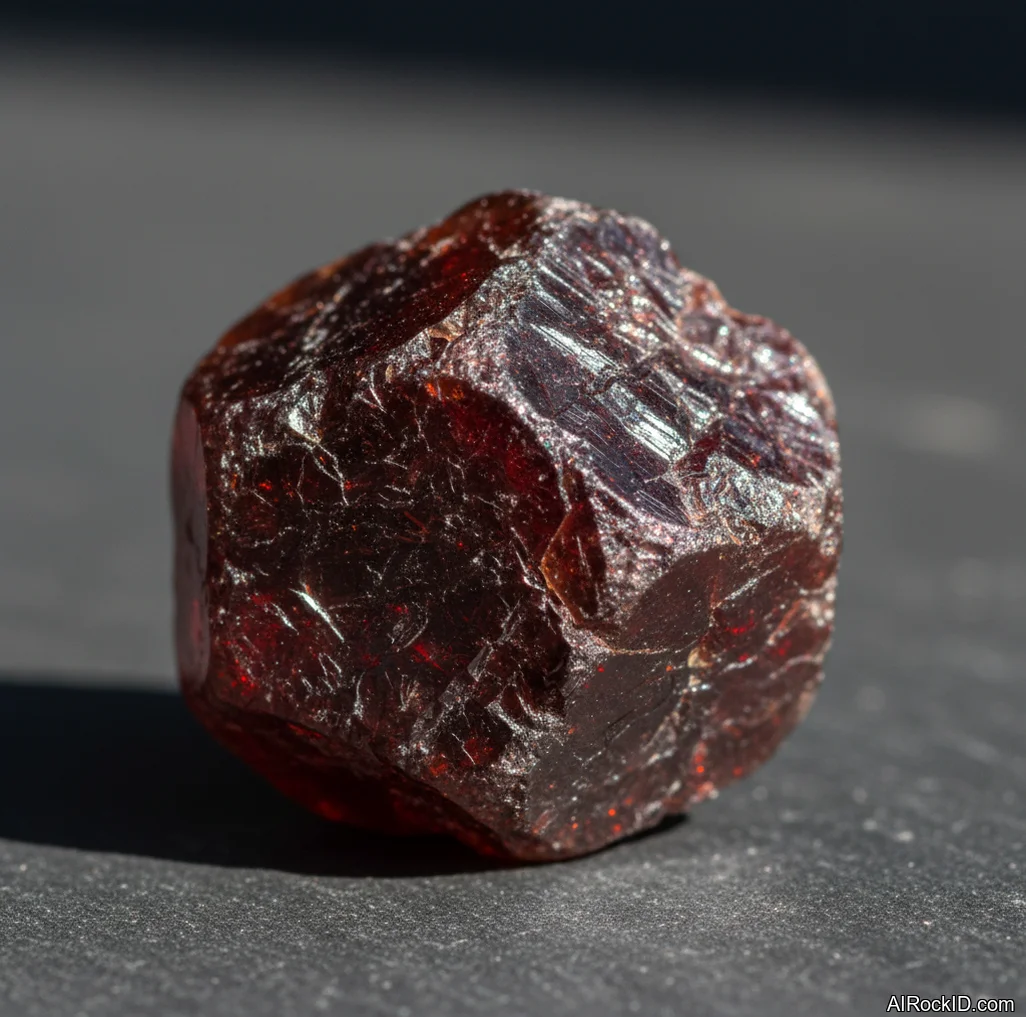
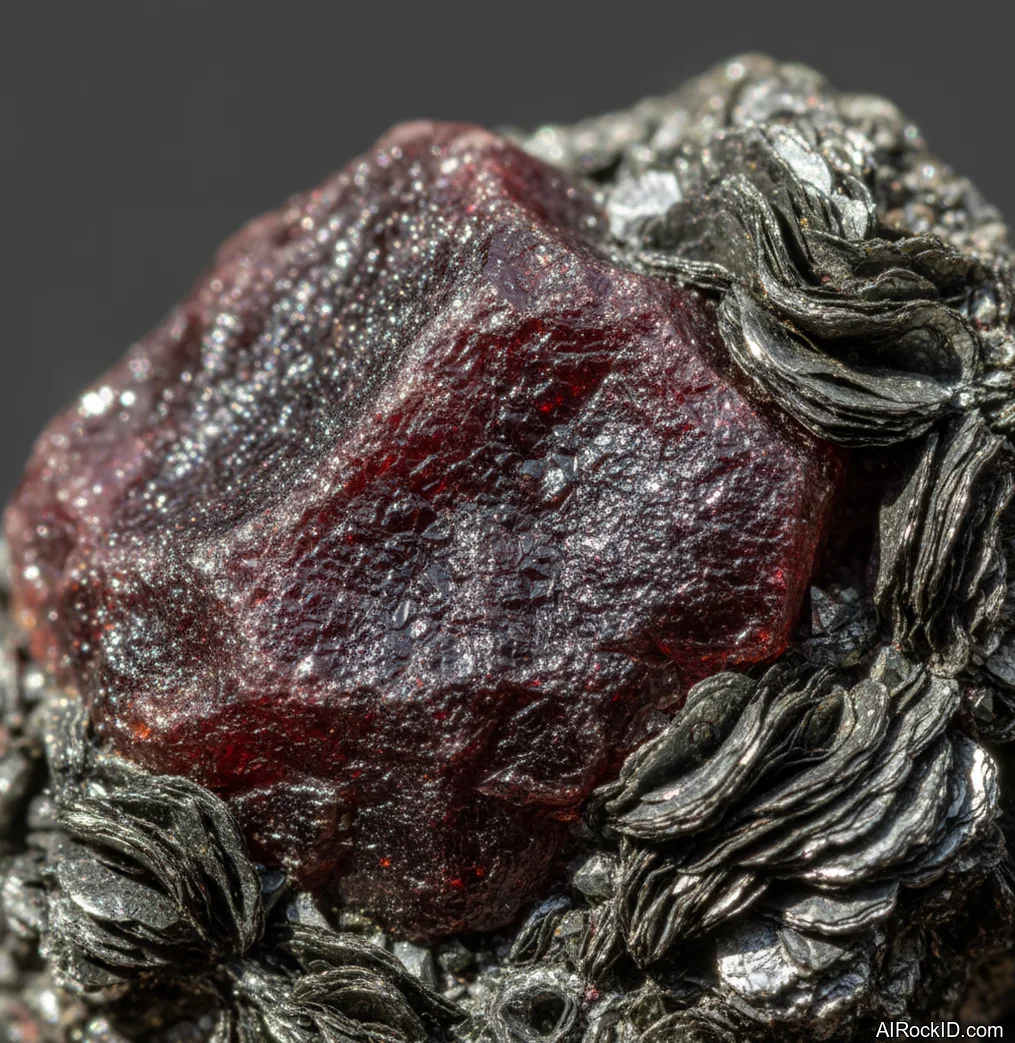
Garnet in biotite means garnet crystals, usually almandine, sitting naturally inside biotite mica, often in a schist or gneiss matrix. When you pick up a chunk, it’s a weird combo in your hand: the garnets feel like tiny hard marbles set into something that wants to flake, crumble a bit, and throw off sparkles.
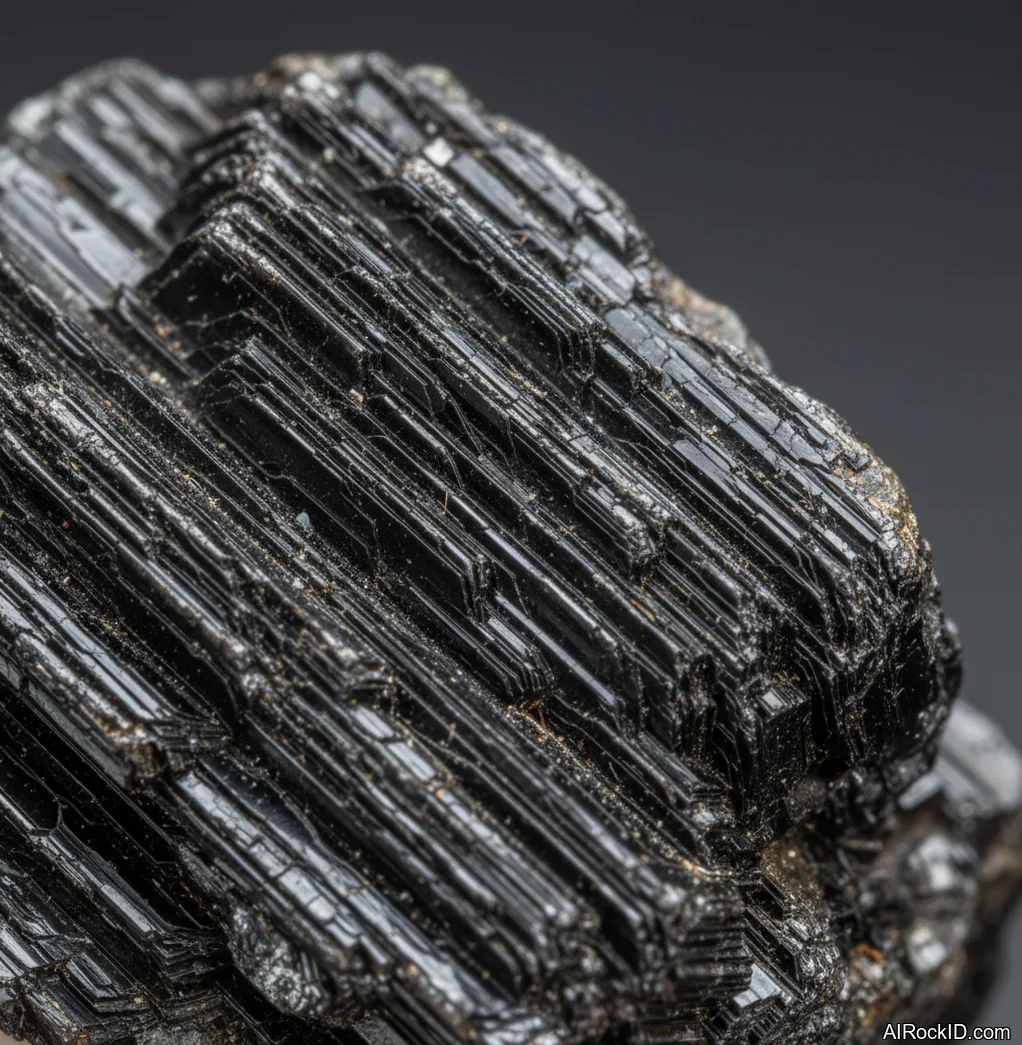
It looks mostly dark at first. But tip it under a lamp and the biotite throws that bronze-black mica sheen back at you, and the garnets jump out as wine-red dots or little dodecahedrons. Some pieces barely show it, like someone dusted pepper into the rock. Others have big, chunky garnets you can follow with a fingernail. And yep, your nail won’t scratch the garnet, but it *will* snag on those thin mica edges.
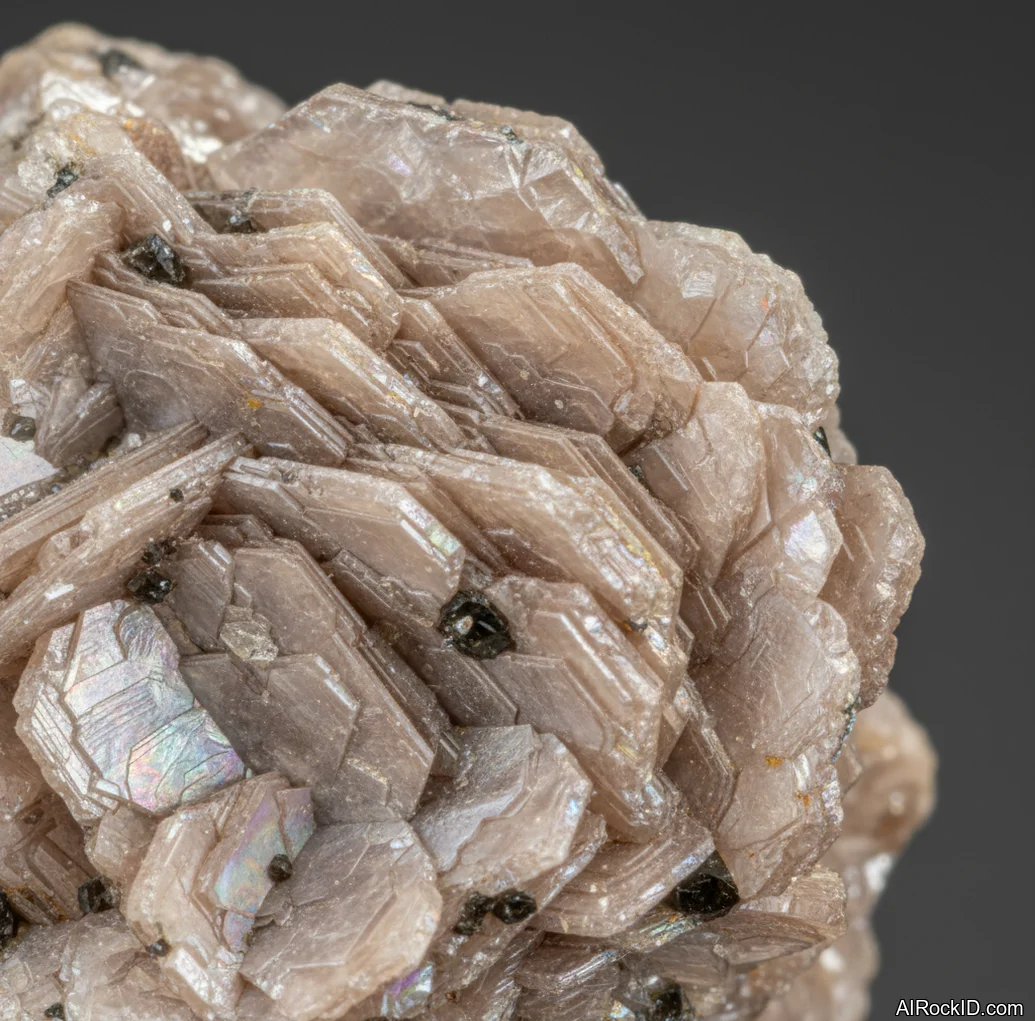
Compared to “garnet in granite,” this stuff feels more layered. The biotite has that booky cleavage, so it can split along shiny sheets if you’re not paying attention. I’ve had specimens where the garnets stayed solid, no problem, but the matrix left glittery mica crumbs in the bottom of the box after a long drive home from a show. Annoying? A little. Normal? Totally.
Origin & History
Garnet’s been treated as a mineral species since the early days of modern mineralogy. The name traces back to the Latin *granatum*, meaning “seed,” because those crystals in the rock can genuinely look like pomegranate seeds tucked into the matrix.
Biotite came along later, in the 1800s, and it was named for the French physicist Jean-Baptiste Biot.
And “garnet in biotite” isn’t a separate species name like tourmaline or fluorite. It’s just a field and dealer label for a super common metamorphic combo. Most shops use the phrase because it’s plain and accurate: hard garnet crystals sitting in softer, shiny black mica that tends to flake in thin sheets when you rub it with a fingernail. That’s what you’re holding.
Where Is Garnet In Biotite Found?
It shows up anywhere you get medium-to-high grade metamorphic rocks, especially schists and gneisses. Dealers most often sell material from Brazil, India, and parts of the US, but similar rock turns up worldwide.
Formation
Look at the matrix up close and you can usually pick out a foliation direction, almost like the rock’s got a grain to it. That comes from metamorphism: some older sedimentary or igneous rock got cooked and squeezed way down in the crust. Biotite shows up as thin, platy sheets that get lined up by the pressure, while garnet pops out as stubby, more equant crystals that basically shove the fabric aside.
Thing is, garnets in this kind of rock usually grow during regional metamorphism in the amphibolite facies and higher, when there’s enough heat for new minerals to form and enough pressure to get the mica to line up. The garnet chemistry depends on what the original rock started with, but almandine, the iron-aluminum garnet, is the usual suspect in dark mica schists. And sometimes you’ll notice a reaction rim or a faint little halo around a garnet where the minerals changed as the crystal grew (it can look like a thin boundary line you can trace with your fingernail if the surface is fresh). Not every sample shows that. But when it does, you’re basically seeing a “growth history” in plain sight, no microscope needed.
How to Identify Garnet In Biotite
Color: Garnets are typically deep red to reddish-brown in this rock, sometimes so dark they read almost black until you hit them with direct light. The biotite matrix is black to dark brown with bronze flashes on cleavage faces.
Luster: Biotite is pearly to vitreous on cleavage, while garnet is typically vitreous to resinous on fresh faces.
Pick up the specimen and rub your thumb across the matrix. Real biotite feels slick and a little flaky, and you’ll sometimes get tiny mica glitter on your skin. If you scratch it with a steel nail, the mica will mark or gouge, but the garnet should resist. The real test is a hand lens: garnet shows rounded crystal faces or dodecahedral bumps, while mica shows flat reflective sheets that step like pages in a book.
Properties of Garnet In Biotite
Physical Properties
| Crystal System | Cubic |
| Hardness (Mohs) | 6.5-7.5 (Hard (6-7.5)) |
| Density | 3.9-4.3 g/cm3 |
| Luster | Vitreous |
| Diaphaneity | Opaque |
| Fracture | Conchoidal |
| Streak | White |
| Magnetism | Non-magnetic |
| Colors | Black, Dark brown, Bronze, Deep red, Reddish-brown |
Chemical Properties
| Classification | Silicates |
| Formula | Garnet: X3Y2(SiO4)3 (commonly Fe3Al2(SiO4)3 for almandine); Biotite: K(Mg,Fe)3AlSi3O10(F,OH)2 |
| Elements | K, Mg, Fe, Al, Si, O, H, F |
| Common Impurities | Mn, Ca, Ti |
Optical Properties
| Refractive Index | 1.72-1.89 |
| Birefringence | None |
| Pleochroism | None |
| Optical Character | Isotropic |
Garnet In Biotite Health & Safety
It’s usually safe to pick up and rinse, but if the specimen’s freshly broken, the mica can leave tiny, sharp edges that’ll catch on your fingertips (you’ll feel it right away).
Safety Tips
If you’re trimming or grinding it, put on safety glasses and a dust mask. And run a little water over it while you work so the dust stays down instead of puffing up into your face.
Garnet In Biotite Value & Price
Price Range
Rough/Tumbled: $8 - $60 per piece
Prices jump depending on crystal size, how many garnets you can actually see on the best face, and whether the mica feels stable instead of crumbly. Clean, well-formed garnet crystals that stand proud of the matrix move quicker than that “peppered” rock (the kind where you just get a bunch of tiny red dots and not much else).
Durability
Moderate — Scratch resistance: Good, Toughness: Fair
Garnet is tough enough for handling, but the biotite matrix can cleave and shed flakes if it gets knocked around.
How to Care for Garnet In Biotite
Use & Storage
Store it in a box or on a shelf where it won’t get rattled. If your piece is extra flaky, wrap it so the mica doesn’t shed into everything else.
Cleaning
1) Rinse briefly with lukewarm water. 2) Use a soft toothbrush to work around garnets and along the mica layers gently. 3) Pat dry and let it air dry fully before putting it back in a closed container.
Cleanse & Charge
If you do energetic cleansing, stick to smoke, sound, or a quick rinse and dry. I avoid salt bowls with this one because salt grains love to wedge into mica seams.
Placement
Put it under a directional light so the biotite flashes when you move past it. A dark shelf works too, but you’ll miss the sparkle.
Caution
Don’t run it through an ultrasonic cleaner. And if the matrix is already starting to split, don’t leave it soaking for ages, either. Also, keep an eye out for little mica flakes if you’ve got kids or pets around. They’re tiny, they get everywhere, and they can feel pretty scratchy.
Works Well With
Garnet In Biotite Meaning & Healing Properties
A lot of people grab this one because they want something steady. Grounded. And yeah, I get why. In your hand it’s this weirdly satisfying mix: gritty little garnet bumps stuck in slick mica sheets that almost feel like they’ve got a natural “slide” to them. That contrast is the whole point, honestly. When your brain won’t shut up, it’s an easy “back to the body” stone because you can’t help but notice what your fingers are doing.
When folks talk energy work, garnet usually gets framed as drive, stamina, staying power. Biotite, since it’s a mica, gets treated more like a “clearing layers” buddy. Together, I’ve watched people use it for routine stuff: keeping up with rehab exercises, sticking with a daily walk, staying consistent with journaling, actually finishing the thing they said they’d do. It’s not medical. It’s more like a reminder you can literally hold.
But look, there’s a real limit here. If what you want is soft and soothing, this combo can feel intense. It’s heavy, dark, kind of serious. I’ve had days where it was too much sitting on my desk, like it kept yanking my attention back to whatever I was supposed to be doing (annoying, right?). So I’ll swap it for something gentler and come back to this one later.
Identify Any Crystal Instantly
Snap a photo and get properties, value, care instructions, and healing meanings in seconds.