Gaspeite
What Is Gaspeite?
Gaspeite is a rare nickel carbonate mineral with the formula (Ni,Mg,Fe)CO3.
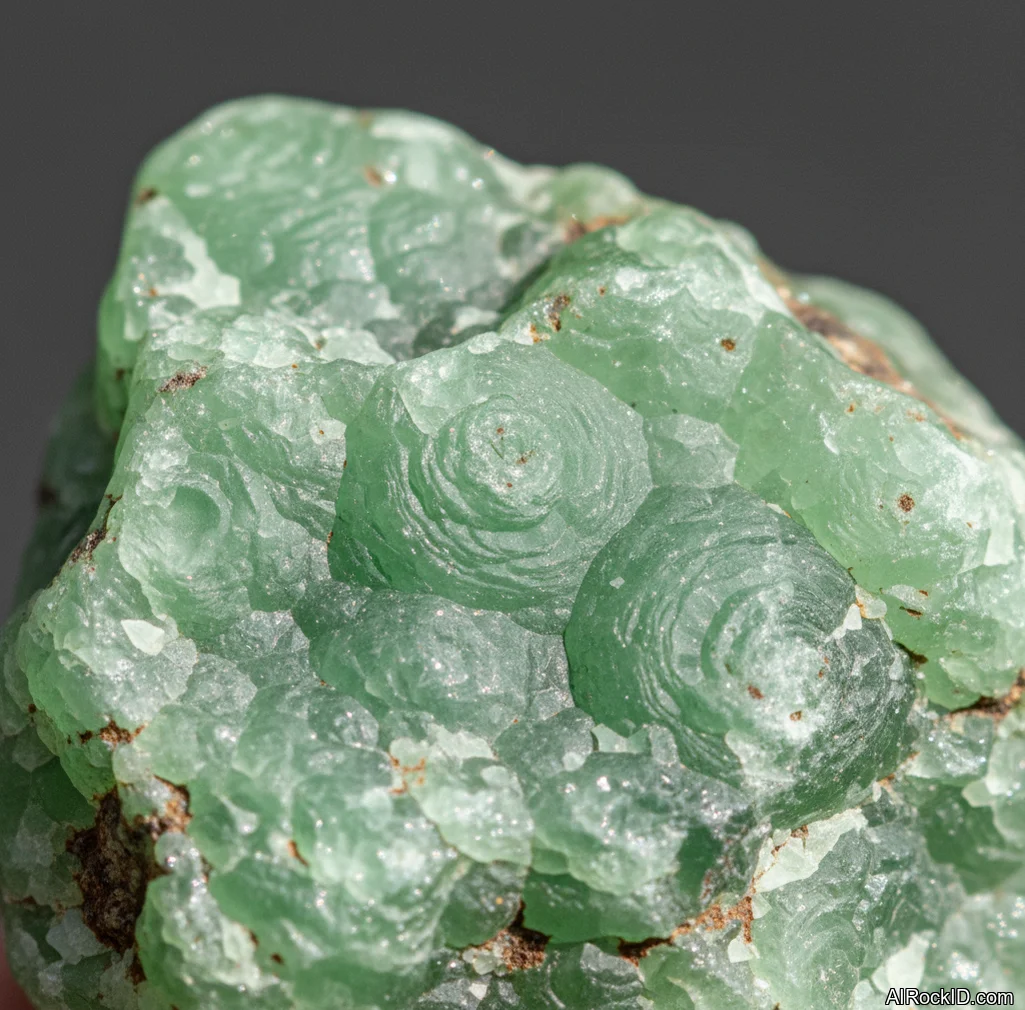
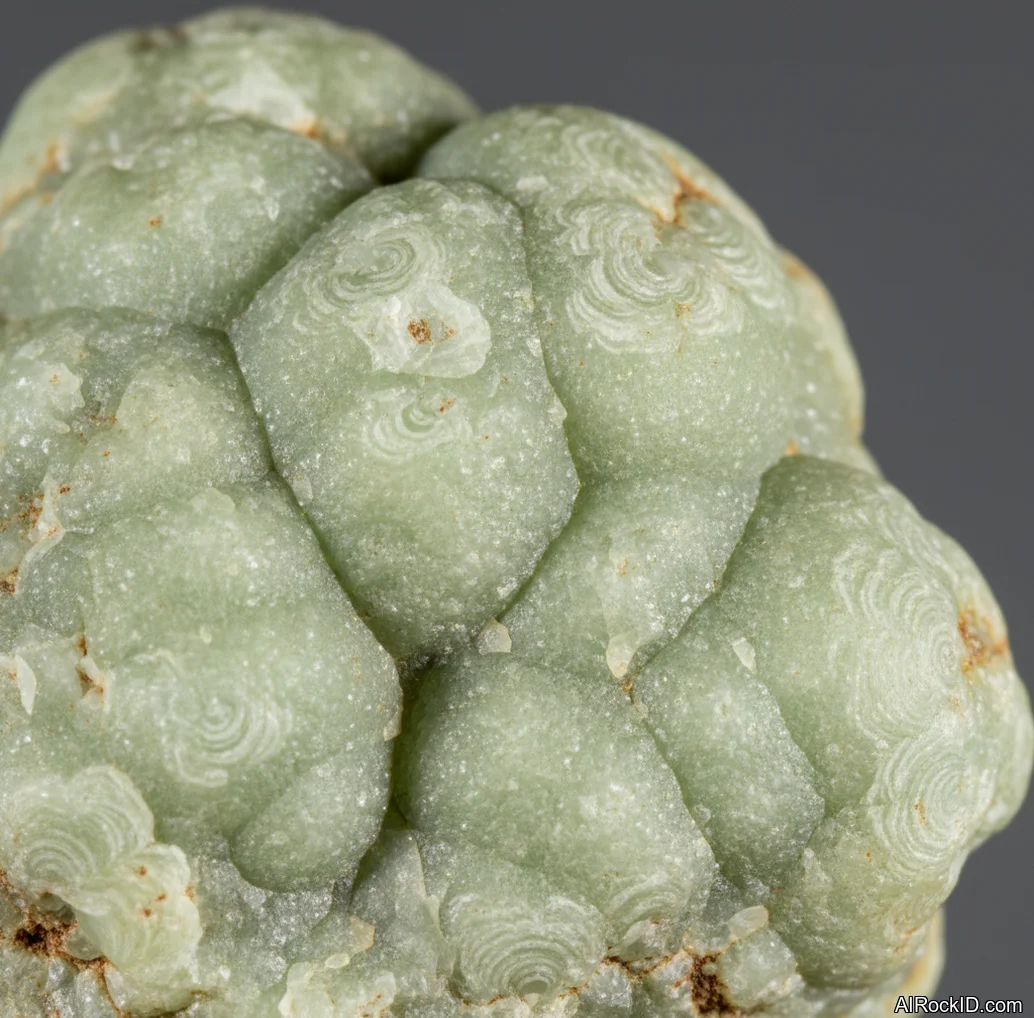
People compare it to chrysoprase all the time because that green can land in the same apple-ish range. But once you’ve actually got a piece in your hand, it usually reads more waxy and kind of blocky, and most of what shows up is massive material, not those crisp, tidy crystals. Pick up a polished cab and you can see it right away: it doesn’t have that glassy pop quartz-family stones have. It’s softer than that. More of a smooth, satiny glow when you tilt it under a light.
Most dealers move it as cabochons, beads, or small slabs. And yeah, that’s where it really works. I’ve handled rough chunks that looked pretty meh sitting in a tray (flat, almost chalky looking), then someone cut a little window and suddenly the color snapped from dull lime to a clean yellow-green, with tiny brown matrix freckles scattered through it. But it’s still a carbonate, so it’s not a “wear it every day and forget about it” stone.
Origin & History
Gaspéite got its first official write-up in 1966, based on material from the Gaspé Peninsula in Quebec, Canada. J. A. Mandarino, a Canadian mineralogist, described it and named it after the place it came from.
But in terms of collectors and the gem world, it didn’t really show up in a big way until later, when Australian nickel deposits started turning out lapidary-grade pieces. And yeah, you’ll still hear old show vendors call it “nickel magnesite” (usually handwritten on a smudged tag), which isn’t a totally off-base description. Thing is, “gaspeite” is the proper species name, and that’s what you’ll see on the serious labels.
Where Is Gaspeite Found?
Good lapidary material is best known from Western Australia, while the type locality is in Quebec. It also turns up in a handful of nickel and magnesium-rich deposits in places like Greece and the western USA.
Formation
Look, if you actually pay attention to where gaspeite turns up, it’s not random at all. It keeps pointing back to nickel-rich spots where carbonates can form during alteration. So nickel gets picked up and moved around by fluids, then it finally “sets” as a carbonate once the chemistry is right, often sitting right next to other carbonates.
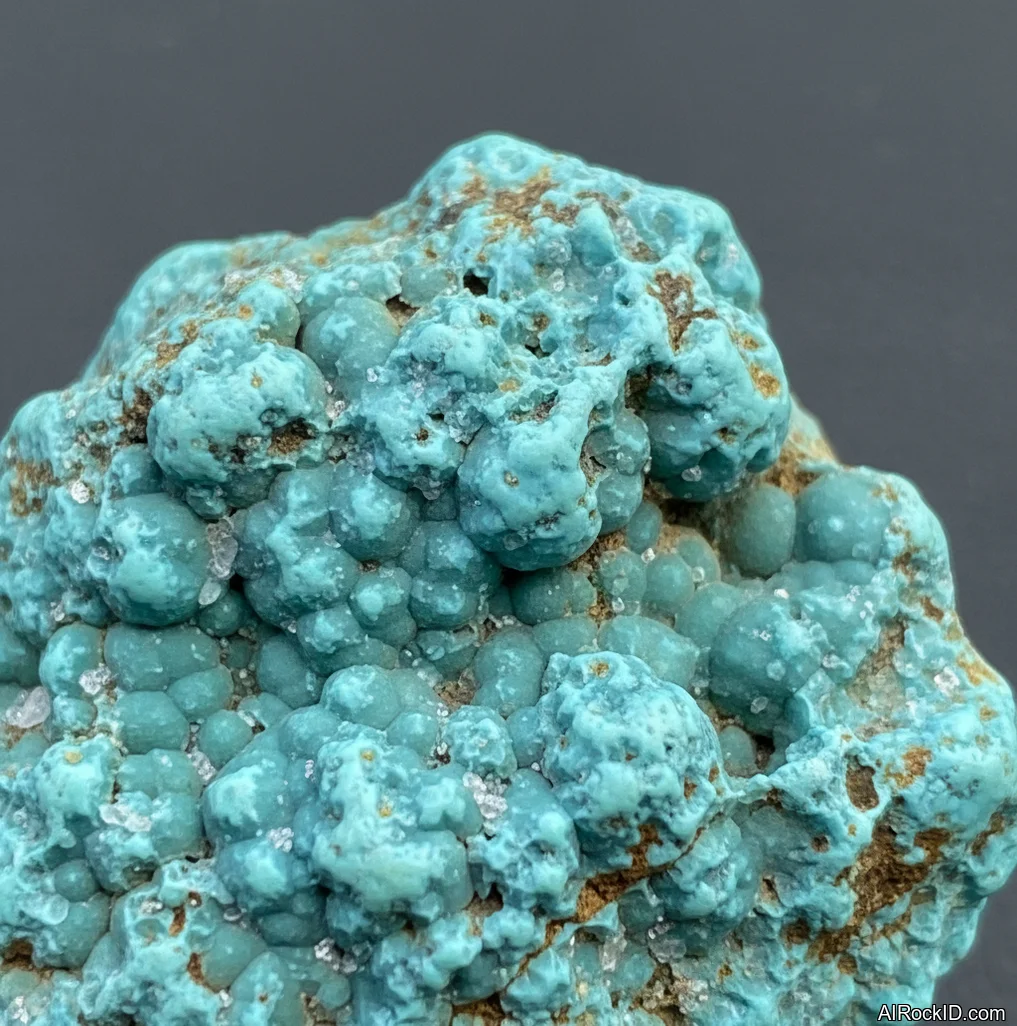
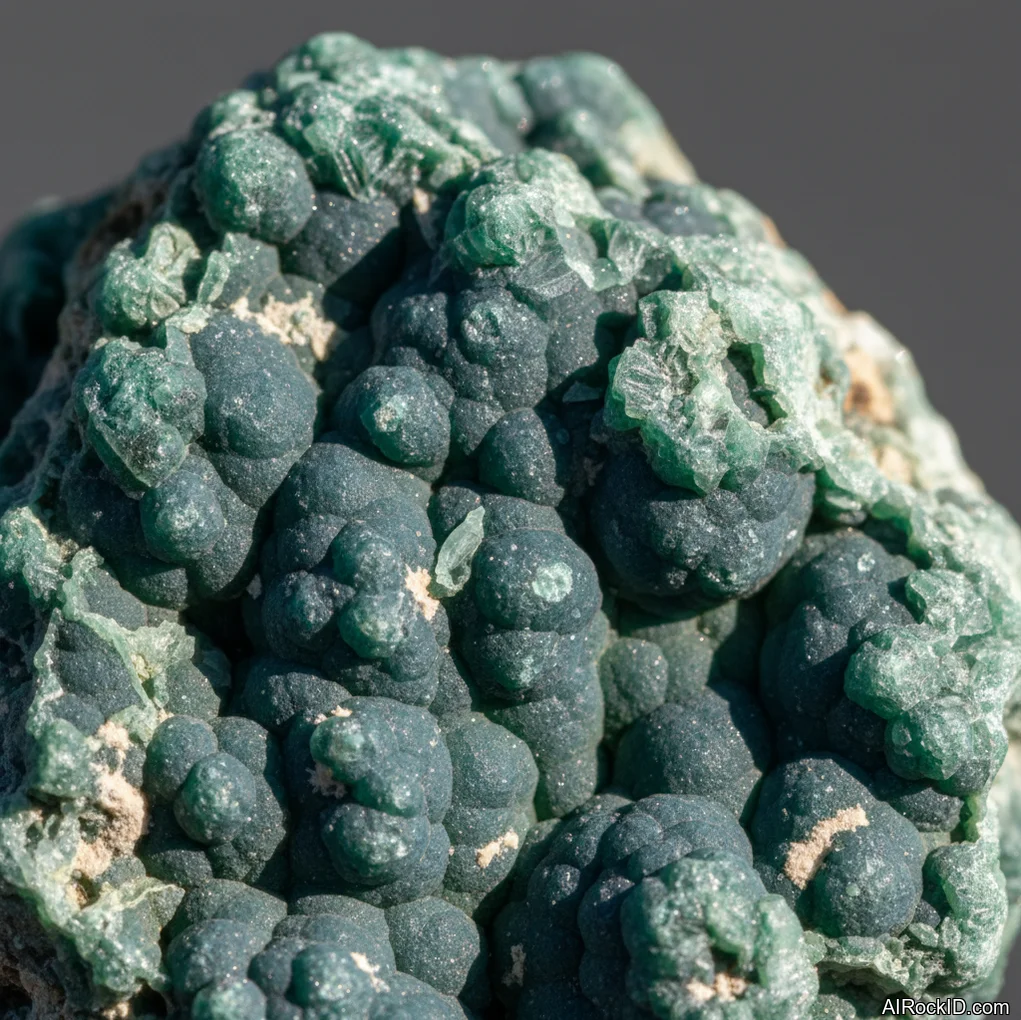
In raw chunks from nickel laterite and similar ore settings, you’ll see that green gaspeite tangled up with brown limonite, little chalcedony seams, or a few other carbonate buddies. Textbook write-ups make it sound clean. It isn’t. Most gaspeite in the real world is a patchwork, like someone glued together bits that don’t quite match (and you can usually feel the unevenness when you run a thumb over it). That patchiness is part of the charm, sure, but it also means the quality can swing wildly from piece to piece.
How to Identify Gaspeite
Color: Usually yellow-green to apple-green, sometimes with brown or tan matrix. Some pieces lean more mustard-green than “mint.”
Luster: Waxy to dull in rough; waxy to slightly resinous when well polished.
Pick up a piece and feel the heft. It’s denser than a lot of lookalikes in the same size range, and it stays cool in the hand like most real mineral material. If you scratch it with a steel nail, it’ll mark more easily than chrysoprase or quartz, which is a quick reality check. And watch for sellers calling any green nickel-looking cab “gaspeite.” A lot of “gaspeite” in cheap bead strands is dyed magnesite or dyed howlite, and that stuff feels warmer and the color looks too uniform.
Properties of Gaspeite
Physical Properties
| Crystal System | Trigonal |
| Hardness (Mohs) | 4.5-5 (Medium (4-6)) |
| Density | 3.55-3.70 |
| Luster | Waxy |
| Diaphaneity | Opaque |
| Fracture | Uneven |
| Streak | pale green |
| Magnetism | Non-magnetic |
| Colors | yellow-green, apple green, olive green, green with brown matrix |
Chemical Properties
| Classification | Carbonates |
| Formula | (Ni,Mg,Fe)CO3 |
| Elements | Ni, Mg, Fe, C, O |
| Common Impurities | Fe, Co, Cu |
Optical Properties
| Refractive Index | 1.63-1.87 |
| Birefringence | 0.24 |
| Pleochroism | None |
| Optical Character | Uniaxial |
Gaspeite Health & Safety
Handling it is usually safe. But if you’re cutting, grinding, or sanding it, don’t breathe in the dust (that fine, floaty stuff that hangs in the air right after you hit it). And if you’ve got a nickel allergy, prolonged skin contact with powders or slurry can irritate you, especially when it gets under a glove cuff or dries on your fingers.
Safety Tips
If you’re doing lapidary work, stick to wet cutting, keep the area ventilated, and wear a real respirator, not just a paper dust mask. That fine grit gets everywhere, like on the rim of the saw tray and in the gray slurry that builds up in the catch pan. And after you’ve handled rough or messed with the sludge, go wash your hands. Seriously.
Gaspeite Value & Price
Price Range
Rough/Tumbled: $10 - $80 per piece
Cut/Polished: $8 - $40 per carat
Price mostly comes down to color (that clean apple-green moves fast), how steady the stuff is when you put it on the wheel and start cutting, and whether the matrix reads like a deliberate pattern or just looks muddy and confused.
Durability
Moderate — Scratch resistance: Fair, Toughness: Fair
It’s reasonably stable as a finished cab, but it will scratch and it doesn’t love hard knocks or abrasive wear.
How to Care for Gaspeite
Use & Storage
Store it away from quartz and other harder stones, because it’ll pick up scratches fast in a mixed bowl. A small pouch or a compartment box works great.
Cleaning
1) Rinse quickly in lukewarm water with a drop of mild soap. 2) Wipe with a soft cloth or a very soft toothbrush around settings. 3) Rinse again and pat dry, then let it air dry fully before storing.
Cleanse & Charge
For a metaphysical-style reset, I stick to smoke cleansing or a quick rest on a dry selenite plate. Skip salt bowls if the piece has any porous matrix.
Placement
Keep it on a shelf where it won’t get rubbed by other stones or jewelry. If it’s a cab ring, treat it like a softer turquoise style stone and take it off for chores.
Caution
Skip ultrasonic cleaners and anything too aggressive chemical-wise. And don’t toss it in a tumbler with harder stones, because it’ll come out scuffed up fast (you’ll feel those little scratchy spots with your thumb). Thing is, don’t just trust a green bead strand because it’s labeled “gaspeite” either. Plenty of them aren’t the real thing.
Works Well With
Gaspeite Meaning & Healing Properties
Next to the loud, flashy greens, gaspeite is the quiet one. When I’ve got a solid cab in my hand, I get what people mean, but it’s not some woo-woo lightning bolt moment. It just sort of drops your attention out of your skull and back into your body, like when you realize your shoulders have been up by your ears for an hour. And then you remember basic stuff. Eat something. Drink water. Go to bed. Stop running on fumes.
Most dealers on the metaphysical side tie it to grounding and steadier habits, and honestly, that lines up with the way it feels in person. It’s got that dense, satisfying weight for its size, the kind you notice when you roll it between your fingers. The green leans earthy, not neon, and under light it can look a little waxy, like it’s holding the color from inside instead of shouting it at you.
But here’s the catch: a lot of “gaspeite” online is dyed material, and that throws everything off because you’re not even handling the same stone. So if someone says it feels weird or “too intense,” I don’t blame them. If it’s dyed, you’re judging the dye job as much as anything.
And just so it’s clear, none of this is medical. If you’ve got anxiety, sleep problems, or anything physical going on, crystals are a support tool at best. I treat gaspeite the way I treat a decent routine. Useful when you actually use it (and keep it where you’ll touch it), not magic when it’s buried in a drawer.
Identify Any Crystal Instantly
Snap a photo and get properties, value, care instructions, and healing meanings in seconds.