Golden Obsidian
What Is Golden Obsidian?
Golden Obsidian is a variety of obsidian (natural volcanic glass) that throws off a gold, metallic sheen when the light hits it at just the right angle.
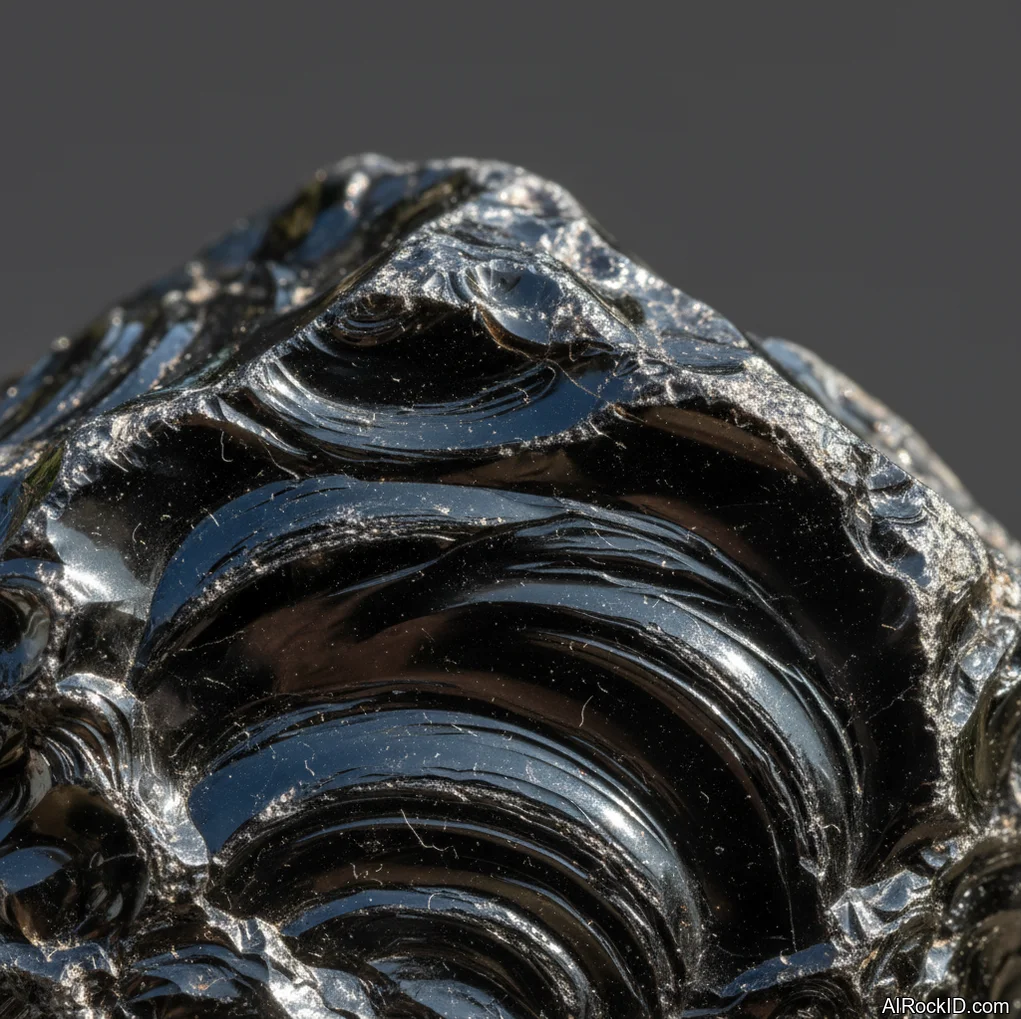
Pick up a palm stone and, honestly, the first thing that jumps out is how slick it is. Almost like a chunk of black ice, except it’s warm from all that polishing. Tip it under a ceiling light and that gold flash skates across the surface in a narrow band, kind of like satin catching light, only the feel is pure glass when you drag a fingernail over it (smooth, no give).
Thing is, a lot of people hear “gold” and picture a yellow stone. That’s not what you usually get. Most pieces are jet black, with the sheen sitting inside the glass instead of coloring the whole thing. And it’s picky about angles. Hold it flat and it can pass for plain obsidian. Turn it a few degrees and the sheen snaps on, then it’s gone again. That little trick? Half the fun. So it makes sense sellers always shoot it under a strong light.
Origin & History
Obsidian got used way before anyone slapped a neat mineral-shop label on it, mostly because when you smack it just right it breaks in these scary, razor-sharp flakes that make great blades and scrapers. The name “obsidian” usually gets traced back to the Latin “obsidianus,” linked to an old Roman story about a guy named Obsidius who supposedly brought a similar stone to Rome.
“Golden obsidian” is really just a trade name based on how it looks, not some officially separate species. Sellers started pushing names like silver sheen, gold sheen, or rainbow obsidian once lapidary work took off, since it lets customers spot what they’re buying in about two seconds. But geologically? Same stuff: obsidian, meaning quenched silica-rich lava that cooled so fast it didn’t have time to crystallize.
Where Is Golden Obsidian Found?
Most golden sheen material in the market is associated with Mexican volcanic fields, with additional obsidian sources in the western United States and parts of the Caucasus region.
Formation
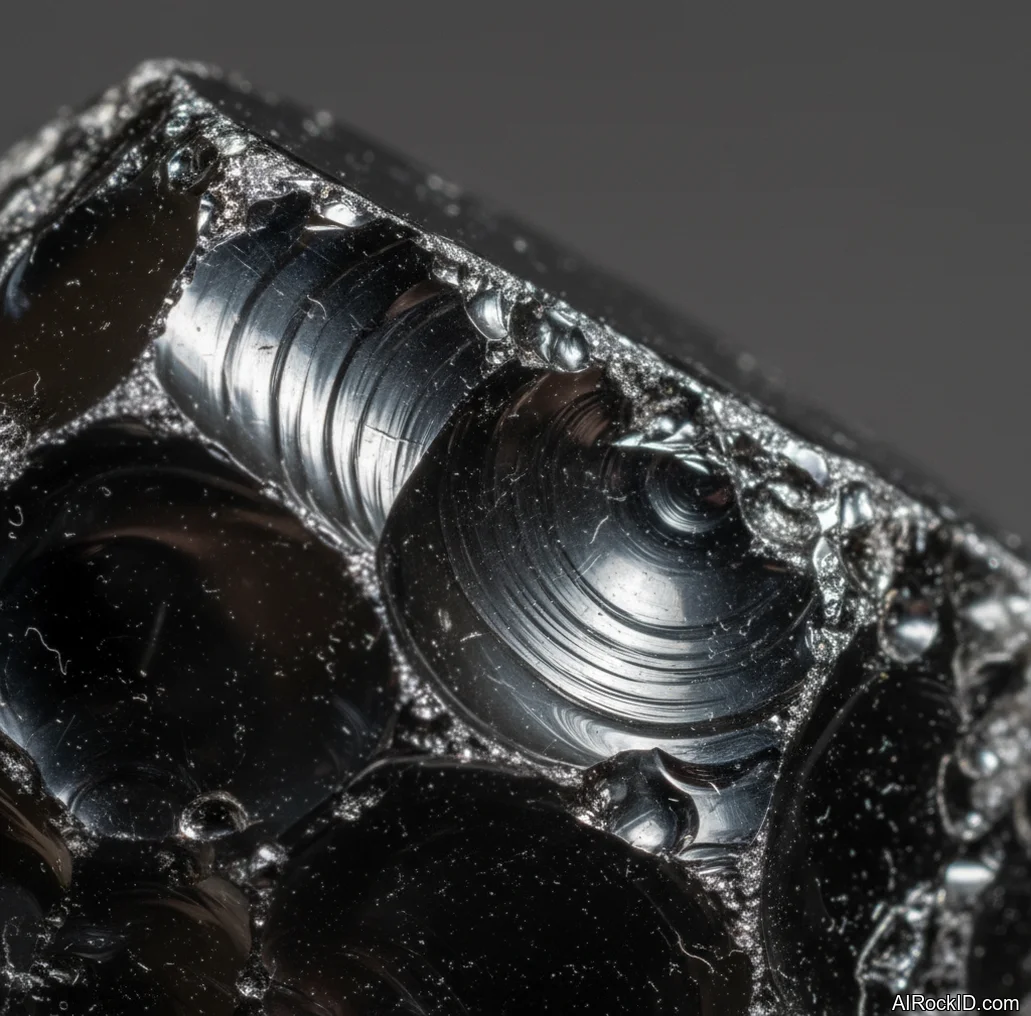
Raw chunks from volcanic flows kind of give the whole thing away. Obsidian happens when silica-rich lava cools so fast the atoms don’t get the chance to line up into mineral crystals. No crystal faces. No cleavage. Just glass. And yeah, you’ll usually catch flow banding, those little swirly streaks, plus the occasional trapped bubble (the tiny round ones that look like someone pinpricked the surface).
That gold sheen isn’t some coating slapped on top. It comes from tiny inclusions and aligned structures inside the glass, usually described as ultra-fine gas bubbles or microscopic mineral dust that got lined up by the way the lava flowed. The dead giveaway is how it acts when you move it in your hand: rotate it and the glow flares up like it’s sitting under the surface, then it drops out and goes dark the second the angle changes. Pretty hard to fake that, right?
How to Identify Golden Obsidian
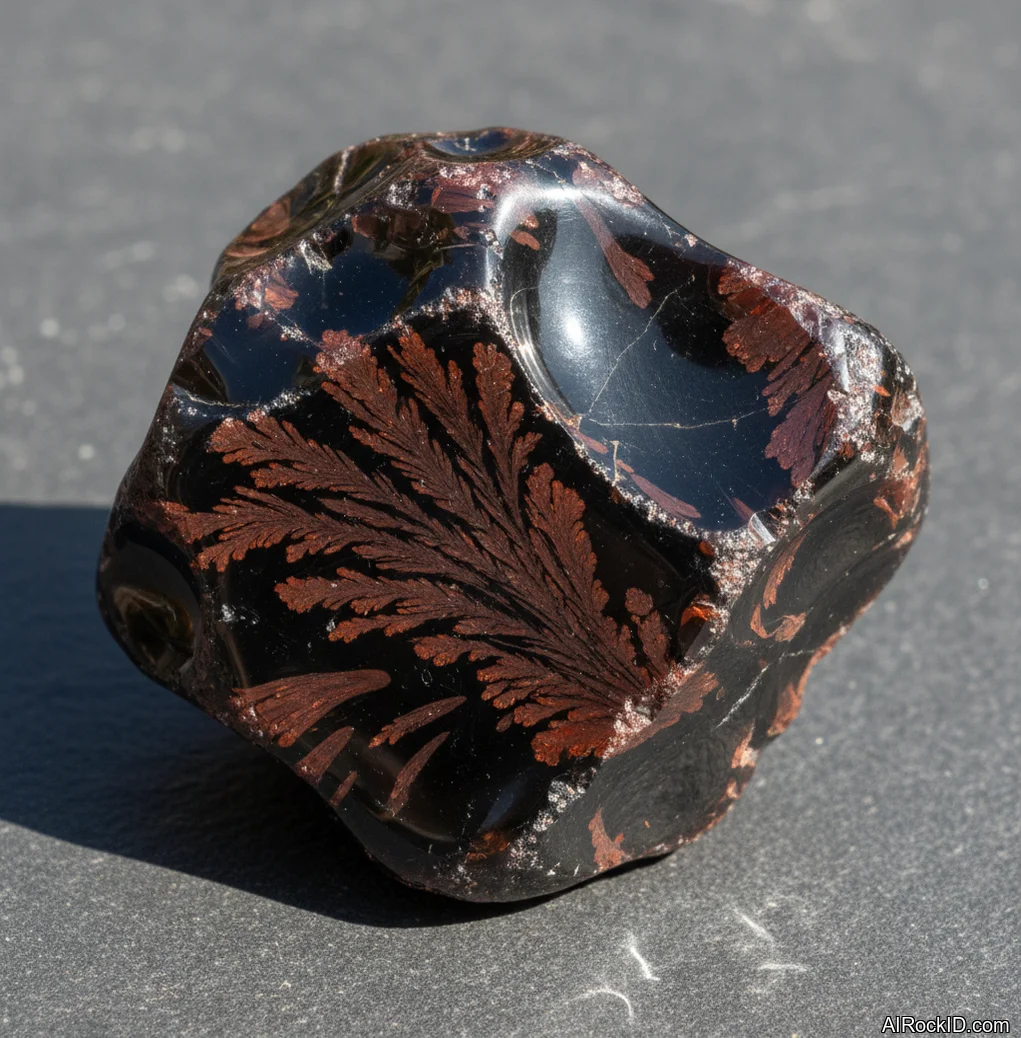
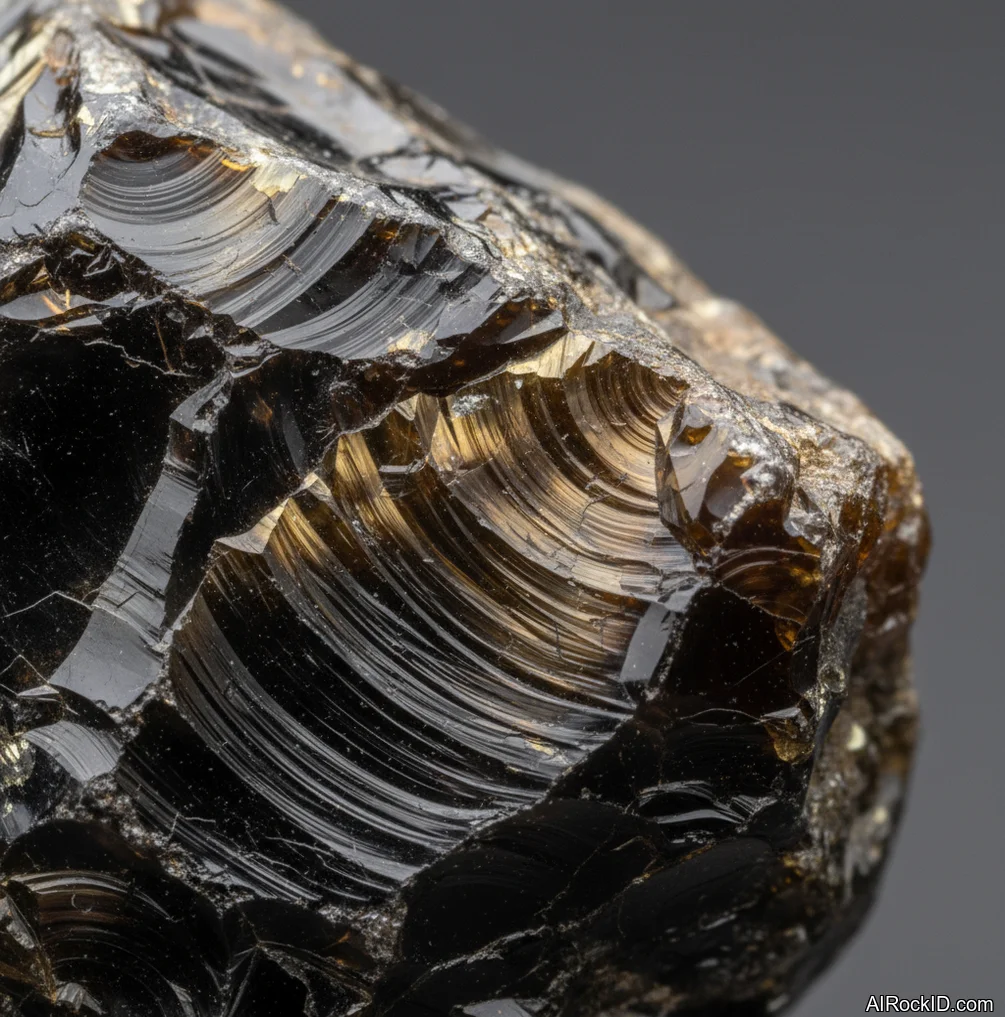
Color: Body color is usually black to very dark brown, with a gold sheen that appears as a band or patch when tilted under light. Some pieces show a more uniform glow, but most have a directional flash.
Luster: Vitreous, often with a very high polish that looks like black glass.
Look closely under a single point light like a phone flashlight. The sheen should move smoothly across the surface as you rotate it, not stay fixed like a metallic coating. If you scratch it with a steel nail in an inconspicuous spot, it can mark because it’s glass, and the scratch will look like a dull line rather than a flake coming off like plated metal. And real pieces usually feel cool at first touch, then warm up in your hand pretty fast, the way glass does.
Properties of Golden Obsidian
Physical Properties
| Crystal System | Amorphous |
| Hardness (Mohs) | 5.0-5.5 (Medium (4-6)) |
| Density | 2.35-2.60 g/cm3 |
| Luster | Vitreous |
| Diaphaneity | Opaque |
| Fracture | Conchoidal |
| Streak | white |
| Magnetism | Non-magnetic |
| Colors | black, dark brown, gold sheen |
Chemical Properties
| Classification | Silicates |
| Formula | SiO2 (amorphous, variable composition) |
| Elements | Si, O |
| Common Impurities | Fe, Mg, Ca, Na, K, Al, Ti |
Optical Properties
| Refractive Index | 1.48-1.51 |
| Birefringence | None |
| Pleochroism | None |
| Optical Character | Isotropic |
Golden Obsidian Health & Safety
Golden obsidian is usually fine to handle, and it’s fine around water for normal use too. The one real gotcha? Sharp edges on rough chunks, plus those nasty glassy chips you can get if you drop it and it snaps.
Safety Tips
If you’re going to cut or grind it, handle it the same way you’d handle glass. Put on eye protection, and don’t skip a real respirator, because that fine silica dust gets everywhere (and it’s nasty).
Golden Obsidian Value & Price
Price Range
Rough/Tumbled: $5 - $60 per piece
Cut/Polished: $1 - $6 per carat
Price mostly comes down to how strong and clean that sheen looks, plus the size and the workmanship. Dealers nearly always ask more if the gold flash is broad and even (the kind you can see roll across the surface when you tilt it under a lamp), and if the carving is shaped well enough that the sheen stays centered instead of sliding off to one side.
Durability
Moderate — Scratch resistance: Fair, Toughness: Good
It’s chemically stable in normal household conditions, but it scratches and chips like glass if it bangs into harder stones or metal.
How to Care for Golden Obsidian
Use & Storage
Store it in a soft pouch or wrap it in cloth if it rides in a pocket or a tackle-box style case. Obsidian will pick up scratches from quartz and even from gritty dust.
Cleaning
1) Rinse with lukewarm water and a drop of mild soap. 2) Wipe with a soft microfiber cloth, not a paper towel. 3) Dry fully so water spots don’t dull the polish.
Cleanse & Charge
If you do energetic cleansing, simple is fine: a quick rinse and a wipe down, or setting it on a dry windowsill for indirect light. Don’t bake it in direct sun for days, because a hot stone in a cold room is how chips happen.
Placement
I like it where light can hit it from the side, like a desk corner lamp or a shelf spot near a reading chair. That’s when the gold band actually shows up instead of looking like plain black glass.
Caution
Skip ultrasonic cleaners and steam cleaning. And don’t just toss it loose in a bag with harder stones where it’ll clack around and get beat up. Keep an eye on any rough edges too, because a fresh chip can be weirdly sharp (ask me how I know).
Works Well With
Golden Obsidian Meaning & Healing Properties
Next to plain black obsidian, the golden sheen kind usually gets sold as “protection plus insight,” and yeah, I see the logic. When I’m sorting stones in one of those shallow black foam trays at a show, this is the piece that makes me pause and physically tip it under the lights. You’ll catch that warm flash sliding across the surface, like a thin film of gold trapped under glass. Makes you wonder what you’re not seeing, right? That mood is basically the whole sales pitch.
In a personal practice sense, people link obsidian with grounding and with taking a blunt, honest look at the habits you’d rather not look at. Thing is, it can hit kind of hard. If you’re already wound up, staring into something that looks like a glossy black mirror can pull you further into your own thoughts. I’ve watched customers pick one up, grin when the sheen pops, then set it back down and go, “Okay, this is staying on a shelf, not in my pocket every day.”
So use it like a tool, not a cure. If you’re meditating, it goes nicely with breath work and journaling because it keeps you on track, and that sheen gives your eyes a place to rest without a bunch of visual noise. And if you’re dealing with real anxiety or sleep problems, crystals can be comforting to hold (warm in your palm, a little slick), but they aren’t medical treatment. Keep it practical.
Identify Any Crystal Instantly
Snap a photo and get properties, value, care instructions, and healing meanings in seconds.