Green Aragonite
What Is Green Aragonite?
Green aragonite is just aragonite that happens to be green, and aragonite is a calcium carbonate (CaCO3) polymorph.
Pick up a chunk and the first thing you notice is the weight. It feels a bit heavier than you expect for something that’s fairly soft. And it’s cold right away, that stone-cold chill you feel in your palm before it warms up. On a lot of pieces, the surface has this faint satin drag, like your fingertip catches slightly, because it’s made of all these tiny packed fibers (you can feel it even before you really see it).
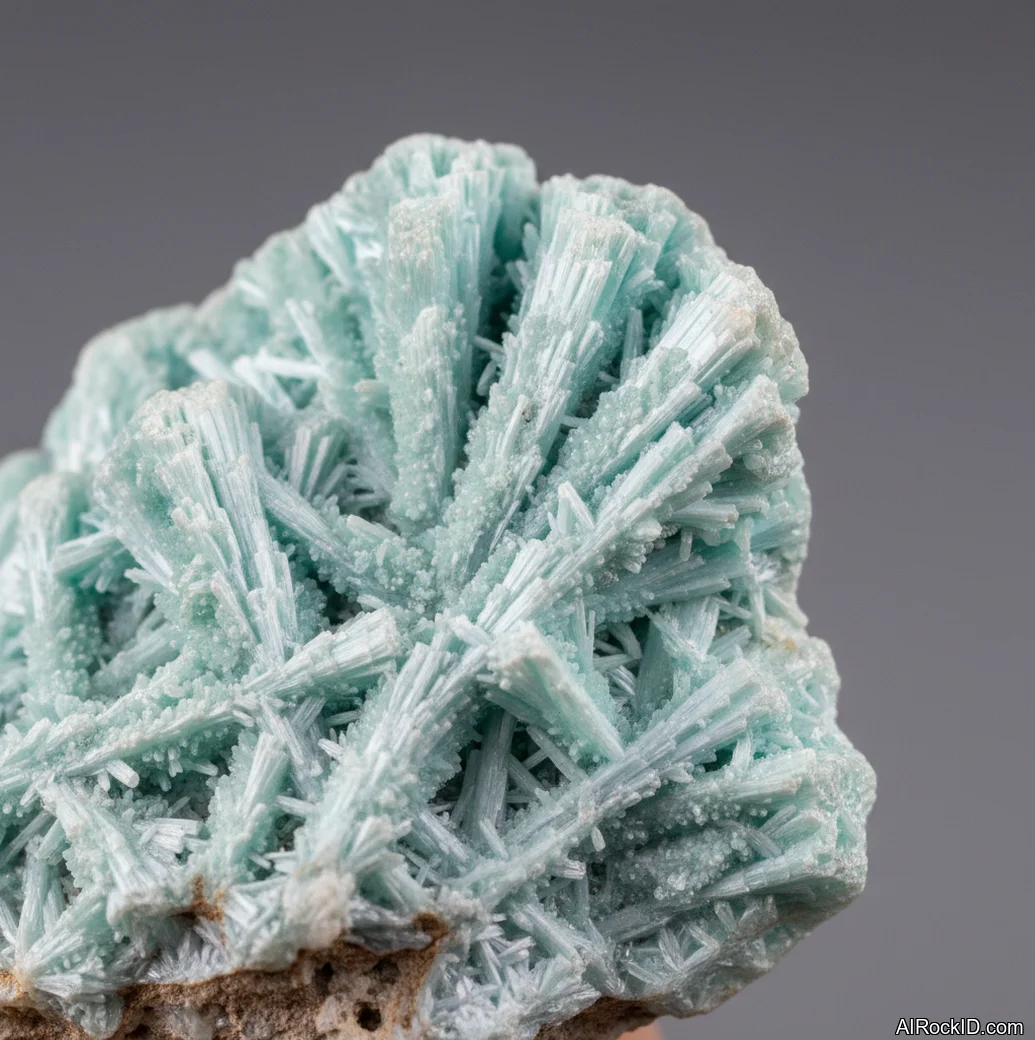
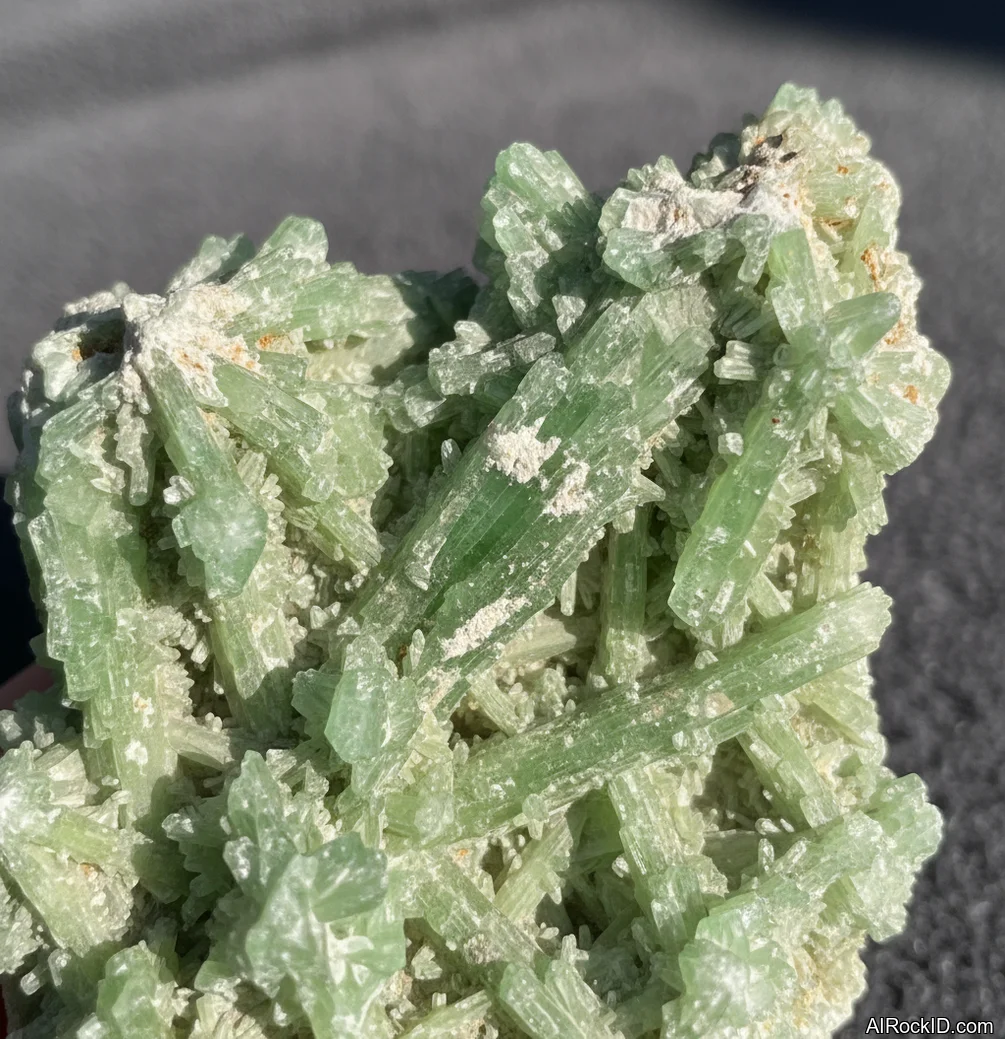
Color-wise, it’s all over the place. Some material comes in a minty, almost pistachio green. Some goes more olive, with tan or white banding running through it.
Look at a fresh break and it usually gives itself away. Instead of neat, quartz-style points, you’ll see radiating sprays, needle-like bundles, or those lumpy “cave coral” shapes. It can take a polish and look great, but it doesn’t take abuse. I’ve had a tumbled piece pick up a new little ding just from clinking against a harder stone in my pocket. Kind of annoying, honestly.
Origin & History
Aragonite got its formal species description in 1797, thanks to Abraham Gottlob Werner, and he named it after Molina de Aragón in Spain. And the name didn’t come out of nowhere, either. That spot was turning up really solid examples of the mineral, and at the time collectors were already trading carbonate specimens all over Europe, so the label just kind of stayed put.
Green aragonite, though, isn’t a separate mineral name in the strict sense. It’s still aragonite. The green color comes from trace impurities and included material, so dealers use “green aragonite” as a color tag, the same way they’ll say blue calcite or pink aragonite. Why complicate it more than that?
Where Is Green Aragonite Found?
It forms in caves, hydrothermal veins, and some sedimentary settings, so it turns up in a lot of countries. Most of the green material in shops is from Morocco and a few other carbonate-rich localities.
Formation
Out in the field, aragonite tends to pop up anywhere calcium-heavy water is on the move and the chemistry shifts in a hurry. Caves are a classic spot. So are spring deposits, plus those tight fractures where fluids suddenly dump carbonate and you can almost picture it flashing out of solution.
Thing is, aragonite’s the less stable polymorph compared to calcite, so it shows up when it needs to form fast. That’s why you so often see it as needles, little sprays, or those rounded botryoidal crusts that feel a bit knobby under your fingertips when you run them along the surface.
But collectors learn the annoying part pretty quickly: over geologic time, aragonite can slowly turn into calcite, and you’ll run into pieces that are only half-converted. I’ve had specimens where the outside stayed fibrous and very aragonite-looking, then you crack it and the inside breaks in chunkier, more blocky bits like calcite. Same chemistry, different structure. And with this mineral, the structure is the whole game.
How to Identify Green Aragonite
Color: Green aragonite ranges from pale mint to medium olive green, often with cream, tan, or white banding. Color is usually a bit cloudy rather than glass-clear.
Luster: Luster is typically vitreous to silky, especially on fibrous or radiating material.
If you scratch it with a copper coin, it’ll usually mark, and a steel nail will cut it cleanly. The real test is the habit: look for radiating sprays, needle bundles, or rounded “cauliflower” forms instead of sharp hexagonal quartz points. And if you’ve handled a lot of tumbled stones, aragonite has a slightly softer, warmer polish than quartz, and it picks up tiny edge bruises fast.
Properties of Green Aragonite
Physical Properties
| Crystal System | Orthorhombic |
| Hardness (Mohs) | 3.5-4 (Soft (2-4)) |
| Density | 2.93-2.95 g/cm3 |
| Luster | Vitreous |
| Diaphaneity | Translucent to opaque |
| Fracture | Uneven |
| Streak | White |
| Magnetism | Non-magnetic |
| Colors | Green, Mint green, Olive green, Green with white banding, Green with tan banding |
Chemical Properties
| Classification | Carbonates |
| Formula | CaCO3 |
| Elements | Ca, C, O |
| Common Impurities | Fe, Mn, Cu, Mg |
Optical Properties
| Refractive Index | 1.530-1.686 |
| Birefringence | 0.156 |
| Pleochroism | None |
| Optical Character | Biaxial |
Green Aragonite Health & Safety
Normal handling is safe. Thing is, the real worry is bumping or scratching the specimen, not any kind of chemical danger.
Safety Tips
If you’re going to cut or grind it, put on a dust mask, and run a little water over the area to keep that super fine carbonate dust from kicking up everywhere (it gets into your nose fast, trust me).
Green Aragonite Value & Price
Price Range
Rough/Tumbled: $5 - $60 per piece
Price jumps around depending on the color (those clean, minty greens move quicker), how much of that radiating texture is still sharp instead of rubbed flat, and if you’ve got a chunky display cluster or just a little tumble. The crisp, natural sprays run higher, mostly because they’re fragile and can get snapped up during shipping if the box gets jostled even a bit.
Durability
Nondurable — Scratch resistance: Poor, Toughness: Fair
It’s stable on a shelf, but it scratches and chips easily and can dull if it gets knocked around.
How to Care for Green Aragonite
Use & Storage
Store it in a padded box or a separate pouch so harder stones don’t scuff it. If it’s a cluster with needles, don’t let it rattle around in a drawer.
Cleaning
1) Rinse quickly in lukewarm water if needed. 2) Use a soft toothbrush with a tiny bit of mild soap for grime in texture. 3) Pat dry and let it air-dry fully before putting it away.
Cleanse & Charge
For a gentle reset, use smoke, sound, or a short sit on a piece of selenite. I avoid long soaks just because seams and softer spots can hold water and look dull after.
Placement
I keep green aragonite where it won’t get bumped, like a desk corner or a shelf away from the edge. Soft indirect light looks best on the silky texture.
Caution
Skip ultrasonic cleaners, steam, and just tossing it loose in your pocket with keys (that kind of rough carry). And don’t store it where it’s rubbing up against quartz, topaz, garnet, or anything else that can scratch it just from sliding around.
Works Well With
Green Aragonite Meaning & Healing Properties
People usually pick up green aragonite because the color catches them first. Then you actually hold it, and it’s like… oh. It has this weighty, settled feel, and the fibrous texture gives off a calm, steady mood that’s hard to put into normal words without sounding corny. So, practical version: I grab it when my room feels chaotic and my brain’s doing that pinball thing.
Most dealers label it as heart-centered and earth-centered work. That lines up with how collectors and crystal people tend to treat green carbonates overall. But here’s the thing I’ve noticed from handling it: green aragonite is more of a “sit with it” stone than a “carry it all day” stone, because it bruises and chips. I’ve literally had customers bring a tumble back with a fresh scuff after one day in a pocket with keys (you know that dull, whitish rub mark you can’t unsee once it’s there).
And yeah, we’re in metaphysical territory here, not medicine. If you’re into stones for rituals, meditation, or even just as a visual reminder on your desk, green aragonite fits that slow-and-steady vibe. But if you’re dealing with anxiety, sleep issues, or anything medical, treat crystals like comfort objects and keep the real support in place too. Why gamble with that?
Identify Any Crystal Instantly
Snap a photo and get properties, value, care instructions, and healing meanings in seconds.