Herkimer Diamond
What Is Herkimer Diamond?
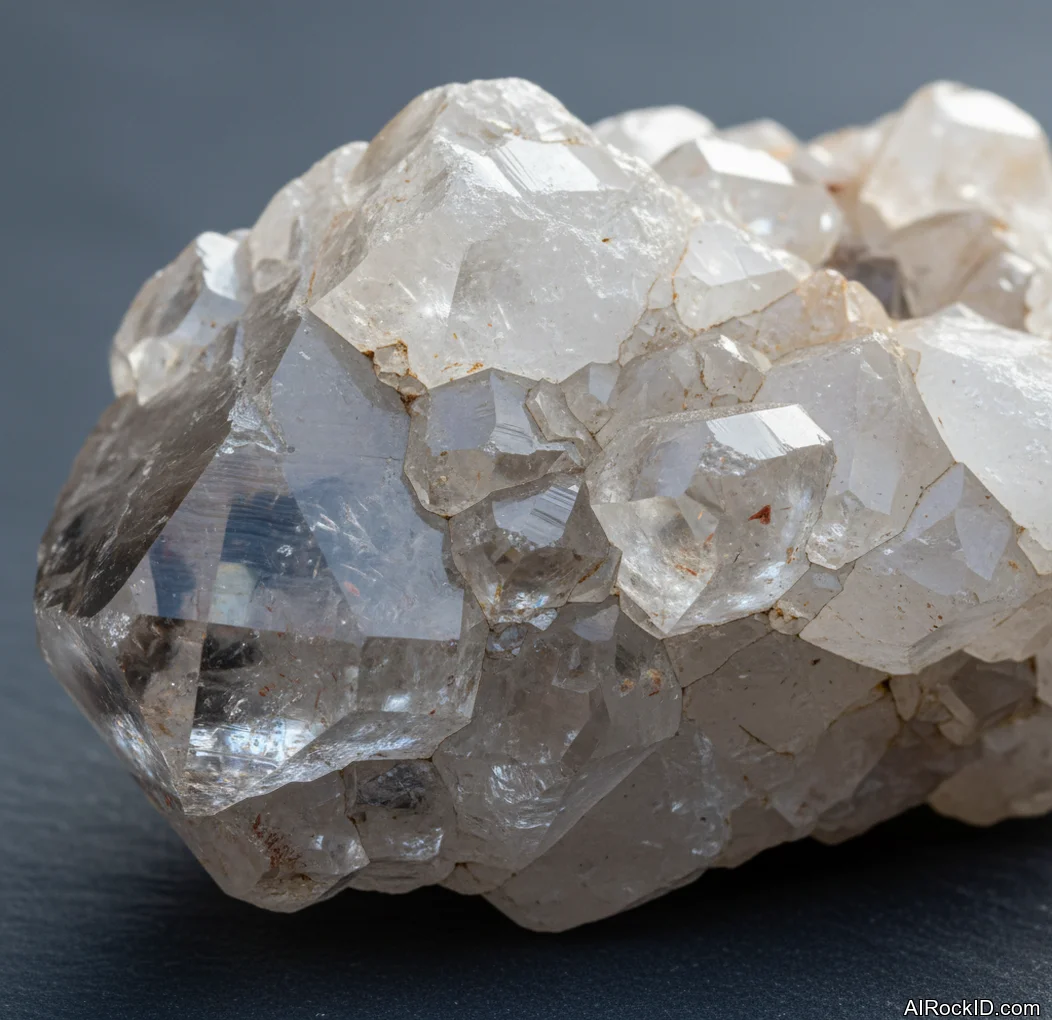
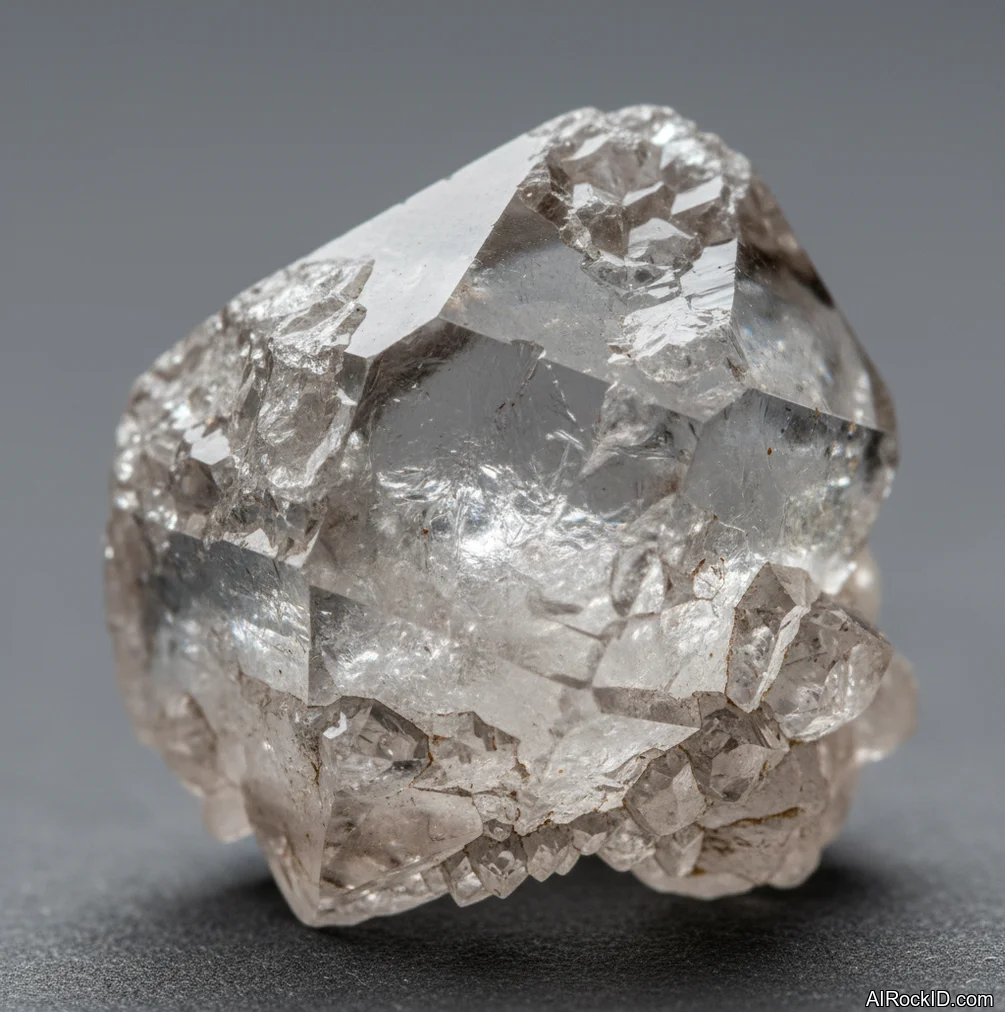
A Herkimer Diamond is a naturally double-terminated quartz crystal that comes from in and around Herkimer County, New York. It’s not a real diamond, obviously, but the nickname clicks the second a clean one catches the light and flashes like broken glass under a shop lamp.
Hold a decent specimen and, yeah, it feels sharp. Not “polished into a point” sharp, but actual pointy points that’ll snag your skin if you’re not paying attention. Most of them have that classic two-ended shape because they grew free inside little pockets, so they didn’t end up stuck to a wall the way regular quartz points do.
They can look crystal clear at first, but then you roll it a bit and you’ll spot tiny rainbows, some needle-like inclusions, maybe a few little black specks. And if you’ve ever cracked open dolostone at a New York dig, you already know some crystals come out wearing that thin gray coating (annoying stuff) that takes patience to scrub off.
Origin & History
The name’s literally just the place: Herkimer County, New York. Folks were turning up these crystals in the Mohawk Valley way before modern collecting was even a thing, but “Herkimer Diamond” really caught on when dealers noticed the double terminations and that clean, bright clarity basically sold on sight.
Geology-wise, it’s plain old quartz. And quartz was formally described long before anyone was writing about Herkimer material in a scientific way. The real story is the local fame. Walk around a gem show and you’ll see them everywhere, usually sitting in a shallow tray with that little folded card that says “New York diamonds,” because that’s the line people actually remember.
Where Is Herkimer Diamond Found?
True Herkimer Diamonds come from the dolostone pockets of central New York. Similar-looking double-terminated quartz is sold from other countries, but it’s not “Herkimer” in the strict locality sense.
Formation
Raw Herkimer pieces get pulled out of Cambrian-age dolostone. Quartz grew inside little vugs and cavities in that rock, the kind of pockets you see when you crack a chunk open and there’s that drusy, hollow surprise inside.
And the double terminations? That part’s pretty simple once you picture it. The crystals had open space around them, so they could build out on all sides instead of being stuck to host rock on one end.
Thing is, the matrix story makes it click if you stare at it for a minute. You’ve got silica-rich fluids moving through carbonate rock, feeding slow quartz growth in those pockets. Some crystals trap hydrocarbons or tiny mineral bits, so you’ll catch black inclusions or little “floating” specks that look like pepper when the light hits just right (especially if you tilt it and the glare shifts). But don’t expect every piece to be museum-clear. A lot of honest field material comes out frosty, coated, or chipped from extraction. Why wouldn’t it?
How to Identify Herkimer Diamond
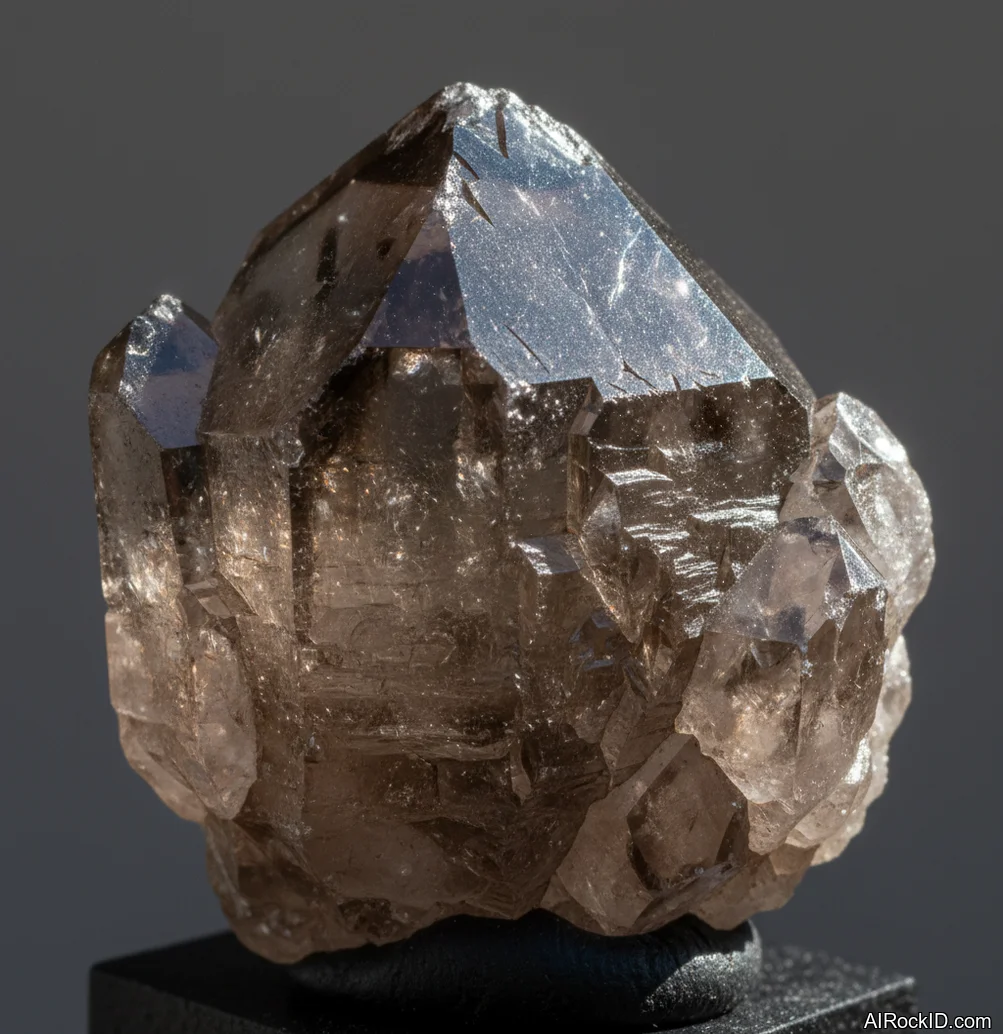
Color: Most Herkimer Diamonds are colorless to smoky-clear, with occasional gray tints from surface coatings or inclusions. Some show black inclusions (often carbonaceous material) and internal rainbows from stress fractures.
Luster: Vitreous luster on clean faces, with a bright glassy flash when you rotate it under a single light.
The real test is the shape and the feel: natural double terminations with crisp faces that still look “grown,” not rounded like tumbles. If you scratch it with a steel knife, the knife won’t bite the quartz, but quartz will scratch glass easily. Cheap versions are sometimes just regular quartz points cut at both ends, and they feel too perfect and too symmetrical when you roll them between your fingers.
Properties of Herkimer Diamond
Physical Properties
| Crystal System | Hexagonal |
| Hardness (Mohs) | 7 (Hard (6-7.5)) |
| Density | 2.65 g/cm3 |
| Luster | Vitreous |
| Diaphaneity | Transparent to translucent |
| Fracture | Conchoidal |
| Streak | White |
| Magnetism | Non-magnetic |
| Colors | Colorless, White, Gray, Smoky |
Chemical Properties
| Classification | Silicates |
| Formula | SiO2 |
| Elements | Si, O |
| Common Impurities | Al, Fe, Li, Na, K, Ti, H |
Optical Properties
| Refractive Index | 1.544-1.553 |
| Birefringence | 0.009 |
| Pleochroism | None |
| Optical Character | Uniaxial |
Herkimer Diamond Health & Safety
Herkimer Diamond is just non-toxic quartz, so it’s safe to handle. But the real issue is physical: those sharp terminations can poke you fast, and if a piece has a chipped edge, it can feel weirdly slicey when you run a finger along it (ask me how I know).
Safety Tips
If you’re cleaning or trimming matrix, put on eye protection and try not to breathe in the fine dust that comes off (it’s the kind that hangs in the air longer than you expect). But for everyday handling, just don’t store loose crystals where they can clack into each other.
Herkimer Diamond Value & Price
Price Range
Rough/Tumbled: $10 - $150 per piece
Cut/Polished: $5 - $30 per carat
Clean, sharp crystals that end naturally on both sides, and have that nice bump in size, get expensive in a hurry. But if the tips are chipped, there’s a thick crusty coating on them, or they’re just hazy all over, the value drops fast even though the crystal itself is still legit.
Durability
Durable — Scratch resistance: Excellent, Toughness: Good
Quartz is stable in normal household conditions, but the points chip if you let pieces rattle together in a bag or jar.
How to Care for Herkimer Diamond
Use & Storage
Store it in a small box or wrap it in a soft cloth so the tips don’t chip. If you keep a group piece, make sure it can’t wobble and fall off a shelf.
Cleaning
1) Rinse with lukewarm water and a drop of mild dish soap. 2) Use a soft toothbrush to work around the terminations and any crevices. 3) Rinse well and air dry; for stubborn mineral film, a short soak in plain white vinegar can help, then rinse again.
Cleanse & Charge
If you like ritual cleaning, a quick rinse and a dry in indirect light works fine. I avoid leaving clear quartz baking in a hot windowsill for days, mostly because shelves get knocked and sunlight can heat the spot.
Placement
Put it where you can catch the flash, like near a lamp or on a desk you actually sit at. If you’ve got pets or kids, keep it off the edge, because those points don’t forgive falls.
Caution
Skip harsh acids and don’t go at it with a stiff wire brush, especially if your Herkimer’s sitting on a carbonate matrix (you’ll feel that matrix crumble under the bristles fast). And please don’t throw a bunch of Herkimers together in a jar unless your goal is to end up with a jar full of little chips and bruised points.
Works Well With
Herkimer Diamond Meaning & Healing Properties
Next to a lot of the crystals with fancy names, Herkimer’s kind of blunt in the metaphysical scene: people talk about it like a loud, clean signal. And honestly, I get it. When I’m sorting a tray at a show, the really clear ones can look like tiny light bulbs under the table lights, and it’s hard not to buy into the whole clarity and focus story right then.
But let’s just say it. It’s still quartz. If you’re waiting for it to feel wildly different from a solid piece of rock crystal, you might walk away a little let down. Where it really earns the hype is the shape. Those double terminations feel weirdly “aimed” in your hand, like the stone has two poles, and that’s probably why people like pairing it with meditation, intention-setting, and dream work.
So if you’re using crystals as a personal tool, I’d keep it simple and practical. Hold one for a short breathing session, then jot down what you actually noticed, not what you wanted to notice. And if anxiety, insomnia, or anything medical is in the mix, treat crystals like a comfort object or a reminder (something to reach for), not a stand-in for real care.
Identify Any Crystal Instantly
Snap a photo and get properties, value, care instructions, and healing meanings in seconds.